
Best Leak Detectors for Water Softeners: Sensors, Shutoffs and Where to Put Them

The best leak detectors for water softeners are automatic shutoffs, not alarm-only sensors. For most homes that means a Moen Flo cut into the main, which watches flow and pressure for the whole house and runs a daily leak test, or a Guardian by Elexa kit, which clamps onto the ball valve you already have and closes it when a floor sensor gets wet. Where you put the sensors matters as much as which kit you buy. The low point under the softener valve, the low side of the brine tank and the water heater pan come first.
A softener has a supply connection, a bypass, a pressurised drain line, a brine line and an overflow, and it usually regenerates at 2 a.m. That is the case for something that closes the water, not just beeps.
Disclosure: Hard Water Solved may earn a commission if you buy through links on this page, at no extra cost to you. It does not change which products we include or how we rank them. Read our disclaimer.
How We Chose
Methodology. Nothing on this page was physically tested. Each system was compared from the maker's product pages and Amazon listings on what it detects, whether it shuts the water off, what it needs to work, and what it takes to own.
- Included: leak protection that can shut off the water automatically, sold on Amazon.com.
- Ranked on: which softener leaks it catches, whether it works without the internet, subscription terms and install effort.
- Excluded: LeakSmart, whose app and hub stopped working when the brand shut down in 2024; alarm-only sensors, which do not shut the water off and are covered below as an add-on, not a pick.
- Prices are not listed here because they change often. Use the buttons to see the current price on Amazon.
What Actually Leaks on a Softener
Leak protection is only as good as its match to the failure. These are the softener leaks it has to catch, and what each one looks like.
| Leak | How it starts | How fast | What catches it |
|---|---|---|---|
| Burst supply connector or cracked bypass | Pressure surge, old braided hose, freeze | Full main flow in seconds | Any automatic shutoff; a floor sensor below the valve |
| Drain line blown out of the standpipe | Regeneration pushes water under pressure | A few gallons a minute, for an hour or more, at night | Floor sensor near the softener; flow monitoring |
| Brine tank overflow | Valve refilling too long, stuck float | Slow, steady, at night | Floor sensor on the low side of the brine tank |
| Weep at the tank base, valve or fittings | Old O-rings, cracked fitting | Drops a minute, for weeks | Daily leak test on a flow-monitoring shutoff, or a sensor right below it |
The slow ones do the expensive damage. Washington State's insurance regulator notes in its guide to leaks, water damage and mold that home insurance "usually covers sudden leaks, but may not cover gradual leaks." A detector that turns a months-long weep into a same-day alert is protecting your claim as well as your floor. How those claims are judged is covered in homeowners insurance and water softener leaks, and the drain line's own failure points are in water softener drain line leaking.
Alarm-Only Sensors vs Automatic Shutoffs
| Type | What it does | Catches | Misses |
|---|---|---|---|
| Alarm-only floor sensor | Beeps or sends an app alert when wet | Water that reaches the sensor | Everything if nobody hears it; water keeps running |
| Sensor-triggered shutoff (Guardian by Elexa) | Closes your existing main valve when a sensor gets wet | Water that reaches a sensor | Leaks away from any sensor, such as inside a wall |
| Flow-monitoring shutoff (Moen Flo, Phyn) | Watches flow and pressure on the main; closes on abnormal flow; runs a leak test | Any leak after the valve, including drips and hidden ones | Needs power and Wi-Fi for full function; learns your patterns first |
An alarm is the right add-on, not the whole answer. If the softener drain line blows out at 2 a.m. while you sleep two floors up, or while you are away, an alarm only tells you about the water afterwards. A shutoff stops it.
The Best Leak Detectors for Water Softeners, Pick by Pick
| Pick | Type | Install | Works without internet? | Subscription | Amazon |
|---|---|---|---|---|---|
| Moen Flo Smart Water Shutoff | Flow-monitoring shutoff | Cut into the main | Shutoff needs power; app needs Wi-Fi | Optional FloProtect | 3/4": Check price on Amazon / 1": Check price on Amazon |
| Guardian by Elexa kit | Sensor-triggered shutoff | Clamps on an existing ball valve | Yes, per Guardian | None | Check price on Amazon |
| Phyn Plus 2nd Gen (now Phyn Protect) | Flow-monitoring shutoff | Cut into the main | Wi-Fi required at install | Not stated on the product page | Check price on Amazon |
Moen Flo Smart Water Shutoff: best whole-house protection
- What it does: a motorised valve on the main with sensors for flow, pressure and temperature. According to Moen's Flo page, its MicroLeak technology runs daily tests for leaks as small as a drop a minute, and the valve can close automatically.
- Sizes: 3/4 inch and 1 inch listings on Amazon, among others. Size it to your main, not smaller.
- Install: a plumber cuts it into the main. Moen asks for an AC outlet within 10 feet, or offers a 25-foot extension cable.
- Subscription: optional. Moen's page describes a FloProtect plan with deductible coverage of up to $5,000 and an extended limited warranty.
3/4 inch: Check price on Amazon
1 inch: Check price on Amazon
This is the one to buy if you want protection for the whole house, not just the spots where you put sensors. It sees a weeping softener fitting through its daily test even if the drops never reach the floor. It also gives you a water-use log, which shows what your softener's regeneration actually uses.
Wrong for: homes with no outlet or Wi-Fi near the main, and owners who will not pay a plumber to cut into the line.
Guardian by Elexa Leak Detection and Prevention Kit: best no-plumbing option
- What it does: a motorised controller clamps onto the quarter-turn ball valve already on your main, and wireless sensors sit on the floor. When a sensor gets wet, the controller turns the valve off.
- Install: no pipe cutting, per the Amazon listing title ("No Tools or Invasive Plumbing Required"). Guardian describes the controller as fitting ball valves from 1/2 to 1-1/4 inch.
- Works offline: Guardian says the valve closes without the internet and charges no monthly fee. It also offers an optional battery backup.
The local shutoff is the reason this kit is here. After LeakSmart's cloud shut down, a system that keeps working whatever happens to the company is worth a lot. Its limit is that it only reacts to water that reaches a sensor, so placement decides how well it works. Use every sensor in the kit, starting with the spots in the plan below.
Wrong for: homes whose main has a gate valve or an old multi-turn valve rather than a quarter-turn ball valve, and owners who want leak detection inside walls.
Phyn Plus 2nd Gen (now sold as Phyn Protect): the alternative flow monitor
- What it does: an automatic shutoff that learns normal flow and closes during abnormal flow after its initial learning period, with remote shutoff from the app. A Plumbing Check feature runs with the main off and looks for hidden flaws such as poor seals and pinhole leaks, per the Phyn Protect product page.
- Install: on main lines 1-1/4 inch or smaller, with 1 inch NPSM threaded ends; adapters sold separately. Wi-Fi is required at the install point, and a power outlet within 12 feet.
- Insurance: Phyn's site says eligible users may save up to 15 percent on insurance premiums. That is Phyn's claim; confirm with your insurer.
- Amazon listing: Phyn's own store now calls the product Phyn Protect, but the Amazon listing is still titled "Plus Smart Water Assistant & Shutoff (2nd Gen)". Its availability was not shown to our check, and it showed as unavailable on 1 October 2026, so check before relying on Amazon.
Wrong for: buyers who want an Amazon purchase today, and homes without Wi-Fi at the main.
Where to Put Leak Detectors Around a Softener
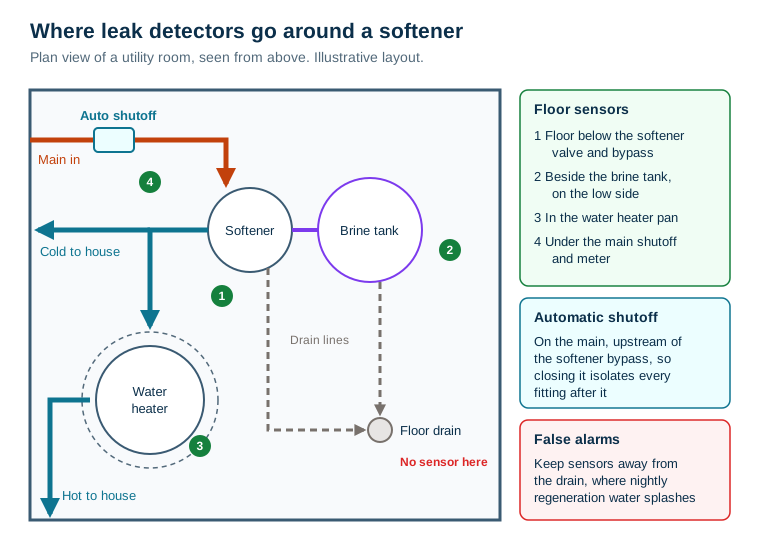
- Put the shutoff on the main, upstream of the softener's bypass. Closing it then isolates the softener, the water heater and everything after them. A shutoff downstream of the softener protects nothing at the softener.
- Sensor 1: the floor below the softener's valve and bypass. This is where a cracked fitting or a weeping O-ring drips first. Find the low point of the floor, which is rarely the middle.
- Sensor 2: beside the brine tank, on the low side. A brine tank that overflows, or a split brine line, puts water here before anywhere else.
- Sensor 3: in the water heater's drain pan. The water heater is the other big leak in most utility rooms, and the pan collects it.
- Sensor 4: under the main shutoff and meter. Supply-side leaks before the shutoff are the one leak an automatic valve cannot stop, so you want to know fast.
- Not at the floor drain or standpipe. The softener sends regeneration water there every few nights. A sensor where that splashes will raise false alarms until you switch it off.
Living With a Smart Shutoff and a Softener
- Note the regeneration time. Metered softeners usually regenerate in the early hours, and a cycle sends water to the drain for an hour or more. A flow alert at that time is usually the softener. Penn State Extension puts a typical regeneration at about 50 gallons.
- Keep the leak test and regeneration apart. If your shutoff runs a nightly test, set the softener's regeneration to a different hour so the test is not upset by drain flow.
- Test the sensors twice a year. Touch each one with a damp cloth and confirm the valve closes.
- Keep the overflow and drain lines visible. A sensor cannot help with water it never reaches.
Matching the Shutoff to Your Main
Check three things at the main before you order:
| Check | Moen Flo | Phyn (Protect / Plus 2nd Gen) | Guardian by Elexa |
|---|---|---|---|
| Pipe size | Buy the 3/4 or 1 inch version to match the main | Mains 1-1/4 inch or smaller; 1 inch NPSM ends, adapters sold separately | Clamps on ball valves from 1/2 to 1-1/4 inch, per Guardian |
| Existing valve | Not needed; the Flo is its own valve | Not needed; Phyn is its own valve | Needs a working quarter-turn ball valve |
| Power and signal | Outlet within 10 feet, or Moen's 25-foot extension | Outlet within 12 feet, Wi-Fi at the install point | Powered valve controller with an optional battery backup, per Guardian |
Size an inline shutoff to the pipe, never smaller, so it adds little pressure loss at normal household flow. If the main is an old gate valve, a plumber fitting a Flo or Phyn can replace it in the same visit, which is the cheaper route than adding a ball valve just for Guardian.
Who Should Buy None of These
- Renters who cannot alter the plumbing. A battery alarm sensor beside the brine tank is the practical step.
- Homes on a well with a gate valve on the main. Guardian needs a quarter-turn ball valve, and a flow monitor may need a plumber to change the valve first. Price both before deciding.
- Softeners in a garage or outbuilding with a floor drain and nothing to damage. The case for a shutoff weakens when a leak simply drains away.
- Owners hoping a detector fixes a leak. If the softener already leaks, fix the fitting or valve first. A brine tank whose water level climbs every cycle is usually a softener that has stopped drawing brine, and the causes are in why a water softener is not using salt.
For most homes, the strongest setup is an automatic shutoff on the main ahead of the softener, plus floor sensors at the low points around the softener, brine tank and water heater. A Moen Flo covers the whole house. A Guardian kit gets most of the protection without cutting a pipe.
Frequently Asked Questions
Where should I put a leak detector near a water softener?
On the floor at the lowest point below the softener's control valve and bypass, and on the low side of the brine tank, where an overflow or split brine line shows first. Add one in the water heater's drain pan and one under the main shutoff. Keep sensors away from the floor drain or standpipe, where regeneration water can splash and set off false alarms.
Is an automatic water shutoff worth it with a water softener?
For most homes, yes. A softener has many joints, a pressurised drain line and a brine tank that can overflow if the valve sticks, and regeneration usually runs at night. An alarm only helps if someone hears it. An automatic shutoff closes the main, which turns a flooded basement into a small puddle. Flow-monitoring shutoffs also catch leaks away from any sensor.
Do leak detectors lower home insurance?
Sometimes. It depends on the insurer and the state. Phyn says eligible users may save up to 15 percent on insurance premiums, and Moen's FloProtect plan adds deductible coverage of up to $5,000. Ask your own insurer before buying, and keep a record of the install date and model.
Will a smart water shutoff think my softener's regeneration is a leak?
It can at first. Regeneration sends water to the drain for an hour or more, usually in the early hours, and that is real flow through the main. Flow-monitoring shutoffs learn household patterns over the first days or weeks. Note your softener's regeneration time so you can match a night-time flow alert to it, and do not set the softener to regenerate during the shutoff's daily leak test.
Can I install a leak shutoff myself?
A sensor-triggered kit that clamps onto an existing quarter-turn ball valve, such as Guardian by Elexa, needs no pipe cutting and is a typical DIY job. Inline shutoffs like Moen Flo and Phyn are cut into the main line, so most owners use a plumber. Both inline units also need a nearby power outlet and Wi-Fi.
