
Research Library
Hard water and water softeners, explained clearly
 Softener Troubleshooting
Why Air Appears in Faucets After Softener Service
Every faucet in the house coughs and spits the first time it is opened after a softener has been serviced. That is trapped air, and it is harmless if you purge it in the right order. The version worth worrying about is air that comes back — the morning after every regeneration, or after every long shower on a well — because that means something is drawing air in, and there are two completely different culprits sharing one symptom.
Read the guide Softener Troubleshooting
Why the Brine Tank Is Full of Water or Overflowing
There is water on the floor beside the softener, or the brine tank is brimming with it when it should hold a few inches. Diagnosis can wait ten minutes. Bypass the unit, get the water level down, and keep the salt. Then the cause is almost always one of four things, in a predictable order: an injector that has stopped drawing brine, a brine valve that will not close, a safety float that was supposed to prevent exactly this and did not, or a valve stuck partway through a cycle.
Read the guide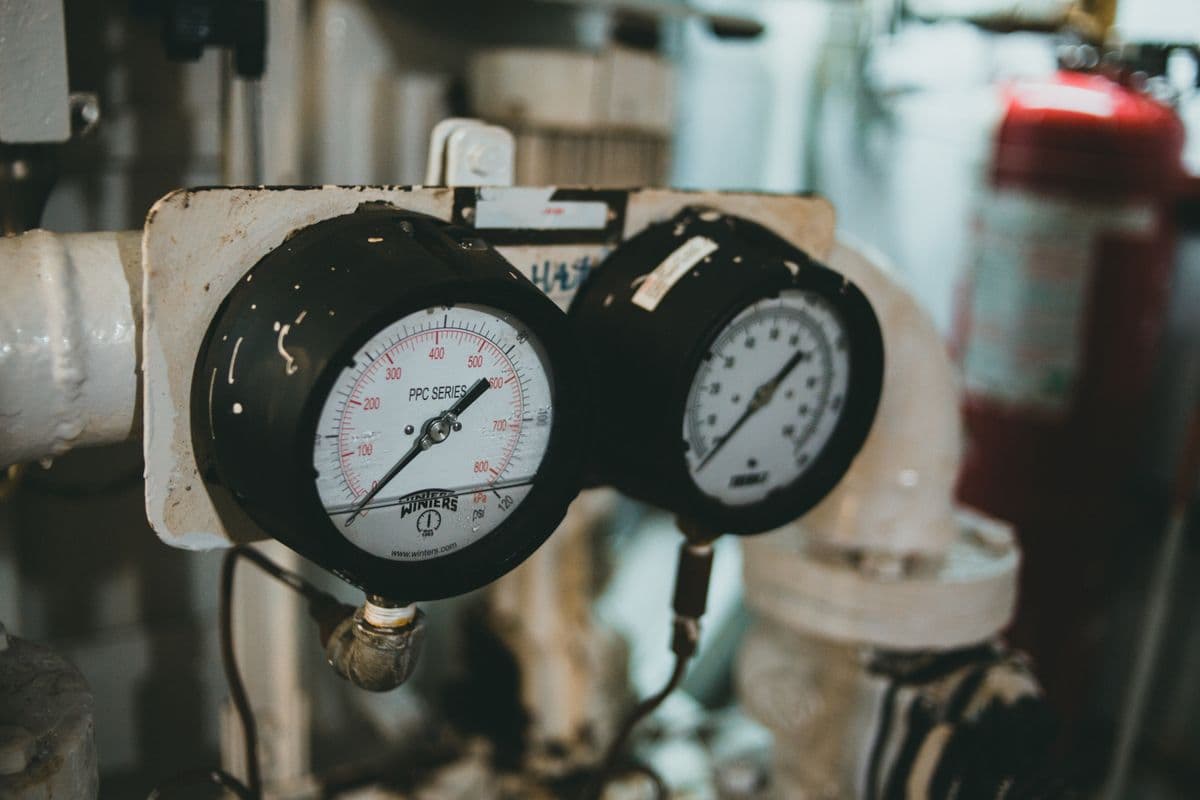 Softener Troubleshooting
Why Water Pressure Drops After a Softener
Every water softener costs some pressure. The question is not whether yours does, but whether it is costing two psi or twenty. A softener's valve and resin bed follow the same hydraulics as any other restriction, so the normal loss can be worked out in advance from the manufacturer's own flow rating — and once you know that number, one pair of gauge readings tells you whether you are looking at ordinary engineering or a real fault.
Read the guide Softener Troubleshooting
Why There Is No Water After Softener Installation
The softener is in, the valves are turned back on, and nothing comes out of the taps. Nearly every no-flow case after an installation comes down to a valve in the wrong position or a screen blocked by debris the installation itself knocked loose. Here is the order a technician works through them, with the quickest checks first, and how to get water back to the house in the meantime.
Read the guide Softener Troubleshooting
Why There Is No Water in the Brine Tank
You lift the lid, push the salt aside and find no water underneath. Before ordering parts, find out when your softener refills. Some are built to sit dry until a couple of hours before regenerating, every tank is nearly empty for a stretch in the middle of a regeneration, and in a lot of tanks the water is simply hidden under the salt. A few minutes with a flashlight and the regeneration clock tells you whether you have a design feature or a refill that has stopped working.
Read the guide Softener Troubleshooting
When to Replace a Sediment Prefilter Before a Softener
The sediment cartridge in front of a softener is the cheapest part of the whole system, and it's the one most likely to be swapped on a guess. Change it too late and the softener's backwash runs short of water, so the bed slowly channels. Pick the wrong micron rating and you either clog it in a fortnight or let silt straight through to the resin. Two pressure gauges and a notebook replace the guessing.
Read the guide Softener Troubleshooting
Water Hammer and Pressure Surges After a Softener
The house was quiet for twenty years. Then a softener went in, and now something slams in the walls at two in the morning. The softener did not break anything — it added a valve that stops flowing water faster than anything else in the house, at the exact hour the system pressure is highest. Knowing when the bang happens tells you which of four causes you have, and where an arrestor has to sit to actually stop it.
Read the guide Softener Troubleshooting
Why a Water Softener Bypass Valve Leaks
A bypass valve that nobody has touched in five years is the most likely part of a softener to start dripping, and the drip is the smaller of its two problems. The same dried, flattened O-rings that let water out of the valve body can also let raw water leak straight through it to the house side, so the softener regenerates on schedule, the salt goes down, and the taps quietly deliver partly hard water. One O-ring kit fixes both, and a two-minute routine once a year stops either happening again.
Read the guide Softener Troubleshooting
Why a Water Softener Keeps Draining
A softener that should run water to the drain for a couple of hours a week is running it all day and all night. At a typical drain flow rate that is more water in a week than the whole system is meant to use in a year. The fix is usually one of two things — a valve parked in the wrong position, or seals that no longer seal — and a single test with the manual advance button tells you which one you have before you spend anything.
Read the guide Softener Troubleshooting
Why a Water Softener Drain Line Leaks
A softener drain line sits empty for days, then carries several gallons a minute for an hour in the middle of the night. That stop-start life is exactly what loosens clamps, kinks elbows, embrittles tubing and stretches unsupported runs into a sag that eventually splits. Most drain line leaks are a ten-minute repair. The part people get wrong is the last foot of the run, where a well-meant fix can quietly remove the air gap that keeps drain water out of your drinking water.
Read the guide Softener Troubleshooting
Softener Display Blank or Showing an Error Code
Every softener brand invents its own codes, and most owner's manuals explain them in a single line that tells you almost nothing. Underneath, though, the faults are the same handful on every valve — a motor that cannot move, a sensor that cannot see, a memory that has been scrambled, a meter that has stopped counting. This guide maps codes from six manufacturers onto those shared families using the manufacturers' own manuals, says plainly where a code could not be verified, and covers the display that shows nothing at all.
Read the guide Softener Troubleshooting
Why a Water Softener Leaks at the Control Head
Water around the top of a softener almost always traces back to one of four places, and three of them are cheap. The trouble is that water runs downhill and pools where it pleases, so the wet spot you find is rarely where the leak starts. A roll of paper towel and a marker pen will tell you the true origin in one regeneration, and that answer decides whether you need a few dollars of O-rings or a new valve.
Read the guide