
Does Homeowners Insurance Cover Softener Leaks?
Homeowners insurance usually covers a water softener leak when it is sudden and accidental, such as a burst connector, a split tank or a drain line that pops loose during regeneration. It usually does not cover a slow leak that went on for weeks, damage caused by wear and tear or neglect, or the softener itself. Your own policy wording decides every case. What follows is general information, not legal advice.
The distinction that decides most claims is time, and the evidence of time is your maintenance record.
Does Homeowners Insurance Cover a Water Softener Leak? Sudden Versus Gradual
A softener is part of your plumbing system. It sits under mains pressure every hour of the day, usually in a basement or utility room that nobody visits. That makes it a candidate for both kinds of water loss insurers distinguish.
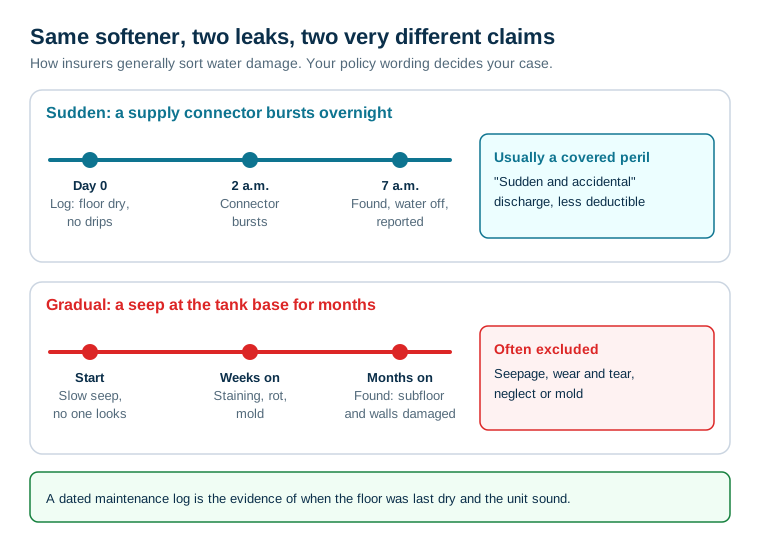
Sudden and accidental. The National Association of Insurance Commissioners (NAIC) explains in its consumer guidance on burst pipes and homeowners coverage that homeowners policies cover damage from a "sudden and accidental" discharge from a plumbing system. For a softener, that typically means a braided connector that bursts, a bypass body that cracks, a tank that splits, or a drain line that blows out of its standpipe mid-regeneration.
Gradual. Washington State's Office of the Insurance Commissioner states in its guide to leaks, water damage and mold that homeowner insurance "usually covers sudden leaks, but may not cover gradual leaks." It adds that policies usually do not cover damage from mold, fungi, rust or rot. A softener that wept at the tank base for six months, staining the subfloor and growing mold behind the drywall, is the textbook gradual loss.
The water on the floor may be the same in both cases. The claim outcome often is not.
How Typical Softener Leaks Tend to Be Treated
These are general patterns, not predictions. Your insurer's investigation and your policy's definitions decide your case.
| What happened | How insurers generally view it | Watch for |
|---|---|---|
| Supply connector bursts overnight, found in the morning | Sudden and accidental discharge; usually covered less the deductible | Whether the connector showed prior signs of wear |
| Mineral tank splits or valve body cracks | Usually sudden. The damage it causes is the insured loss | The softener itself is usually not covered |
| Drain line pops out during regeneration | Usually sudden | Securing the drain line is basic maintenance |
| Brine tank overflows because the float stuck | Usually sudden, especially if found quickly | Prior overflow marks that were ignored |
| Slow drip at the bypass or tank neck for months | Commonly excluded as seepage, wear and tear or neglect | Staining that shows it was visible for a long time |
| Freeze damage in an unheated garage or vacant house | Depends on whether reasonable steps were taken to prevent freezing | Heating and vacancy conditions in the policy |
| Mold from any leak | Often excluded or sub-limited | Whether you bought additional mold coverage |
| The softener wore out or broke down | Not an insured loss; it is maintenance or warranty territory | The manufacturer's warranty term |
| Floodwater from outside entering the basement | Excluded from standard homeowners policies | Needs separate flood insurance |
Two frequent softener faults are worth fixing before they become claims. A brine tank that is filling too far points to a float or refill fault, covered in why the brine tank is full of water or overflowing. And if the basement flooded from outside, what to do with a softener after basement flooding covers the unit itself.
Why Your Maintenance Log Matters in a Claim
A log does not change what happened. What it can do is document it. When an adjuster is deciding whether water damage was sudden or developed over time, and whether neglect played a part, dated records help show:
- When the floor was last seen dry. A monthly entry reading "floor dry, no drips at tanks, valve or bypass" dated three weeks before the loss supports a sudden event.
- That the system was maintained. Salt checks, annual brine tank cleaning, inspections of connectors and the drain line, and any repairs, with dates.
- When a problem was first noticed and what you did about it. If you saw a drip, bypassed the unit and called for service the same week, that is a very different record from a drip left for months.
The monthly and annual routine in the water softener maintenance schedule includes an external inspection of the tank base, valve, bypass, connections, drain line and brine tank overflow. Its printable log is exactly this kind of record. Keep it with the manual, the installation receipt and a few dated photos of the installation.
Be honest with it. A log is only useful if it records what you actually saw. An entry noting an earlier drip is still better than no record at all.
Three Things to Find in Your Own Policy
Get the full policy document, not the summary page, and look for:
- How water damage is defined as a covered cause of loss. Look for wording about sudden and accidental discharge or overflow of water from a plumbing system or household appliance.
- The exclusions. Typical ones cover continuous or repeated seepage or leakage, wear and tear or deterioration, mechanical breakdown, mold, fungi and rot, and flood. Note any time period the seepage wording uses.
- The conditions. These include keeping the home heated or shutting off the water when it is unoccupied, your duty to protect the property from further damage after a loss, and how quickly you must report it.
If the wording is unclear, the Washington commissioner's advice applies everywhere: ask your insurance agent or broker whether your policy covers water damage. Ask the question before a leak happens, not after. For a dispute about a claim, your state insurance department's consumer line is the place to start.
What to Do in the First Hour of a Softener Leak
- Stop the water. Put the softener in bypass. If the leak is upstream of the bypass or you cannot find it, close the main shut-off.
- Unplug the softener so it cannot start a regeneration.
- Record everything before cleaning up. Take photos and video of the source, the water spread, and any damaged flooring, walls and belongings. Include a wide shot showing where the unit sits.
- Limit further damage. Remove standing water, move belongings and start drying. Policies generally expect you to take reasonable steps to prevent further loss. Keep receipts for pumps, fans and emergency plumbing.
- Keep the failed part. Do not throw away the burst connector, cracked bypass or split tank. It may be evidence of how the failure happened.
- Report it promptly to your insurer, and note the claim number and the name of everyone you speak to.
- Check the warranty separately. The manufacturer's warranty may cover a defective part. It almost never covers water damage. How to read a water softener warranty explains the difference.
Prevention Measures That Matter
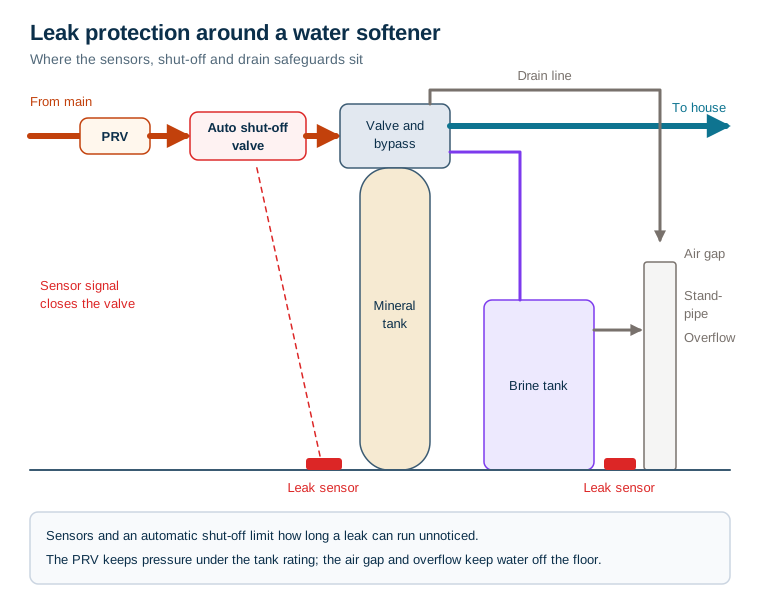
Every measure below works the same way: it keeps a failure small and sudden rather than large and slow.
- Floor leak sensors beside the mineral tank and brine tank. The cheapest measure, and they tell you within minutes rather than weeks. Choosing leak sensors for a softener and where to place them covers the options.
- An automatic shut-off valve on the main, triggered by those sensors. It closes the supply while you are asleep or away. Choosing a smart shutoff or sensor kit to pair with a softener compares the add-ons that do this for any unit.
- A pressure-reducing valve if house pressure runs high. Softener warranties commonly exclude damage above a stated pressure, and over-pressure strains every connector.
- A secured drain line with an air gap, and a brine tank overflow line run to a drain rather than left open.
- Heat. Keep the softener above freezing, and follow your policy's conditions on heating or shutting off the water in an unoccupied home.
- Water off when away. For long absences, bypass the softener and close the main if the house will be empty.
- Replacing ageing connectors before they fail. Braided flexible connectors and push-fit fittings are cheap compared with a claim.
Premium credits. Some insurers offer a credit for a leak detection system or an automatic shut-off valve, and some do not. It varies by company and state, so ask yours before you buy, and keep the invoice if they do.
Warranty, Insurance or You: Who Usually Pays for What
| Cost | Usually paid by |
|---|---|
| Replacement part for a defective component within its term | Manufacturer's warranty |
| Labour to fit that part | You, or a service contract |
| A softener that wore out | You |
| Water damage from a sudden, accidental discharge | Homeowners insurance, less the deductible |
| Water damage from a slow leak, neglect or wear and tear | Commonly you |
| Mold remediation | Often you, unless you bought added coverage |
| Damage from outside floodwater | Flood insurance, if you have it |
The Limits of This Answer
- Policies differ. Wording varies between insurers, policy forms and states. The patterns above describe how coverage generally works, not how your claim will be decided.
- This is not legal or insurance advice. For your policy, ask your agent or insurer. For a dispute, contact your state insurance department.
- A softener cannot prevent its own leaks. It is a pressurised appliance with plastic fittings, seals and a tank. The safeguards around it, and your inspections, are what limit the damage when one fails.
So does homeowners insurance cover a water softener leak? Usually, when the failure is sudden and you acted quickly. Usually not, when the leak built up slowly or neglect played a part. Keep the log, fit a sensor, and read your policy's water damage wording before you ever need it.
Frequently Asked Questions
Does homeowners insurance cover water softener leaks?
Often, when the leak is sudden and accidental, such as a connector bursting, a tank splitting or a drain line coming loose during regeneration. The National Association of Insurance Commissioners says homeowners policies cover damage from a sudden and accidental discharge from a plumbing system. Slow leaks that went on for weeks or months, and damage from wear and tear or neglect, are commonly excluded. Your own policy wording decides the outcome, so read it or ask your agent.
Will insurance pay to replace my water softener?
Usually not when the softener simply wore out or broke down, because that is wear and tear or a mechanical failure rather than an insured event. The policy typically responds to the water damage the failure causes, subject to your deductible and exclusions. A failed part may instead be covered by the manufacturer's warranty if it is still within its term and the failure is a defect.
Is water damage from a slow leak covered by insurance?
Frequently not. Washington State's Office of the Insurance Commissioner advises that homeowner insurance usually covers sudden leaks but may not cover gradual leaks. Many policies exclude continuous or repeated seepage, wear and tear, deterioration and mold. Some insurers sell limited additional coverage for mold, so check what your policy includes.
What should I do if my water softener leaks?
Stop the water first by putting the softener in bypass or closing the main shut-off, and unplug the unit. Photograph and video the leak, the source and the damage before you clean up. Then limit further damage by removing water and drying the area, keep any failed parts, and contact your insurer promptly. Keep receipts for emergency repairs and drying costs.
Does a frozen water softener count as a sudden leak?
Sometimes, but freezing carries its own condition. The NAIC notes that if your insurer determines you neglected the plumbing by not taking steps to prevent freezing, burst-pipe damage may not be covered. Policies generally require you to keep the home at a minimum temperature, or shut off the water if the home is vacant. A softener in an unheated garage or a winterized cabin is exactly where this matters.
Do leak detectors lower homeowners insurance premiums?
Some insurers offer a premium credit for water leak detection systems or automatic shut-off valves, and some do not. It varies by company and state, so ask your insurer directly before buying a device. Even without a discount, a sensor that alerts you within minutes turns a potential gradual-damage claim into a small, sudden one.
