
How to Adjust a Dishwasher After Installing a Softener
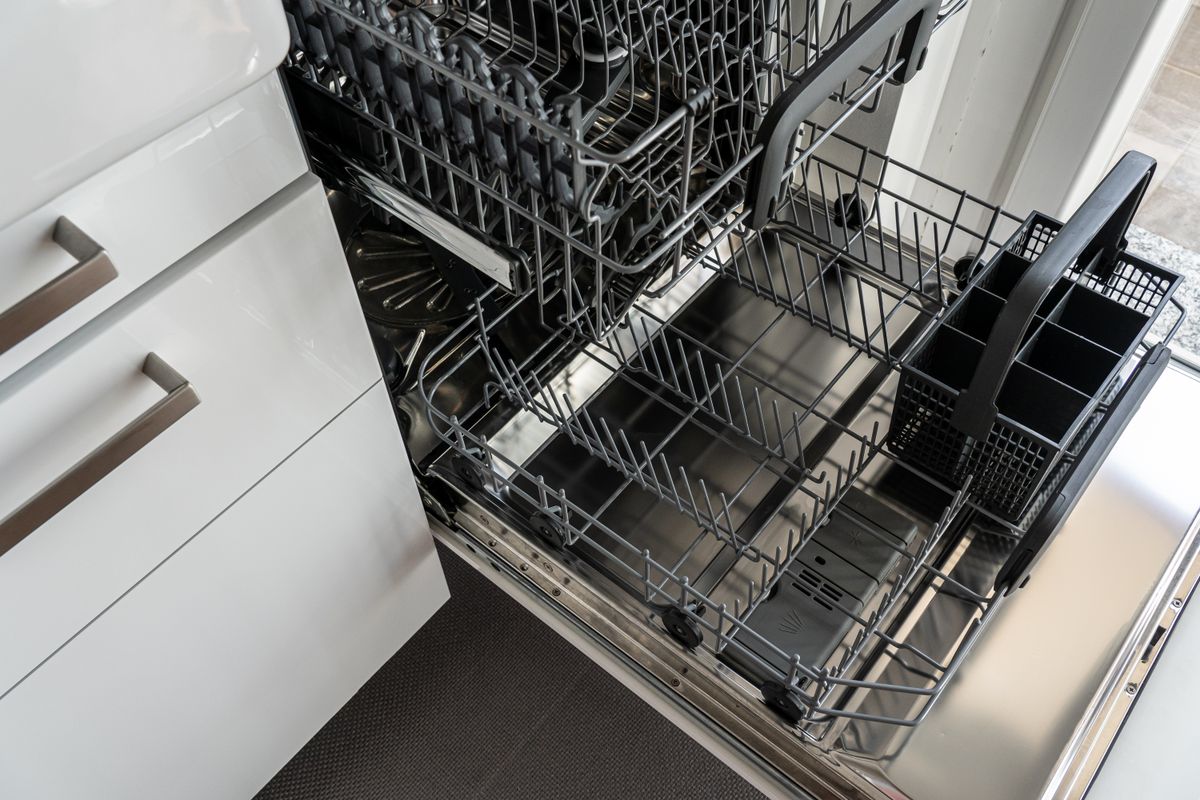
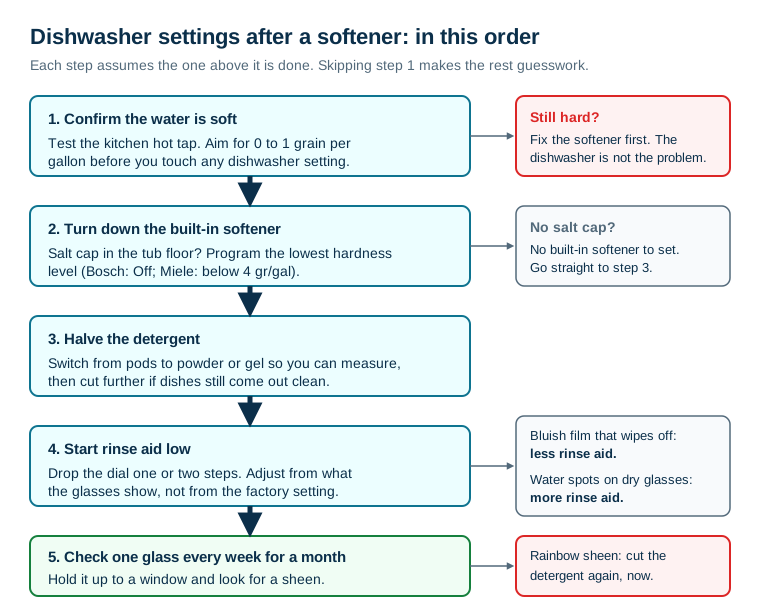
The dishwasher settings for soft water come down to four changes, and they should all happen the day the softener goes in. Cut the detergent to about half, lower the rinse aid a step or two, and turn any built-in dishwasher softener down to its lowest level. Then check one glass every week for the first month. Skip them and the same dose that fought hard water starts attacking your glassware.
That last step matters more than most people expect. Glass etching is permanent. The only way to stop it is to catch the warning signs early.
Dishwasher Settings for Soft Water: The Four Changes
Your dishwasher was set up for the water you used to have. Nothing in it detects a new softener upstream, so every setting that assumed hard water is now wrong.
| Setting | What it was doing on hard water | What to do after softening | Where it comes from |
|---|---|---|---|
| Built-in softener (European machines) | Softening the water a second time, using salt | Program the lowest hardness level | Miele and Bosch manuals |
| Detergent dose | Part of it was spent on calcium and magnesium | Start at half, then cut further if dishes stay clean | GE Appliances |
| Rinse aid | Stopping hard-water droplets drying into spots | Drop one or two steps, then adjust from results | Miele troubleshooting table |
| Wash program | Hot cycles helped rinse minerals away | Prefer lower-temperature programs for glassware | Miele glassware guidance |
Do them in order. Changing the detergent before you have confirmed the water is actually soft means you are tuning to a guess.
Step one is a hardness test, not a setting
Test the kitchen hot tap, since most dishwashers are fed from the hot line under the sink. You want 0 to 1 grain per gallon. If the result is higher, the softener is not finished, not programmed, or not feeding that line. Some installers leave the kitchen on a bypass for drinking water, so check which pipe the dishwasher actually connects to. Whether softened water should read exactly zero is worth understanding before you panic at a reading of 1.
The Built-In Softener on European Dishwashers
If your dishwasher is a Miele, Bosch, Thermador, Gaggenau, Asko or similar European design, there is a good chance it has its own small ion exchange softener. Take out the lower rack and look at the floor of the tub. A large screw cap in one corner is the salt reservoir that feeds it. If you want the full tour of that reservoir, the dishwasher white film guide shows where it sits and what goes wrong with it.
Almost no US guide mentions it, but a whole-house softener changes what you should do with that built-in unit.
Miele is explicit. The US manual for the G 4510 says water above 4 grains per gallon should be softened, and that if your supply is constantly below 4 grains, you do not need to add salt, but the hardness level must still be programmed. It also says the salt indicator light switches off when the machine is programmed below 4 grains. You can read it in Miele's G 4510 operating instructions.
Bosch says the same thing in different words. Its dishwasher manual sets the water softening system across a range of levels. It says no salt is needed at the lowest setting, which the display treats as Off. Bosch's instruction manual walks through the button sequence.
Two details in those manuals catch people out:
- Factory defaults differ widely. The Miele G 4510 leaves the factory set to 1 to 4 grains, already the lowest level. The Miele G 7856 manual says that model ships set for 20 grains. Do not assume. Enter the settings menu and look.
- Miele wants the level programmed even when you stop using salt. The setting tells the machine how often to regenerate. On a softened supply, the lowest level stops it regenerating for water that is already soft.
Should you leave salt in the reservoir?
It does no harm, and it gives you a buffer. If the whole-house softener runs out of salt or sits in bypass during a repair, the dishwasher's own softener is the only protection left. The catch is that it only protects you if it is set to a level that makes it work. A reasonable approach is to program the lowest level and leave any remaining salt where it is. If the house softener is going to be off for more than a few days, raise the dishwasher's setting to match your raw water until it is back.
Detergent: Why Half Is the Starting Point, Not the Answer
GE Appliances' guidance for homes with a water softener is to cut back to half as much detergent as before and check the cleaning results. That is a starting point. Miele's own glassware sheet goes further for soft water, saying one teaspoon of detergent in the cup is usually enough and extra should go in by the half teaspoon only for very dirty loads.
The reason for the big cut is chemistry. On hard water, calcium and magnesium use up part of every detergent dose. On softened water, nothing uses it up, so the whole dose goes to work on the dishes and on the glass. Cloudy glasses: etching or hard water? walks through that mechanism in detail. The short version is that you should dose for the water you have now, not the water printed on the box.
Three practical consequences:
- Pods and tabs are a poor fit. You cannot halve a pod. On softened water, a single pod is often a full hard-water dose every load. Powder or gel lets you measure.
- Cut in steps. Halve the dose for a week. If plates and cutlery come out clean, cut again. Stop reducing when you see food soil left behind, and go back one step.
- Soil level changes the answer. A lightly soiled load of glasses needs less than a sink of roasting pans. Miele's manual says to reduce detergent to two-thirds for small loads, and to at least half for its China and Crystal program.
For the same logic applied to laundry and handwashing, see how much detergent to use with soft water.
Rinse Aid Settings Once the Water Is Soft
Rinse aid still earns its place in a softened house. It makes water sheet off glass instead of drying in drops. It also shortens the time wash chemistry sits on the glass, which is why Miele lists missing rinse aid among the causes of etching.
What changes is the right setting. Miele's troubleshooting table is the clearest guide to reading the result:
| What you see on dry glasses | What Miele says it means | Adjustment |
|---|---|---|
| Streaks, a bluish sheen, a film that wipes off | Rinse aid dose too high | Turn the dial down |
| Water spots, dishes not dry | Rinse aid too low, or reservoir empty | Turn it up or refill |
| White residue, clouding that wipes off | Not enough rinse aid, or salt reservoir empty | Refill and check the salt setting |
On the G 4510 the dial runs from 0 to 6 and ships at 3. After softening, drop one or two steps and read the glasses for a week before moving again. Change one setting at a time, or you will not know which change worked.
The Etching Risk Timeline
This is the part of the job with no second chance. Etching strips material from the glass surface, and Miele's glassware sheet is blunt about it: once the process has begun, it cannot be reversed.
The same sheet explains why it creeps up on people. Filming and streaking usually come before etching or appear alongside it. The first sign is an iridescent, rainbow-like sheen when you hold the glass up to the light. Miele lists the things that speed it up: pre-rinsing dishes, too little water, too-soft water, too-hot water and no rinse aid. A household that has just installed a softener, kept its old detergent dose, and pre-rinses everything is doing most of that list at once.
No manufacturer publishes a day count, because the rate depends on dose, temperature and the glass itself. What you can control is how quickly you notice. Use one everyday glass as a gauge and follow a fixed schedule.
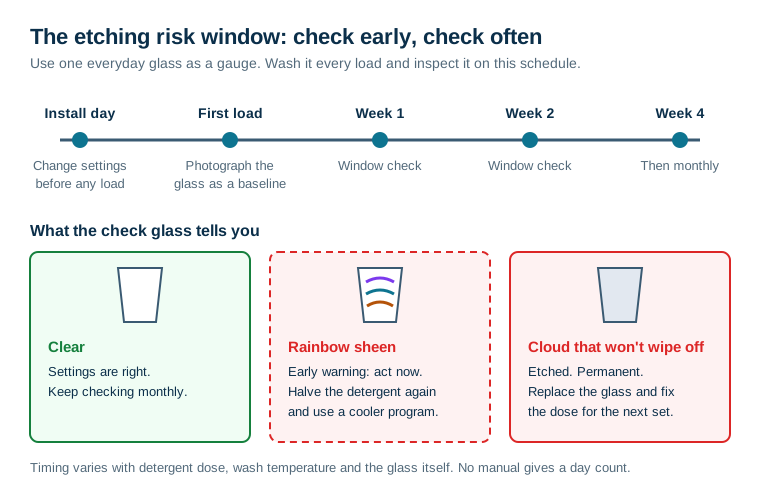
- Install day. Change the settings before the first load, not after you see a problem.
- First load. Photograph your gauge glass against a window. That is your baseline.
- Week 1 and week 2. Hold it up to the same window. Look for rainbow colours and for haze in the base curve.
- Week 4, then monthly. If it still matches the photograph, the settings are right.
If you see a sheen, act the same day. Cut the detergent again, choose a lower-temperature program, stop pre-rinsing and scrape plates instead. If a haze will not shift with a vinegar rub, it is etching and that glass is finished. The job now is protecting the rest of the cupboard.
Program and Loading Changes That Protect Glass
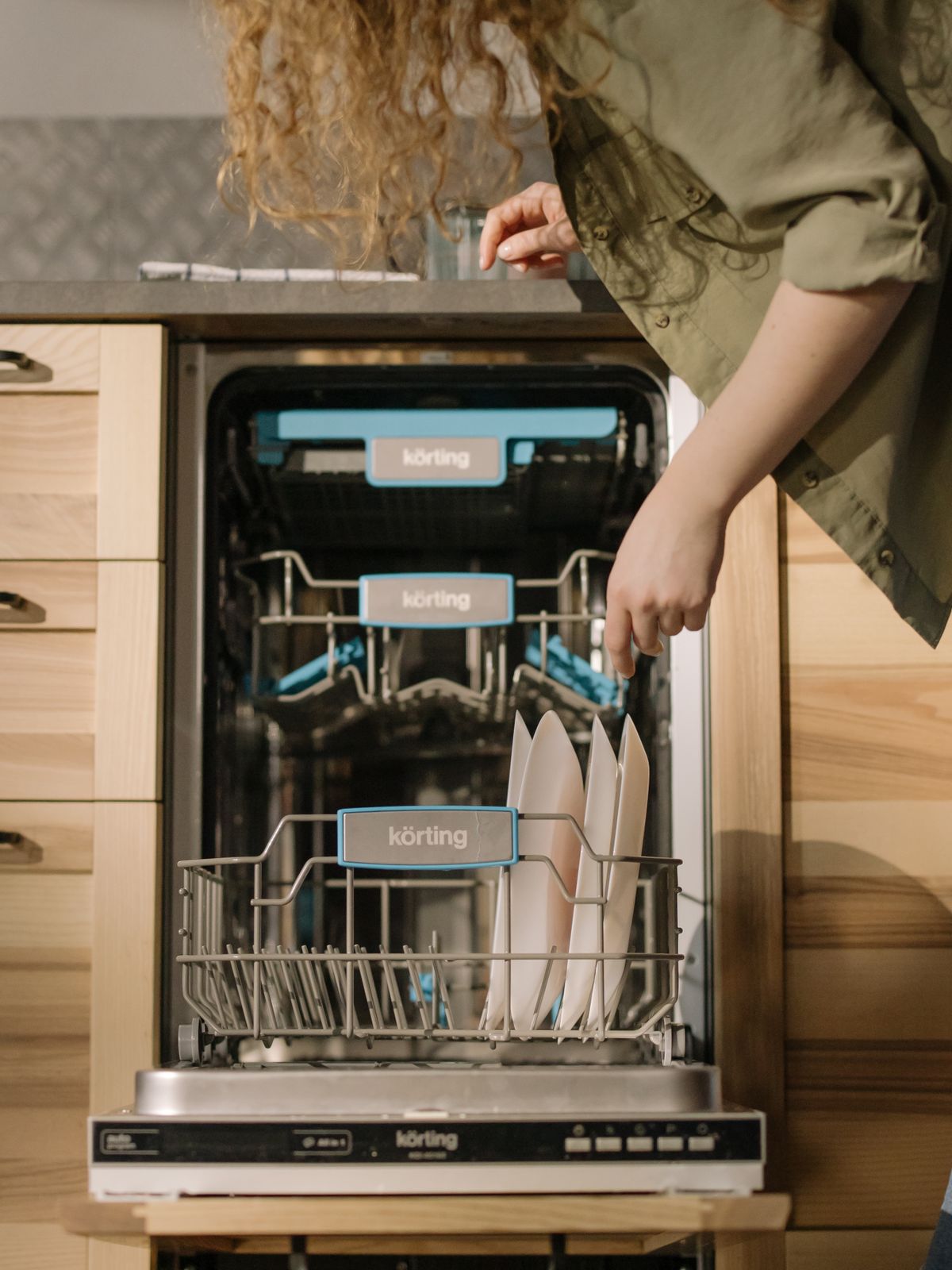
Settings are not the only lever. Miele's glassware guidance adds several habits that reduce etching on soft water:
- Choose lower-temperature programs for glassware. Miele notes that higher temperatures lower a glass's resistance to etching.
- Use the gentlest glass program your machine has. Miele's manual says fine glassware and crystal should go through its China and Crystal program, with the detergent reduced to at least half.
- Stop pre-rinsing. Food soil takes up detergent. A load of spotless, pre-rinsed glasses leaves the full dose with nothing to work on but the glass.
- Load for rinsing. Glasses upside down, not touching, and not crowded behind large plates.
- Only machine-wash glasses marked dishwasher safe. Miele's troubleshooting table lists dull glasses with a film that cannot be wiped off as a glass problem with no remedy.
What the Softener Cannot Fix in Your Dishwasher
A softener removes calcium and magnesium by swapping them for sodium. It does not remove silica, it does not lower total dissolved solids, and it cannot repair glass that is already etched. Miele's glassware sheet notes that softening increases dissolved solids, which can itself cause streaks or filming. It also says silica film cannot be removed.
So a softened house can still see some residue:
- Spots that wipe off with a dry cloth are usually dried dissolved solids. Rinse aid and hand-drying the glasses you care about handle this.
- An even haze that vinegar does not touch is either silica or etching. Neither is a hardness problem, and neither responds to more softening.
- Chalky film that dissolves in vinegar means hardness is getting through. Retest the tap before you change anything else.
What to Do Next
- Test the kitchen hot tap today. Nothing else on this page is reliable until you know the water reaching the dishwasher is soft.
- Open the settings menu on a European machine and program the lowest hardness level. Check the factory default rather than assuming it.
- Switch to powder or gel and halve the dose. Then keep cutting in steps while the dishes stay clean.
- Turn the rinse aid down a step or two and adjust from the Miele table above.
- Photograph a gauge glass and check it at week 1, week 2 and week 4. A rainbow sheen means cut the detergent again, the same day.
Frequently Asked Questions
Should I still put salt in my dishwasher if I have a water softener?
Usually not, as long as the dishwasher's own softener is programmed to its lowest level. Miele's US manual for the G 4510 says that if your supply is constantly below 4 grains per gallon you do not need to add salt, but the hardness level must still be programmed. Bosch's manual says no salt is needed at the lowest setting, which it labels Off. Leaving salt in the reservoir does no harm, but a machine still set for hard water will keep regenerating and using it for nothing.
How much dishwasher detergent should I use with soft water?
Start at half of what you used on hard water, which is GE Appliances' own guidance for homes with a water softener, then cut further if dishes still come out clean. Miele's glassware sheet goes lower, saying one teaspoon in the detergent cup is usually enough and extra should be added by the half teaspoon only for very dirty loads. Pods and tabs cannot be split accurately, so most softened homes do better with powder or gel.
Can soft water ruin dishwasher glasses?
It can if the detergent dose stays the same. On hard water, part of every dose is spent dealing with calcium and magnesium. On softened water, the whole dose reaches the glass, and alkaline detergent attacks the glass surface. Miele lists too-soft water, too-hot water, pre-rinsing and missing rinse aid as the things that speed etching up. Once a glass is etched it cannot be restored.
Do I need rinse aid with softened water?
Yes, but usually less of it. Rinse aid makes water sheet off instead of drying in drops, which still matters when the water is soft. Miele's troubleshooting table says a bluish film that wipes off means the rinse aid is set too high, and spots on dry glasses mean it is too low. Drop the dial a step or two after the softener goes in and adjust from what the glasses show.
Why are my dishes cloudy after installing a water softener?
Most often the detergent dose was never reduced. The second cause is a rinse aid setting that suited hard water and is now too high, leaving a streaky film. If the cloud wipes off with vinegar it is a film and the settings can fix it. If it does not, the glass is etched and the damage is permanent, so change the settings before the rest of the cupboard goes the same way.
Does the dishwasher need to be reset if the softener is bypassed?
Not for a short bypass. A day or two of hard water leaves some spotting that clears once the softener is back in service. If the softener will be off for weeks, for example during a repair, raise the dishwasher's hardness setting and add salt for that period, then turn it back down afterwards.
