
Best Replacement Water Softener Resin: Which Grade, and How Much Your Tank Needs

The best replacement water softener resin is the grade your water calls for, bought in the volume your tank already holds. For most homes on chlorinated city water that means a 10 percent crosslink resin, such as ResinTech CG10 or AFWFilters' 1.5 cubic foot 10 percent refill kit. Clean, chlorine-free wells do just as well on standard 8 percent resin. Wells with dissolved iron suit fine mesh. On chloramine, no resin grade is enough without carbon in front of it.
The usual mistakes are buying by grain rating instead of cubic feet, and buying the cheapest grade for water that will wear it out in a few years. This page fixes both.
Disclosure: Hard Water Solved may earn a commission if you buy through links on this page, at no extra cost to you. It does not change which products we include or how we rank them. Read our disclaimer.
How We Chose
Methodology. Nothing on this page was physically tested. Each resin was compared on crosslink percentage and pack size, using the sellers' product pages and published resin data.
- Included: strong acid cation softening resin sold on Amazon.com in packs of 1 cubic foot or more, with a named brand or seller.
- Normalised: every pack is matched to tank sizes by cubic feet, because packs range from 1 to 2 cubic feet and kits add a funnel.
- Excluded: half-cubic-foot bags, resin cleaners, and fine mesh resin, which we could not confirm as a pack on Amazon.
- Prices are not listed here because they change often. Use the buttons to see the current price on Amazon.
Pick the Grade From Your Water, Not the Box
There are three grades worth knowing, and they differ in one way each. Standard resin is 8 percent crosslinked. Chlorine-resistant resin is the same polymer built tighter, at 10 percent. Fine mesh is standard resin in smaller beads. Total capacity per cubic foot is about the same for all three. What changes is how long the bed survives your water.
Ecolab Purolite's note on factors affecting softening resin performance and life gives the rule the industry plans with: each 1 mg/L of chlorine in the supply cuts resin life by about half. It also says higher crosslinking gives "greater resistance to oxidative attack". That is the whole case for the 10 percent grade. The arithmetic of when the premium pays is worked through in standard vs chlorine-resistant softener resin, and the iron case for small beads is in standard vs fine mesh resin.
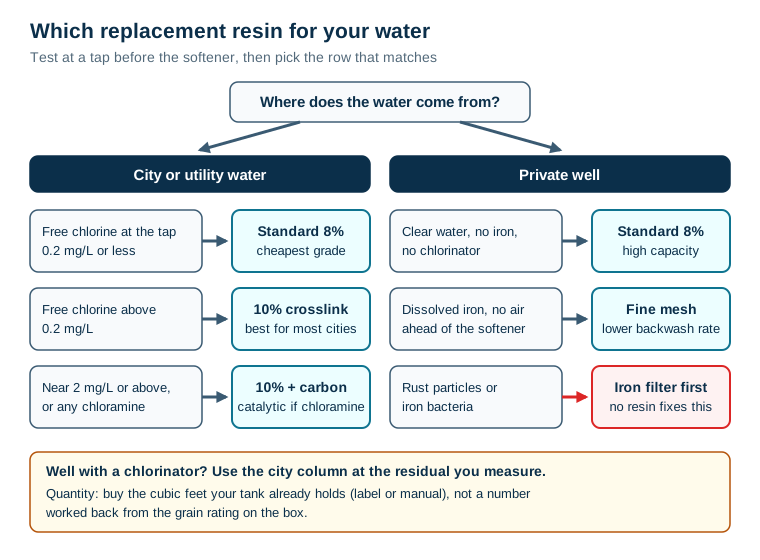
Run two tests before you order. On city water, test free and total chlorine at a tap ahead of the softener, and use the highest reading you see, not the utility's average. If total runs well above free, the residual is mostly chloramine. On a well, get a lab test for iron, manganese and pH, and look for orange slime in the toilet tank, which points to iron bacteria.
How Much Resin Your Tank Needs
Resin is sold by the cubic foot, and the tank holds a set volume of it. The grain rating on the old softener's box is a marketing figure worked back from that volume at a heavy salt dose, so do not buy from it. Read the volume from the tank label or manual. If neither survives, measure the tank's diameter and height and use the common pairings below.
| Tank (diameter x height, inches) | Resin it usually holds | Usually sold as | What to buy |
|---|---|---|---|
| 8 x 44 | 0.75 cu ft | 24,000 grain | One 1 cu ft bag, part used |
| 9 x 48 | 1.0 cu ft | 32,000 grain | One 1 cu ft bag |
| 10 x 44 | 1.0 cu ft | 32,000 grain | One 1 cu ft bag |
| 10 x 54 | 1.5 cu ft | 48,000 grain | A 1.5 cu ft kit, or two 1 cu ft bags |
| 12 x 48 | 2.0 cu ft | 64,000 grain | Two 1 cu ft bags, or a 2 cu ft pack |
| 13 x 54 | 2.5 cu ft | 80,000 grain | A 2.5 cu ft kit, or three 1 cu ft bags |
Common pairings, not a standard. Pentair's whole-house softener spec sheet, for example, lists 10x44, 10x54 and 12x48 resin tanks. Check your own unit's figure before you order.
Leave the headspace empty. A filled tank has resin to roughly two-thirds of its height, with the top third left as freeboard. During backwash the bed lifts into that space. Overfilling packs the bed against the top screen, and backwash can then carry beads to the drain.
The 1.5 cubic foot trap. The single most common softener size takes 1.5 cubic feet, and most branded resin comes in 1 cubic foot bags. Two bags means paying for half a cubic foot you will not use. That is why a 1.5 cubic foot kit can beat a cheaper-per-bag resin on the total bill.
Gravel underbedding. Some tanks have a layer of gravel under the resin. If yours did, clean gravel can usually go back in. AFWFilters' kit page says gravel is optional for standard softeners, but follow the valve and tank maker's instruction if it differs.
The Best Replacement Water Softener Resin, Pick by Pick
| Pick | Grade | Pack | Amazon |
|---|---|---|---|
| ResinTech CG10 | 10% crosslink | 1 cu ft | Check price on Amazon |
| AFWFilters 10% refill kit | 10% crosslink | 1.5 cu ft + funnel | Check price on Amazon |
| Aldex C-800x10 | 10% crosslink | 1 cu ft | Check price on Amazon |
| LiquaGen softening resin + funnel | Crosslink not stated | 2 cu ft + funnel | Check price on Amazon |
ResinTech CG10: best single bag for city water
- What it is: ResinTech's premium 10 percent crosslinked strong acid cation resin in sodium form, 1 cubic foot, 53 to 55 lb.
- Seller data: 2.20 meq/mL total capacity, 93 percent minimum sphericity, rated to 280°F, and stated to conform to the FDA's food additive rule for potable water (21 CFR 173.25), per the WECO product page.
CG10 is the pick for buyers who want a named resin maker and a published spec on the bag. It suits 1.0 and 2.0 cubic foot tanks, which take whole bags. For a 1.5 cubic foot tank the second bag is half wasted, which raises the cost of the job.
Wrong for: a 1.5 cubic foot tank on a tight budget, where the kit below avoids paying for a half-used second bag, and chlorine-free wells, where you are paying for protection you will not use.
AFWFilters 10% Crosslink Refill Kit, 1.5 cu ft: best for the common 48,000-grain tank
- What it is: 1.5 cubic feet of 10 percent crosslink resin with a loading funnel. AFWFilters notes the resin may arrive in generic bags, and the listing does not name the resin maker.
- Sizes: the same kit comes in 1, 2, 2.5 and 3 cubic foot versions at AFWFilters.
This is the pick for the most common residential size, a 10x54 tank with 1.5 cubic feet of resin. You buy exactly the volume you need. The funnel matters more than it sounds: it keeps beads out of the riser tube while you pour.
Wrong for: buyers who want a named resin manufacturer on the bag, and anyone who needs a published data sheet for the exact resin they are loading.
Aldex C-800x10: the Canadian-made 10% alternative
- What it is: Aldex's 10 percent crosslinked version of its C-800 gel resin, in 1 cubic foot bags. Aquatell, a Canadian seller, describes it as resistant to iron fouling and chlorine breakdown compared with 8 percent grades.
- Certification: seller pages describe Aldex's C-800 resin as certified to NSF/ANSI 44 and 61 and tested under WQA's Gold Seal programme. We could not match the 10 percent grade to a listing ourselves, so check NSF's certified product search or ask the seller for the certificate before relying on it.
Aldex publishes the clearest salt-dose figures of any resin here. For its C-800 family it quotes about 30,000 grains per cubic foot at 15 lb of salt and about 20,000 at 6 lb. That is a useful reminder when you reprogram the valve after a rebed: the efficient 6 lb setting gives about two-thirds of the headline capacity.
Wrong for: buyers who want the 10 percent grade's certificate confirmed before ordering, and 1.5 cubic foot tanks, where whole bags again leave half a cubic foot over.
LiquaGen 2 cu ft with funnel: for chlorine-free wells
- What it is: two cubic feet of high-capacity cation softening resin plus a loading funnel, per the Amazon listing. The listing does not state a crosslink percentage, so treat it as standard 8 percent resin.
Standard resin is the sensible buy where nothing in the water attacks it: a well with no chlorinator and no iron. Two cubic feet fills a 12x48 tank in one purchase.
Wrong for: city water with a measurable chlorine residual, and any buyer who wants the grade confirmed in writing before paying.
Fine Mesh Resin: Why It Is Not on This List
We found no fine mesh resin pack confirmed on Amazon on the day we checked. Fine mesh is mostly sold inside complete well-water softeners, or from specialist sellers' own stores. AFWFilters, for example, lists fine mesh refill kits in 1, 1.5 and 2 cubic foot sizes.
Fine mesh only helps when the iron is dissolved and stays dissolved until it reaches the bed. It also needs a lower drain line flow control rate than standard resin in the same tank, or the backwash lifts the small beads out to the drain. If your well passes the conditions set out in standard vs fine mesh resin, buy fine mesh from a seller who will also supply the matching flow control.
What a Rebed Takes, Grade by Grade
Here is what you buy for a 1.5 cubic foot tank, the most common size, from the sellers named above.
| Option | What you buy | Left over |
|---|---|---|
| Standard high-capacity kit (AFWFilters) | 1.5 cu ft + funnel | none |
| 10% crosslink kit (AFWFilters) | 1.5 cu ft + funnel | none |
| ResinTech CG10 | two 1 cu ft bags | 0.5 cu ft |
| Fine mesh kit (AFWFilters store) | 1.5 cu ft + funnel | none |
At AFWFilters' store the step from the standard kit to the 10 percent kit is small on a 1.5 cubic foot rebed. On any city supply with a measurable residual, that premium is the easiest money in the job. The bigger cost decision is whether to rebed at all, or replace the softener. The site's guide to water softener resin life and replacement works the crossover: once a rebed costs more than about two-thirds of a comparable new unit and the valve is past eight years old, replace the unit.
Before You Order
- Confirm the resin is the problem. A softener that stops softening because it no longer draws brine has a valve or brine-side fault, not worn resin. Work through why a water softener is not using salt first. New resin will not fix a blocked injector.
- Check the bed. Fine amber beads at the taps point to a broken riser or distributor, which needs replacing along with the resin. Mushy, swollen beads that squash between your fingers are chlorine-oxidised. Resin coated brown or orange is iron-fouled.
- Plan the protection. If chlorine wore out the old bed, the new one meets the same water. Moving to 10 percent helps. Above about 2 mg/L, or on chloramine, put carbon ahead of the softener, and on chloramine make it catalytic carbon.
- Reprogram after the rebed. Set the capacity for the resin volume and the salt dose you actually use, not the old box rating.
Who Should Buy None of These
- Owners whose softener is not drawing brine. The resin is probably fine. Fix the brine side.
- Valves past about twelve years, or with a fault history. New resin under a head that may fail next is poor value. Price a valve replacement or a new unit first.
- Wells with rust particles, manganese or iron bacteria. No resin grade survives fouling. An iron filter goes in first.
- Chloramine supplies with no plan for carbon. Even 10 percent resin will be oxidised again. Budget for catalytic carbon ahead of the softener, or accept a shorter bed life.
- Cabinet softeners with sealed resin cartridges. Some all-in-one units are not designed to be rebedded. Check the manual before buying loose resin.
For most city homes, the answer is a 10 percent crosslink resin bought in exactly the volume the tank holds. For a 1.5 cubic foot tank that means a kit, not two bags. For a clean well, standard resin is enough. And whatever wore out the last bed is still in the water, so deal with it before you pour in new resin.
Frequently Asked Questions
What is the best replacement resin for a water softener?
On chlorinated city water, a 10 percent crosslink resin such as ResinTech CG10 or AFWFilters' 10 percent refill kit is the best choice for most homes, because it resists chlorine longer for a small premium. On a clean, chlorine-free well, standard 8 percent resin does the same job for less. Wells with dissolved iron suit fine mesh resin, and supplies with chloramine need carbon ahead of whatever resin you choose.
How much resin do I need to rebed my water softener?
Match the volume the tank already holds. Common pairings are 1.0 cubic foot in a 9x48 or 10x44 tank, 1.5 cubic feet in a 10x54 and 2.0 cubic feet in a 12x48. The tank label or manual gives the figure. Leave the headspace above the bed empty, because the resin needs room to lift during backwash.
Is 10 percent crosslink resin worth the extra cost?
On city water with a measurable chlorine residual, usually yes. The 10 percent grade usually costs only a little more per cubic foot than standard high-capacity resin, and the site's cost model shows it paying back at residuals above about 0.2 mg/L. On a chlorine-free well it adds little, because something other than oxidation usually ends the bed's life.
Can I put fine mesh resin in my existing softener?
Often, but check the drain line flow control and the distributor basket first. Fine beads need a lower backwash rate than standard resin, and the basket slots must be narrow enough to hold them. We found no fine mesh resin pack confirmed on Amazon, so most buyers get it inside a complete well softener or from a specialist seller's own store.
How long does replacement softener resin last?
On clean water with no chlorine, ten to fifteen years is a fair planning figure. On city water with about 1 mg/L of free chlorine and no carbon filter, expect roughly five to eight years from standard resin, and longer from 10 percent crosslink. Iron and chloramine shorten both, which is why the grade should follow your water test.
