
Culligan vs Whirlpool Water Softener: Three Homes, Three Answers

The Culligan vs Whirlpool water softener decision is really a decision about who looks after the softener. Both are certified to NSF/ANSI 44 and soften water equally well. A Culligan costs several times more because a local dealer tests your water, installs the system, adds iron or carbon treatment if needed and comes back when something fails. A Whirlpool is a self-install cabinet unit, made under licence by Water Channel Partners, with parts mailed to your door. On our illustrative model, a Whirlpool 48K costs about $98 to $138 a year of expected life, and a dealer-installed Culligan about $217 to $383 a year. On simple city water the cheaper unit is enough. On an iron-heavy well, or for an owner who will never touch it, the dealer earns the premium.
Disclosure: Hard Water Solved may earn a commission if you buy through links on this page, at no extra cost to you. It does not change which products we include or how we rank them. Read our disclaimer.
Culligan vs Whirlpool at a Glance
Method. Culligan figures come from its Aquasential Smart High Efficiency product page and its high efficiency softener owner's guide (document 01021076, revision H). Whirlpool figures come from its product pages, the current WHES30 and WHES33 owner's manual (revision H, January 2025) and its softener extended-warranty page. The cost model uses stated assumptions, marked illustrative. Nothing was physically tested. Prices are not listed here because they change often. Use the buttons to see the current price on Amazon.
| Culligan Aquasential Smart HE | Whirlpool cabinet softeners | |
|---|---|---|
| Who makes it | Culligan International; sold by independently operated dealers | Water Channel Partners, under licence from Whirlpool |
| Where you buy it | Local Culligan dealer only | Farm, home and hardware stores; Amazon listings unavailable |
| Installation | By the dealer | DIY kit included, or your plumber |
| Layout | Separate tank and brine tank; 9, 10, 12 and 14 inch tanks; twin-tank option | Single-tank cabinet, resin tank inside the salt cabinet |
| Certification | WQA and IAPMO R&T, NSF/ANSI 44 and 372, CSA B483.1 | NSF/ANSI 44, listed under Water Channel Partners |
| Rated flow | 10.8 to 12.8 gpm at a 15 psi drop | 7 to 8.2 gpm on most models; 12 gpm on the WHES48 |
| Iron limit | 5 ppm, with at least 8 gpg of hardness per 1 ppm of iron | 3 to 12 ppm clear-water iron, by model |
| Warranty headline | Lifetime tank and resin; 10 years on board and valve body | 10 years on tanks; 3 on the control board; 1 or 2 years on the rest, extendable |
| Price | Set by each dealer; not published | Store shelf price; a fraction of a typical dealer quote |
What the Culligan Premium Actually Buys
Strip out the logo and the premium pays for four things.
- Someone who reads your water test. A dealer who sees iron, low pH or sulfur on the report will design a treatment train, not just sell a softener. With a Whirlpool, that judgement is yours.
- Installation done to code. Loop, drain, air gap and outlet are the dealer's problem. Those site costs are what make one installation $1,000 more than another, as the breakdown in water softener installation cost shows.
- Longer cover on the expensive parts. Lifetime on the Quadra-Hull tank and Cullex resin, 10 years on the circuit board, control valve body, salt storage and brine valve, and 5 years on meters and probes.
- A service relationship. When the board fails in year seven, you phone the dealer.
What it does not buy is better softening per pound of salt. Culligan's guide rates the 10-inch model at 26,781 grains on 6 lb of salt, about 4,460 grains per pound. Whirlpool rates the WHES48 at 5,090 grains per pound at its minimum dose. Both are efficient. Salt and water bills come out similar, so the cost model below leaves them out.
What the Whirlpool Saving Gives Up
A Whirlpool cabinet unit is a capable, compact softener. The trade-offs are specific:
- Short full cover unless you keep buying cleanser. Standard models (WHES30, 33, 40, 44) get 1 year of full parts and labor, extendable to 5 years. PRO models (WHES48, WHESFC, WHEC46) get 2 years, extendable to 10. The extension needs registration and one bottle of Whirlpool WHE-WSC cleanser every four months, with proof of purchase.
- Parts by post, fitted by you. After the first year, the warrantor ships parts and labor is yours. The manual says aftermarket or non-manufacturer parts "will void all warranties".
- Cabinet flow. Most models are certified at 7 to 8.2 gpm. Two showers and a washing machine at once can exceed that.
- No one to call for the water chemistry. If the softener is the wrong treatment for your water, nobody tells you.
Culligan vs Whirlpool Water Softener: Cost per Year of Expected Life
Neither maker publishes a service life, so the model below assumes one for each and says so. The point is to compare like with like: a cheaper unit that lasts fewer years against a dearer one that lasts more.
Assumptions (illustrative):
- Whirlpool 48K: the farm-store shelf price at the time of writing, plus either $100 of DIY supplies or $500 for a plumber, inside the $150 to $1,000 labor range Fixr gives. $200 set aside for a rotor and seal kit or a board over the unit's life. Assumed life 10 years, consistent with its 10-year tank warranty and 3-year board cover.
- Culligan: three installed quotes, $2,500, $3,500 and $5,000, inside the owner-reported range. Five paid dealer visits at an illustrative $150 each. Assumed life 15 years, reflecting the lifetime tank and resin and 10-year valve body cover.
| Upfront | Repairs and visits | Years | Per year | |
|---|---|---|---|---|
| Whirlpool, installed yourself | $780 | $200 | 10 | about $98 |
| Whirlpool, plumber installed | $1,180 | $200 | 10 | about $138 |
| Culligan at $2,500 | $2,500 | $750 | 15 | about $217 |
| Culligan at $3,500 | $3,500 | $750 | 15 | about $283 |
| Culligan at $5,000 | $5,000 | $750 | 15 | about $383 |
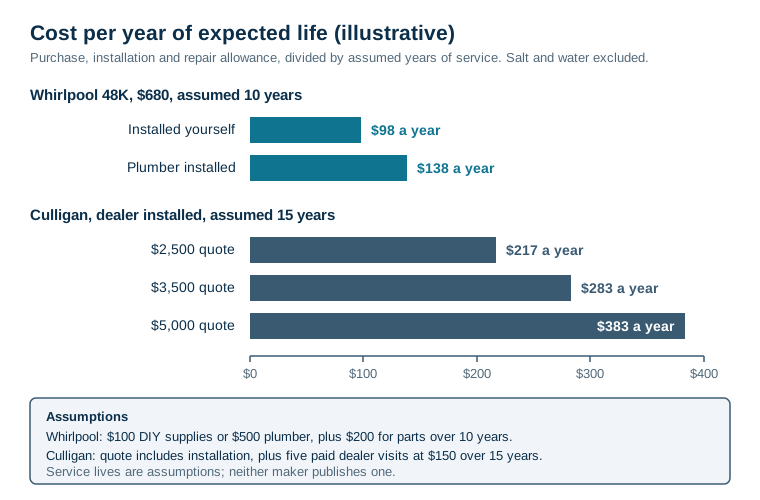
Read the gap as the annual price of the dealer. At a $2,500 quote you pay about $80 to $120 a year more for Culligan's service and longer cover. At $5,000 it is $245 to $285 a year. If you want the Whirlpool's 10-year extended cover, add three bottles of cleanser a year; we could not confirm the cleanser's current price, so it is left out.
The other way to pay for a Culligan is rent. One owner reported quotes of $55 to $120 a month. That is $660 to $1,440 a year, more than a whole Whirlpool. Renting vs buying a water softener gives the break-even for your own quote; for most owners who stay more than a few years, buying wins.
Household 1: Simple City Water. Whirlpool Wins
The house: three bedrooms, two bathrooms, four people, municipal water at 12 gpg with no iron. The owner is comfortable with a pipe cutter, or has a plumber they use.
This is the Whirlpool's home ground. A WHES40 or WHES48 sized to the family softens city water as well as any dealer unit, and there is no water chemistry for a dealer to manage. The softener needs salt, a cleanser bottle every four months if you want the extended cover, and a rotor and seal kit some years in. All of that is a do-it-yourself job.
The numbers: about $98 to $138 a year against $217 or more for Culligan. Over 15 years that gap is roughly $1,200 to $4,300, depending on the Culligan quote.
One check before buying: ask your utility whether it disinfects with chloramine. Culligan's resin warranty excludes damage from chlorine and chloramine, and resin wears faster on any brand on chloraminated water. If yours does, budget for a carbon prefilter, or for resin replacement in the second half of the unit's life.
Household 2: A Well With Iron. Culligan Earns Its Price
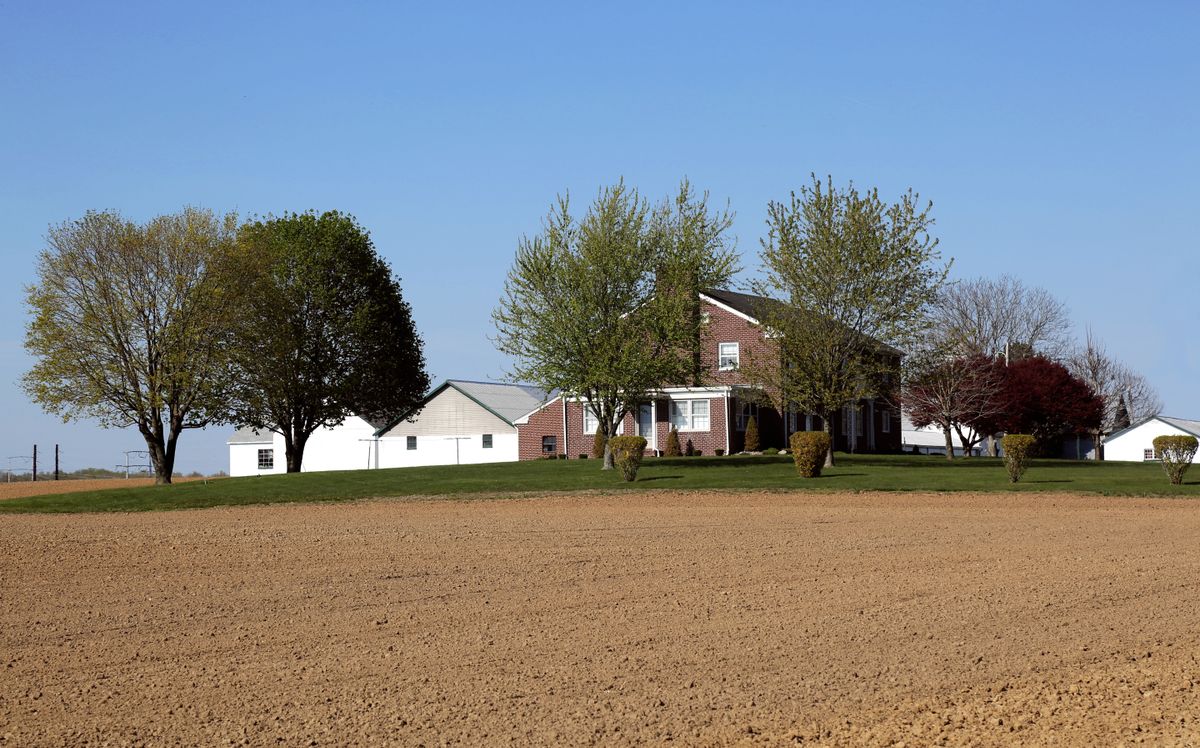
The house: a rural property on a private well. The water is 20 gpg hard with 4 ppm of iron and a faint sulfur smell. The owners do not want to maintain anything themselves.
On paper the Whirlpool looks fine: the WHES48 is rated for 12 ppm of clear-water iron. In practice, running a cabinet softener near its iron limit fouls the resin and rotor seals faster. It does nothing for the sulfur, and nothing for any iron that has already oxidised.
Culligan's own spec sheet shows why the dealer matters here. Its HE softener needs at least 8 gpg of hardness per 1 ppm of iron. At 20 gpg and 4 ppm, the ratio is 5 to 1, so the softener alone is outside its rated envelope. A competent dealer will put an iron filter or other pretreatment ahead of it, and then service the whole train. That design work, and the service visits, are worth paying for when the water is complicated and the owner will not touch it.
The numbers: the cost gap still exists, but the fair comparison is no longer Culligan against a lone Whirlpool. It is Culligan's installed train against a Whirlpool plus an iron filter you specify, install and maintain yourself.
Who should still choose Whirlpool here: an owner who will learn the water chemistry, add the right pretreatment and maintain it. Whirlpool's softener cleanser genuinely helps on iron-fouled resin.
Household 3: A Large, Busy House. Closer Than It Looks
The house: five bathrooms, six people, city water at 15 gpg. Mornings mean two showers and the washing machine running together.
Flow decides this one. Most Whirlpool models are certified at 7 to 8.2 gpm, which a household like this can exceed. Only the WHES48 at 12 gpm and the Wi-Fi WHEC46 at 12.5 gpm keep up. Culligan's 12 and 14-inch HE models are rated at 12.6 and 12.8 gpm at a 15 psi drop, and its Smart HE Twin gives soft water during regeneration.
If the WHES48 fits the space and the hardness, it handles the flow at a fraction of the price. If you need more capacity than one cabinet holds, or want soft water around the clock with twin tanks, the dealer system is the simpler route. Fit, flow and a written quote decide it, not the brand.
The Warranties, Compared Where It Matters
| Part | Culligan Aquasential Smart HE | Whirlpool standard / PRO |
|---|---|---|
| Whole unit | 1 year | 1 year / 2 years full parts and labor |
| Extension | None needed | To 5 / 10 years with registration and Whirlpool cleanser every four months |
| Electronics | 10 years on the circuit board | 3 years on the control board |
| Valve | 10 years on the valve body, excluding internal parts | Within the full-cover period |
| Tanks | Lifetime tank and resin | 10 years |
| Labor after year one | Not included; you pay freight and dealer charges | Not included; parts shipped to you |
| Main exclusion | Chlorine and chloramine damage to resin; non-Culligan-spec parts | Aftermarket or non-manufacturer parts void all warranties |
| Who is covered | Original end user | Bought from an authorized dealer |
Culligan's numbers are longer, but both warranties leave labor to you, and both void cover if you fit third-party parts. The guide to water softener installation cost is worth reading alongside this table: on both brands, the labor you pay for after year one is what most repairs really cost.
Where to Buy (and the Amazon Situation)
Culligan softeners are sold only through Culligan dealers and are not on Amazon. Whirlpool's Amazon listings for the WHES18, WHES30, WHES33 and WHES48 showed as currently unavailable on 1 October 2026, and the WHES40E listing had been removed. A check on 2 October could not confirm an active offer either. Farm and home stores, such as Blain's Farm and Fleet, still list them.
If you want to order a cabinet softener on Amazon, these two were active listings on 1 October 2026:
| Amazon alternative | Why it compares | Amazon |
|---|---|---|
| EcoPure EPH130 | Made by Water Channel Partners, Whirlpool's licensee; cabinet softener with filtration, 1-year parts and labor warranty on the listing | Check price on Amazon |
| GE Smart Water Softener GXSH35W | 35,000-grain cabinet unit, 1 cu ft resin, Wi-Fi alerts, certified to NSF/ANSI 44 by IAPMO R&T per its manual; GE's 1-year full warranty | Check price on Amazon |
Who Should Buy Neither
- Homes that do not need softening. Water under about 3 to 4 gpg, or a scale-only goal, may not justify a salt softener at all.
- Wells with sulfur, bacteria or high iron and no plan for pretreatment. Neither softener fixes those, and both warranties exclude the damage they cause.
- Renters and short stays. A Whirlpool is cheap enough to leave behind, but a Culligan purchase rarely pays back in two years.
- Owners who want neither a dealer nor a cabinet. A two-tank online softener on a standard valve is a third option, with parts any supplier stocks.
For a simple city home, buy the Whirlpool and spend the difference elsewhere. For a complicated well and an owner who wants it handled, get two written Culligan quotes and compare the labor and visit charges as closely as the price.
Frequently Asked Questions
Is Culligan better than Whirlpool for a water softener?
Culligan is not better at softening; both are certified to NSF/ANSI 44. What Culligan adds is a local dealer who tests the water, sizes and installs the system, adds iron or carbon treatment where needed and handles service. A Whirlpool is a self-install cabinet unit with parts mailed to you. On simple city water a Whirlpool is usually enough; on complicated well water, or for an owner who will never touch the unit, the dealer is what you pay for.
How much more does a Culligan softener cost than a Whirlpool?
Culligan publishes no prices. Owner reports range from under $1,000 to more than $5,000 installed, with one set of quotes at $2,500 to $5,500. A Whirlpool 48K is a self-install cabinet unit sold at farm and home stores for a fraction of that. On our illustrative model, that works out to roughly $98 to $138 a year for the Whirlpool over 10 years against $217 to $383 a year for a Culligan over 15.
Who makes Whirlpool water softeners?
Water Channel Partners of Eagan, Minnesota, under licence from Whirlpool. Whirlpool's water site and the current WHES30 and WHES33 owner's manual name it as manufacturer and warrantor, so warranty claims go to Water Channel Partners, not to Whirlpool appliance service.
Can a Whirlpool water softener handle well water with iron?
Within its rating. Whirlpool rates its models for clear-water iron from 3 ppm on the WHES18 and WHESFC up to 12 ppm on the WHES44 and WHES48. Running near the limit fouls the resin and valve seals faster, and the softener does nothing for iron bacteria, sulfur smell or sediment. Above a few ppm, an iron filter ahead of any softener is the safer plan.
Is a Whirlpool water softener available on Amazon?
Not reliably. On 1 October 2026 the WHES18, WHES30, WHES33 and WHES48 Amazon listings showed as currently unavailable and the WHES40E listing no longer existed, and a 2 October check could not confirm an active offer. Farm and home stores still list Whirlpool units. Culligan softeners have never been sold on Amazon.
Should I rent a Culligan instead of buying a Whirlpool?
Only for a short stay. Reported Culligan rents run roughly $55 to $120 a month in one market, which is $660 to $1,440 a year, more than the full price of a Whirlpool cabinet unit. Renting makes sense if you will move within a couple of years and want every service visit included.
