
What Causes Salt Mushing in a Brine Tank?
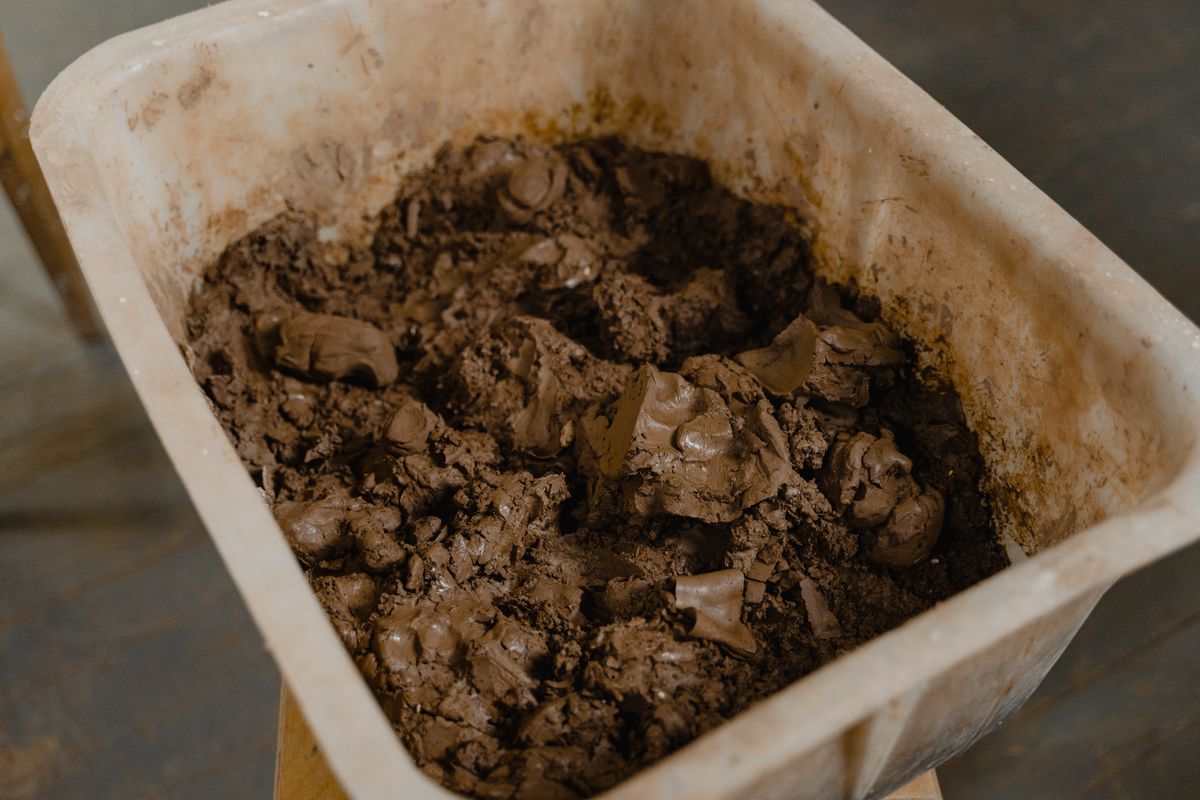
Salt mushing in a brine tank is a layer of recrystallised salt and insoluble residue that settles into a dense sludge on the tank floor, blocking the openings the softener draws brine through. The salt above it looks completely normal, which is why the fault is so often missed.
It is not a salt bridge, it does not respond to the fix for a salt bridge, and it comes from the salt you bought rather than from anything the softener did.
Salt Mushing in a Brine Tank Versus a Salt Bridge
These two faults get used interchangeably in forum answers and product FAQs, and the confusion costs people a wasted afternoon. They sit in different places, feel different to the touch, and need opposite responses.
| Salt bridge | Salt mushing | |
|---|---|---|
| Where it sits | Partway up the tank, spanning wall to wall | On the tank floor, under normal salt |
| Texture | Hard, brittle crust, breaks with a crack | Soft, dense, muddy; compresses rather than cracks |
| What is underneath | An air void, then water | Nothing — it is the bottom |
| Probe result | Resistance, crack, sudden drop | Handle passes through salt, then stops dead in muck |
| Salt level behaviour | Frozen at one height for weeks | Falls, but more slowly than it should |
| Root cause | Humidity plus overfilling | Insolubles in low-grade salt, plus recrystallisation |
| Fix | Break it in place, ten minutes | Empty and wash the tank, about an hour |
| Comes back if | You keep filling to the brim | You keep buying the same salt |
The one symptom they share is the important one. Neither produces brine, so neither recharges the resin, so the house goes hard in both cases while the tank sits there looking well stocked. If you have already probed for a bridge and found none, do not conclude the salt side is healthy — you have ruled out one of two faults that live in the same tank. The bridge case is covered separately in how to identify and break a salt bridge.
Where the two overlap. A tank that has bridged repeatedly usually has mushing as well, because the same humidity cycling that welds the crust also drives the recrystallisation at the bottom. Finding one is a reason to check for the other in the same visit.
How Salt Ends Up as Sludge on the Floor

Two separate processes contribute, and the severity depends on how much each one has to work with.
First, the insolubles never leave. Softener salt is not pure sodium chloride. Every grade carries some fraction of material that simply does not dissolve — clay, gypsum, silt, sand — and that fraction ranges from a fraction of a percent to several percent depending on grade. When the salt around it dissolves, the insolubles drop to the floor and stay there. Nothing removes them. A tank that has run for four years on rock salt has four years of accumulated grit in the bottom.
Second, salt reprecipitates as fines. Brine near saturation is easily disturbed. A drop in temperature, a fresh refill of dry salt, or the turbulence of a refill cycle can push dissolved salt back out of solution — but it comes back as very fine crystals rather than as the pellets it went in as. Those fines settle, pack tightly, and cement the insoluble grit into a single layer.
The result is a floor, not a pile. It is dense, holds water, has the consistency of wet sand or thin mortar, and it covers exactly the part of the tank the softener needs access to.
What that blocks:
| Component | Effect when buried in sludge |
|---|---|
| Brine well base openings | Brine cannot enter the well, so the injector draws nothing |
| Grid plate (where fitted) | The plenum underneath fills with sludge instead of brine |
| Safety float travel | Float sticks, shutting off refill or failing to shut it off |
| Brine line pickup | Draws sludge into the line, then into the injector |
That last one is the expensive path. Fine sludge pulled into the brine line reaches the injector and the air check valve, both of which have very small passages. A softener that starts mushing and is left alone often ends up needing the injector cleaned as well.
Conditions that accelerate all of it: low-purity salt above everything else, then a tank that is never allowed to empty, high humidity, warm ambient temperature, very fine salt grades, and long gaps between regenerations that leave the brine sitting undisturbed.
Confirming It Before You Empty Anything
Emptying a brine tank is an hour of work, so it is worth being sure first.
The probe, read differently. Push a broom handle down through the salt. For mushing you are not listening for a crack — you are feeling for the stop. Loose salt, loose salt, loose salt, then a soft but immovable resistance that does not yield when you lean on it, and the handle comes out coated in grey-brown paste rather than clean wet salt. That coating is the diagnosis.
How thick. Mark the handle where it stopped and compare against the tank's internal depth. Half an inch of residue is normal accumulation in any tank. Three inches is a fault. Six inches means the brine well base has been submerged in it for a long time.
The jar check, which tells you why. Take a cup of salt from the bag you are currently using, drop it into a jar of warm water, shake, and let it settle for twenty minutes. Evaporated pellets leave the water nearly clear with a trace of sediment. Rock salt leaves a visible band of grey-brown silt and cloudy water that does not clear. Whatever settles in that jar is the same material accumulating on your tank floor, at the rate of one bag at a time.
Supporting evidence from the water side:
- Hardness has returned gradually, and salt use has dropped without the level fully stalling
- The brine tank water level looks higher than usual after a cycle, because refill happened but draw did not
- You have been using rock salt, or salt from a farm or hardware supplier rather than a water-treatment grade
- The tank has never been emptied — most tanks in this state have run five years or more on continuous top-ups
Rule out the cheap explanations first. If the injector is blocked, the symptom is the same and the tank floor may be innocent. If the unit regenerates but hardness returns after a few days rather than immediately, the pattern points elsewhere and is covered in why hardness returns before the next regeneration.
The Cleanout
Mushing cannot be broken up in place. The material has to leave the tank.
Before you start: a wet vacuum if you have one, two buckets, a long-handled brush, dish soap, rubber gloves, and somewhere to put fifty pounds of wet salt. Do this when the tank is naturally low — right before a refill is due, not right after one.
- Bypass the softener. Handle the valve gently; bypass valves that have not moved in years can seize and leak, which turns one job into two.
- Scoop the usable salt into a clean bucket. Anything above the sludge line is fine to put back. Keep it dry and covered.
- Remove the water. A wet vacuum is fastest. Otherwise bail with a jug — expect two to five gallons. Do not tip the tank; full tanks are heavy and the connections at the base do not tolerate it.
- Lift out the brine well. It is the vertical tube, and in many units it simply lifts free once the salt is clear. Take the float assembly out first if it is separate. Note the orientation before anything moves.
- Lift out the grid plate if your tank has one. Some do not.
- Get the sludge out. Scoop what you can, then scrape the floor. This is the actual job and it is unpleasant; a stiff plastic scraper works better than a brush at this stage.
- Wash the tank. A few tablespoons of dish soap in one or two gallons of warm water, scrubbed round with the long-handled brush, gets the film off the walls.
- Rinse thoroughly and remove the rinse water. Soap residue left in the tank foams during refill and can confuse the float.
- Clean the brine well and grid plate separately. The small holes at the base of the well are the ones that matter — hold the well up to the light and confirm you can see through them. Rinse crystallised salt off the float and check it slides freely on its rod.
- Reassemble in reverse order, seating the grid plate flat and the brine well fully down.
- Add about five gallons of clean water, then salt — the returned salt plus a fresh bag if needed, staying well short of full.
- Return to service and run a manual regeneration. Watch that brine actually draws; the water level should fall noticeably during the draw stage.
If brine still will not draw after a clean tank, the sludge has already reached the injector. That is the next component to open, and it is a small, cheap part that is frequently fouled.
One thing worth doing while the tank is empty: look at the residue you scraped out. Grey and gritty is ordinary salt insolubles. Orange or rust-coloured means iron is getting into the tank from the resin side, which is a different diagnosis entirely and is covered in why softener salt looks brown or dirty.
The Salt Change That Actually Prevents It
You can clean the tank every year, or you can stop supplying the raw material. The second is less work.
| Grade | Typical insolubles | Mushing risk | Practical verdict |
|---|---|---|---|
| Evaporated pellets / cubes | Very low | Lowest | The default choice for any softener |
| Solar crystals | Low | Low to moderate | Fine for most households |
| Rock salt | High | Highest | The grade that creates this fault |
| Block salt | Varies by product | Low, where the unit is designed for it | Only if the manufacturer specifies it |
| Potassium chloride | Low | Low | Chosen for sodium reasons, not mushing reasons |
Beyond grade, three habits matter:
- Let the tank run down before refilling. Down to a quarter, every time if you can. Perpetual topping up means the bottom layer of a tank has been sitting in brine for years, and it is that layer that turns to sludge.
- Do not overfill. Depth compacts the bottom and drives bridging as well. The correct working band is set out in how much salt should be in a brine tank.
- Clean the tank on a schedule, not on symptoms. Once a year on evaporated salt; twice if you are stuck with rock salt for supply reasons. The full procedure is in how to clean a water softener brine tank.
A note on what you are putting down the drain. Every regeneration discharges chloride, and the insolubles in low-grade salt add solids on top of that. Chloride carries a secondary standard of 250 mg/L in the EPA's guidance on nuisance chemicals in drinking water, and a softener regenerating more often than it needs to — which is what a starved or fouled brine tank tends to provoke — discharges more of it. Penn State Extension's overview of water softening covers the regeneration and discharge side in more detail.
On buying: grade claims on bags are inconsistent, and "water softener salt" on the label is not a purity specification. Products carrying third-party certification are listed in the WQA product database, which is a more reliable check than the marketing on the sack.
In Order
- Probe the tank and note whether you get a crack-and-drop, or a soft dead stop with paste on the handle.
- Measure the residue depth. Under an inch is normal, over three is the fault.
- Run the jar test on your current salt to see what it is depositing.
- Plan an hour, and do it when the tank is naturally low.
- Bypass, scoop, vacuum, disassemble in that order.
- Scrape the floor, wash, rinse — and check the brine well holes against the light.
- Look at the colour of what came out. Grey is salt grade. Orange is iron, and a different investigation.
- Reassemble, add five gallons of water, then salt to no more than two thirds.
- Regenerate manually and watch the water level fall during brine draw. That is your proof.
- Switch salt grade and change the refill habit, or you are booking the same hour again next year.
The reason mushing persists in so many homes is that it is invisible from the top of the tank and it does not respond to any of the things that fix a bridge. Once you know to feel for a dead stop rather than a crack, the two faults stop being interchangeable — and only one of them needs a bucket.
Frequently Asked Questions
What is salt mushing in a water softener?
Mushing is a layer of recrystallised salt and insoluble residue that settles into a dense sludge on the brine tank floor. It forms when dissolved salt reprecipitates as fine particles rather than staying in solution, and those particles pack together with the clay, gypsum and grit that lower-grade salts carry. The layer blocks the openings at the base of the brine well, so the softener cannot draw brine even though the tank is full of salt and water.
What is the difference between salt mushing and a salt bridge?
Position and texture. A bridge is a hard crust partway up the tank with an air void beneath it, and a broom handle breaks through it. Mushing is a soft, dense sludge sitting on the tank floor with normal loose salt above it, and a broom handle passes straight through the salt and simply stops in the muck. They share a symptom — no brine, so no softening — but a bridge is broken in place while mushing has to be scooped, vacuumed and rinsed out.
What causes salt mushing in a brine tank?
Low-purity salt is the main cause. Rock salt and cheap pellets carry insoluble material — clay, gypsum, silt — that never dissolves and accumulates on the floor over months. Repeated partial dissolving and recrystallising, driven by humidity and by topping up a tank that never fully empties, then binds that residue into a solid layer. Very fine salt grades, high water temperatures and long intervals between regenerations all make it worse.
How do I get rid of salt mushing?
The tank has to be emptied. Bypass the softener, scoop out the usable salt, remove the remaining water with a wet vacuum or a jug, lift out the brine well and grid plate, and scrape the sludge layer off the floor. Wash the tank with a few tablespoons of dish soap in warm water, scrub with a long-handled brush, rinse thoroughly, and check that the holes at the base of the brine well are clear before refilling. Budget about an hour.
Can salt mushing damage a water softener?
Not the resin bed directly, but it damages performance and can foul components. The immediate effect is failed brine draw, so the resin never recharges and the house runs hard. Sludge drawn up into the brine line can block the injector and the air check, which turns a cleanout into a parts job. Left long enough, an exhausted bed sitting in hard water also begins to accumulate iron and hardness deposits of its own.
What salt stops mushing from coming back?
Evaporated salt pellets or cubes, which are refined to very high purity and leave almost no insoluble residue. Solar crystals are a reasonable second choice. Rock salt is the grade that causes the problem and switching away from it removes the raw material for the sludge. Pair the change with letting the tank run nearly empty before each refill, rather than perpetually topping up a bottom layer that has been sitting there for years.