
Why Hardness Returns Before the Next Regeneration
If hard water returns before regeneration, the resin bed ran out of exchange capacity before the control valve expected it to. There are only three reasons that happens — the capacity figure is wrong, the unit is too small, or the resin is not delivering what it should — and the day of the cycle the hardness appears on tells you which one it is. Log the timing before you touch anything.
This is the check most people skip, and it is why so many of these cases end in an unnecessary resin change. A softener that goes hard on the same evening of every cycle has a completely different fault from one that goes hard at random, and both look identical from the kitchen tap.
Log It Before You Diagnose It

You need two pieces of information, over two full regeneration cycles:
- The date and time of each regeneration. Metered valves display days since the last cycle or remaining capacity; note it daily for a week and you will see the interval.
- The day the water goes hard, counted forward from the regeneration. Test rather than guess — soap behaviour and skin feel are lagging indicators and they will move your answer by a day.
Test at the same tap each time, on cold water, with a drop kit rather than strips. Strips resolve too coarsely to see hardness climbing from 1 gpg to 3 gpg to 7 gpg across a cycle, and that climb is the whole signal. The method and its pitfalls are in how to test water hardness at home and common water hardness sampling mistakes.
Two cycles of data is enough. Then read the pattern.
Hard Water Returns Before Regeneration: The Four Timing Signatures
| What the log shows | What it means | Most likely cause | Costs to fix |
|---|---|---|---|
| Hard on the same day of every cycle, gradually climbing | The bed is exhausting predictably, just sooner than the valve thinks | Hardness setting too low, or the unit is undersized | Free, then possibly equipment |
| Hard at random — fine for six days once, two days the next | The bed is not being used evenly | Channelling, fouling, or low flow through the bed | Cheap to inspect |
| Was fine, then went hard abruptly and stayed hard | A cycle did not happen, or happened without salt | Missed regeneration, salt bridge, power cut clock reset | Free |
| Hard only in the last evening before regeneration | The bed is right, the safety margin is not | Reserve set too low or to zero | Free |
Everything below works through those four in order of how often they turn out to be the answer.
Signature 1: Consistent Early Breakthrough — Capacity or Setting
This is the common one. The water is soft for the first three days of a four-day cycle and hard for the fourth, every single time, and the hardness reading climbs steadily rather than jumping.
A predictable pattern means the resin is behaving predictably. The arithmetic is wrong, not the hardware.
Cause A: the hardness setting is too low. The valve calculates how many gallons it can treat from the hardness number you gave it. Give it 10 gpg when the water is 18 gpg and it will let you draw nearly twice the volume it should before regenerating. This is overwhelmingly a commissioning failure — a default figure left in place at install.
Cause B: iron was never compensated for. Iron and manganese occupy exchange sites without appearing in a hardness result at all. The convention is to add roughly 4 gpg of compensated hardness per 1 ppm of dissolved iron, and more for manganese. A well at 15 gpg with 2 ppm iron needs a setting around 23 gpg, not 15. Enter 15 and you will run out early forever. The measurement side of this is covered in testing iron and manganese before sizing a softener, and Penn State Extension's guidance on iron and manganese in private water systems sets out the concentration limits beyond which a softener stops being the right tool at all.
Cause C: the household outgrew the unit. Two people became five. A rental suite was added. The setting is right and the resin is fine; there is simply not enough of it.
The Capacity Versus Actual Use Worksheet
Do this before you spend anything. It takes ten minutes and it settles "wrong setting" versus "too small" definitively.
Step 1 — grains removed per day
people × gallons per person per day × compensated hardness (gpg) = grains/day
Use 75 gallons per person per day as a planning figure unless you have meter data, in which case use the meter. Compensated hardness is raw hardness plus the iron and manganese allowance.
Step 2 — usable capacity, not rated capacity
This is the step people get wrong. A "32,000 grain" softener does not deliver 32,000 grains in normal service. That headline number assumes a very heavy salt dose — around 15 lb of salt per cubic foot of resin — which is inefficient and rarely how a unit is actually programmed. At an economical salt setting the same bed delivers roughly 20,000 to 24,000 grains.
| Nominal rating | Resin volume | Usable capacity at an efficient salt dose |
|---|---|---|
| 24,000 grain | 0.75 cu ft | ~15,000–18,000 grains |
| 32,000 grain | 1.0 cu ft | ~20,000–24,000 grains |
| 48,000 grain | 1.5 cu ft | ~30,000–36,000 grains |
| 64,000 grain | 2.0 cu ft | ~40,000–48,000 grains |
Use the lower end of the range if your valve is set for salt efficiency. The EPA's WaterSense guidance on cation exchange softeners treats salt efficiency as a headline specification for exactly this reason: high-efficiency programming buys you less capacity per cycle.
Step 3 — divide
usable capacity ÷ grains per day = days between regenerations
Step 4 — compare to your log
- Calculated interval matches the regeneration interval, but hardness appears a day early — the reserve is too small. Go to signature 4.
- Calculated interval is shorter than the programmed interval — the valve is working on a hardness figure lower than reality. Correct the setting.
- Calculated interval is under two days even with the setting correct — the unit is undersized. No programming change fixes that; it just trades early hard water for daily regenerations and a large salt bill.
Worked example. Four people, 18 gpg raw, 1.5 ppm iron on a well. Compensated hardness is 18 + (1.5 × 4) = 24 gpg. Daily load is 4 × 75 × 24 = 7,200 grains. A 32,000-grain unit at an efficient salt dose gives about 22,000 usable grains, so 22,000 ÷ 7,200 ≈ 3 days. If that unit is set to regenerate every 5 days, hardness will appear on day 4 of every cycle — exactly the pattern in the log, and entirely explained by the arithmetic.
Signature 2: Erratic Breakthrough — Channelling or Fouling
If the log has no pattern — six good days, then two, then five — the bed is not exhausting evenly. Water is finding a preferential path through the resin and leaving parts of it untouched, or parts of it are coated and out of service.
Channelling. Water carves a low-resistance route down through the bed. The resin along that route exhausts fast; the rest barely participates. Classic contributors:
- Chronically low flow rates. A softener sized for a large house on a low-demand household never develops even flow through the bed.
- A compacted or fouled bed that has not been properly backwashed, often because the backwash flow is restricted.
- A cracked distributor or riser tube, which lets water short-circuit past the bed entirely.
Iron fouling. Iron oxide plates onto the beads and blocks exchange sites. The tell is capacity that falls month over month, and discoloured water immediately after a regeneration — which is the subject of why water turns brown after softener regeneration.
Sediment. Silt and grit from a well collect at the top of the bed and behave like a partial blockage, forcing flow into whatever channels remain open. A sediment prefilter that has not been changed in two years is a very common finding here.
The inspection. Take the top off the tank and look. Healthy cation resin is amber, translucent, and pours like coarse wet sand. Rust-brown or clumped beads mean fouling. Mushy or broken beads mean oxidation and end of life. A visible crater or a compacted crust on the surface means the backwash is not fluidising the bed.
Signature 3: Sudden Onset — A Missed Cycle or a Salt Bridge
If the water was consistently soft and then simply went hard and stayed hard, do not look at capacity at all. Something stopped happening.
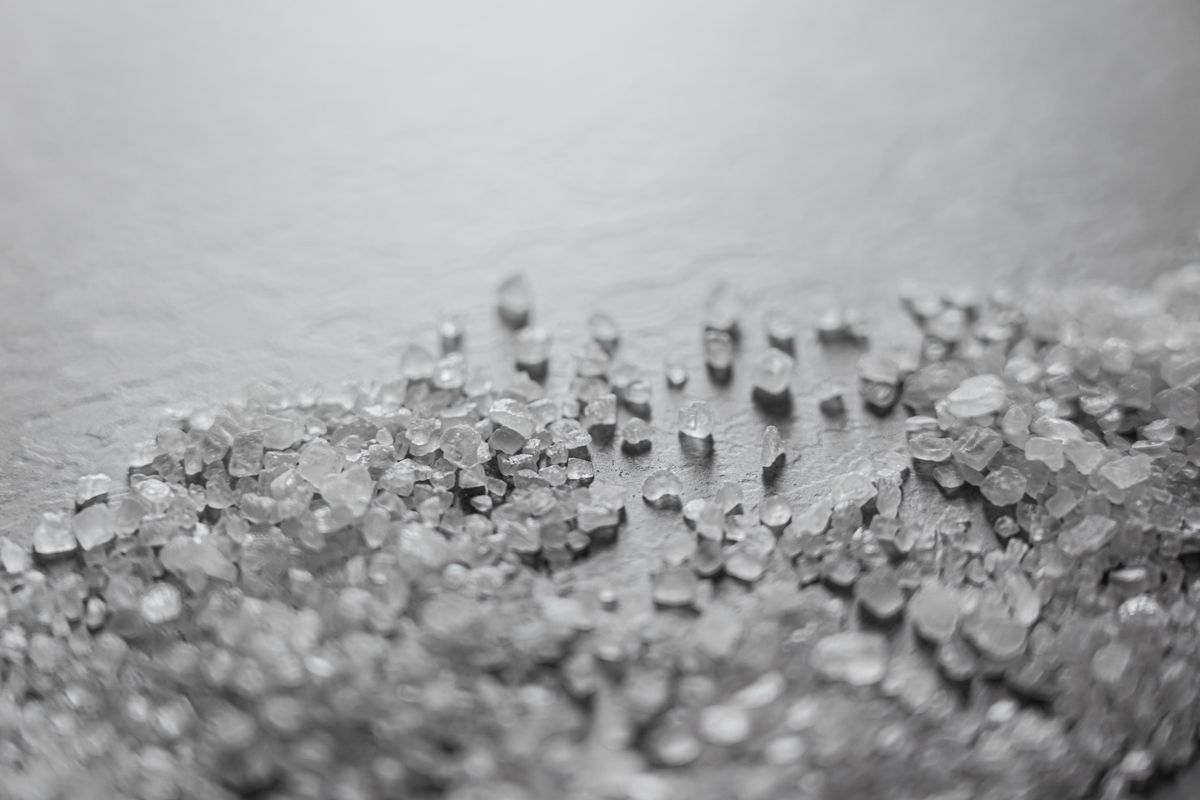
- Salt bridge. A crust of salt spans the tank, supported by the walls, with a dry cavity underneath. The tank looks full. The unit has been regenerating with plain water for weeks, which accomplishes nothing. Push a broom handle straight down through the salt; if it stops partway and then breaks through with a crack, that was your answer.
- Salt simply out. Obvious, and still worth checking rather than glancing at.
- A power cut reset the clock. Older valves lose the time of day. A unit that thinks it is 2 a.m. when it is 2 p.m. will regenerate mid-afternoon and send hard water to the whole house while it does — and it may also now be regenerating on the wrong day count.
- No brine draw. The cycle runs, the drain flows, and no brine is pulled because the injector is blocked. Fill the brine well to a marked level, start a manual regeneration, advance to the brine draw stage and watch. If the level does not visibly fall within a few minutes, clean the injector and venturi.
- The bypass was knocked. A partly open bypass blends hard water in continuously and looks like a sudden loss of capacity.
Each of these is free to check, which is why they come before anything involving resin. The full post-installation sequence is in why water is still hard after installing a softener.
Signature 4: Hard Only on the Last Evening
The subtlest of the four, and genuinely easy to fix.
The bed is the right size and the setting is correct, but the valve triggers regeneration at the moment the calculated capacity runs out rather than before it. On an ordinary day that works. On the evening of three loads of laundry and four showers, demand overruns the last of the capacity and hard water reaches the taps for a couple of hours before the overnight cycle.
The fix is the reserve: a slice of capacity the valve holds back so it regenerates early rather than exactly on time. Roughly one day of household use is a common setting. Many valves express this as a percentage or as a fixed gallon figure; some calculate it automatically from learned usage and some do not.
Two related settings to check while you are in the menu:
- Regeneration time. It should be in the middle of the night, when no water is being drawn. During a cycle the house is on hard water regardless.
- Metered versus timer mode. A timer regenerates on a fixed schedule and has no idea how much water you used. Any household whose demand varies — guests, holidays, a new baby — will run out early on a timer. Demand-initiated regeneration is the better arrangement and is treated as the efficiency baseline in the WaterSense guidance linked above.
What Is Not the Cause
Ruling things out saves money here.
- Salt type. Pellets versus crystals versus solar salt has almost no bearing on when hardness breaks through. Rock salt is worth avoiding for the insoluble sludge it leaves, but it does not change capacity.
- Water temperature. Hot water shows scale more readily, which makes the symptom more visible, but it does not change the exchange capacity of the bed. That distinction is covered in why hot water shows more scale than cold water.
- Water pressure, unless it is low enough to stop the injector drawing brine. Normal pressure variation does not cause early breakthrough.
- A residue that vinegar will not dissolve. If a fixture still shows white deposits while the water tests at zero, that is not hardness returning — see why a hardness test reads zero but scale remains.
Fix Order
- Log two cycles. Regeneration dates, and the day hardness appears. Do not skip this.
- Sudden onset? Salt level, salt bridge, clock, bypass, brine draw. All free.
- Consistent pattern? Run the worksheet. Correct the hardness setting with iron compensation.
- Still short after the setting is right? Compare calculated days to programmed days. Under two days means undersized.
- Last evening only? Raise the reserve and move the regeneration time to the middle of the night.
- No pattern at all? Inspect the bed for channelling, fouling and compaction, and check the sediment prefilter and backwash flow.
- Resin last. Only after the arithmetic is right and the bed has been inspected.
The order matters more than any single step. Steps 2 through 5 are free, and between them they account for the large majority of these complaints. Penn State Extension's overview of water softening is a useful neutral reference if you want to sanity-check a capacity claim an installer has made, and if the worksheet has concluded the unit really is too small, do you actually need a whole-house water softener is worth rereading before you replace like for like.
Frequently Asked Questions
Why does my water get hard before the softener regenerates?
Because the resin bed has run out of exchange capacity before the valve decided it should. That happens for three reasons: the hardness figure programmed into the valve is lower than your actual compensated hardness, so the unit thinks it has more capacity left than it does; the softener is genuinely too small for how much water the household uses; or the resin is no longer delivering its rated capacity because it is fouled, channelling or near end of life. The day of the cycle on which the hardness shows up separates them.
How often should a water softener regenerate?
Every two to four days is the usual design target for a correctly sized metered unit on a typical household. Longer than about a week and the resin sits exhausted or near-exhausted for long stretches, which encourages fouling and bacterial growth in the bed. Every day means the unit is undersized, the hardness setting is far too high, or something is consuming capacity that was not accounted for — most often iron. Timer units regenerate on a fixed schedule regardless of use, which is exactly why they run out early when the household grows.
What is reserve capacity on a water softener?
The reserve is the slice of capacity the valve holds back so that it triggers regeneration before the bed is completely exhausted, rather than at the moment it runs dry. Without it, a heavy evening of laundry and showers pushes past the remaining capacity and hard water reaches the taps hours before the 2 a.m. cycle. A reserve of roughly one day of household use is a common setting. Set the reserve to zero, or leave it at a default meant for a smaller house, and you get hard water on the last evening of every cycle.
Does hard water returning early mean I need new resin?
Usually not, and it should be the last thing you conclude rather than the first. Check the hardness setting, the reserve, the salt dose and the actual water use first — those cost nothing and explain most cases. Resin is the likely answer when capacity has been falling month over month rather than being wrong from the start, when the water is discoloured right after a regeneration, or when performance is erratic with no pattern at all. Resin on a chlorinated supply typically lasts ten to fifteen years; on iron-bearing well water, considerably less.
How do I know if my water softener is actually regenerating?
Mark the salt level in the brine tank and note the date. A working household softener visibly consumes salt week to week. Then force a manual regeneration and stay with it: you should hear the valve step through positions and see water running to the drain for the backwash and rinse stages, and the level in the brine well should visibly fall during the brine draw. No drain flow means no cycle. Drain flow with no drop in the brine well means the unit is cycling but not actually recharging the resin.
Can raising the hardness setting fix water going hard early?
Often yes, and it is the cheapest thing to try — but set it to a number you measured, not a number you guessed. Enter your raw hardness compensated for iron and manganese, because those consume exchange capacity that a hardness test does not report. Raising the setting makes the unit regenerate more often, which uses more salt and water; that is the trade. If a correctly compensated setting still runs out early, the unit is undersized or the resin is underperforming, and no setting will cover for that.