
Best Water Softener for Low Water Pressure Homes

The best water softener for low water pressure is the SoftPro Elite 48k, with 1 inch ports throughout and a 20 psi minimum inlet pressure. A Fleck 5600SXT 48k on a 1 inch yoke is the budget choice, with a valve that loses about 5 psi at a 12 gpm peak on its own. The Aquasure Harmony 32k works on city water above about 40 psi, but its 25 psi minimum rules it out on a well with a 20/40 pressure switch.
Two numbers decide whether a softener works in a low-pressure house: how much pressure it loses at your peak flow, and the minimum inlet pressure its valve needs. This page puts every published figure on one chart, so you can see which units simply will not work for you.
Disclosure: Hard Water Solved may earn a commission if you buy through links on this page, at no extra cost to you. It does not change which products we include or how we rank them. Read our disclaimer.
How These Picks Were Ranked
Methodology. Every pick is a metered, salt-based softener listed on Amazon.com. Pressure-drop figures come from manufacturer spec sheets, manuals and listings, scaled to a 12 gpm household peak with the square of the flow ratio, the method set out in our guide to water softener pressure drop. Minimum inlet pressures come from the same documents. Nothing was physically tested. Excluded: units shown as unavailable on Amazon, and units with no published pressure range. Prices are not listed here because they change often. Use the buttons to see the current price on Amazon.
Some well-known high-flow and low-loss units are not ranked:
- Fleck 7000SXT systems with 1.25 in ports. The 7000 is Pentair's high-flow valve and the natural choice for big homes on weak supplies. Every 7000SXT system listing we checked on Amazon showed as currently unavailable.
- WaterBoss 900. It is one of the few cabinet units to publish a system figure, 10 gpm at a 15 psi drop. Its Amazon listing shows as currently unavailable.
- SpringWell salt-based softener. The brand lists a 25 to 80 psi operating range and 11 to 20 gpm by size. Its Amazon listing shows as currently unavailable.
Best Water Softener for Low Water Pressure: Loss at a Real Peak
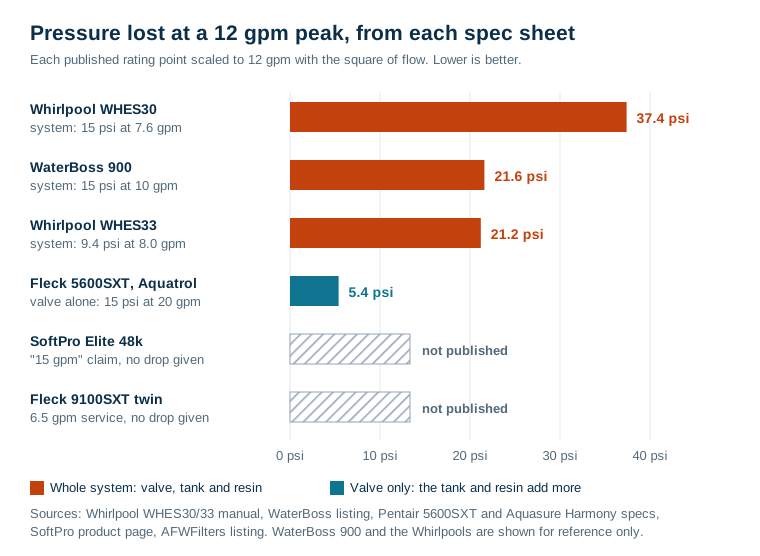
A spec sheet gives one pressure-drop figure at one flow the maker chose. Scaled to the same 12 gpm, roughly two showers, a toilet and a washing machine together, the published figures look like this:
| Model | Published rating | Scope | Loss at 12 gpm |
|---|---|---|---|
| Whirlpool WHES30 | 15 psi at 7.6 gpm | Whole system | ~37 psi |
| WaterBoss 900 | 15 psi at 10 gpm | Whole system | ~22 psi |
| Whirlpool WHES33 | 9.4 psi at 8.0 gpm | Whole system | ~21 psi |
| Fleck 5600SXT valve | 15 psi at 20 gpm | Valve alone | ~5.4 psi |
| Aquasure Aquatrol valve | 15 psi at 20 gpm | Valve alone | ~5.4 psi |
| SoftPro Elite 48k | "15 gpm" | No drop published | – |
| Fleck 9100SXT twin 48k | 6.5 gpm service, 9.8 gpm peak | No drop published | – |
The Whirlpool and WaterBoss units are shown for comparison; they are not picks.
Three things come out of it.
- The cabinet units that do publish a system figure lose a lot at a real peak. Whirlpool's own manual puts the WHES30 at 15 psi at just 7.6 gpm. On a house that starts at 40 psi, that unit at 12 gpm would leave a trickle.
- The Fleck 5600SXT and Aquatrol figures are for the valve alone. Pentair's Fleck 5600SXT specification sheet gives 20 gpm at a 15 psi drop and 26 gpm at 25 psi, with a Cv of 5.0. The resin tank and bed add more, so the whole system loses more than 5.4 psi. Sellers quote about 12 gpm of service flow for a 48k 5600SXT system.
- Some makers publish no drop at all. SoftPro quotes a flow rate; AFWFilters quotes service and peak flow for the twin. Neither gives the pressure lost at that flow. Ask before you buy. NSF/ANSI 44 limits a certified softener's drop to 15 psi at its rated service flow, so a certified unit's service flow is at least a ceiling.
Minimum Inlet Pressure: The Units That Will Not Work
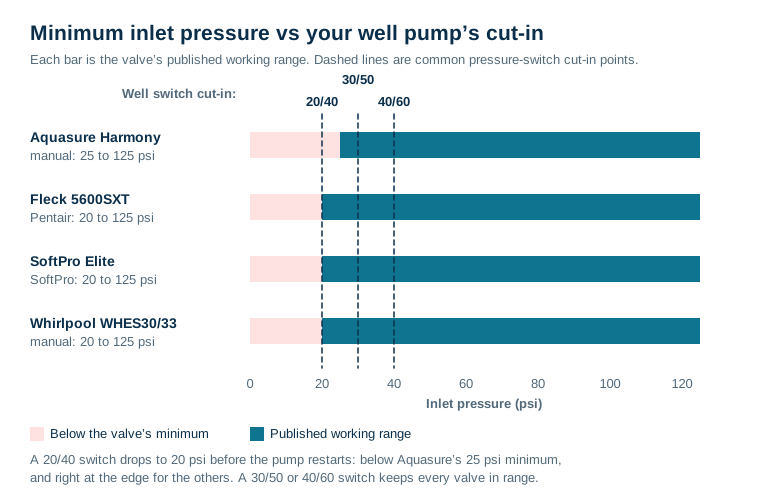
Below its minimum inlet pressure, a softener's injector may not draw brine, so it stops softening while water still flows. The published minimums:
- Fleck 5600SXT: 20 to 125 psi working pressure (Pentair).
- SoftPro Elite: 20 to 125 psi (SoftPro's warranty conditions).
- Aquasure Harmony: 25 psi minimum, 125 psi maximum (Aquasure's manual). The valve's own spec table lists 20 to 125 psi, but the manual's installation conditions, which the warranty depends on, say 25.
On a well, the lowest pressure the softener sees is the pressure switch cut-in, the point where the pump restarts. With a 20/40 switch the pressure falls to 20 psi on every pump cycle: below Aquasure's minimum and right at the edge for the others. A 30/50 or 40/60 switch keeps every valve here in range. How to check your own numbers is in water softener pressure requirements.
1. SoftPro Elite 48k: Best for Low-Pressure Homes
The Elite uses a Canature valve set to upflow regeneration, and SoftPro describes it as having 1 inch ports throughout. SoftPro rates it at 15 gpm and lists a 20 to 125 psi operating range. Of the units on Amazon, it is the one built around a full 1 inch flow path, which is what keeps the loss down at a high peak.
What we could not confirm. SoftPro does not publish a pressure-drop figure for the Elite. The 15 gpm is a flow claim, not a statement of how many psi it costs. If your supply is marginal, ask SoftPro for the drop at your peak flow before ordering. Its six-month return window is a useful safety net if the house feels the difference.
Other points in its favour. 10% crosslink resin, a lifetime warranty on the tanks and control valve body, seven years on the circuit board and five on the piston and seals on city water, per SoftPro's warranty page. Upflow regeneration also uses less salt and water.
Skip it if your pipe is 3/4 in throughout and your peak demand is modest. The 1 inch flow path will not help much past a 3/4 in bottleneck elsewhere.
2. AFWFilters Fleck 5600SXT 48k, 1" Yoke: Best Budget Low-Pressure Pick
The 5600SXT is one of the best-documented residential valves. Pentair publishes the valve's whole flow curve through its Cv of 5.0, a 20 psi minimum, and certification by the WQA to NSF/ANSI 44 for softener performance. At a 12 gpm peak the valve alone loses about 5.4 psi.
Why the 1 inch yoke matters. The valve body is the same either way, but a 1 inch yoke and bypass avoid adding a 3/4 in restriction at the connection. On a weak supply, every fitting counts.
Its limit. The 5600SXT is not a high-flow valve. Sellers quote about 12 gpm of service flow for a 48k system, and Pentair's own high-flow option is the 7000SXT. For a large house with many bathrooms on a weak supply, the SoftPro or a 7000SXT system from another seller is the better fit.
Warranty. AFWFilters' standard terms are five years on the Fleck valve and ten on the tank.
Size the resin separately. Pressure is about the valve; capacity is about the resin. Work out the bed you need from your hardness and household with how to size a water softener, then check the valve can carry your peak.
3. Aquasure Harmony 32k: Only for City Water Above 40 psi
The Harmony's Aquatrol valve publishes the same valve-alone figures as the Fleck 5600SXT: 20 gpm at a 15 psi drop, 26 gpm at 25 psi and a Cv of 5.0, according to the Harmony owner's manual. For a small house on steady city pressure, it is usually the least expensive low-loss option here.
Why it ranks third. The manual makes 25 psi the minimum inlet pressure for the warranty. On a well with a 20/40 switch, or on a city supply that sags below 25 psi at peak, it is out of specification. Aquasure sizes the 32k for one or two bathrooms.
Skip it if you are on a well, unless your switch is 30/50 or higher.
Which Softener for a Low-Pressure House?
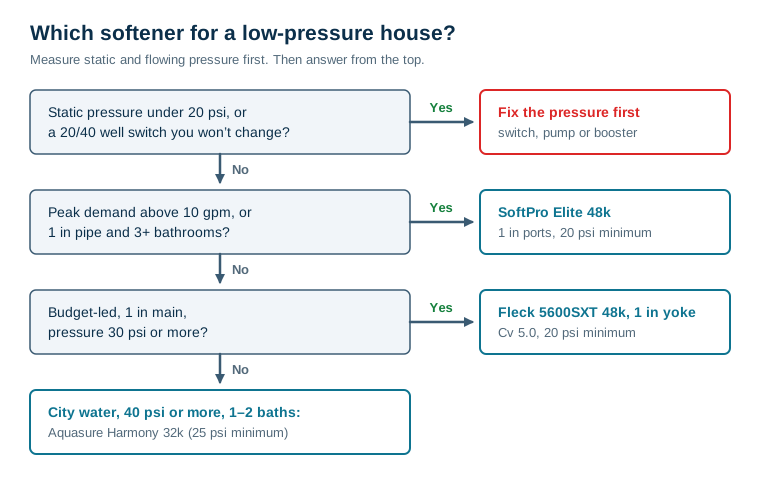
Measure Before You Buy
You need two readings, both at a hose bib or a gauge near the main:
- Static pressure, with every tap closed. On a well, watch the gauge through a full pump cycle and note the lowest reading, the cut-in.
- Flowing pressure, with two or three fixtures open at once. The difference between the two is what your pipes already lose.
Then budget the softener's loss. Subtract its drop at your peak from your lowest supply pressure. As a rule of thumb, aim for a softener that costs no more than about 8 to 10 psi at your realistic peak. If a softener is already installed and pressure fell afterwards, the causes are covered in low water pressure after a water softener.
Other Things That Cost Pressure Around a Softener
- The bypass. A partly closed bypass or a 3/4 in bypass on a 1 inch main costs pressure. Check it is fully in service.
- Prefilters. A sediment cartridge ahead of the softener adds its own loss, which grows as it loads. Change it on pressure drop, not on the calendar.
- A fouled resin bed. Iron, silt or broken-down resin raises the bed's resistance over the years. A softener that once flowed well and now does not may need its resin replaced, not a bigger unit.
- Undersized tanks. A small tank on a big flow pushes water through the bed fast. The resin also softens less completely at excessive flow.
- Pipe size between meter and softener. A long 3/4 in run to a 1 inch softener makes the softener's ports irrelevant.
Who Should Buy None of These
- Homes below 20 psi static. No softener here is rated to work. Fix the pressure first.
- Wells on a 20/40 switch you cannot change. The pressure falls to the edge of every valve's minimum on each pump cycle.
- Large homes with high peak demand on a weak supply. Look for a 1.25 in high-flow valve such as a Fleck 7000SXT, and ask for its system pressure drop.
- Anyone whose low pressure has not been diagnosed. A failing pressure-reducing valve, a clogged main shutoff or a waterlogged pressure tank all look like "low pressure" and are cheaper to fix than any softener.
The best water softener for low water pressure is the one whose pressure loss you know before it is installed. Measure your lowest supply pressure, check each valve's minimum against it, and ask for the drop at your peak flow in writing.
Frequently Asked Questions
Will a water softener lower my water pressure?
A little, always, and a lot if it is undersized. Every softener loses some pressure as water passes the valve and the resin bed, and the loss rises with roughly the square of the flow. A well-sized unit loses a few psi at normal flow. A small cabinet unit at a high household peak can lose 20 psi or more, which a low-pressure house will feel at the shower.
What is the minimum water pressure for a water softener?
Most valves need at least 20 psi at the inlet. The Fleck 5600SXT and the SoftPro Elite list 20 to 125 psi. Aquasure's Harmony manual sets a 25 psi minimum. Below the minimum, the injector may not draw brine properly, so the softener stops softening even if water still flows. On a well, the number to check is the pressure switch cut-in, not the cut-out.
Is a bigger water softener better for low water pressure?
A bigger valve is. A larger port and a valve with a higher flow rating lose less pressure at the same flow. A bigger resin tank on the same small valve does not help much, because the valve is usually the main restriction. Look for 1 inch ports throughout and a published pressure-drop figure, then size the resin for your hardness.
Do upflow softeners have less pressure drop?
Not because of the upflow regeneration itself. Regeneration direction affects salt and water use, not the flow path during service. What matters for pressure is the valve's port size and flow rating and the bed's depth and diameter. SoftPro says its Elite delivers 15 gpm with 1 inch ports, but it does not publish a pressure-drop figure, so ask for one.
What should I do if my water pressure is too low for any softener?
Fix the pressure first. On a well, raising a 20/40 pressure switch to 30/50 or 40/60, if the pump and tank are rated for it, is often enough. Other fixes are a larger pressure tank, a constant-pressure pump or a booster pump. On city water, check the pressure-reducing valve and the main shutoff before blaming the supply. A softener cannot work below its minimum inlet pressure.
