
Minimum and Maximum Pressure for a Water Softener
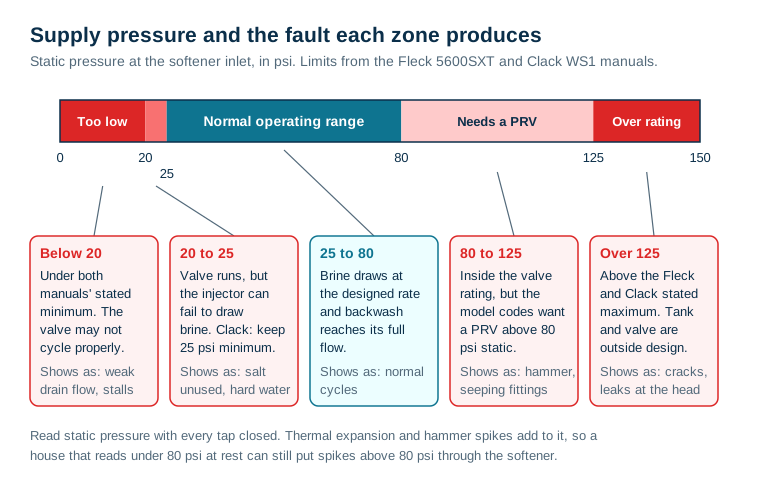
Water softener pressure requirements come down to one window. Common residential valves such as the Fleck 5600SXT and Clack WS1 are rated for 20 to 125 psi, but the injector needs about 25 psi to draw brine reliably, and plumbing codes cap household static pressure at 80 psi. In practice, a softener works properly between roughly 25 and 80 psi measured at its inlet.
Outside that window the symptoms are specific, which makes pressure one of the first things to check when a softener misbehaves. This page reads as a diagnostic chart rather than a spec sheet: what fails at the low end, what fails at the high end, and the trap that the usual fix for high pressure creates.
Water Softener Pressure Requirements at a Glance
| Limit | Value | Where it comes from |
|---|---|---|
| Valve minimum | 20 psi | Fleck 5600SXT manual; Clack WS1 service manual |
| Practical minimum for brine draw | 25 psi | Clack WS1 troubleshooting table |
| Household static maximum | 80 psi | IRC P2903.3.2 (and IPC 604.8) |
| Valve maximum | 125 psi | Fleck 5600SXT manual; Clack WS1 service manual |
Pentair's Fleck 5600SXT service manual says a minimum of 20 psi "is required for the regeneration valve to operate effectively" and cautions that pressure "is not to exceed 125 psi." Clack's WS1 drawings and service manual gives the same 20 to 125 psi operating range, and in its troubleshooting table tells the owner that pressure "must remain at minimum of 25 psi" when brine is not being drawn. Other brands publish their own figures in the installation section of the manual; check yours, because cabinet units and some older valves differ.
How to Measure the Pressure the Softener Actually Sees
A number from the water utility or the well installer is not good enough. You want the pressure at the softener, at rest and while it is working.
- Fit a gauge. A hose-thread pressure gauge on a laundry tub faucet, a hose bib near the softener, or the water heater drain valve is enough. Read it with every tap in the house closed. That is static pressure.
- Open a tap and read it again. Run a bathtub. The drop you see is flowing pressure, which is what the softener has during backwash and rinse.
- On a well, watch a full pump cycle. Pressure swings between the pressure switch's cut-in and cut-out settings, often 30/50 or 40/60 psi. The low point is what matters for brine draw.
- Leave the gauge on overnight if you can. Some gauges have a drag needle that records the highest reading. A peak far above the static figure points to thermal expansion or water hammer, not the supply.
- Read it during a manual regeneration. Start a regeneration and note the pressure during the brine draw step. That single reading answers the low-pressure question more directly than anything else.
The Low End: Why the Injector Quits First
A softener does not pump brine. It pulls it with an injector, a small venturi in the control valve. Water forced through a narrow nozzle speeds up and creates suction, and that suction lifts brine out of the salt tank and into the resin. Clack describes it as a self-priming injector that "increases the velocity of the water, creating a zone of negative pressure." How it works, and what clogs it, is covered in what a water softener injector does.
The suction depends on how hard water is pushed through the nozzle. As inlet pressure falls, so does the draw, and before the valve itself stops working, the brine draw weakens or stops altogether. The valve steps through its cycle on schedule and the display looks normal, but the resin never sees enough salt.
Two things make low pressure worse at the injector:
- Back pressure on the drain. Clack's troubleshooting list for "control valve fails to draw in regenerant" includes a restricted drain line and a drain line "too long or too high" alongside low pressure. The injector has to push against whatever resistance is downstream of it. A long run or a high lift to the drain uses up pressure the injector needed.
- Pressure that sags during the cycle. A well pump near cut-in, a partly closed main valve or a clogged sediment filter ahead of the softener can leave a good static reading and a poor working one.
Low-pressure symptoms, and what else causes them
| Symptom | Pressure check | Other causes to rule out |
|---|---|---|
| Salt level barely drops between refills | Pressure during brine draw below about 25 psi | Salt bridge, plugged injector, air leak in brine line |
| Brine tank stays full of water after regeneration | Same | Plugged injector or screen, drain restriction |
| Hard water a few days after regeneration | Same | Hardness set too low, bypass open, exhausted resin |
| Weak, short backwash flow to the drain | Flowing pressure well below static | Partly closed supply valve, clogged prefilter, restricted drain |
| Valve stalls or drifts between positions | Static below 20 psi | Motor, gears or position sensor |
If pressure is fine and brine still is not drawn, stop looking at pressure and work along the rest of the brine path: the injector and its screen, the brine line and its air check, and the salt tank itself.
The High End: What Too Much Pressure Does
Above 80 psi static, the softener is still inside its rating. The problem is the rest of the house, and the codes treat it that way. The International Residential Code, in section P2903.3.2, limits static pressure to 80 psi and requires an approved pressure-reducing valve (PRV) where the main pressure is higher. The International Plumbing Code has the same 80 psi limit in section 604.8.
Above 125 psi, the softener is outside what its maker designed for. The tank and valve body are pressure vessels, and running them over their rating invites cracks, seal extrusion and leaks at the control head.
What high pressure looks like on a softener installation:
- Water hammer when solenoid valves in the washer or dishwasher snap shut. High static pressure makes each surge bigger. See water hammer after a water softener for the full diagnosis.
- Seepage at connections: the bypass valve, the fittings on the valve head, the O-ring where the valve meets the tank.
- Fast, noisy backwash that pushes the drain line around or splashes out of the standpipe.
- Lifted resin on upflow units. Clack notes that its upflow injector sizing assumes 30 to 50 psi inlet pressure, and that higher pressures need smaller injectors "to avoid lifting the bed."
Pressure-Reducing Valves and the Softener
Where a PRV is needed, it goes on the main supply where the water enters the house, ahead of the softener, so the softener and every fixture after it see the reduced pressure. A PRV installed only in front of the softener leaves the rest of the house at the pressure the code does not allow.
Set it so static pressure stays below 80 psi, with enough margin that brine draw and the upper floors are still well supplied. Recheck with a gauge after installation, because PRVs can drift, and one that fails usually fails by letting full street pressure through.
A PRV can also cause the opposite problem on a softener. A PRV set too low, or one that sticks, can drag flowing pressure down during backwash and brine draw. If low-pressure symptoms appear after a PRV was fitted, read the gauge during a regeneration before blaming the softener.
The Thermal Expansion Problem a PRV Creates
This is the fault that turns a pressure fix into a new pressure problem, and it is the most common high-pressure complaint on houses that already have a PRV.
Most pressure-reducing valves do not let water flow back toward the main. With the PRV in place, the house plumbing is a closed system. When the water heater heats a full tank, the water expands. There is nowhere for that extra volume to go, so pressure climbs through the whole system, softener included, until someone opens a tap or the water heater's temperature and pressure relief valve lifts.
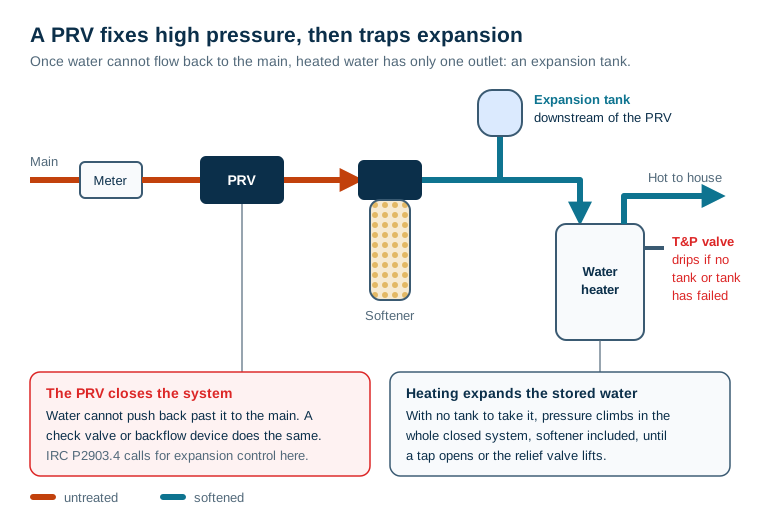
The IRC addresses it in section P2903.4.1: on services up to 2 inches, a device for controlling pressure must be installed where thermal expansion pushes pressure downstream of a PRV above the PRV's setting. The usual device is a thermal expansion tank on the water heater's cold supply, downstream of the PRV.
Signs you have this problem:
- The water heater relief valve drips, especially after a period of no water use.
- A gauge with a drag needle reads far higher than the static pressure you measured.
- Pressure at a tap is noticeably higher first thing in the morning, then settles.
- An existing expansion tank has stopped working: tap it, and a waterlogged tank sounds solid all the way up. Its air charge should match the house pressure setting.
A dual check backflow preventer at the meter causes exactly the same effect. If your utility has added one, the same expansion control applies; the backflow side of that is covered in does a water softener need backflow protection.
Pressure Drop Through the Softener Is a Different Question
Supply pressure and pressure drop get confused. Supply pressure is what arrives at the softener. Pressure drop is how much the softener takes away while water flows through it. Every softener has some, and it grows with flow rate: little at one tap, more with the shower, washer and a hose running together.
A drop that suddenly gets worse, or that makes showers weak, is not a supply problem. The usual causes are a partly closed bypass, fouled or broken-down resin, debris in the distributor screens, or a unit too small for the house's peak flow. Low water pressure after a water softener walks through that diagnosis. If the unit itself is the restriction on a weak supply, comparing softeners on pressure loss and minimum inlet pressure shows which valves suit it.
What Changing the Pressure Cannot Fix
- Raising pressure will not clear a plugged injector. If the nozzle or its screen is blocked, more pressure behind it changes little. Clean it first, then judge the pressure.
- Lowering pressure will not seal a worn valve. A leaking seal stack or O-ring at 70 psi still needs replacing.
- A softener does not regulate pressure. It neither raises low supply pressure nor protects the house from high pressure. That is the PRV's job, or on a well, the pressure switch and tank.
- A normal gauge reading at rest proves nothing about spikes. Only a peak reading, or watching the gauge while the water heater recovers, shows thermal expansion.
Pressure is quick to check and eliminates or confirms a whole group of faults in one reading. Measure it at the softener, during a regeneration, and against both the manufacturer's minimum and the code's 80 psi ceiling. If you find a PRV, look for the expansion tank that should be next to the water heater.
Frequently Asked Questions
What is the minimum water pressure for a water softener?
The Fleck 5600SXT and Clack WS1 manuals both give 20 psi as the minimum for the control valve. Brine draw needs a little more: Clack's troubleshooting table says pressure must remain at a minimum of 25 psi when a softener fails to draw brine. Treat 25 psi measured at the softener, during a regeneration, as the practical floor, and remember that a well system spends part of every cycle near its low cut-in pressure.
What is the maximum water pressure for a water softener?
Common residential valves such as the Fleck 5600SXT and Clack WS1 are rated to 125 psi. Household plumbing codes set a lower limit: the International Residential Code caps static pressure at 80 psi and requires a pressure-reducing valve where the main exceeds that. So a softener may tolerate 100 psi, but the house should not be running at it.
Can low water pressure stop a softener from regenerating?
It usually lets the valve cycle but stops the regeneration from working. The injector needs pressure to create the suction that pulls brine from the salt tank, so at low pressure the valve runs its steps on time while little or no brine is drawn. The result is salt that is not being used, a brine tank that stays full, and hard water a few days later.
Do I need a pressure-reducing valve before my water softener?
If your static pressure is above 80 psi, the model codes require one for the whole house, and it belongs on the main supply before the softener so the softener and everything after it are protected. If your pressure is already 80 psi or below, a PRV is not required for the softener, though a softener rated to 125 psi does not make high house pressure acceptable.
Why did my water heater relief valve start dripping after a PRV was installed?
Because the PRV closed the system. Most pressure-reducing valves stop water flowing back to the main, so when the water heater heats its tank, the expanding water has nowhere to go and pressure climbs until the relief valve lifts. The IRC requires a device to control that pressure, usually an expansion tank on the heater's cold supply, downstream of the PRV.
Does a water softener reduce water pressure?
It causes a pressure drop while water is flowing through it, which grows with flow rate, but it does not lower the static pressure in the house. A small drop is normal. A large one points to an undersized unit, a partly closed bypass, fouled resin or debris in the valve, which is a separate diagnosis from supply pressure being too low.
