
How a Water Softener Can Affect the Water Bill
Does a water softener increase your water bill? Yes, but normally by a few dollars a month. Regeneration water goes through your meter like any other use, and most utilities then charge sewer on the same gallons, so it is billed twice. A working metered softener in a typical home adds roughly $30 to $42 a year at combined rates of $12 per 1,000 gallons. A sudden, large jump is not normal use. It is the most reliable early sign of a softener valve running water to drain.
This page covers both halves: what a healthy softener should add, and how to use the bill and the meter to catch the fault that costs far more.
Does a Water Softener Increase Your Water Bill? What Normal Looks Like
A softener only adds to the bill through regeneration. The water you drink, shower in and wash with is the same volume with or without it.
How much regeneration water a home uses is worked through in how much water does a water softener use each year. In short, a metered softener on 15 gpg water in a typical home uses about 2,900 gallons a year. A timer set to every three days uses about 6,100.
Here is what that costs at illustrative rates of $5 per 1,000 gallons for water and $7 for sewer:
| Softener | Gallons a year | Water charge | Sewer charge | Total a year | Per month |
|---|---|---|---|---|---|
| Metered, set to real hardness | 2,900 | $14.50 | $20.30 | $34.80 | $2.90 |
| Timer, every 3 days | 6,100 | $30.50 | $42.70 | $73.20 | $6.10 |
| Timer, every night | 18,250 | $91.25 | $127.75 | $219.00 | $18.25 |
| Valve stuck running to drain for one month | about 95,000 | $475 | $665 | $1,140 in that month |
The first three rows are the range of normal-to-careless. The last row is a fault, and it is the reason to keep an eye on the bill.
The Sewer Charge Most Estimates Leave Out
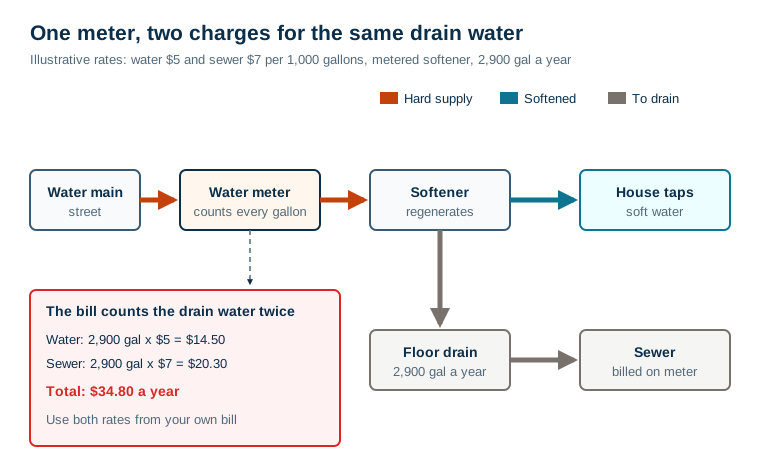
Most estimates price regeneration water at the water rate alone. That misses the second charge.
A house usually has one meter, at the street or where the service enters. Nothing measures what leaves through the drains. EPA WaterSense's guide to understanding your water bill says it plainly: "many utilities have only one meter on location and will charge both volumes based on water entering the house."
Regeneration water is a clear case. It enters through the meter and goes straight to a floor drain, laundry standpipe or sump, then into the sewer. So it is billed as water in and again as sewer out.
In the table the sewer column is the larger one only because the illustrative sewer rate is higher. On your bill it may be the other way round, so take both rates from the bill itself.
Some utilities do it differently. A few bill sewer on an average of winter months, so summer irrigation does not count. In that case, winter regeneration water counts all year round. Others cap the sewer charge, or measure sewer flow directly. A line or two on the utility's rate page usually explains which method it uses.
On a septic system the sewer column is zero. You pay for the regeneration water in septic loading instead, a separate question from the bill.
Three Lines on the Bill That Decide Your Number
You do not need the utility's whole rate schedule. Three items on the bill tell you what the softener costs you.
- The volumetric water rate. Usually per 1,000 gallons, or per unit of 100 cubic feet (748 gallons). EPA notes that many utilities combine a fixed base fee with a variable charge for volume. The softener only affects the variable part.
- How sewer is charged. Metered water, winter average, flat fee, or a cap. This decides whether regeneration water is billed once or twice.
- Tiers. If the price rises with use, the last gallons you use each month are the dearest. Regeneration water is part of total use, so it is effectively priced at your top tier. That matters more for a timer unit that regenerates heavily.
Divide the variable charges on a recent bill by the gallons billed to get your real price per gallon. Multiply that by the softener's annual regeneration water. That is the honest annual cost, and it belongs in the running-cost total alongside salt, covered in total cost of owning a water softener.
When the Bill Jumps: Treat the Softener as a Suspect
A healthy softener changes the bill gradually, if at all. Household use drives most swings: guests, a new baby, a dry summer, a filled pool. A softener fault looks different. The bill rises sharply with nothing else changed, and it keeps rising while the fault continues.
How big the fault can get depends on how fast water goes to drain. The Hellenbrand H125 manual lists a backwash of 17.6 gallons over 8 minutes for its one cubic foot model, about 2.2 gallons a minute. That flow rate is the useful figure. A valve stuck in a drain position can run near it all day:
| Fault | Approximate flow to drain | Gallons in a 30-day cycle | At $12 per 1,000 gallons |
|---|---|---|---|
| Stuck in backwash or rinse | 2.2 gallons a minute | about 95,000 | about $1,140 |
| Worn piston seals, steady trickle | 0.25 gallons a minute | about 10,800 | about $130 |
| Brine tank refill that never shuts off, going to overflow | varies, often under 1 gallon a minute | several thousand to 40,000 | $50 to $480 |
| Timer or hardness setting far too high | normal per cycle, far too many cycles | several hundred to a few thousand extra | $5 to $40 |
The flow rates in the lower rows are illustrative, because they depend on how badly the part has worn. The point is the scale. A stuck valve can cost more in one month than a year of normal regeneration. It is also silent, and the house still has water, so it can run for weeks.
The Two-Reading Meter Test
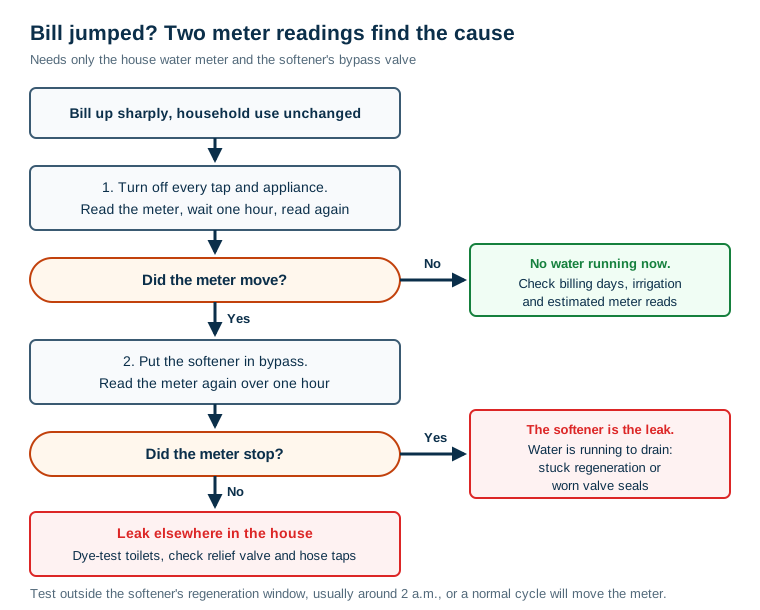
You can settle whether the softener is to blame in two hours, with no tools.
- Find the meter and note its reading. Many meters also have a small leak-indicator dial, often a triangle or star, that spins with even a trickle.
- Turn off every tap and water-using appliance. Make sure the dishwasher, washing machine, ice maker, irrigation and any humidifier are idle.
- Wait one hour and read again. If nothing moved, no water is running now. The high bill came from usage, the billing period, or an estimated read.
- If it moved, put the softener in bypass and wait another hour.
- If the meter has now stopped, the softener was sending water to drain. If it keeps moving, the leak is elsewhere. Check toilets first with a few drops of food colouring in the cistern, then the water heater's relief valve discharge pipe and outdoor taps.
Do the test at a time when the softener would not normally regenerate. Most are set for about 2 a.m. A normal cycle during the test would move the meter and look like a fault.
If the softener is the source, the display and the drain line usually tell you which fault it is. A display frozen on a regeneration step, or a motor that runs without the valve moving, points to a softener stuck in regeneration. Steady flow at the drain with the display showing service points to worn seals. The full diagnosis is in why a water softener keeps draining. A brine tank that keeps filling and sends water out of its overflow fitting is a different path, with its own fixes.
After a Fault: Limiting the Damage to the Bill
If the meter test points at the softener, three steps limit the cost while you arrange a repair.
- Leave it in bypass. The house gets hard water for a few days, which does no lasting harm. Every hour the valve stays in service while faulty sends more water to the drain.
- Photograph the meter reading and the display. Note the date and time, and the step the display shows. That record helps a technician, and it is the evidence you need if you ask the utility for anything.
- Ask the utility about a leak adjustment. Some utilities reduce a bill, or the sewer part of it, after a documented leak has been repaired. The rules differ from place to place and are usually on the utility's billing page. Water that went down a drain inside the house may not qualify, so ask before assuming.
Then get the valve fixed properly. A stuck valve often has a cause, such as a worn piston or seal, a failed motor or a jammed cam, that will recur if the unit is only reset.
What Switching From Timer to Metered Is Worth on the Bill
For a healthy but wasteful softener, the bill tells you whether an upgrade pays. In the example above, moving from a three-day timer to metered control saves 3,200 gallons a year. At the illustrative combined rate of $12 per 1,000 gallons, that is about $38 a year on the water bill alone, before the salt saving.
The salt saving is usually larger than the water saving, because the same regenerations use salt as well as water. Add both before deciding whether a new valve head is worth it. The full comparison is in how much water does a water softener use each year.
Settings That Raise the Bill Without a Fault
Not every bill increase is a broken part. Four settings raise the regeneration count while the softener appears to work perfectly.
- A timer schedule set for a bigger household. A child leaves home and the three-day schedule stays. Recalculate the interval, or convert to metered control.
- A hardness setting above the real water. A valve set to 25 gpg on 15 gpg water regenerates about two-thirds more often than it needs to.
- A reserve set far larger than needed. A big fixed percentage left over from setup makes every cycle start early, and the regeneration count rises for no benefit. About one day's use is enough.
- A running toilet counted as use. A metered softener regenerates for leaked water too. Fixing the leak cuts both the leak and the extra regenerations.
What a Softener Cannot Do to Your Bill
It cannot lower your water use. Some households use a little less detergent or rinse water with soft water, but the regeneration water is a real addition. Any claim that a softener "pays for itself" on the water bill does not hold up on the meter. The EPA WaterSense page on cation exchange water softeners puts regeneration at up to 10,000 gallons a year, which is a cost, not a saving.
It also does nothing for water quality beyond hardness. A higher bill buys soft water, not safer water. A softener does not remove bacteria, nitrate or lead.
A water softener increases your water bill by a small, predictable amount when it is metered and set correctly. Check the sewer line to know your true figure. Then treat any sharp, unexplained jump as a fault until two meter readings prove otherwise.
Frequently Asked Questions
Does a water softener increase your water bill?
Yes, by a small amount. A metered softener in a typical home sends about 2,500 to 3,500 gallons a year to drain for regeneration. At a combined water and sewer rate of $12 per 1,000 gallons, that is roughly $30 to $42 a year, or about $3 a month. A timer unit set to regenerate every few days can double that.
Why did my water bill go up after installing a water softener?
A small, steady rise is the regeneration water, which is metered like any other use and often billed again as sewer. A large rise, tens or hundreds of dollars a month, is not normal. It usually means the softener is regenerating far too often because of a wrong setting, or its valve is stuck or leaking and sending water to drain continuously.
Does a water softener affect the sewer bill?
On most city connections, yes. EPA WaterSense notes that many utilities have only one meter at the property and charge both water and sewer on the water entering the house. Regeneration water therefore appears on both lines. Some utilities bill sewer on a winter average or cap it, so check how your own sewer charge is calculated.
How do I know if my water softener is leaking water to the drain?
Turn off every tap and appliance and watch the water meter for an hour. If it moves, put the softener in bypass and watch it for another hour. If the meter stops in bypass, the softener is passing water to drain. You may also hear water running at the drain line or see the display stuck on a regeneration step.
Can a water softener cause a high water bill?
Yes, when it fails. A valve stuck in backwash on a one cubic foot unit can run about 2 gallons a minute to drain, over 3,000 gallons a day. Left for a billing cycle, that can add hundreds of dollars or more to a combined water and sewer bill. It is one of the costliest softener faults because it is silent.
Does a softener use water if I am on a well and septic?
Yes, the same volume, but it does not appear on a bill. The well pump supplies the regeneration water and the septic system receives it. The cost shows up as pump run time and septic loading rather than as dollars on a statement.
