
Does Soft Water Damage or Protect Household Pipes?
Does soft water damage pipes? A properly configured water softener does not make your water corrode pipes. Three separate pipe studies found no increase in corrosion or metal leaching compared with hard water. There is one catch. If your water was acidic before it reached the softener, it was already attacking the pipes, and softening does nothing to stop it. Softening protects pipes from new scale, especially on the hot side.
Readers come to this question with opposite fears. Some have been told a softener will eat their copper. Others have been told hard water is closing up their pipes and softening will save them. This page answers both. It also covers two things that trip people up: the corrosion index that gives the wrong answer for softened water, and the flakes that appear in the weeks after installation.
Does Soft Water Damage Pipes? What the Pipe Studies Measured
The corrosion question has been tested directly, on real plumbing materials, more than once.
| Study | What was tested | Result |
|---|---|---|
| US EPA, Lytle, Schock & Sorg (1998) | Duplicate pipe loops of lead pipe, copper-solder pipe, copper tubing and brass faucets. The loops ran on a pH 9.1 treated tap water at 160 mg/L hardness and on a pH 7.3 groundwater at 300 mg/L | No pattern of higher lead, copper or zinc leaching from softened water |
| BSI for the UK Water Treatment Association, Munn (2012) | Two identical model heating systems, one on hard water and one on softened water, with metal samples removed at 1, 3 and 6 months | No significant difference in corrosion rate for brass, copper, mild steel or stainless steel |
| METALogic, Nijs & Verdonckt (2007) | Four real domestic installations, two copper and two galvanized steel, measured at 6 and 12 months | No evidence that corrosion was more severe with softened water |
The EPA study's summary adds the detail that matters most. Softening did not have a harmful effect on the water-quality factors that control how fast metal dissolves: pH, total inorganic carbon, dissolved oxygen, chlorine, temperature and orthophosphate. You can read it in the EPA Science Inventory record for the study. The Water Quality Association's white paper on softened water and corrosion, last reviewed in 2023, reviews all three studies. It concludes that a properly configured softener does not make treated water more corrosive.
Keep in mind that WQA is an industry association. The EPA loop study is the independent evidence, and its results point the same way.
Why "Soft Water Corrodes Pipes" Keeps Getting Repeated
The belief has a real basis. It is just about a different kind of soft water.
Naturally soft water is corrosive. Rain-fed surface supplies in New England, the Pacific Northwest and much of the Southeast are low in calcium. They are also low in pH, low in dissolved solids and low in alkalinity, which is the water's buffer against acid. That combination strips the protective film from copper. Penn State Extension's page on corrosive water problems sums it up: water that is "soft and acidic (pH < 7.0) tends to be more corrosive."
Softened water is not the same water. A cation-exchange softener swaps calcium and magnesium for sodium. It leaves pH, alkalinity and dissolved solids about where they were. Softened city water at pH 7.8 is still at pH 7.8. The two waters share the word "soft" but not the chemistry that makes naturally soft water aggressive.
That distinction settles most of the argument. What remains is a calculation that seems to contradict it.
The Langelier Index Gives the Wrong Answer for Softened Water
The Langelier Saturation Index (LSI) is the standard screening number for whether water deposits or dissolves calcium carbonate. Penn State's guidance reads it simply: negative means corrosive, positive means non-corrosive. The hand calculation is set out term by term in how to interpret pH and hardness together.
Run it on ordinary hard city water before and after softening. Take pH 7.8, 300 mg/L dissolved solids, 25 °C, 180 mg/L alkalinity and 200 mg/L calcium hardness, about 11.7 gpg:
| Calcium hardness (mg/L as CaCO₃) | pHs | LSI | What the index says | |
|---|---|---|---|---|
| Before the softener | 200 | 7.38 | +0.42 | Mildly scale-forming |
| After the softener | 5 | 8.98 | −1.18 | "Corrosive" |
The pH is unchanged. The alkalinity is unchanged. Only the calcium term moved, and it dragged the index well below zero.
This happens to every softened water, and that is why the index is the wrong tool here. LSI measures one thing, calcium carbonate saturation, and calcium is one of its inputs. Remove the calcium and the index will always read negative, even when the water is not corroding anything. The EPA pipe loops show what that negative reading misses. Copper and lead corrosion is driven by pH, inorganic carbon, oxygen and disinfectant, and softening leaves all of them alone.
A more useful way to read softened water:
| Question | Where to look | Why |
|---|---|---|
| Is this water aggressive to metal? | pH and alkalinity of the raw water | The softener does not change them, so the raw water's corrosion risk carries straight through |
| Will it deposit scale in my heater? | Hardness after the softener | Near zero means no new scale |
| Is the softener adding anything harmful? | Chloride after regeneration, and how the unit is set up | A short or failed rinse sends brine into the house. That is a configuration fault, not a property of softened water |
The WQA paper names chloride-to-sulfate ratio as one factor that speeds up lead release. A softener in good working order barely changes chloride. One that runs a short rinse, or siphons brine, can raise it. That is part of what "properly configured" means.
When Softened Water Really Is Aggressive
Softening can go with real pipe damage in three situations. In none of them is the softener the cause.
1. The raw water is acidic. This is the one that matters. On a well at pH 6.5, the water is already dissolving copper. A softener removes the calcium and leaves the acid, so the house gets water that is still aggressive, now without any calcium to slow it down. The same arithmetic on a pH 6.5 well moves the LSI from −1.16 to −2.64. The fix is an acid neutralizer ahead of the softener, set out in low-pH well water treatment.
2. The water is naturally soft, and a softener was sold for it anyway. The softener has nothing to do. Whatever corrosion is happening was happening before it arrived.
3. Something else is corroding the pipe. Fast flow through undersized pipe, joints between different metals, stray electrical current and poor soldering all cause pinholes on water that is chemically well balanced. A new softener often gets the blame because it is the most recent change in the house.
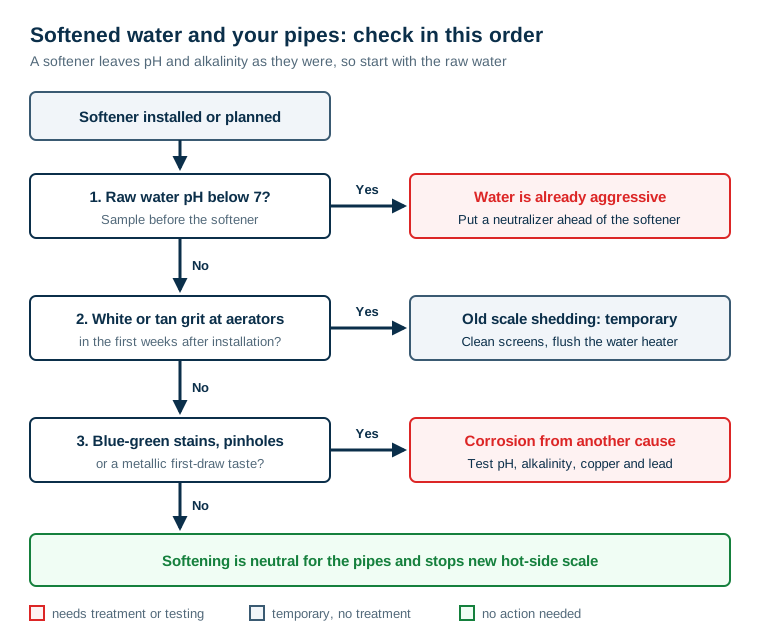
If your first-draw water tastes metallic after installation, the first-draw versus flushed test in why softened water has a metallic taste tells you whether metal is actually coming off the pipe.
The Other Direction: What Softening Does for Pipes
The protection claim is real, but narrower than most sales pitches make it.
Softening stops new scale. Calcium carbonate comes out of solution when water is heated, so the heavy scale builds up on the hot side: in the water heater, on elements, in tankless heat exchangers, in the hot line near the heater and in mixing valves. With hardness near zero, none of that forms. This is the main plumbing benefit, and it is well established.
Cold copper lines were rarely at risk. At cold-water temperatures, most hard water deposits very little inside a copper pipe. A softener does not "unclog" cold lines that were never clogged.
Scale was never a good shield. The idea that hard water protects pipes by coating them is common. The WQA review found little scientific evidence for it. Scale forms in porous, uneven patches, and corrosion carries on underneath and around it. Removing hardness does not take away protection your pipes were counting on.
Old scale does not vanish. Softened water dissolves some existing deposits over time, but a galvanized line that has narrowed to half its bore stays narrow. Descaling or replacing it is a separate job.
Flakes After Installation: Old Scale, Not Corrosion
This is the symptom most often misread as damage. A week or two after a softener goes in, aerators clog with white or tan grit and the toilet tank has a sandy layer on the bottom. It looks as if the new water is eating the pipes.
It is the opposite. Softened water is undersaturated with calcium carbonate, which is exactly what that negative LSI means. It slowly loosens scale that hard water laid down over years in the heater, in old galvanized pipe and in fittings. The loose pieces travel downstream until the old deposits run out.
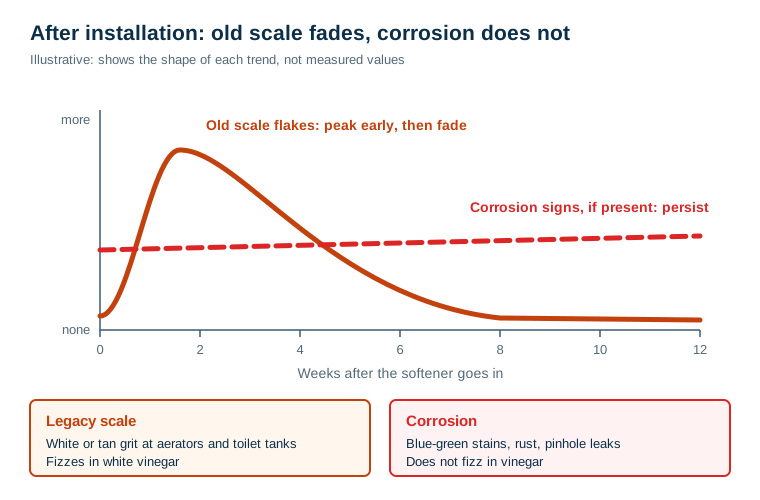
To tell the two apart:
| Test | Legacy scale | Corrosion |
|---|---|---|
| Colour | White, cream or tan grit | Blue-green (copper) or rust-brown (iron) |
| Drop it in white vinegar | Fizzes and softens | Does not fizz |
| Trend over weeks | Tapers off | Continues or gets worse |
| Where it shows up | Aerators, showerheads, toilet tanks, water heater drain | Stains in sinks and tubs, pinhole leaks, green crust at joints |
Scale that keeps appearing long after installation, or that does not fizz in vinegar, calls for a different explanation. The residue key in why a hardness test reads zero but scale remains covers silica and the other deposits a softener cannot touch.
What to do while it sheds: clean aerators and showerhead screens every week or two, flush the water heater once the flakes slow down, and leave the softener in service. Bypassing it restarts the process.
Pipe by Pipe: What Changes When You Soften
| Pipe material | Corrosion effect of softening | Scale effect of softening | Watch for |
|---|---|---|---|
| Copper | None measurable on balanced water (EPA, METALogic) | Stops hot-side scale | Acidic raw water. Treat pH first |
| PEX and CPVC | Does not corrode | Stops scale at fittings and valves | Nothing specific to softening |
| Galvanized steel | No worse than hard water in the 12-month field study | Stops new scale. Old deposits may shed | Rust and grit for a while after installation. Existing corrosion continues |
| Brass valves and fittings | No difference in the BSI heating-rig test | Keeps cartridges and mixing valves free | Nothing specific to softening |
| Lead service line or lead solder | No pattern of higher lead leaching in the EPA loops | Not relevant | A softener is not lead control. Test for lead separately |
What a Softener Cannot Do for Your Pipes
- It cannot neutralize acidic water. Softening does not raise pH. Water below about pH 7 needs a neutralizer or chemical feed.
- It cannot repair corrosion that is already under way. Pitted copper and rusted galvanized pipe keep failing on their existing damage.
- It is not lead or copper treatment. Removing hardness is not corrosion control, and a softener should never be relied on to lower lead at the tap.
- It cannot quickly clear pipes that scale has already narrowed. Expect gradual shedding, not a restored bore.
What to Do Next
- Test the raw water's pH and alkalinity before or alongside the softener decision. The softener passes both straight through, so they tell you whether your pipes are at risk.
- If pH is below 7, put a neutralizer ahead of the softener. Size the softener on the hardness measured after the neutralizer.
- If pH is normal, soften without worrying about corrosion. The pipe-loop studies support it.
- Expect flakes for some weeks after installation. Clean the screens and flush the heater. Worry only if they do not fade or do not fizz in vinegar.
- Check that the softener rinses fully. Salty-tasting water after a regeneration means brine is reaching the house. That is a fault to fix, not a feature of softened water.
Frequently Asked Questions
Is softened water corrosive to copper pipes?
Not on its own. An EPA pipe-loop study of copper tubing, copper-solder pipe, lead pipe and brass faucets found that ion-exchange softened water did not produce a pattern of higher metal leaching than the same water unsoftened. The softener also did not change pH, total inorganic carbon, dissolved oxygen or chlorine, which are the factors that drive copper corrosion. The exception is water that was acidic before it reached the softener. That water was already aggressive, and softening does nothing to correct it.
Why do plumbers say soft water ruins pipes?
Mostly because naturally soft water does. Rain-fed surface supplies in New England, the Pacific Northwest and parts of the Southeast are soft, acidic, low in dissolved solids and low in alkalinity, and that combination corrodes copper. Softened water is different. It keeps the pH, alkalinity and dissolved solids of the hard water it came from, and only the calcium and magnesium are swapped for sodium. The two waters share a name but not a chemistry.
Does hard water scale protect pipes from corrosion?
Not reliably. The Water Quality Association's 2023 white paper found little scientific evidence that calcium carbonate scale works as corrosion control. Scale builds up in porous, uneven patches rather than a continuous layer, and corrosion goes on underneath it. Removing hardness does not strip away a shield your pipes were relying on.
Why are there white flakes in my water after installing a softener?
Usually it is old scale coming loose. Softened water is undersaturated with calcium carbonate, so it slowly loosens deposits that hard water built up in older pipe and in the water heater. The flakes are white to tan, gritty, and fizz in vinegar. They collect on aerator screens for some weeks and then taper off. Corrosion products look different. Copper corrosion shows up as blue-green staining, and iron corrosion as rust-brown water, and neither of them fades with time.
Will a water softener remove existing scale from pipes?
Slowly and only partly. Softened water can dissolve some old calcium carbonate over months, which is where the flakes after installation come from, but it will not clear a heavily restricted galvanized line or a scaled tankless heat exchanger. Those need descaling or replacement. What a softener does reliably is stop new scale forming, especially on the hot side where most of it builds up.
Should I install a softener if my house has galvanized pipes?
A softener will not make galvanized pipe corrode faster, according to a 12-month field study of copper and galvanized steel installations. Old galvanized pipe does tend to shed rust and loosened scale when its water chemistry changes, so expect a period of discoloured or gritty water, and clean the aerators more often. If the galvanized pipe is already badly corroded, it will keep failing whether you soften or not. Plan to re-pipe on its condition, not on the softener.
