
Electric vs Non-Electric Water Softeners: Real Tradeoffs
A non electric water softener uses the flow and pressure of your own water to drive its control valve, so it needs no outlet and keeps working in a power cut. The tradeoffs are that it needs steady dynamic pressure at the softener, it usually costs more to buy, and it is often serviced through one brand's dealers.
An electric softener does the same softening from a small plug-in transformer. The deciding questions are pressure, outlet and outages, in that order.
How a Non Electric Water Softener Works Without a Plug
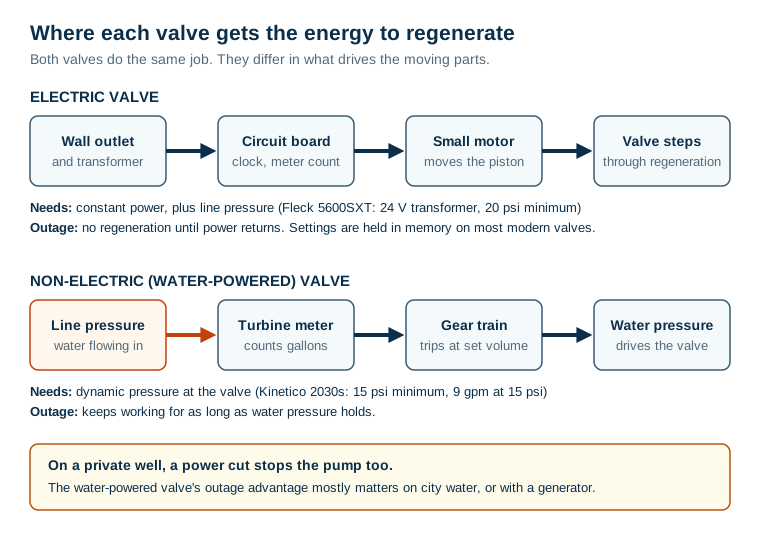
Both kinds of softener use the same resin and the same regeneration steps. The only difference is what moves the valve.
Electric valves take power from a wall outlet through a small transformer. The circuit board counts gallons from a meter, or keeps time for a timer model. A small motor turns a cam or moves a piston through backwash, brine draw, rinse and refill. The Fleck 5600SXT, one of the most common residential valves, runs from a 24-volt transformer rated at 9.6 VA. Its downflow service manual gives an operating range of 20 to 125 psi. The running cost is small. How much electricity a water softener uses works it through.
Non-electric valves take their energy from the water itself. Kinetico's 2030s data sheet describes the design:
- A turbine meter counts the water as it passes.
- The valve operates "using a minimum inlet pressure of 15 psi. Pressure shall be used to drive all valve functions. No electric hook-up shall be required."
- Two tanks alternate. One tank provides "water to service and to the regenerating tank". The house gets soft water throughout, and the regenerating tank is rinsed with softened water.
- The valve "will prevent the by-pass of hard water to service during the regeneration cycle."
That last point is a genuine difference from most single-tank electric softeners. A single-tank electric unit sends hard bypass water to the house while it regenerates, which is why it is normally set to run at 2 a.m. A twin-tank water-powered unit can regenerate at any hour. Twin-tank electric softeners exist too, so this advantage comes from the second tank rather than from the lack of a plug.
The Pressure Check That Decides the Site
The claim you will read most often is that non-electric softeners "need more pressure". The published numbers do not support that as a blanket rule:
| Valve | Minimum pressure (manufacturer) | Note |
|---|---|---|
| Kinetico 2030s (non-electric) | 15 psi, dynamic | 9 gpm at 15 psi, 15 gpm at 30 psi |
| Fleck 5600SXT (electric) | 20 psi | Its troubleshooting table says to increase line pressure to 20 psi |
| Clack WS1 (electric) | 20 psi | Same 20 to 125 psi range |
So pressure is not a non-electric problem. It is a softener problem, and it rules out both types on the same sites. What makes it the deciding factor is how the minimum is measured, and what a fix costs.
It is a dynamic figure. "Dynamic" means pressure measured while water is flowing. A gauge on a sleeping house reads static pressure, which is always higher. The softener has to work at the pressure left after the pipe runs, filters and fixtures have taken their share.
It is measured at the softener inlet, not at the street or the pressure switch. On a well with a 20/40 pressure switch, the system drops to 20 psi at cut-in by design. A sediment filter and an iron filter ahead of the softener can each take a few more psi when dirty. That can put the softener inlet below 15 psi at exactly the moment the house is using water.
Flow falls with pressure. Kinetico's own figures give 9 gpm at 15 psi against 15 gpm at 30 psi. A site that scrapes over the minimum may regenerate correctly and still deliver weak showers.
How to measure it:
- Fit a pressure gauge as close to the softener inlet as you can. A hose-bib gauge on a nearby spigot on the same line is a reasonable stand-in.
- Open two or three fixtures, such as a shower, a kitchen tap and an outdoor tap.
- On a well, keep them running through a full pump cycle and note the lowest reading, just before the pump cuts in.
- Repeat with any filters at the end of their service life, not freshly changed.
If that lowest reading sits above the valve's minimum with some margin, pressure is not your deciding factor. If it does not, neither type of softener will work reliably. The usual fix is a booster pump, and a booster pump needs electricity. That removes the main reason for going non-electric in the first place. The pressure range a softener needs, including the maximum, is covered in water softener pressure requirements.
No Outlet Nearby: Add a Receptacle or Pay the Premium?
The honest reason most people look at a non-electric softener is that there is no outlet where the water line comes in. Before that becomes a buying decision, it should be a simple sum.
| Line | Electric route | Non-electric route |
|---|---|---|
| Softener, installed | Quote A | Quote B |
| New receptacle by an electrician | Quote C | Not needed |
| Total | A + C | B |
Get quote C before you shop. Where a circuit already runs close by, such as a basement with a laundry or a garage with lighting, adding a receptacle is usually a short job. It becomes expensive when a new circuit must be run a long way from the panel, through finished walls or to a detached building. Ask the electrician what local code requires for a receptacle in that location, because damp basements and garages often carry specific requirements.
If A + C is less than B, the outlet is the cheaper way to get a softener, and it also serves anything else that later needs power there. That includes a UV unit, a booster pump or an iron filter with its own electric valve.
Options that are not a permanent fix:
- An extension cord from another room. It works on day one and gets unplugged, kinked or soaked later. An appliance that runs every day deserves a real receptacle.
- A timer-only softener on a cord. This adds salt waste to the extension-cord problem.
Off-grid and remote sites have another option. Clack makes a solar-powered version of its Water Specialist valve, the SQ. On a cabin with solar but no mains, that can beat both the water-powered premium and a long cable run.
Where the problem is also the lack of a drain nearby, installing a water softener with no drain or outlet nearby covers both constraints together. A non-electric softener still needs a drain for its regeneration water. Kinetico's 2030s sends 29 gallons to drain per regeneration.
Power Outages: Who Actually Benefits
The outage argument is the one that most needs checking against your own water supply.
On city water, the mains stay pressurised during a local power cut. A water-powered softener keeps metering and regenerating. An electric one stops counting and cannot regenerate until power returns, but the resin still softens water until its remaining capacity runs out. For outages measured in hours, the difference is academic. For outages measured in days, in places where storms regularly take the grid down, it is real.
On a private well, the argument mostly collapses. The well pump is electric. When the power goes, the pressure tank delivers its stored water and then the house has no pressure at all. The non-electric softener has nothing to run on. It only keeps working if the pump is on a generator or battery backup, and then the same backup could run an electric valve's transformer.
What electric valves do in an outage. Most modern units keep their programming in memory. Clack's Water Specialist manual says that if the power goes out "the system will keep time until the battery is depleted", and that it "will remember the rest." Older units may lose the time of day. After any long outage, check the clock, because a softener that thinks 2 a.m. is 2 p.m. will regenerate while you shower.
Buying and Repair: Where the Costs Differ
Purchase price. Non-electric softeners generally cost more than an electric metered softener of similar capacity. They also tend to be sold through authorised dealers rather than online, which removes the option of a self-install kit.
Parts. The common electric valves, Fleck and Clack among them, are fitted by many softener brands and sold by many suppliers. Seals, pistons, motors, circuit boards and transformers are easy to find and priced competitively. Water-powered valves use proprietary internals, so parts and service usually come through that brand's network. That can mean better-trained technicians. It also means less competition on price.
What wears out. Electric valves fail in electrical ways: transformers, circuit boards, motors, position sensors. They are cheap to swap when parts are generic. Water-powered valves have no electronics to fail, but their turbines, gear trains and hydraulic seals wear, and sediment reaching the valve is a common enemy. Neither type is maintenance-free. Typical prices for the common fixes are compared in common water softener repair costs.
Side by Side
| Factor | Electric softener | Non-electric softener |
|---|---|---|
| Energy to run the valve | Plug-in transformer | Household water pressure |
| Minimum pressure (examples) | 20 psi (Fleck 5600SXT, Clack WS1) | 15 psi dynamic (Kinetico 2030s) |
| Needs an outlet | Yes | No |
| Needs a drain | Yes | Yes |
| Regenerates in a power cut | No | Yes, while pressure lasts |
| On a well in a power cut | Stops | Stops too, unless the pump has backup power |
| Hard water during regeneration | Yes on single-tank units | Not on twin-tank designs |
| Parts availability | Wide, many suppliers | Usually through the brand's dealers |
| Purchase price | Lower | Usually higher |
| Programming | Display, many settings | Mechanical, set by the dealer |
Which One Fits Your Site
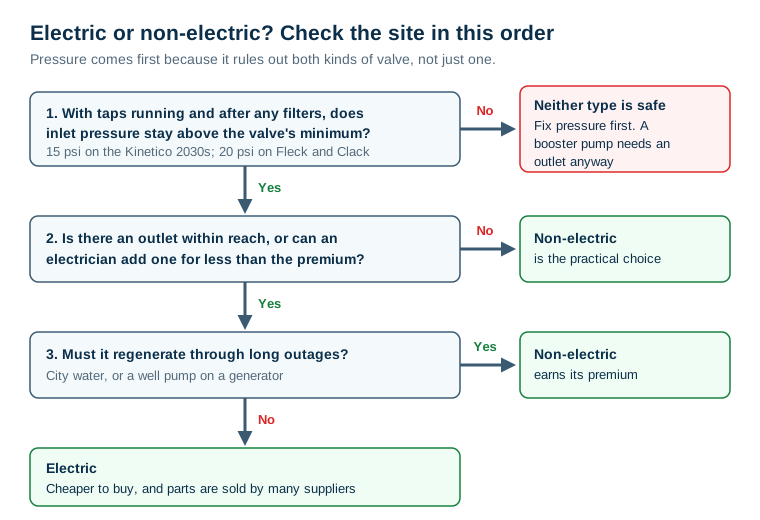
Work through it in this order:
- Measure dynamic pressure at the softener inlet, with fixtures running, downstream of any filters and at the bottom of the pump cycle. If it does not stay above the valve's minimum, fix pressure first. Neither type is the answer yet.
- Price the outlet. If an electrician can add a receptacle for less than the non-electric premium, the electric route is cheaper.
- Weigh outages honestly. City water with long, frequent outages favours non-electric. A well with no backup power for the pump does not.
- Consider who will service it. If there is no dealer for a water-powered brand within reach, an electric valve with generic parts is the lower-risk choice. If there is one, whether a Kinetico quote justifies its premium over 15 years of running costs is the number to check before signing. If you are weighing it against another dealer, compare a water-powered Kinetico with an app-driven electric EcoWater on salt and water use, or Kinetico with RainSoft on warranty conditions and efficiency.
What Neither Type Can Do
- Neither fixes low pressure. Both need a minimum dynamic pressure, and a softener takes a few psi of its own.
- Neither avoids a drain. Regeneration water has to go somewhere.
- Neither removes more than hardness and a little dissolved iron. Chlorine, sediment, bacteria and oxidised iron need their own treatment, whatever drives the valve.
- Neither makes the resin last longer. Resin life depends on the water chemistry, not on the valve's power source.
The short answer: a non-electric softener is the right tool where there is no practical way to get power to the softener, or on city water where long outages are routine. Everywhere else, get a quote for a receptacle first. It usually settles the question.
Frequently Asked Questions
How does a non-electric water softener work?
Water flowing through the unit spins a turbine meter, which turns a gear train that counts gallons. When the set volume is reached, the gear train trips the valve and the household's water pressure drives it through the regeneration steps. Kinetico's 2030s specification says pressure is used to drive all valve functions and no electric hook-up is required. Most designs use two tanks, so one is always in service while the other regenerates.
What water pressure does a non-electric softener need?
It needs a minimum dynamic pressure, measured at the softener inlet while water is flowing. Kinetico's 2030s data sheet gives a range of 15 to 125 psi dynamic pressure, with a flow range of 9 gpm at 15 psi and 15 gpm at 30 psi. Electric valves need pressure too: the Fleck 5600SXT and Clack WS1 both list 20 psi minimums. Measure with fixtures running, downstream of any filters, at the bottom of the pump cycle.
Are non-electric water softeners better?
They are better at two things: running where there is no outlet, and continuing to regenerate through power cuts on city water. They are usually more expensive to buy and are often sold and serviced through one brand's dealer network, which can make repairs dearer and slower. Where an outlet is available and outages are rare, an electric metered softener does the same softening for less.
Does a non-electric softener work during a power outage on a well?
Only while there is pressure in the system. A private well pump is electric, so in an outage the pressure tank runs down and the house loses water pressure. The softener stops with it. The water-powered valve's outage advantage matters mainly on municipal water, or on a well with a generator or backup power for the pump.
What happens to an electric water softener when the power goes out?
It stops counting and cannot regenerate until power returns, but you still get softened water from the resin's remaining capacity. Most modern valves keep their programming in memory. Clack's Water Specialist manual says the valve keeps time on a backup battery and remembers its other settings. After a long outage, check the time of day, because a wrong clock shifts regeneration into the hours you use water.
Can I plug a water softener into an extension cord?
It will run, but an extension cord is a temporary fix, not a permanent power supply for an appliance that runs continuously. Cords get kinked, unplugged and wet in basements and garages. If there is no receptacle near the softener, get a quote from an electrician for adding one. That quote is the number to compare against the price premium of a non-electric softener.
