
Why Low-pH Well Water Needs Separate Treatment
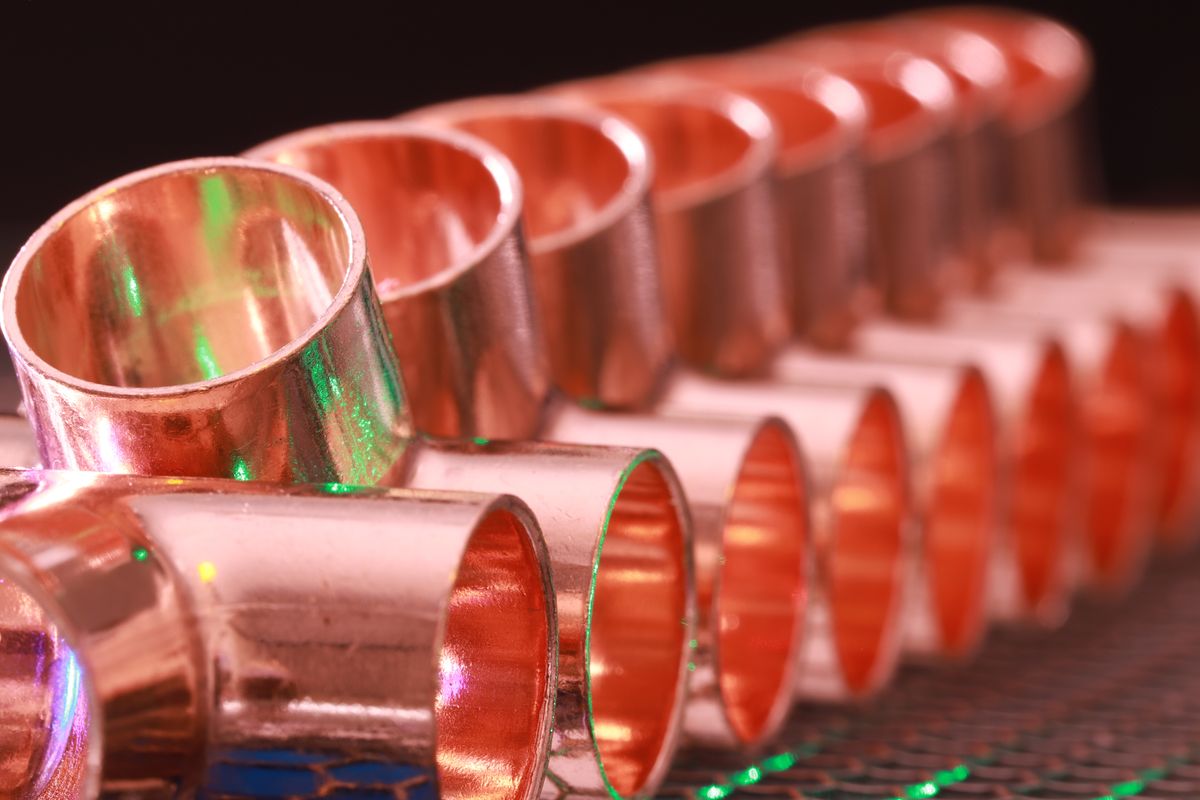
Low pH well water treatment means raising the pH with a neutralizer or a soda ash feed before anything else touches the water. A softener cannot do it. On acidic water, softening removes the calcium that slows copper corrosion, so the pipes corrode faster. Neutralize first, then soften. Also plan for the hardness a calcite neutralizer adds back.
This page covers the corrosion problem itself: recognizing it, confirming it and treating it. The side-by-side comparison with a softener, including a worked sizing example, is in water softener vs acid neutralizer.
What Acidic Water Is Doing to a Copper-Plumbed House
Acidity on a private well usually comes from carbon dioxide. Rain picks it up from soil and decaying plant matter on the way down. Where the aquifer rock has little limestone to buffer it, the water arrives at the house still acidic. Penn State Extension estimates that about 60% of wells, springs and cisterns serving individual Pennsylvania homes have corrosive water. That share is for one state, but the geology behind it, granite, sandstone and other rock low in carbonate, runs through much of the East and Upper Midwest.
Acidic water dissolves metal from the plumbing it passes through. In most houses that metal is copper. There are three results:
- Metal ends up in the drinking water. Virginia Cooperative Extension lists EPA's copper action level at 1.3 mg/L and the health goal for lead at zero. Lead comes from older solder, brass fittings and faucet bodies, not from the copper itself.
- The pipe wall thins and eventually leaks. The attack is rarely even. It concentrates at points, and those become pinholes.
- Fixtures stain. Dissolved copper comes back out of solution where water drips and dries.
EPA recommends drinking water between pH 6.5 and 8.5, according to the VCE fact sheet. The number alone does not tell the whole story. Soft water with little alkalinity at pH 6.8 can be more aggressive than harder water at 6.5.
Blue-Green Staining and Pinhole Leaks: How to Identify Them
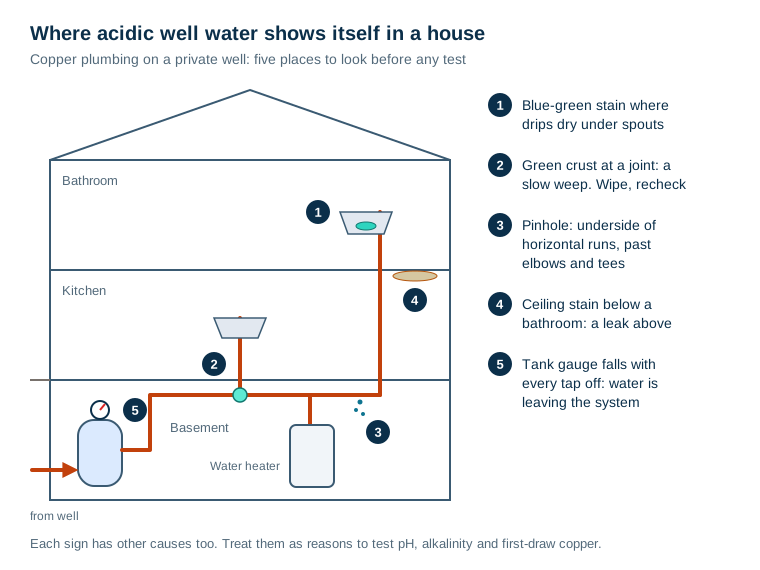
Every one of these signs has another possible cause, so treat them as reasons to test, not as a diagnosis.
Blue-green staining. Look for it under the faucet spout, where drips land in a sink or tub. Also check the tub drain, the toilet bowl below the water line, and anywhere water evaporates and leaves a line. The color is copper carbonate and hydroxide left behind as dissolved copper dries. Penn State lists "bluish-green stains in sinks" as the first sign of corrosive water. Blue-green usually means copper and orange-brown usually means iron. Some wells show both.
Green crust at joints. A green or blue-green bloom on the outside of a solder joint, compression fitting or valve body means water has been weeping through at that spot. Wipe it off and check again in a week. A crust that comes back is an active seep.
Pinhole leaks. A pinhole often starts as a fine mist or a slow bead of water, not a drip. Check these places first:
- the underside of horizontal copper runs in the basement and crawlspace
- the pipe just past elbows and tees, where turbulence adds to the chemical attack
- hot-water lines, where heat speeds the reaction
- ceiling drywall below upstairs bathrooms, where a leak shows up as a stain before you find the pipe
The well-specific leak test. A private well system has a gauge that a city customer does not have. Turn off every fixture, the ice maker and irrigation, note the pressure-tank gauge and wait an hour. If the pressure falls or the pump starts with nothing running, water is leaving the system somewhere. The cause could be a pinhole, a leaking toilet flapper or a failing check valve at the well. Rule out the easy ones and then go looking along the copper.
Metallic taste in the first glass of the morning. Water that has stood in copper overnight picks up the most metal. Penn State lists this taste as a sign of corrosive water. How to tell pipe metal from source metal is covered in why softened water has a metallic taste.
Short water heater anode life. A heater that eats its anode rod unusually fast can be another sign of aggressive water, though a softener also shortens anode life.
Why a Softener Makes Acidic Water Worse
This is the part most sales conversations skip. On acidic water, a softener installed alone speeds up copper corrosion.
The softener is not doing anything wrong. It swaps calcium and magnesium for sodium, exactly as designed. The problem is that calcium is part of copper's defense. On balanced water, a thin film of copper oxides and carbonates forms on the pipe wall, helped by calcium carbonate from the water. Acidic water keeps dissolving that film. Softening then removes the calcium that was partly rebuilding it, and it does nothing to the pH.
Penn State describes corrosive water as water that is "soft and acidic." Put a softener alone on an acidic well and you have produced exactly that. The Langelier index arithmetic, which shows the same water becoming more than twice as aggressive after softening, is worked by hand in how to interpret pH and hardness together.
The fix is order, not avoiding softeners. Neutralize the water first. The softener then works on water that is no longer aggressive.
Confirm It With Four Numbers Before Buying Anything
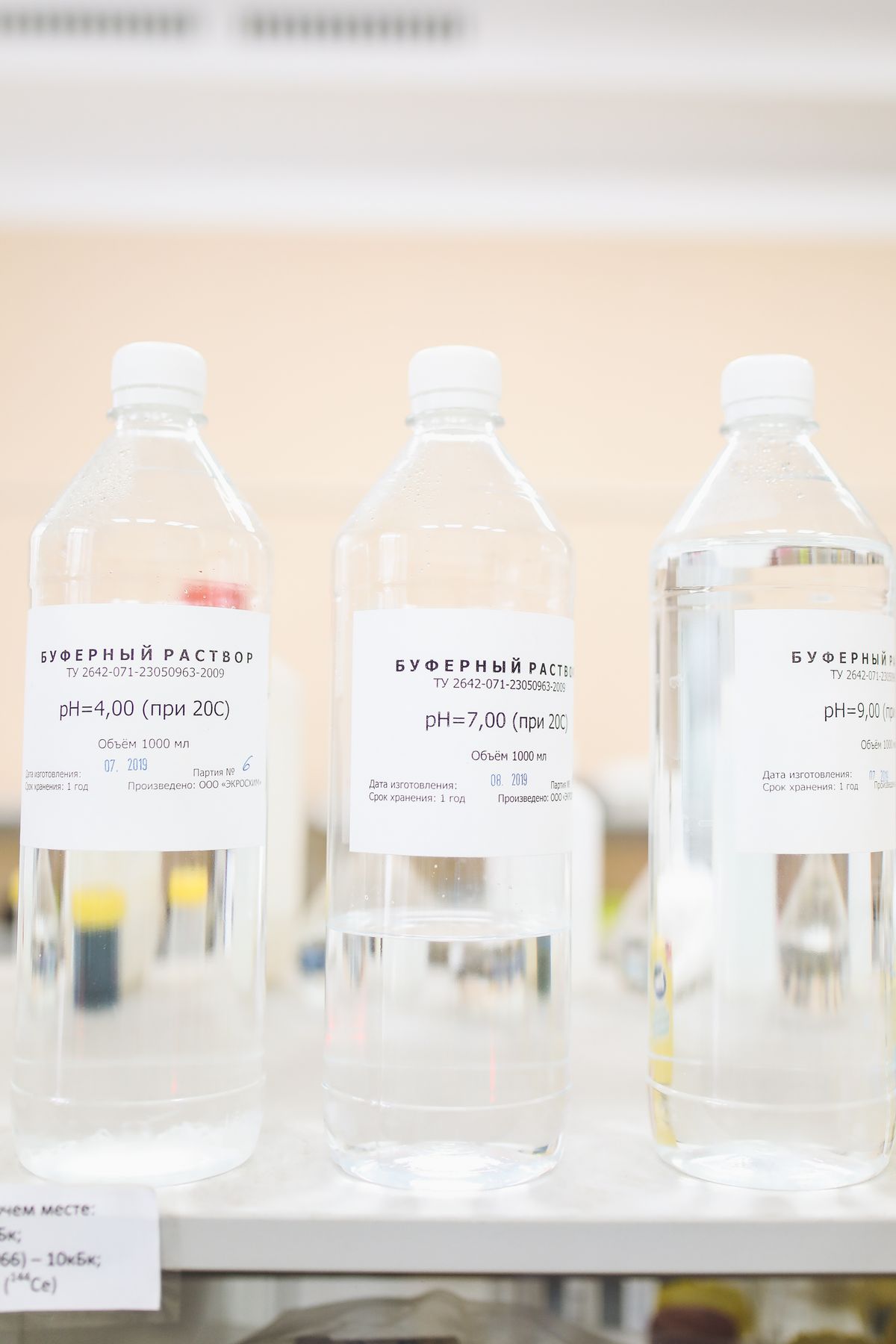
A neutralizer bought on the strength of a blue stain can still be the wrong size or the wrong type. Get these four numbers from one sample:
| Test | Why it matters | Where to get it |
|---|---|---|
| pH | Decides which of the three treatments fits | Lab, or a meter calibrated with buffer solutions. Strip readings are too coarse |
| Alkalinity | Shows how strongly the water resists pH change and, with pH, lets you estimate the carbon dioxide to be neutralized | Lab |
| Hardness | The starting figure the neutralizer will add to | Lab or a titration kit |
| Copper and lead, first draw | Shows whether metal is actually reaching the tap | Certified lab. Penn State recommends a first-draw morning sample |
On a well, add iron and manganese to the same order. They change the treatment order, covered below, and the softener sizing. Test iron and manganese before sizing a softener lists what to ask the lab for.
One sample gives you a starting point. A well at pH 6.9 in winter can drop after spring recharge. If the first result is borderline, take a second sample in a different season before choosing between treatments. Why the numbers move is in why well water chemistry changes.
Low pH Well Water Treatment: Three Methods, Matched to the pH
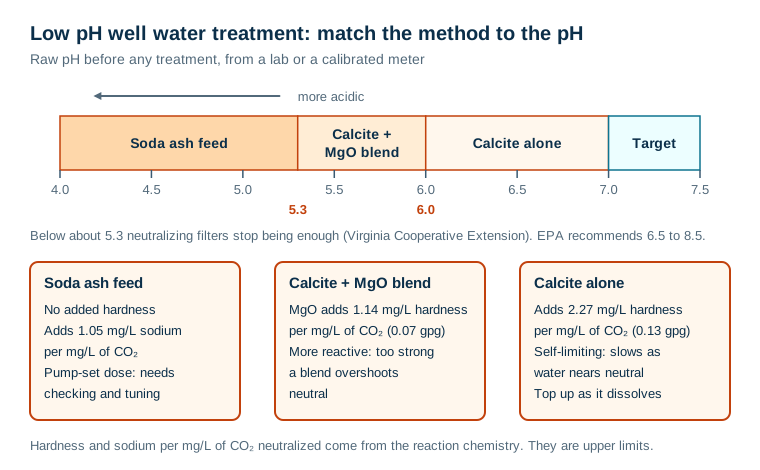
There are three standard treatments. The raw pH decides between them, with one exception: a household that cannot accept extra hardness.
| Calcite neutralizer | Calcite plus magnesium oxide blend | Soda ash chemical feed | |
|---|---|---|---|
| What it is | Tank of crushed calcium carbonate (limestone or marble) | Calcite with a minority of magnesium oxide (often sold as Corosex or FloMag) | Metering pump injecting a sodium carbonate solution |
| pH range | Mildly acidic water, roughly 6.0 and up | Down to about 5.3, per VCE | Below 5.3, or any pH where hardness must not rise |
| Adds hardness | Yes | Yes, but less per unit of acid | No |
| Adds sodium | No | No | Yes |
| Self-limiting | Yes. Calcite dissolves more slowly as water nears neutral | Less so. Magnesium oxide can push pH past neutral if the blend is too strong | No. The dose is set by the pump, so it must be adjusted |
| Upkeep | Top up media as it dissolves; backwash so the bed does not pack | Same as calcite | Mix solution, clean the pump and injector, check pH |
Calcite is the default because it is simple and hard to overdo. It dissolves only while there is acid to dissolve it. Penn State notes that the tank "must be routinely refilled with neutralizing material." That is expected, because the media is used up as it neutralizes the water.
Magnesium oxide is more reactive, so it corrects lower pH. Suppliers blend it in as a small share of the bed for the same reason: too much of it can take the water past neutral. VCE puts the lower limit for neutralizing filters at about pH 5.3, depending on the mix.
Soda ash takes over below that. Penn State says chemical feed is injected before the pressure tank, prefers soda ash to sodium hydroxide because it is safer to handle, and notes that it does not raise hardness. The cost is ongoing upkeep and some added sodium.
Aeration also raises pH, by stripping out carbon dioxide. It is usually installed for radon, hydrogen sulfide or iron, and the higher pH is a side benefit. On its own it is rarely the answer to acidic water.
The Hardness the Neutralizer Adds Back
A calcite neutralizer works by adding hardness, so the softener after it has more to remove than the raw well test shows. Penn State says it plainly: the process "will increase the hardness of the water, but this is necessary for proper corrosion control."
The amount depends on how much carbon dioxide is being neutralized, and the chemistry sets the ratio:
| Treatment | Reaction with carbon dioxide | Added per 1 mg/L of CO₂ neutralized |
|---|---|---|
| Calcite (CaCO₃) | One calcium for each CO₂ | 2.27 mg/L hardness as CaCO₃ (0.13 gpg) |
| Magnesium oxide (MgO) | One magnesium for every two CO₂ | 1.14 mg/L hardness as CaCO₃ (0.07 gpg) |
| Soda ash (Na₂CO₃) | Two sodium for each CO₂ | No hardness; 1.05 mg/L sodium |
These ratios come from the reaction stoichiometry. Here is how they play out on water with 30 mg/L of free carbon dioxide:
- Calcite that neutralizes all of it adds up to about 68 mg/L, or 4.0 gpg.
- Magnesium oxide doing the same job adds about 2.0 gpg.
- Soda ash adds no hardness and about 31 mg/L of sodium.
In practice a neutralizer stops short of consuming every milligram of carbon dioxide, so these are upper limits, not predictions.
That added hardness changes the softener you need. A well that tested at 6 gpg might leave the neutralizer at 9 or 10 gpg. A softener set for 6 gpg runs out of capacity days before it regenerates. Estimating carbon dioxide from pH and alkalinity, and carrying it through to resin size, salt and regeneration frequency, is worked step by step in water softener vs acid neutralizer. The short version is to measure hardness after the neutralizer has run for a couple of weeks and set the softener to that number.
Upflow or Backwashing: Choosing the Neutralizer Tank
Calcite tanks come in two designs, and the choice depends on your house more than on your water.
Upflow (non-backwashing). Water enters at the bottom and rises through the bed. There is no control valve, no drain line and no power. The flowing water keeps the bed loose. It suits a small household with a modest flow and nowhere convenient to run a drain. The downside is that the bed can still pack or channel over time, and there is no automatic way to loosen it.
Backwashing. A control valve, like a softener's, periodically reverses the flow to lift and rinse the bed. That keeps calcite from cementing and flushes out fines and any iron the bed has caught. It needs a drain, an outlet and enough well flow to lift the bed. How well pump flow limits backwashing covers how to check your pump before buying.
Whichever you choose, three things decide whether it works:
- Contact time. The water needs time in the bed to dissolve enough calcite. A tank that is too small for your peak flow lets acidic water through during showers and laundry, even though a slow-flow test looks fine.
- Media level. Calcite dissolves as it works, so the bed gets shorter. The pH at the outlet falls gradually as the level drops. Check the level and top it up on a schedule, not only when stains come back.
- A sample tap after the tank. Place one between the neutralizer and the softener. It is the only way to check the neutralizer's output pH and the hardness it adds, and both numbers change as the bed is used up.
With the pH, the flow and the drain question answered, comparing neutralizer tanks by starting pH narrows the choice to a few models.
Where the Neutralizer Sits in the System
The neutralizer goes after the pressure tank, where Penn State says it is usually installed, and before the softener. Two other stages can change that:
- An iron filter. Oxidizing iron media need water that is near neutral. NDSU Extension warns that greensand will "probably not" remove iron and manganese adequately below pH 6.8. On an acidic, iron-bearing well, the neutralizer comes ahead of the iron filter.
- A soda ash feed. This has no tank position. It is injected ahead of the pressure tank, according to Penn State.
A softener already installed on acidic water cannot be fixed by adding a neutralizer after it. The neutralizer has to go upstream, which usually means re-plumbing. How every stage fits together, from aeration to UV, is set out in well water treatment train order.
What Neutralizing Will Not Fix
Raising the pH stops the chemistry from getting worse. It does not undo what has already happened:
- Existing pinholes stay. Pipe that has already thinned is still thin. Houses with several pinhole leaks often need sections re-piped even after treatment.
- Lead already in the plumbing does not disappear. Neutralized water dissolves much less of it, but only a first-draw retest after treatment shows whether the level at the tap has dropped.
- Bacteria, nitrate and arsenic are untouched. A neutralizer is not a disinfection or health-contaminant treatment.
- Blue-green stains already on fixtures stay. They need cleaning off. New stains should stop forming.
- Acidity that is not from carbon dioxide may not respond the same way. Water acidified by mine drainage or sulfides behaves differently, and calcite can become coated and stop working. Ask for a lab interpretation if your well is near mining.
- A softener still cannot do any of this. It is the second stage on an acidic, hard well, never the first.
Next Step
Low pH well water treatment starts with a lab test for pH, alkalinity, hardness and first-draw copper. Choose the treatment from the pH: calcite, a calcite and magnesium oxide blend, or soda ash. Install it ahead of any iron filter and any softener. Then retest hardness at the neutralizer outlet before you set the softener. If you already have blue-green staining or a pinhole, do not wait for a second season of data before neutralizing. The corrosion continues while you wait.
Frequently Asked Questions
How do you fix low pH in well water?
Most homes use a calcite neutralizer, a tank of crushed calcium carbonate that dissolves into the water and raises its pH. For more acidic water a blend of calcite and magnesium oxide is used. Virginia Cooperative Extension says neutralizing filters can treat water down to about pH 5.3, depending on the mix. Below that, or where you cannot accept any added hardness, a chemical feed pump injects soda ash. A softener is not a pH treatment.
Will a water softener raise the pH of acidic well water?
No. A softener swaps calcium and magnesium for sodium and leaves the pH essentially where it was. It also removes the calcium that helps copper pipe form a protective film, so on acidic water it makes the water more aggressive toward plumbing, not less. Neutralize first, then soften if the water is still hard afterward.
Is low pH well water safe to drink?
The acidity itself is not usually the health issue. The problem is what acidic water dissolves out of the plumbing. Copper has an EPA action level of 1.3 mg/L, and the EPA's health goal for lead is zero. Acidic water can raise both, especially in water that has stood in the pipes overnight. A first-draw lab test for copper and lead tells you whether it is happening in your house.
Does an acid neutralizer make water hard?
A calcite or calcite-blend neutralizer does. It raises pH by dissolving calcium carbonate, and magnesium oxide if it is in the blend, so the water leaves harder than it arrived. Penn State Extension says this added hardness is necessary for corrosion control. The amount depends on how much acid is in the water. Soda ash injection raises pH without adding hardness but adds sodium instead.
What pH is too low for well water?
EPA's recommended range for drinking water is 6.5 to 8.5, and most treatment professionals aim for about 7.0 at the tap. Water below 6.5 is commonly corrosive to copper, and water just below 7 can still cause problems if it is soft and low in alkalinity. Always read pH together with alkalinity and hardness before choosing equipment.
Can I put a softener and an acid neutralizer on the same well?
Yes, and many acidic, hard wells need both. The neutralizer goes first and the softener second. The softener then has to remove the original hardness plus the hardness the neutralizer adds, so it should be set and sized for the water leaving the neutralizer, not the raw well water.
