
Eddy vs ScaleBlaster: Which Electronic Descaler Is Safer to Try?
Eddy vs ScaleBlaster comes down to how long each one gives you to find out whether it works. Both are wire coils wrapped around your main water pipe, driven by a plug-in box. Neither removes hardness, and neither maker publishes an independent scale test of its own unit. So the sensible purchase is a trial. On that basis the Eddy is the safer one to try: it costs about the same but comes with a 12-month money-back guarantee and lifetime repair or replacement. The ScaleBlaster SB-75 gives you 90 days, and its own manual says the full results can take that long to show.
Disclosure: Hard Water Solved may earn a commission if you buy through links on this page, at no extra cost to you. It does not change which products we include or how we rank them. Read our disclaimer.
Eddy vs ScaleBlaster at a Glance
| Eddy ED6002P-US | ScaleBlaster SB-75 | |
|---|---|---|
| How it works | Electronic coils wrapped on the pipe, plug-in control box | Signal cable wrapped on the pipe, plug-in control box |
| Hardness limit | Not stated on Eddy's US site; retailer listings say about 20 gpg | Up to 19 gpg (325 ppm), per the manual |
| Home size | Not stated | Up to about 4,000 sq ft, per the manual |
| Pipe size | 3/4 to 1 inch as standard; extension set for 1.5 to 2.5 inch | Wrap charts for 1/2, 3/4 and 1 inch copper, PVC and CPVC; PEX always 70 wraps |
| Pipe material | Copper, plastic or iron; not lead | Copper, PVC, CPVC, PEX; not magnetic galvanized pipe |
| Indoor or outdoor | Fitted where the main enters the home | Indoor installation only |
| Power | "About 10 cents per week", per Eddy | About 15 watts, about $8.76 a year, per the manual |
| Money-back window | 12 months, "no quibble" | 90 days, per the manual |
| Warranty | Lifetime repair or replace, with the original invoice | 3 years on materials and workmanship; extension sold online |
| Amazon | Check price on Amazon | Check price on Amazon |
How This Comparison Was Built
Method. Neither unit was physically tested. The ScaleBlaster figures come from the SB-75 Installation and Operation Manual on ScaleBlaster's site. The Eddy figures come from Eddy's US store, FAQ and guarantee page. Both brands were searched in the WQA certified-product database. Each Amazon listing was opened to confirm the product page exists.
- Compared: the two best-known whole-house electronic descalers sold on Amazon.
- Not compared: the HydroFLOW Pearl Plus. Its Amazon listing exists, but we could not confirm a current US offer or its guarantee terms on the day we checked.
- Prices are not listed here because they change often. Use the buttons to see the current price on Amazon.
Why Neither Has Earned a Performance Ranking
The question most buyers want answered is "which one works better?" There is no fair answer from published evidence.
Neither company publishes a third-party scale test of its residential unit. Eddy's US FAQ mentions FCC compliance, which is about radio interference. ScaleBlaster's manual mentions UL and CUL approval, which is about electrical safety. Neither is a performance test. Neither brand appears in WQA's certified-product database, which we searched on 2 October 2026.
The category evidence is mixed. The best-known independent study, a WateReuse project run by Arizona State University, found that electrically induced and electromagnetic devices cut scale formation by about 50% under a heated lab protocol. Other work on magnetic devices found no effect. Those results describe the technology in general, not either of these brands. We go through what that study measured, and what it did not, in water softener vs electronic descaler.
What both makers agree on is useful in itself. ScaleBlaster's manual says "the water hardness level and TDS will remain the same" and calls the unit "a water conditioner, not a water softener". Eddy's FAQ says it "cannot guarantee" removal of existing limescale. So a hardness test strip will tell you nothing about either unit. The only way to judge one is to watch scale on a heated surface. That makes the refund window the most important spec on the box.
Hardness Limit: 19 gpg vs "About 20"
ScaleBlaster states its limit plainly: the SB-75 "will handle water hardness levels up to 19 gpg (grains per gallon) or 325 ppm". Above that, the company sells larger models.
Eddy's US site does not give a hardness ceiling that we could find. Retailer listings and review sites put it at about 20 gpg, and one review site recommends a softener above 25 gpg. Treat the Eddy's limit as roughly the same as the ScaleBlaster's. Get the figure from Eddy in writing if your water is near it.
In practice, the two limits are close enough that hardness will not decide between them. It decides whether you should buy either. On water above about 20 gpg, the partial reduction a descaler might give is small against the load. A softener is the device that removes the minerals. The trade-off is set out in salt-based vs salt-free water treatment.
Installation: Where the Two Units Differ Most
Both units need a straight run of the incoming cold main and an outlet nearby. The rules differ in ways that can rule one out.
ScaleBlaster SB-75:
- Indoor only. The control box is not weatherproof.
- Pipe material: copper, PVC, CPVC and PEX. If the wrap point is galvanized pipe with magnetic properties, the manual says to cut out about 12 inches and replace it with copper or PVC.
- Placement: on the main cold line after the shutoff and before it splits to the water heater. On a well, after the pressure tank. With a softener, after the softener.
- Distances: the box within 5 feet of an outlet and within 10 feet of the wrap. The manual says the 10-foot coil lead cannot be extended.
- Wraps: set by a chart. Copper takes two layers, for example 50 wraps twice on 3/4-inch pipe. PVC and CPVC take one layer, and PEX always takes 70. The wraps must sit flush and not overlap.
- One line only. The signal treats one line and one building.
Eddy:
- Pipe size: 3/4 to 1 inch with the standard cable. Eddy sells an extension set for 1.5 to 2.5 inches.
- Pipe material: copper, plastic or iron, but not lead.
- Placement: on the main cold supply where it enters the home.
- Power lead: 6 feet as standard, with longer leads sold separately.
The practical difference: an older house with galvanized pipe at the only reachable spot can fit an Eddy without re-plumbing. The SB-75 needs a short section replaced. A house where the main is in an unheated outbuilding or outdoors suits neither the SB-75 box nor, probably, the Eddy box. Neither maker rates its control box for outdoor use.
If you already have a softener, ScaleBlaster's advice is to fit the coil after it. There is little point, though. A working softener has already removed the minerals that scale. The informational guide covers the few cases where the combination makes sense.
Refund Window and Warranty: The Deciding Difference
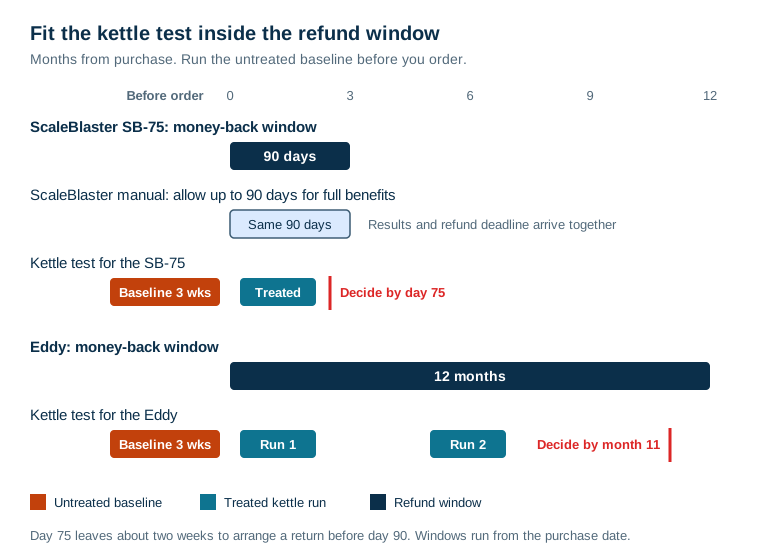
ScaleBlaster: 90 days to return, 3 years of cover. The 2023 SB-75 manual offers "a full 90-day money-back guarantee". The same manual says to "allow up to 90-days to realize full benefits" and that descaling existing pipes "takes about 3 months". Read together, the refund window closes at about the time the maker says the result should be visible. Some retailer descriptions quote a 120-day guarantee. The manual says 90, so plan on 90 unless the seller confirms otherwise in writing. The warranty covers defects in materials and workmanship for 3 years from purchase. ScaleBlaster offers an extended warranty through its website.
Eddy: 12 months to return, lifetime repair or replace. Eddy's guarantee page says you can return the unit "at any time within 12 months after purchase for a no-quibble full refund of your purchase cost". Its lifetime cover reads: "we undertake to repair or replace the unit at any time within the lifetime of the original purchaser upon presentation of the original invoice."
Two things to check before buying either one on Amazon:
- Who honours the guarantee. Both guarantees are written by the makers. Ask the seller, before you order, whether the maker's guarantee applies to a marketplace purchase, and how returns are handled.
- Keep the invoice. Eddy's lifetime cover needs the original invoice. Save the order confirmation as a PDF the day it arrives.
A Kettle-Scale Test to Run Inside the Refund Window
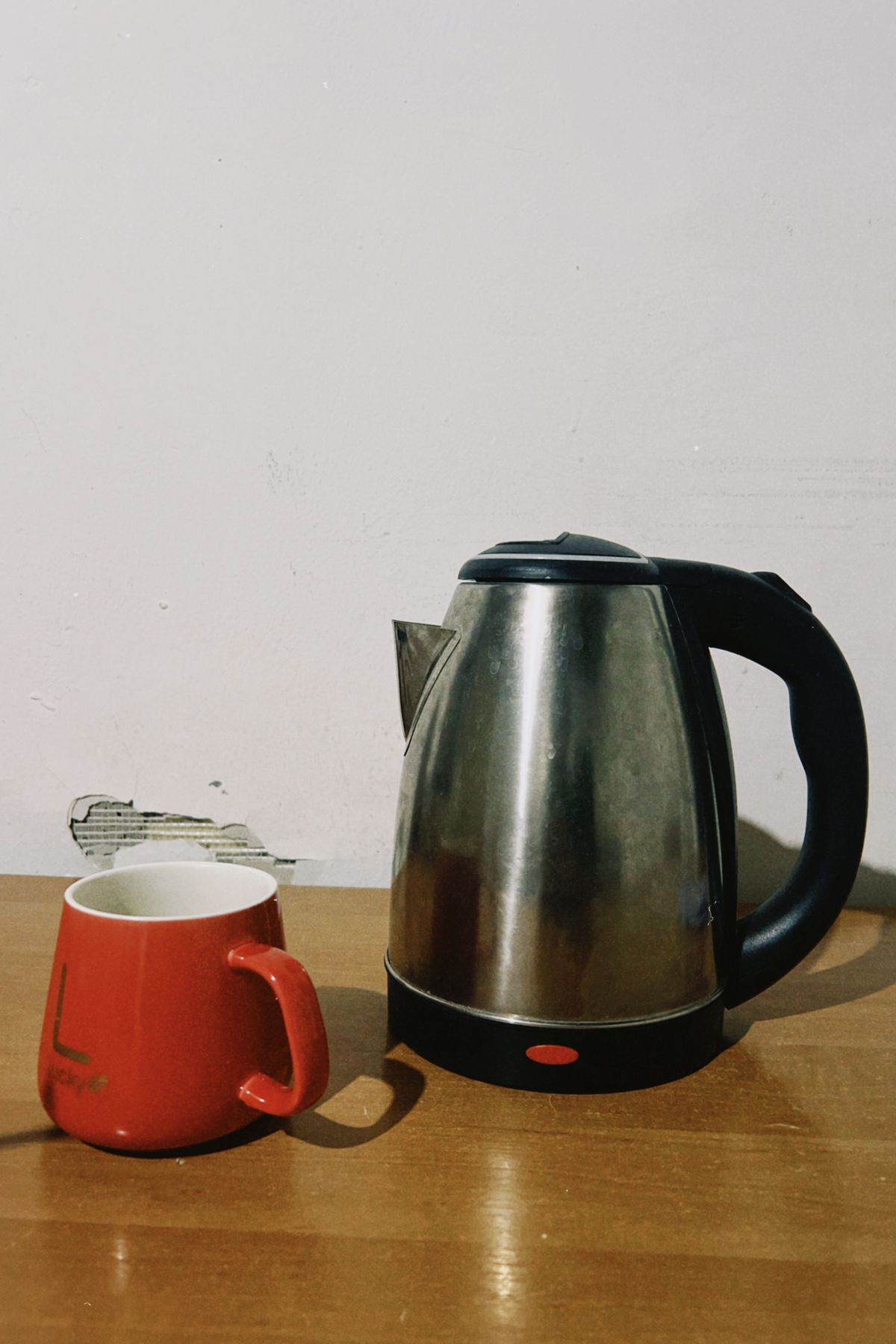
A kettle is the best home test bed. It heats the same water the same way every day, and its element shows scale within weeks on hard water. The test compares how much scale forms, and how easily it comes off, before and after the descaler goes in. Why heated surfaces show scale first, and how kettles and irons differ, is covered in limescale in kettles, coffee makers and irons.
Before you order: the untreated baseline
- Descale the kettle completely with citric acid or vinegar, rinse it well and let it dry.
- Photograph the element or base in the same spot and the same light you will use later.
- Use it the same way every day for three weeks. Fill it to the same mark from the same cold tap, and boil it the same number of times a day. Write the count down.
- Test the hardness at the cold tap on day one and day 21 with a strip or drop kit. It tells you the supply stayed the same, not anything about the descaler.
- At day 21, photograph the scale, then wipe it. Note whether it comes away with a damp cloth or needs acid.
Do this before you order. Every week of baseline you run after buying is a week taken out of the refund window. On a 90-day window, that matters.
After installing: the treated runs
- Descale the kettle again on installation day.
- Repeat the same routine for the same three weeks, with the same tap, fill mark and boil count.
- Compare the photographs and the wipe test. The independent work on electrical devices reported softer scale that brushed off, rather than hard scale needing acid, as well as less of it. Those are the two things to look for.
- Re-test hardness. It should read the same as before. If it reads lower, check you sampled the cold tap, not the hot.
When to decide
- ScaleBlaster SB-75: start the treated run in week one and run it again through week nine. Decide by about day 75, so there is time to arrange a return before day 90.
- Eddy: do a first treated run in the first two months, then a second around months five and six. That covers a change of season, and lets you check the water heater flush and the shower aerators too. Decide by about month 11.
A result is worth acting on only if it is clear. "A little less scale" in one run is within the variation of a home test. If the scale is no softer and no lighter after two runs, send it back.
What Neither Unit Will Do
Both makers' own documents set limits that are worth reading before you buy:
- No change to hardness or TDS. You will see the same test result, the same soap use and the same lack of a slippery feel.
- Little effect on cold-water spotting. Glass, shower screens and taps spot as the water dries. The effect of a descaler, where there is one, is on heated water.
- No iron or sulfur treatment. The SB-75 manual says it "will not affect iron or sulfur in the water".
- A possible messy start. ScaleBlaster warns that initial descaling "may make things worse for a while, especially in the dishwasher and aerators". Clean the aerator screens in the first months.
Eddy vs ScaleBlaster: Which to Buy
| If you… | Choose |
|---|---|
| Want the longest time to judge it and the longest cover | Eddy |
| Have galvanized or iron pipe at the only wrap point | Eddy |
| Have copper, PVC, CPVC or PEX and want a detailed install manual | ScaleBlaster SB-75 |
| Have water above about 19 to 20 gpg | Neither; a softener |
| Want spot-free glass, less soap or soft-feeling water | Neither; a softener |
| Rent, cannot plumb in a softener, and want to protect one water heater | Either, bought as a trial |
The Eddy is the safer one to try. The prices are close, and the 12-month window covers two full kettle runs and a change of season. Lifetime repair or replacement, with the invoice, is longer cover than the SB-75's three years.
Choose the SB-75 if you value the clearer manual, with its wrap charts, distance limits and placement rules for wells and softeners. Then run the kettle test exactly as set out above, and put the day-75 decision in your calendar the day you order.
Who Should Buy Neither
- Anyone who wants soft water. Neither device removes calcium or magnesium. If your goal is better lather, fewer spots or softer laundry, buy a softener.
- Homes above about 20 gpg. Both units sit at or near their stated limits there, and a partial effect is unlikely to show.
- Wells with iron, manganese or sulfur. Neither unit treats them, and ScaleBlaster says so directly.
- Lead service lines. Eddy says not to install on lead pipe. Replace the lead line first.
- Buyers who will not run a test. Without a baseline and a treated comparison, you cannot tell inside the refund window whether either unit did anything. Then the guarantee is worth nothing to you.
If what you want from a no-salt option is the best-documented scale reduction, read the comparison of salt-based and salt-free water treatment before buying a coil. It covers the media-based conditioners, which scored well above the electrical devices in the independent work.
Frequently Asked Questions
Is Eddy or ScaleBlaster better?
Neither has published independent test results, so neither can be called better on performance. The Eddy is the safer purchase because its 12-month money-back guarantee gives you time to judge it, and its lifetime repair-or-replace cover outlasts ScaleBlaster's 3-year warranty. The ScaleBlaster SB-75 has the clearer installation manual and a published 19 gpg limit, but only a 90-day refund window.
How long does an electronic descaler take to work?
ScaleBlaster's SB-75 manual says to allow up to 90 days for the full benefits, and about 3 months to descale existing pipework. Eddy's US site says newly formed scale should become soft and powdery after a few weeks. A kettle comparison needs at least three weeks of untreated baseline and several weeks of treated water, which is why the length of the refund window matters.
Do Eddy and ScaleBlaster lower water hardness?
No. Both makers say so directly. ScaleBlaster's manual states that hardness and TDS stay the same because it is a water conditioner, not a softener. A hardness test after installation should read the same as before. Judge either unit by scale on heated surfaces, such as a kettle or water heater, not by a test strip.
Can you install a ScaleBlaster on galvanized pipe?
Not where the coil goes, if the pipe is magnetic. The SB-75 manual says to replace about 12 inches of galvanized pipe with copper or PVC at the wrapping point. It works on copper, PVC, CPVC and PEX. Eddy's US site says its unit can go on copper, plastic or iron pipe but not lead pipe.
Are Eddy or ScaleBlaster certified by NSF or WQA?
We found no listing for either brand in the WQA certified-product database on 2 October 2026. NSF/ANSI 44 covers ion-exchange softeners, not coils, so a softener certification badge on a descaler should not be taken at face value. Eddy states FCC compliance and ScaleBlaster states UL and CUL approval, both of which are electrical safety and interference marks, not performance tests.
