
Hard Water Sediment in a Storage Water Heater
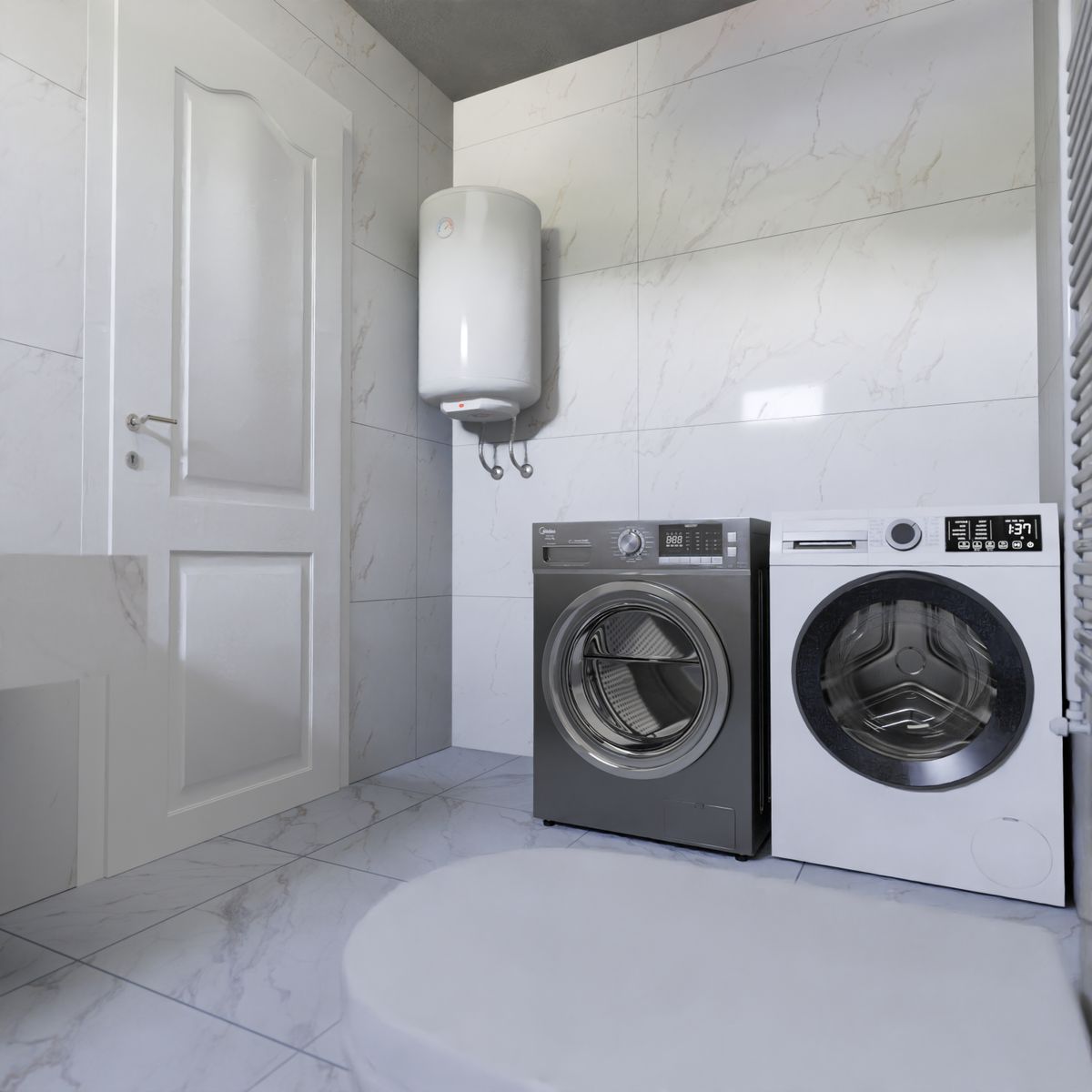
Hard water sediment in a water heater is calcium and magnesium that fell out of solution when the water was heated, settled on the tank floor, and hardened into an insulating crust between the burner and the water. The give-away is sound: popping, crackling or rumbling as the heater fires. That noise is steam bubbles forming underneath the layer and collapsing as they escape.
The standard advice — flush it annually — is fine as far as it goes. What almost nobody tells you is to catch what comes out and weigh it, which turns a chore into the one measurement that tells you whether this tank has years left or months.
What the Noises Actually Mean
Not every water heater sound is sediment, and the distinctions save money.
| Sound | When it happens | Cause | Fixable by flushing? |
|---|---|---|---|
| Popping, crackling | During burner firing | Steam collapsing under sediment on the tank floor | Yes, usually |
| Low rumble or boom | Start of a heating cycle | A thick, consolidated sediment layer shifting as steam escapes | Sometimes — depends on how hardened it is |
| High ticking | After hot water use stops | Pipe expansion against joists. Not the heater | No, and no need |
| Hissing or sizzling | Continuous | Water dripping onto a hot surface — a leak, not sediment | No. Investigate immediately |
| Screeching | While water runs | A restricted valve, usually the inlet or a partly closed shut-off | No |
Popping and rumbling are the two that mean sediment. They appear earlier on gas heaters than electric ones, because a gas burner heats the tank floor where the deposit lies while electric elements sit above it — an electric heater stays quiet until the layer builds high enough to bury the lower element, at which point that element usually burns out. A tankless unit makes similar noises for the same reason, but scale in a tankless heat exchanger shows up as temperature swings first rather than as sound.
The rate at which this accumulates tracks hardness closely, and the physics is the same one behind scale on the hot side of every fixture in the house: calcium carbonate becomes less soluble as water heats, so a storage tank is effectively a hardness precipitator with a 50-gallon collection tray at the bottom.
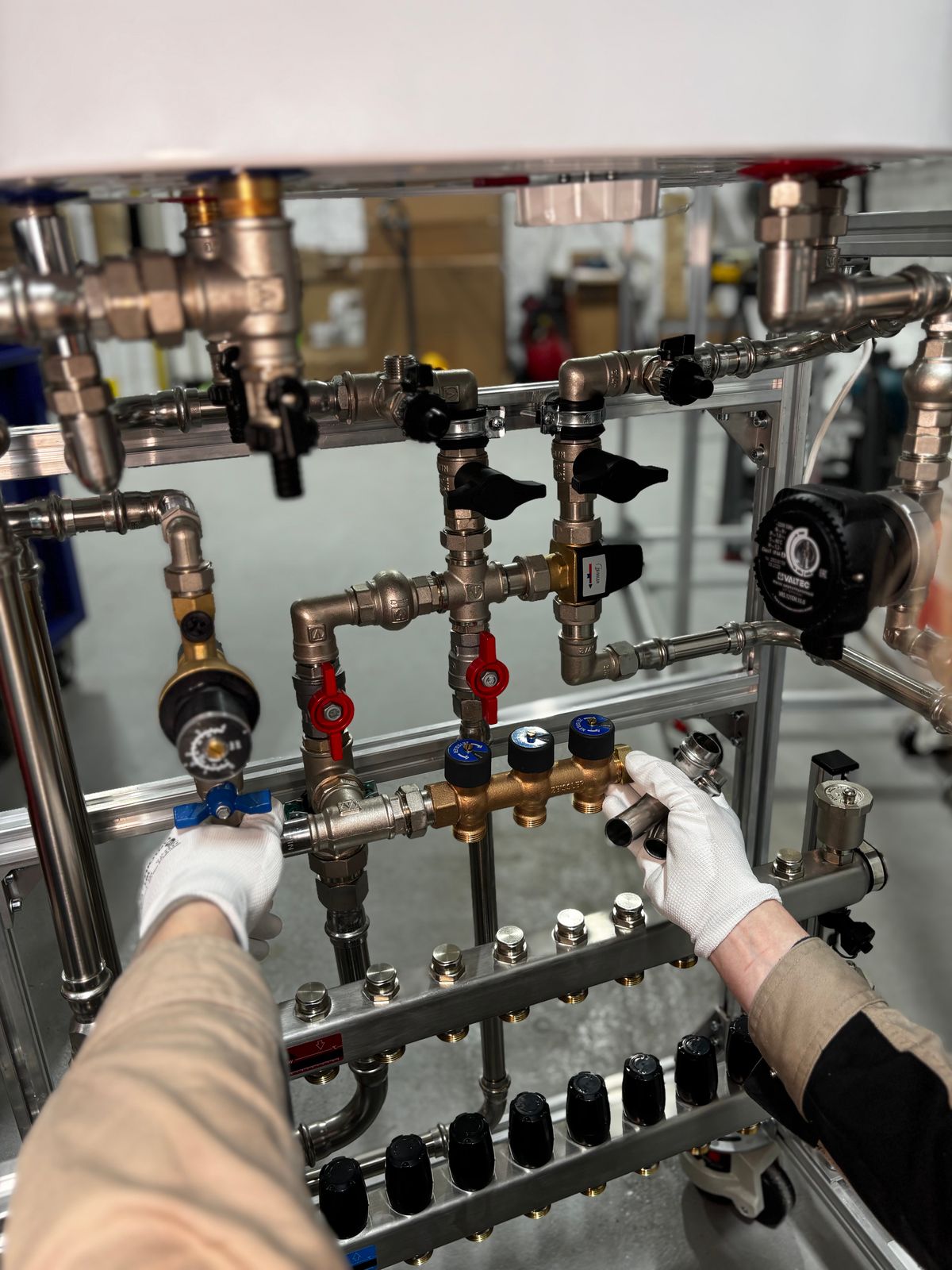
The Weighed Flush: Turning a Chore Into a Measurement
A flush that ends with "the water ran clear, good enough" gives you no information. Ten extra minutes gives you a number you can compare year over year.
What you need: a garden hose, two five-gallon buckets, a paint strainer bag or a square of fine mesh, and a kitchen scale.
The procedure:
- Turn the heater off. Gas to pilot or vacation; electric to the breaker. Never flush a live electric heater — dropping the water level exposes and destroys the elements.
- Let it cool for two hours. This is not optional if you plan to handle the discharge, and cooler water also lets deposit settle rather than stay suspended.
- Close the cold inlet valve and open a hot tap somewhere in the house to break the vacuum.
- Hose onto the drain valve, with the far end into a bucket lined with the strainer bag. This is the step everyone skips and it is the entire point.
- Open the drain valve and fill the bucket. Swap to the second bucket, swap the strainer, keep going. Take the first two buckets separately — that is where the heavy material is.
- Once the tank is low, open the cold inlet in short bursts. The inrush stirs settled deposit off the floor. Two or three bursts of ten seconds each does more than a slow continuous drain.
- Close the drain, refill, purge air at a hot tap until it runs steady, then restore power or gas.
The measurement: let the strainer contents dry on a tray for a day, then weigh them. Record the date, the dry weight, and a photograph next to a coin for scale.
That single number, repeated annually, tells you three things nothing else will:
- Rising yield means you are still behind the accumulation curve. Shorten the interval.
- Flat yield means you have found the equilibrium your water and your interval produce. Hold there.
- Falling yield with continuing noise is the bad one. It means the remaining deposit is consolidated hard scale that the flush is no longer lifting, and you are now maintaining a tank that has a cemented floor.
Hard Water Sediment in a Water Heater at Year 3, Year 6 and Year 10
The character of the discharge changes as much as the quantity, and it is more diagnostic than the weight alone. On untreated water in the 15-grain range, a typical progression looks like this.
| Tank age | What the discharge looks like | What it means |
|---|---|---|
| Year 3 | Cloudy water, fine pale grit, a light dusting in the strainer | Normal accumulation. Deposit is still loose and flushes freely |
| Year 6 | Sandy granules, some the size of coarse salt, occasional flat chips | The layer has begun consolidating. Noise usually starts around here |
| Year 10 | Little grit but hard flat flakes, some rust-coloured, water slow to clear | Consolidated scale plus lining damage. The flush is no longer reaching the bulk of it |
| Any age, rusty | Orange-brown flakes, metallic smell | Tank corrosion, not hardness. Check the anode before anything else |
The year-10 row is the one to take seriously. Pale grit is hardness. Rust flakes are the glass lining failing and the steel underneath corroding, and there is no maintenance answer to that. If a flush at that age produces mostly rusty material, you are looking at the beginning of the end of the tank rather than a maintenance backlog.
Colour is worth a second look before you panic, though. Discoloured hot water has several causes that have nothing to do with a failing tank, and it is worth ruling out the household problems routinely misattributed to hard water — iron, manganese and a corroding galvanized run all produce coloured water without the heater being at fault.
The Anode Rod Changes When You Soften
Here is the part left out of nearly every article on hard water and water heaters, and it matters most to exactly the people reading this — those about to install a softener to protect the tank.
Every glass-lined steel water heater contains a sacrificial anode rod: a magnesium or aluminium rod that corrodes preferentially so the tank does not. It works by galvanic action, and galvanic action depends on how well the water conducts electricity.
Softening does not remove dissolved solids. It exchanges calcium and magnesium ions for sodium ions, which Penn State Extension describes plainly in its water softening guidance. Sodium chloride raises conductivity, and higher conductivity accelerates the anode's consumption.
Bradford White states it directly in its technical bulletin on anode rods: "In some situations where water is more conductive, i.e. softened water or lower pH levels, this sacrificial process is accelerated; in those cases, aluminum is a better choice."
What that means practically for anyone softening:
- Inspect the anode within two years of installing a softener, not at the five-year mark you may have planned. If it is down to bare wire over much of its length, replace it.
- Ask about anode material when you replace it. Magnesium protects a steel tank more aggressively; aluminium lasts longer in conductive water. The manufacturer's guidance above points to aluminium on softened supplies.
- Check your warranty terms. Some tank warranties address softened water explicitly, and a few require a specific anode type. Read yours before assuming.
- Do not let this talk you out of softening. The net effect on tank life is still strongly positive — you are trading a consumable rod that costs tens of dollars for a scale problem that costs hundreds. You just have to actually replace the rod.
That trade is the honest version of "a softener extends your water heater's life." It does, on the condition that you maintain a part most homeowners have never looked at.
When the Tank Is Already Finished
Three signs say the decision has moved from maintenance to replacement, and none of them improve with flushing.
Any water on the floor around the base. A leaking storage tank is not repairable. The lining has failed and the steel has perforated. Shut off the cold inlet and plan the replacement now, not after the next holiday weekend.
Rumbling that survives a proper flush. If the noise persists a week after a flush that produced little material, the deposit is cemented to the floor and no longer flushable. The tank will keep overheating locally until the lining gives.
Age past twelve years with no maintenance history. Beyond that point, aggressive flushing carries its own risk: hard deposit can be sitting over thin, corroded steel, and disturbing it occasionally starts the leak it was covering. That is an uncomfortable thing to be told, but it is better than being told afterwards.
Worth knowing regardless of the tank's state: hardness itself is a nuisance parameter rather than a health one. The EPA covers it under secondary drinking water standards for nuisance chemicals, which are non-enforceable guidelines about taste, appearance and equipment effects. Nothing about sediment in your water heater makes the water unsafe — it makes it expensive.
What to Do Next
- Listen to the heater through a full firing cycle. Popping and rumbling mean sediment; ticking and hissing mean something else entirely. Match the sound to the table above before you plan anything.
- Do one weighed flush. Strainer bag, kitchen scale, photo, date. It takes ten minutes more than the flush you were going to do anyway and it starts a record worth having.
- Measure your hardness and set the interval from the number, not from a generic annual recommendation. Above 10 grains, twice a year; above 15, quarterly until the yield flattens.
- Pull the anode rod if it has been more than four years, or two years since you installed a softener. This is the single highest-value thing on the list and almost nobody does it.
- Be honest about the tank's age. Rusty flakes past year ten is a replacement conversation, and no amount of flushing changes that.
Frequently Asked Questions
How do I know if my water heater has sediment?
Listen first. Popping, crackling or a low rumble as the burner fires is steam collapsing under a mineral layer on the tank floor, and it is close to diagnostic on a gas heater. Then flush it and look at what comes out: cloudy water that clears is normal, gritty sand-coloured particles are hardness scale, and rust-coloured flakes point at tank corrosion instead. On an electric heater the noise arrives later, because the elements sit above the floor and the deposit has to build up to reach them.
Can too much sediment ruin a water heater?
It can end one, though it rarely does the killing directly. Sediment insulates the tank floor from the burner, which forces longer burn cycles and drives the steel above its design temperature. That thermal stress cracks the glass lining, and once the lining is compromised the steel corrodes and the tank leaks. So the sequence is sediment to overheating to lining failure to leak, and the point of no return is the lining. That is also why a heater that has never been flushed in twelve years may not be worth flushing now.
How often should you flush a water heater with hard water?
Annually is the standard advice and it is written for average water. Above roughly 10 grains per gallon, twice a year is a better fit; above 15 grains, quarterly for the first two years will tell you what your particular tank is doing. Rather than guessing, weigh the sediment your flush produces — once the dry weight stops rising between flushes, you have found the interval your water actually needs. A softened supply moves most homes to every two years.
Does a water softener stop sediment in a water heater?
It stops calcium and magnesium scale, which is the bulk of the deposit in a hard water home. It does not stop sand, silt or iron particles arriving from a well or an old main, so a heater fed by untreated well water can still accumulate sediment on a softened supply. There is also a change most people are never told about: softened water is more electrically conductive, which consumes the sacrificial anode rod faster. Softening extends the tank's life on balance, but only if you check the anode.
Should I replace or flush a water heater that is rumbling loudly?
Judge it on age and on what the flush yields. A heater under six years old that rumbles almost always recovers, and the noise usually stops within a day or two of a proper flush. A heater over ten years old that has never been flushed, rumbles loudly, and produces rusty debris rather than pale grit is telling you the lining is already gone — flushing it will not quiet it and may dislodge deposit that was sealing a weak spot. At that age, budget for the replacement instead.