
Can Hard Water Damage a Refrigerator Ice Maker?
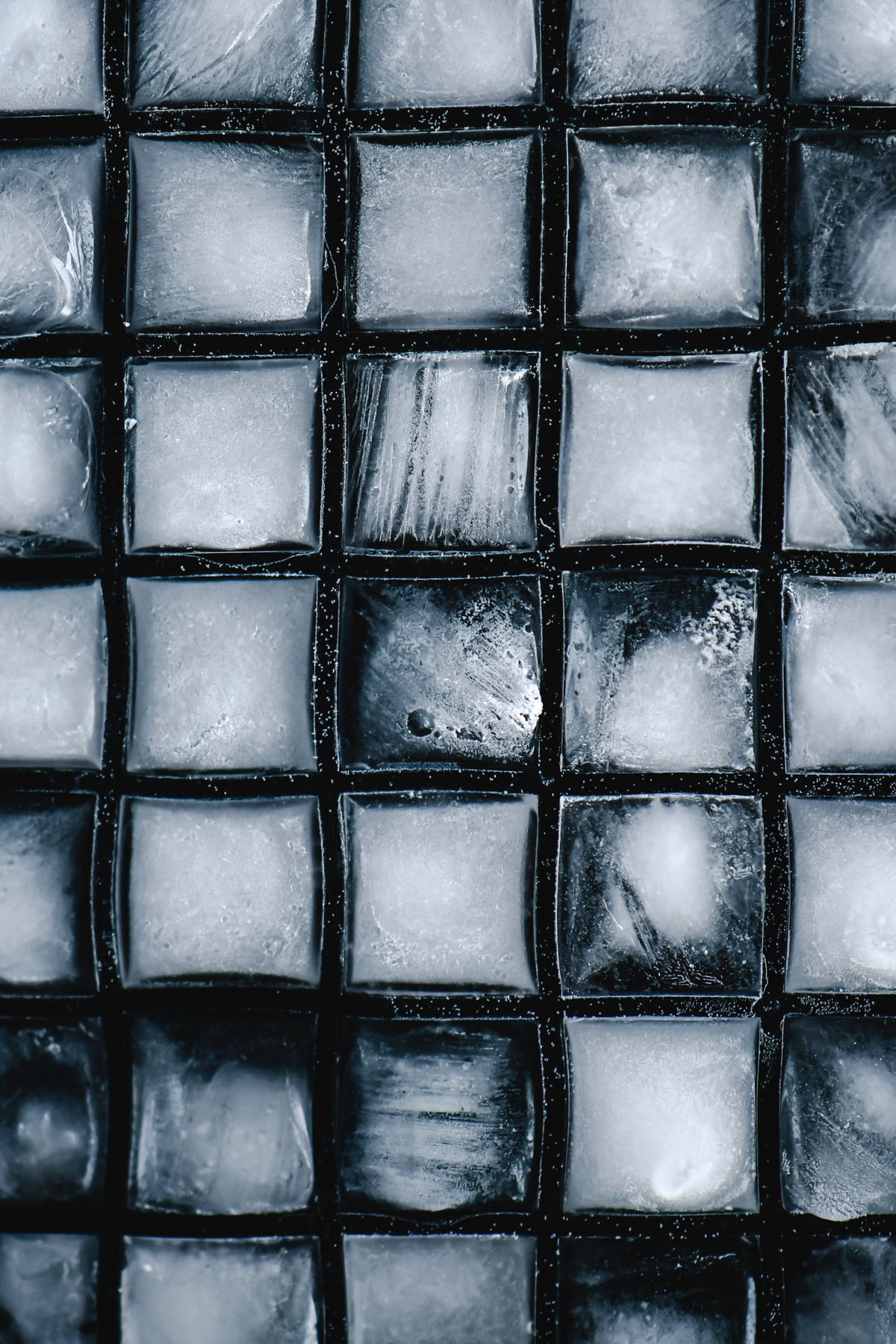
A hard water refrigerator ice maker fails in specific, boring ways: the fill valve scales, the inlet screen blocks, the filter clogs early, and cubes get smaller. What it does not do is make your ice cloudy. Cloudy ice is trapped air, and it happens with distilled water too.
Separating those two is the whole diagnosis. One is a cosmetic property of how freezers freeze, and no water treatment changes it. The other is a slow restriction you can measure with a jug and a stopwatch, a year before the ice maker starts failing.
Cloudy Ice Is Not a Hardness Problem
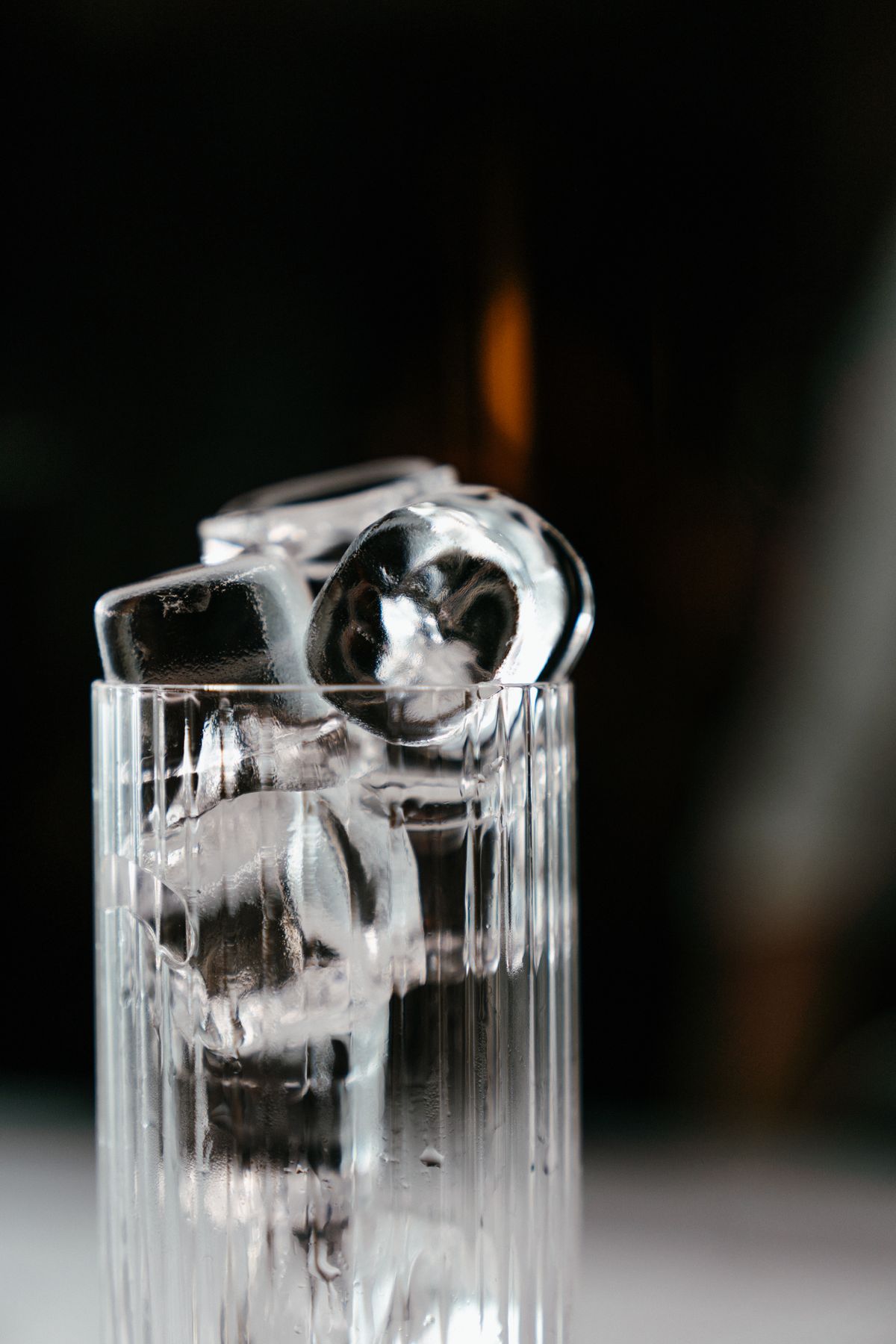
Household water holds dissolved oxygen and nitrogen. When water freezes, the crystal lattice rejects those gases — they cannot fit into the structure of ice, so they get pushed ahead of the advancing freeze front.
In a refrigerator ice mould, freezing starts on every surface of the cube at once. The freeze fronts advance inward from all sides and converge in the middle, and every dissolved gas molecule they rejected ends up concentrated there, forming microscopic bubbles. That white core is air.
Commercial clear-ice machines solve this by freezing directionally — a thin layer at a time, usually with the water flowing, so the rejected gas escapes into the remaining liquid and then into the air rather than being trapped. It is a mechanical difference, not a water quality one.
You can prove this at home in a single evening. Fill one section of an ice tray with tap water, one with distilled water, and one with tap water that you boiled and let cool covered (boiling drives off dissolved gas). Freeze all three together. The boiled sample will come out noticeably clearer than the distilled one. Nothing about mineral content explains that result; degassing does.
Minerals do contribute a little. Very hard water leaves a faint overall haze and, in extreme cases, a white sediment in the bottom of the glass as the cube melts. But that is a subtle effect layered on top of a much larger one, and it is the reason so many people misdiagnose this. The mistake has the same shape as assuming a softener will stop humidifier white dust — in both cases the visible symptom is governed by something a softener does not touch. If your interest is in what hardness genuinely does and does not cause, ice clarity belongs firmly on the "does not" side.
What Hard Water Actually Does to a Refrigerator Ice Maker
The real damage is upstream of the freezer, in the water path.
The water inlet valve. A solenoid valve that opens for a fixed number of seconds per cycle. Scale builds on the internal seat and the small plunger, and the valve becomes slow to open, slow to close, or eventually sticks. A valve that fails closed stops ice production; a valve that fails to seal fully drips, and that is how ice makers cause water damage.
The inlet screen. Almost every inlet valve has a fine mesh screen at its input, fitted to catch debris. It is the most commonly blocked component in the whole assembly and the least commonly inspected — most owners do not know it exists.
The water filter. Rated for six months, but the rating assumes reasonable water. On untreated hard water, filters routinely clog earlier, because they capture particulate as well as taste and odour compounds. A partly clogged filter reduces fill volume before it changes taste.
The fill tube. The short tube that delivers water into the mould. Deposit accumulates at the outlet, narrows it, and can freeze there — producing the classic ice bridge or a stream of water that misses the mould and freezes on the shelf below.
Not affected at all: the compressor, the sealed refrigeration system, the evaporator, the controls, the door seals. Water never touches any of them. When people talk about hard water "killing the fridge", they mean a valve and a filter — parts worth tens of dollars, not the appliance.
The Fill-Time Test
This is the measurement that turns a vague worry into a trend line, and it takes a minute a month.
Refrigerator ice makers dose water by time, not by volume. The controller opens the inlet valve for a fixed period — typically around seven seconds — and whatever arrives in that window is what freezes. That design detail is what makes this test work: as flow falls, the dose falls with it, and the cubes shrink proportionally.
The procedure:
- Take a measuring jug with millilitre or fluid-ounce markings.
- Hold it under the water dispenser and dispense for exactly ten seconds, timed. Use the same timing method every month.
- Record the volume, the date, and the age of the filter.
- Repeat monthly, always with the door closed for at least an hour beforehand so the reservoir is at a consistent temperature.
Reading it:
| Pattern over 3 months | Interpretation | First action |
|---|---|---|
| Steady volume | Nothing developing | Continue logging |
| Falling 10–20% | Filter loading up normally | Change the filter, re-baseline |
| Falling, unchanged by a new filter | Restriction downstream of the filter | Inspect the inlet screen and valve |
| Falling sharply within weeks | Not scale — something changed | Check the saddle valve and the supply line for kinks |
| Low from day one | Supply-side problem, never was fine | Check the saddle valve type and household pressure |
The fourth and fifth rows matter as much as the others. Scale is a months-and-years process; a change over weeks has a different cause. That is the same timescale logic that separates scale from every other cause of falling water pressure elsewhere in the house.
GE's own troubleshooting material lines up with this. It attributes small or hollow cubes to "a clogged water filter" or "a restriction in the water supply line", and explains that hollow cubes occur when the icemaker fills too slowly — the rear of the mould freezes before the front cube reaches the thermostat, and the harvest fires early. Your fill-time log catches that mechanism before it shows up in the ice bucket.
Inspecting the Inlet Valve Screen
Ten minutes, one screwdriver, and the part most likely to be your problem.
- Unplug the refrigerator and close the household shut-off feeding it — usually a saddle or ball valve under the sink or behind the appliance.
- Pull the fridge out far enough to reach the lower rear panel. Put a towel down; some water will come out.
- Locate the water inlet valve — a small plastic body with one or two solenoid coils and an electrical connector, mounted at the back near where the supply line enters.
- Disconnect the supply line from the valve inlet.
- Look into the inlet port. The screen is a fine mesh disc set just inside. On hard water it is often glazed with white deposit or packed with fine grit.
- Clean it. Ease it out with needle-nose pliers if it is removable, soak it in white vinegar for twenty minutes, rinse and refit. If it is fixed, flush backwards with vinegar using a syringe and rinse thoroughly.
- Reassemble, restore water, and check carefully for leaks for the next few hours before pushing the fridge back.
If the screen was blocked, your fill volume should return close to its original figure — which is exactly why the log is worth keeping. Without a baseline you have no way of knowing whether the job worked.
If cleaning the screen changes nothing and a new filter changes nothing, the valve itself is scaled internally and replacement is the answer. It is an inexpensive part and a straightforward swap on most models.
Symptom Table: What Your Ice Is Telling You
| Symptom | Most likely cause | Hardness-related? |
|---|---|---|
| Cloudy white centres | Trapped air from all-sided freezing | No |
| Uniform faint haze plus sediment on melt | High mineral content | Yes, mildly |
| Cubes getting smaller over months | Falling fill volume — filter, screen, or valve | Usually |
| Hollow cubes | Fill too slow; early harvest | Usually |
| Ice tastes stale or of the freezer | Old filter, or ice sitting too long in the bucket | No |
| Ice smells or tastes metallic | Iron or manganese in the supply, not hardness | No |
| Water stream misses the mould, ice on the shelf | Fill tube deposit or partial freeze | Often |
| Ice maker stopped entirely | Stuck valve, blocked screen, or frozen fill tube | Often |
| Water dripping behind the fridge | Valve not sealing — act on this now | Sometimes |
The metallic-taste row is worth a second look, because it is regularly reported as a hard water symptom and is not one. Iron and manganese are different contaminants with different treatment, and a softener may or may not be the right answer depending on their form and concentration.
Does a Softener Help? The Honest Answer
What softening genuinely does for an ice maker:
- Stops new calcium and magnesium scale forming on the inlet valve seat, screen and fill tube.
- Extends filter life, because the filter is no longer capturing hardness-related particulate.
- Removes the slow decline in fill volume that shortens cube size over the years.
What it does not do:
- It does not make ice clearer. Ion exchange leaves total dissolved solids roughly unchanged — the EPA's account of cation exchange water softeners describes the swap plainly — and it has no effect whatever on dissolved oxygen and nitrogen, which is what clouds a cube.
- It does not clean existing deposit. Scale already on the valve seat stays there. Service the valve and soften if you are doing both.
- It does not filter anything. Taste, odour, chlorine and particulate all still need the refrigerator's filter, and choosing one is a certification question — NSF sets out which standard covers which claim, and scale control is not the same claim as contaminant reduction.
One question that comes up whenever softening is on the table: whether to run the ice maker and drinking tap on softened water at all. Softened water contains added sodium in proportion to the hardness removed, which on very hard water is a real amount. Many households on softened supplies plumb the kitchen cold tap and the refrigerator line from the unsoftened side, and if you are having this conversation at all, it is worth pairing with the question of whether your hardness level justifies whole-house treatment in the first place.
If your household ice consumption genuinely warrants clear ice, the answer is a directional-freeze clear ice maker or a clear-ice mould, not water treatment. That is a solved problem with the wrong solution attached to it almost everywhere online.
What to Do Next
- Stop trying to fix cloudy ice with water treatment. Run the boiled-versus-distilled tray test once and the question is settled for good.
- Start the fill-time log this month. Ten seconds into a measuring jug, recorded with the date and filter age. It is the only early warning available for this failure.
- Change the filter if it is anywhere near its rating, and re-measure. On hard water, assume the rated interval is optimistic.
- Inspect the inlet screen if a new filter did not restore the volume. It is ten minutes and it is the most commonly missed component in the assembly.
- Treat dripping behind the fridge as urgent, not as a symptom to log. A valve that will not seal is the one failure mode here that causes real damage.
Frequently Asked Questions
Does hard water make ice cloudy?
Barely. Cloudiness in domestic ice is overwhelmingly trapped air, not minerals. Household water carries dissolved oxygen and nitrogen, and a freezer that freezes a cube from every side at once drives those gases into the shrinking centre, where they form the white core you see. Very high mineral content adds a faint haze on top of that, but if you froze distilled water in the same tray you would get a cloudy cube too. Clarity is set by how the ice freezes, not by what is dissolved in it.
Will a water softener give me clearer ice?
No, and this is one of the most repeated wrong claims in the category. Softening does not remove dissolved solids — it exchanges calcium and magnesium ions for sodium ions, leaving total dissolved solids about the same. More importantly, it does nothing at all to dissolved oxygen and nitrogen, which is what actually clouds a cube. Softening is genuinely worth doing to protect the fill valve and the plumbing behind the fridge. It will not change how your ice looks.
How do I know if scale is affecting my ice maker?
Time the fill. Most refrigerator ice makers dose a fixed volume per cycle, so a fill that takes progressively longer means flow is falling. Catch water from the dispenser for exactly ten seconds and record the volume, once a month, always with the door closed for the same period beforehand. A steady decline across three months points at a restriction — filter, inlet valve screen, or the supply line. Cubes getting smaller is the same signal arriving later, once the fill is short enough to under-fill the mould.
Why are my ice cubes suddenly small or hollow?
Low fill volume, almost always. GE's own troubleshooting attributes small or hollow cubes to a clogged water filter or a restriction in the water supply line, and notes that hollow cubes occur when the icemaker fills too slowly. On hard water, the usual culprits in order are an overdue filter, a scaled inlet valve screen, and a partly closed supply saddle valve. Check the filter first — it is the cheapest and the most likely, and on untreated hard water filters frequently clog well before their rated six months.
Does hard water damage the refrigerator itself?
It damages a short list of parts rather than the appliance. The water inlet valve and its inlet screen scale up, the fill tube can accumulate deposit and freeze, and the filter clogs faster than its rating. None of that is catastrophic and all of it is serviceable, but a stuck inlet valve is the failure that occasionally leaks, and that is worth avoiding. The rest of the refrigerator — compressor, sealed system, controls — never touches the water and is unaffected by hardness.