Signs of Scale Inside a Tankless Water Heater
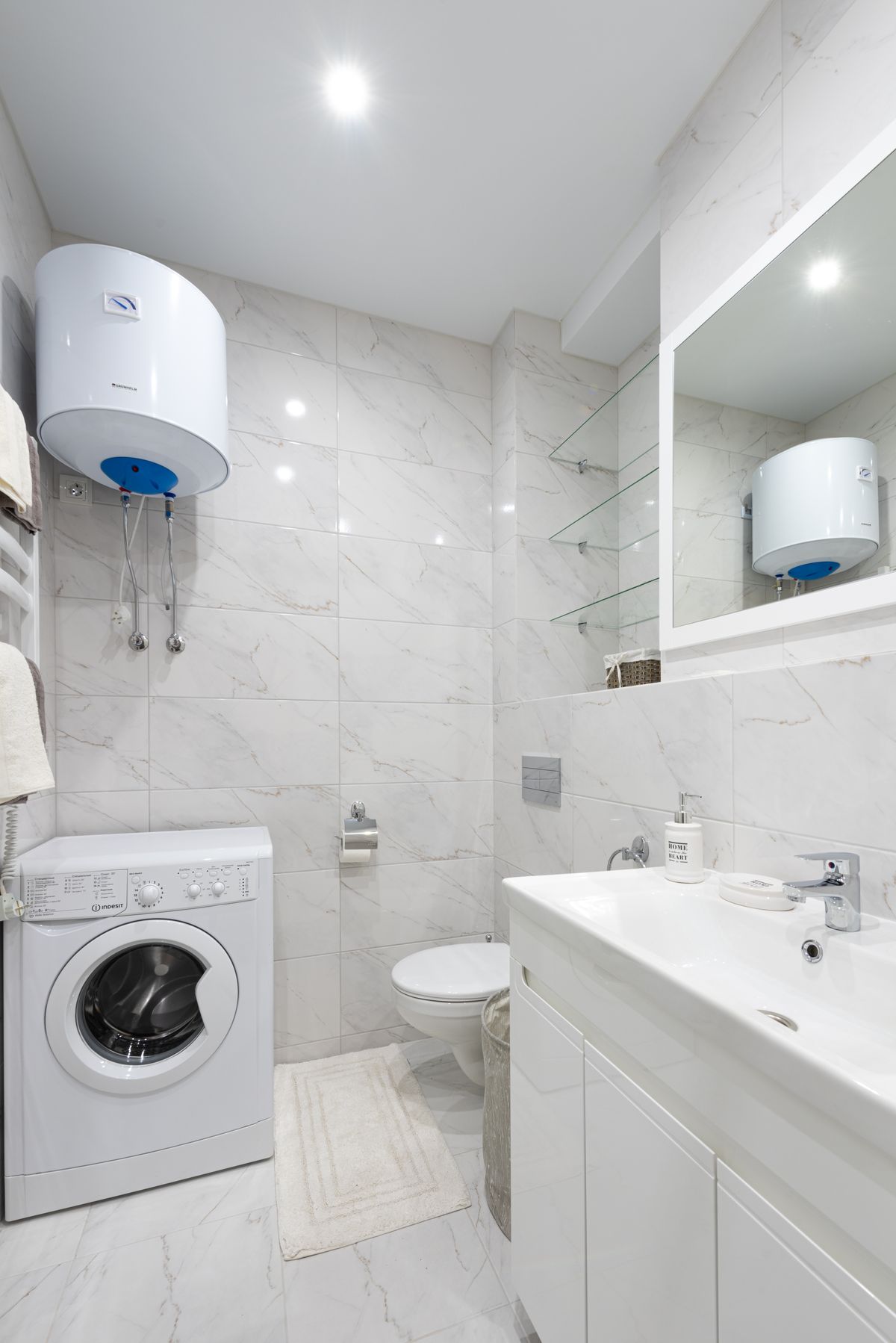
Scale in tankless water heater systems announces itself long before it fails the unit. The first sign is not a leak or an error code — it is a widening gap between the temperature you set and the temperature that arrives, worst at low flow. By the time a code appears, the heat exchanger has usually been coating for a year or more.
That gap is measurable with a thermometer and thirty seconds a month. This article covers what to watch, what your manufacturer actually publishes as a hardness limit, and how to turn that number into a flush interval.
The Five Signs, in the Order They Appear
Tankless units scale from the inside of a narrow copper or stainless heat exchanger outward. Because the passages are small by design, a deposit that would be invisible in a storage tank changes behaviour quickly. The symptoms arrive in a predictable sequence.
1. Longer time-to-hot at the tap. The first and least noticed. Scale is an insulator between the burner and the water, so the exchanger takes longer to bring the passing stream up to setpoint. You will notice it as an extra two or three seconds at the kitchen sink before anyone calls it a problem.
2. Temperature swings at low flow. A scaled exchanger holds temperature well at 3 gallons per minute and badly at 0.7. Bathroom faucets and trickling shower valves go lukewarm-hot-lukewarm while the tub runs perfectly. This is the signature symptom, and it is the one homeowners misattribute to the "cold water sandwich" that all tankless units produce on restart.
3. Reduced hot flow with normal cold flow. Scale narrows the exchanger's internal channels. If the hot side of a fixture is visibly weaker than the cold side across the whole house, the restriction is at the heater. This differs from whole-house pressure loss from scale in the supply piping, which affects hot and cold together.
4. Noise during firing. Popping, crackling or a low rumble as the burner runs. Water trapped underneath a scale layer flash-boils into steam bubbles that collapse against the metal. It is the same acoustic mechanism as a sediment-lined storage tank, in a component that costs a great deal more.
5. Error codes. Overheat and flow-rate faults. On Rinnai equipment the LC or LC0 code is an explicit scale warning; other brands throw generic overheat and ignition faults. This is the last stage, not the first, and the exchanger is usually well coated by the time it appears.
Manufacturer Hardness Limits and What the Warranty Says
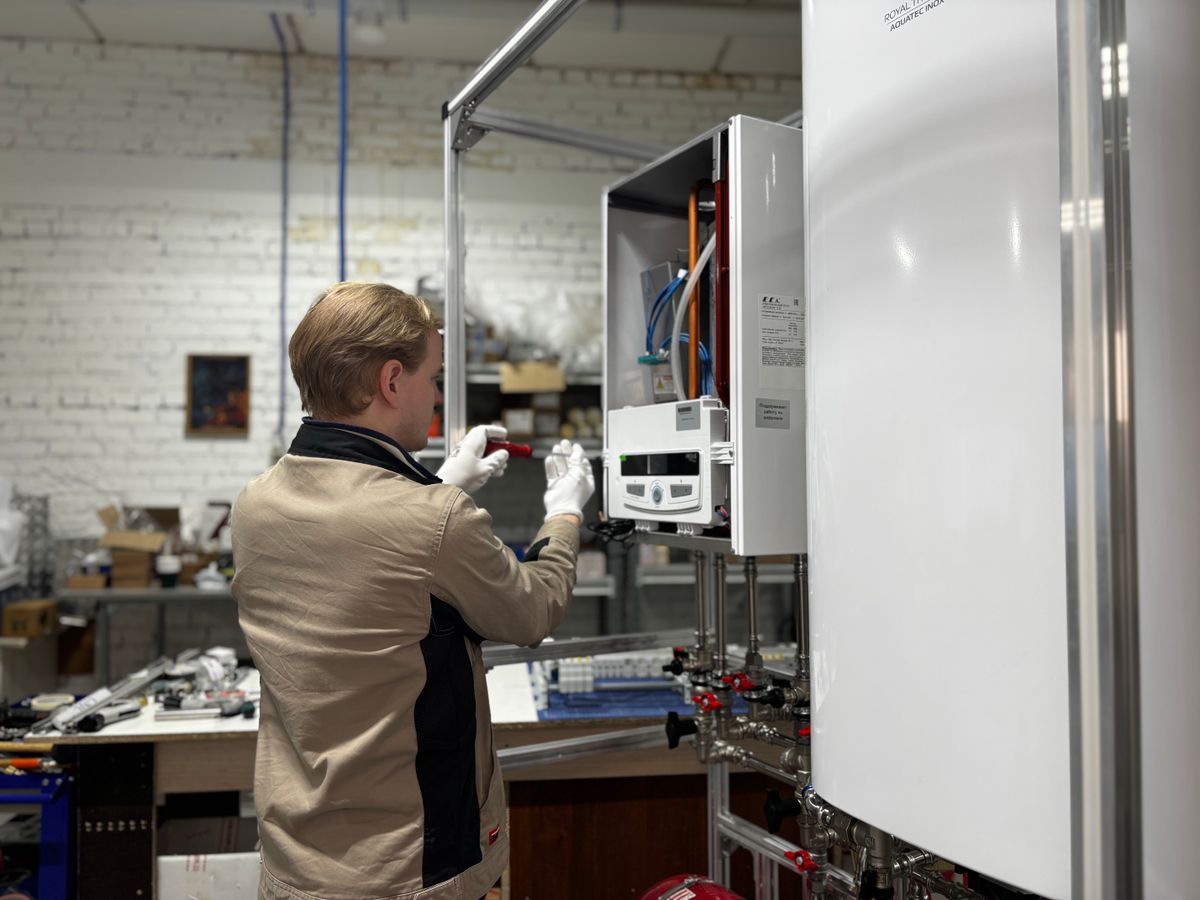
Most articles on this topic assert that hard water "voids your warranty" without quoting anything. The manufacturers do publish numbers, they differ, and the differences matter. Here is what four major brands put in writing.
| Brand | Published hardness limit | Where it appears | What it means in practice |
|---|---|---|---|
| Noritz | Damage from hardness "in excess of 12 grains per gallon (200 mg/L)" is excluded | Tankless limited warranty, exclusion 9 | Hardness above 12 gpg is a named exclusion, alongside non-potable and poorly treated well water |
| Rheem | Total hardness max 250 mg/L (14.6 gr/gal); water "over 11.68 grains" flagged as hard | User's Information Manual, water quality Table 3 | Also caps TDS at 500 mg/L and pH at 6.5–8.5 in the same table |
| Rinnai | Total hardness not to exceed 200 mg/L (about 11.7 gpg) | Service manual water quality specification | Heat exchanger replacement due to water quality damage is not a covered repair |
| Navien | Water above 12 grains/gal (200 mg/L) classed as hard; softener or scale treatment called for | Installation manual water quality section | Treatment is specified as a condition of the installation, not a suggestion |
Three things follow from that table.
The clustering around 200 mg/L is not a coincidence. Roughly 11.7 to 12 grains per gallon is where the industry has settled on "this exchanger will not survive untreated." If your measured hardness is above that, you are outside the design envelope of most residential tankless equipment.
The exclusion targets the heat exchanger specifically. Nobody voids an entire warranty over water chemistry. They decline the one claim that represents most of the unit's replacement cost. A control board failure will still be covered; the exchanger will not.
Hardness is one row in a longer table. Rheem's water quality specification also limits TDS and pH; Rinnai's covers iron and manganese. Well owners in particular should read the whole table rather than the hardness line, because iron and manganese have their own limits and their own treatment that a softener alone may not meet.
You can pull your own model's numbers from the manufacturer directly — Rinnai publishes its warranty documents and Navien hosts its installation manuals — and the figure that governs your claim is the one in your model's manual, not the one in this table.
The Delta-T Log: Catching Scale in a Tankless Water Heater Early
This is the part almost nobody does, and it is the reason most tankless units are diagnosed late.
Delta-T is simply the temperature rise across the unit: outlet temperature minus inlet temperature. A clean exchanger transfers heat efficiently and holds a consistent rise at a given flow. A scaling exchanger loses that consistency at low flow first, because there is less thermal mass moving through to buffer the insulating layer.
What you need: an instant-read kitchen thermometer, a one-gallon jug, and a stopwatch.
The monthly routine, five minutes:
- Note the incoming water temperature. If there is a cold tap upstream of the heater, use that; otherwise run the cold at the fixture nearest where the service line enters and let it stabilise for a minute.
- Set the unit to a fixed temperature and leave it there permanently. 120°F is the usual choice.
- Open a hot tap to a low flow — a bathroom faucet about a third open. Let it run 45 seconds, then measure the temperature in a cup under the stream.
- Measure the flow at that same setting: time how long the stream takes to fill a one-gallon jug, then divide 60 by the seconds to get gallons per minute.
- Write down four numbers: date, inlet temp, outlet temp, GPM.
Reading the log. What matters is not any single reading — it is the trend at comparable flow. On a clean unit, the outlet temperature at 0.8 GPM sits within a couple of degrees of setpoint month after month. Scale shows up as a slow, one-directional drift: the low-flow outlet temperature falls, or becomes unstable across the 45 seconds, while the high-flow reading still looks fine.
A drop of 4 to 5°F at low flow, sustained across two consecutive months, is worth a flush. That typically arrives six to twelve months before an error code does, which is the entire value of keeping the log.
Two things that will corrupt your readings: taking measurements at different flow rates and comparing them, and seasonal inlet temperature change. Winter groundwater can be 25°F colder than summer, which pushes the unit harder and changes the achievable rise. Always compare against the same month last year, or record the inlet temperature and compare deltas rather than outlet temperatures.
Flush Interval by Measured Hardness
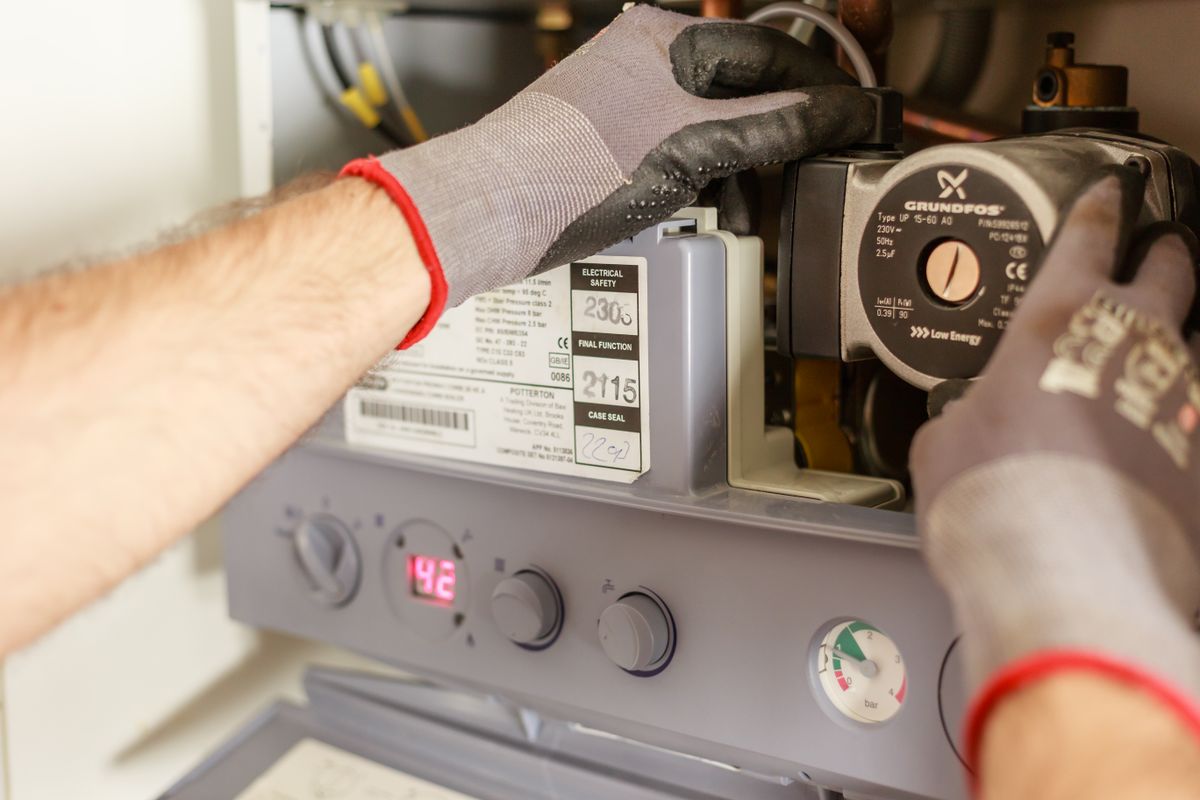
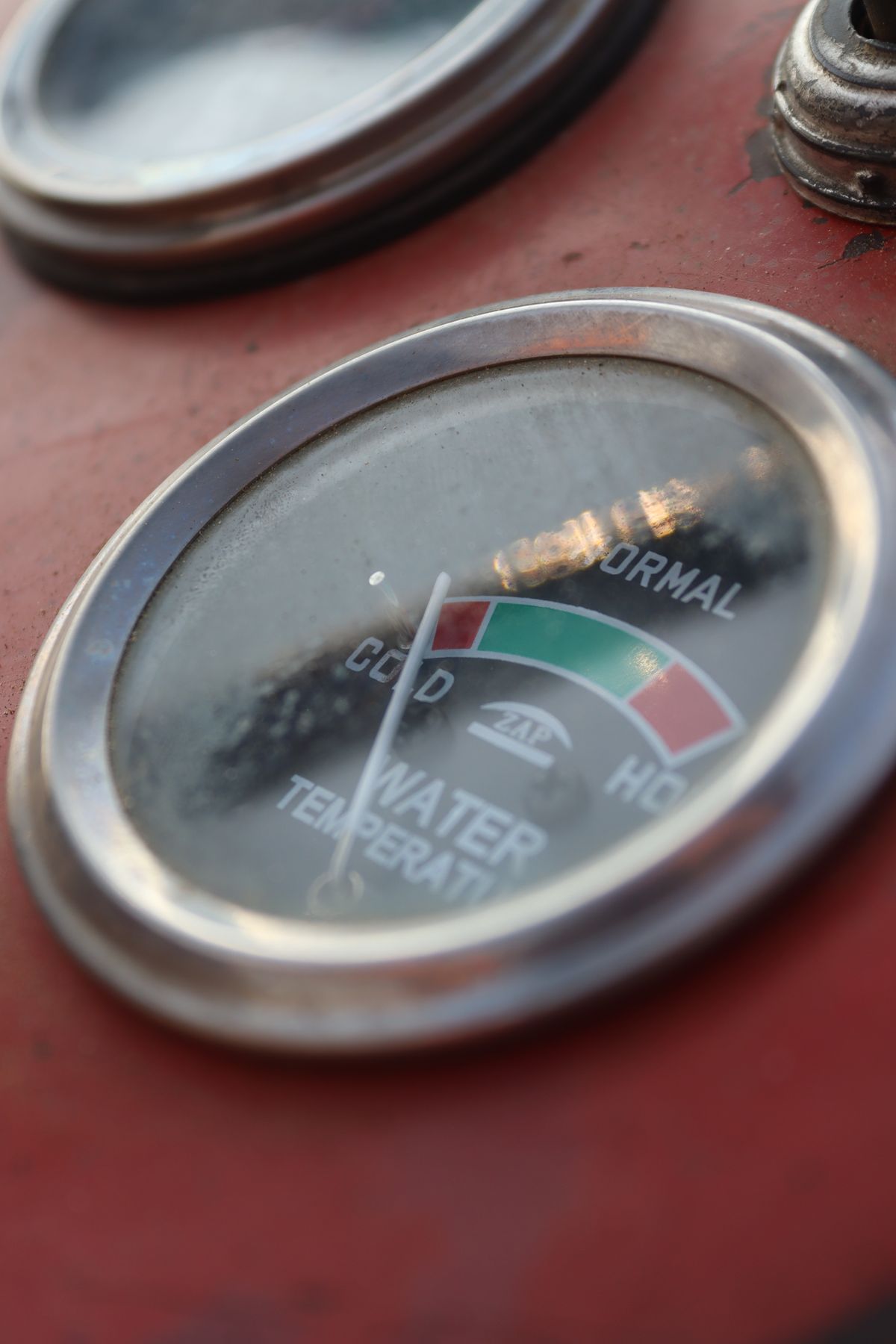
The manufacturer baseline is annual. Your water decides whether that is generous or optimistic.
| Measured hardness | Realistic flush interval | Notes |
|---|---|---|
| Under 7 gpg (120 mg/L) | 18–24 months | Comfortably inside every published limit |
| 7–12 gpg (120–200 mg/L) | 12 months | The manufacturer baseline exists for this band |
| 12–20 gpg (200–340 mg/L) | 6 months untreated | Above the published limit for most brands. Treatment is cheaper than the interval |
| Over 20 gpg (340 mg/L) | Not a maintenance problem | Flushing is holding back a tide. Soften or condition the feed |
| Any hardness, softened feed | 24 months | Flush once after installing treatment to clear existing deposit |
The awkward truth in the bottom half of that table: at high hardness, flushing is not maintenance, it is triage. A six-month flush cycle costs roughly what a year of softener salt does, and the exchanger is still accumulating deposit between flushes in the places circulation reaches least.
If you are in that band, the decision is not "flush or soften" — it is whether the tankless unit was the right choice for this water at all. Whether your hardness number justifies whole-house treatment is worth working out before you spend another year flushing.
What a Flush Cannot Fix
Descaling circulates a mild acid — white vinegar or a proprietary solution — through the exchanger for 45 to 60 minutes. It dissolves carbonate deposit that the solution can physically reach. That is a real and worthwhile intervention, and it has limits.
It does not reach dead legs. Circulation follows the path of least resistance. Passages that are already substantially blocked receive the least flow and therefore the least solution, which is the opposite of what you want.
It does not restore a pitted exchanger. Where scale has caused sustained local overheating, the metal underneath has been thermally stressed. Removing the deposit reveals the damage rather than repairing it.
It does not clean the inlet filter screen. Every tankless unit has one, most owners have never seen it, and a partly blocked screen produces the same low-flow symptoms as a scaled exchanger. Check it before you conclude anything — it is a two-minute job and it is a common false positive.
It does not change your water. A flushed exchanger on 18-grain water starts re-scaling the moment it comes back online, at exactly the rate it did before.
For a well-maintained unit on moderate water, the payoff is genuine. ENERGY STAR's data on tankless gas water heaters rests on the unit performing at its rated efficiency, and a scaled exchanger does not. The efficiency you paid a premium for is the first thing scale takes.
What to Do Next
- Measure your hardness properly before doing anything else. Every decision on this page is keyed to that number, and a test strip costs less than a coffee.
- Find your model's water quality table — it is in the installation or user manual, usually within two pages of the maintenance section. Compare your number to it and note the iron, pH and TDS limits while you are there.
- Start the delta-T log this month. Four numbers, once a month, at a consistent low flow. It is the only early warning you will get.
- Check for isolation valves at the unit. If they are there, a DIY flush is a Saturday morning. If they are not, price fitting them now rather than during a failure.
- If you are above 12 grains, treat the water. Every manufacturer in the table above has told you in writing where their equipment stops, and flushing more often does not move that line.
Frequently Asked Questions
How often should a tankless water heater be flushed in hard water?
Base it on your measured hardness rather than the calendar. Below about 7 grains per gallon, once every 18 to 24 months is usually enough. Between 7 and 12 grains, annually. Above 12 grains with no treatment, every six months, and expect that to be a losing battle rather than a maintenance plan. Every major manufacturer sets annual flushing as the baseline for warranty purposes, so if you are stretching the interval, keep the receipts and the dates — a denied claim usually turns on documentation, not on the flush itself.
Does hard water void a tankless water heater warranty?
It can void the part of it that matters. Noritz's tankless limited warranty explicitly excludes damage from water with hardness in excess of 12 grains per gallon (200 mg/L). Rheem's tankless user manual publishes a maximum total hardness of 250 mg/L (14.6 gr/gal) in its water quality table and flags water above 11.68 grains as hard. The heat exchanger is the expensive component and it is the one these clauses are written to protect. Nobody voids the whole warranty over hardness — they decline the heat exchanger claim, which is most of the unit's value.
Can you descale a tankless water heater yourself?
Yes, if the installer fitted isolation valves — the pair of service valves with hose ports either side of the unit. You need a submersible pump, a five-gallon bucket, two washing machine hoses and four gallons of white vinegar or a proprietary descaler, and the circulation runs 45 to 60 minutes. Without isolation valves it is not a DIY job, because the alternative is breaking into the water connections. Fitting the valves retroactively costs a few hundred dollars and pays for itself over two flushes.
What error codes mean scale in a tankless water heater?
The codes vary by brand, but the family is consistent: overheat and flow-related faults. On Rinnai units the LC or LC0 code is specifically a scale warning. Navien's E003 and similar ignition or overheat codes and Rheem's 11, 29 and 76 group all appear on scaled units, though none of them mean scale exclusively. Treat any recurring overheat or flow code on a unit that has never been flushed as a scale hypothesis first, because it is both the cheapest and the most likely explanation.
Does a water softener stop scale in a tankless water heater?
It stops the calcium and magnesium scale, which is the deposit that blocks heat exchanger passages. That is the whole mechanism, and it is why every manufacturer names softening as an acceptable treatment. Two honest caveats: softening does not remove scale already inside the exchanger, so flush the unit before or shortly after installing one, and it does nothing for the other water quality limits in the manual — pH, TDS and iron each have their own thresholds and their own treatment.