
Why Hard Water Leaves Spots After Washing a Car
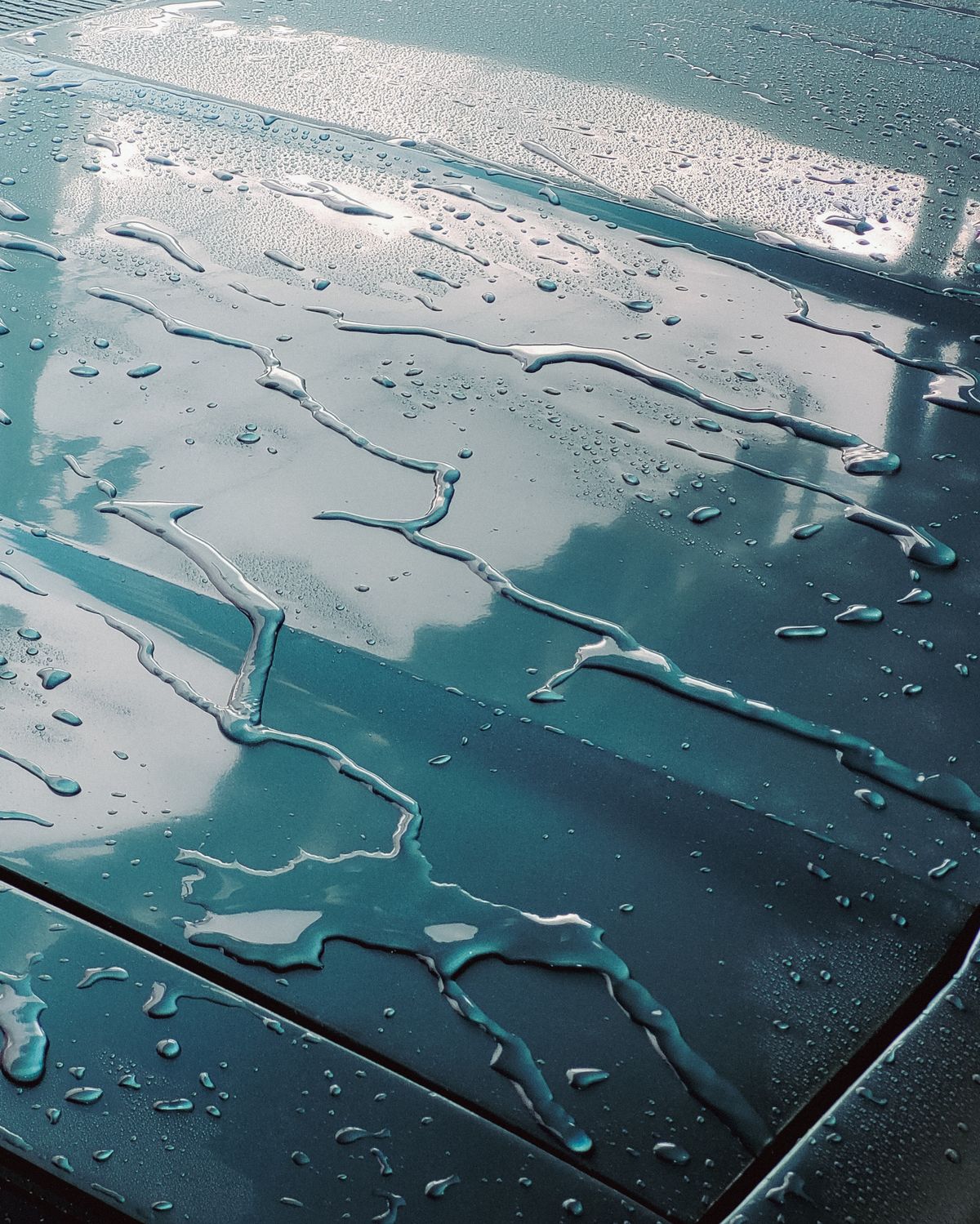
Hard water spots on car paint are the calcium and magnesium left behind when water evaporates off a panel. Fresh spots sit on top of the clear coat and come off with a mild acid. Left in hot sun, especially from very hard water, they can etch into the clear coat within days, and then only polishing removes them. Hardness sets how fast that happens.
That is why two neighbors can wash identical cars the same way and get completely different results. The one on 4 grains-per-gallon water gets faint rings that a quick detailer wipes away. The one on 18 gpg well water gets crusty white circles that are still there after the next wash.
Why Hard Water Spots on Car Paint Turn Into Etching
A drop of water on a panel is a small reservoir of dissolved minerals. As it evaporates, the water leaves and the minerals stay behind. They concentrate at the edge of the drop, which is why a water spot is usually a ring rather than a solid dot.
Three things decide what that ring does next:
Mineral load. Harder water carries more dissolved calcium and magnesium per drop, so it leaves a thicker, more continuous deposit. On soft water the ring is so faint it barely shows. On very hard water you can feel it with a fingertip.
Heat. A panel in direct summer sun gets far hotter than the air around it, and dark paint gets hotter still. Heat speeds up evaporation and whatever reaction happens between the deposit and the clear coat. Detailers see far more etching on the roof, hood and trunk lid than on door panels for exactly this reason.
Rewetting. Dew, sprinklers and the next wash all put water back on an old deposit. Each wet cycle redissolves some of it into a concentrated solution sitting right on the clear coat, then dries again. A car that gets sprinkler overspray every morning builds deposits faster than one washed once a week.
The detailing trade calls the first stage above-surface mineral deposits and the second below-surface etching. Dr. Beasley's, a paint-care manufacturer, describes the line between them: surface deposits clean off with a paint cleaner, while hard-water etching needs a clay and polish regimen. The practical question is when your water crosses that line, and that is what the test below is designed to show.
The Three Stages, and What Removes Each One
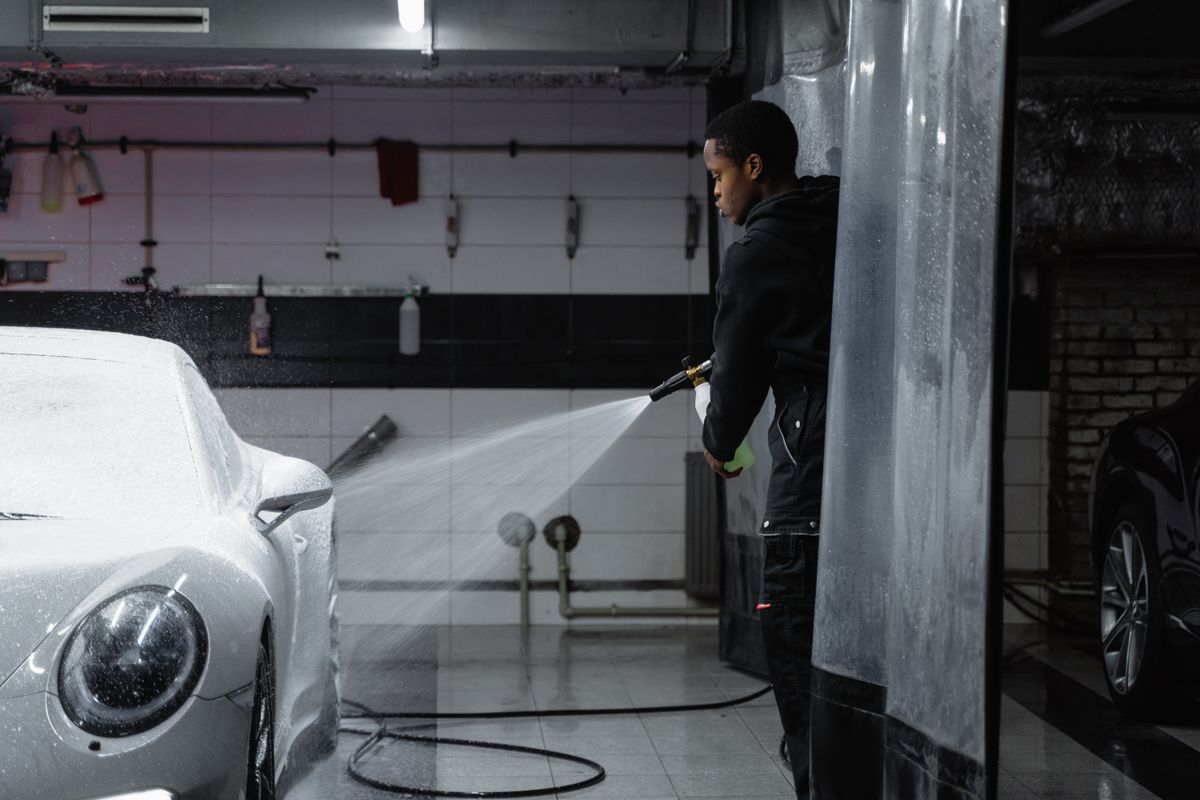
Every spot on your car is at one of three stages. The stage, not the product label, decides what will work.
| Stage | What it looks like | Fingertip and flashlight check | What removes it |
|---|---|---|---|
| 1. Surface deposit | White or gray ring, chalky, often on dark paint after a wash | Slightly rough to the touch; ring disappears when wiped with a wet acid remover | Rinse-less wash, quick detailer, or a mild acid water spot remover |
| 2. Bonded deposit | Ring survives a normal wash and a quick detailer | Still feels raised; fades but doesn't fully clear with one acid pass | Stronger mineral remover, repeated dwell, then clay bar |
| 3. Etched | Crisp ring outline, visible even when the paint is wet | Surface feels smooth, but a flashlight shows a dull ring or a shallow crater | Polish or compound, by machine or hand |
The most useful diagnostic step is the flashlight check after an acid remover. If the paint feels smooth and the ring is gone, it was a deposit. If the paint feels smooth and you can still see a ring, you are looking at a dent in the clear coat, not something sitting on top of it. No chemical fixes that.
The 3×3 Panel Test: Where Deposit Becomes Etching
Most water spot guides tell you to "not let spots sit too long" without saying how long that is. The honest answer is that it depends on your water and your weather, and nobody else can tell you exactly. You can find out yourself with one panel, some tape, and a weekend.
What you need
- A painted panel you don't mind polishing afterwards. A junkyard hood or fender is ideal. An inconspicuous area of your own car, such as the lower rear quarter, will do if you're prepared to polish it.
- Painter's tape to divide it into a 3×3 grid of squares.
- Three waters: distilled (the near-zero control), your tap water, and a harder sample. For the third, use a friend's well or tap water, or leave a jar of your tap water uncovered at room temperature until half of it has evaporated, which roughly doubles its mineral content. Don't boil it, because boiling drops calcium carbonate out of solution and lowers the hardness.
- A hardness strip to record the actual number for each water. A test strip or drop kit gets you that number in minutes.
- A spray bottle, a microfiber towel, a mild acid water spot remover or 1:1 vinegar and distilled water, and a bright flashlight.
The protocol
- Wash and dry the panel so every square starts clean. Leave it unwaxed so a coating doesn't change the result.
- Assign each row to one water and each column to one dry time.
- Mist each square with its water so it forms a scattering of beads.
- Column A: towel-dry within two minutes. Column B: let it air-dry in the shade and inspect after one hour. Column C: leave it in direct sun and inspect after 48 hours, misting it again with the same water each morning to mimic dew or sprinklers.
- Grade each square in three steps: wipe with a damp microfiber, then apply the acid remover for one minute and rinse, then inspect with the flashlight at a low angle.
The expected results
These are the outcomes you should expect based on how deposits behave, not measurements from a lab. Your exact results will shift with paint color, clear coat hardness, and how hot your sun gets.
| A: Dried in 2 min | B: Air-dried in shade, 1 hr | C: Sun, 48 hrs with rewetting | |
|---|---|---|---|
| Distilled (~0 gpg) | Nothing | Nothing, or faint dust outline | Faint outline from airborne dust at most |
| Your tap (e.g. 5–8 gpg) | Nothing | Visible rings, wipe off or clear with acid | Rings clear with acid; possible faint outline on dark paint |
| Harder sample (e.g. 12–20 gpg) | Faint haze at most | Heavy rings, need acid remover | Thick deposit; outline likely remains after acid — early etching |
The line you are looking for is the first square where the flashlight still shows a ring after the acid step. That square tells you how much margin you have. If it appears only in the bottom-right corner, your washing routine has plenty of slack. If it appears in column B on your own tap water, you should stop letting the car air-dry at all.
Two patterns show up almost regardless of water. First, column A stays clean on every row. Drying fast beats every product on the market. Second, the distilled row barely marks even in column C, which is the whole case for a pure-water final rinse, covered below.
Removing Hard Water Spots, Least Aggressive First
Start gentle and escalate only when the flashlight tells you to. Every step above the first removes something, whether wax, sealant, or clear coat, and clear coat doesn't grow back.
- Work on a cool panel in shade. Acid on a hot panel dries in seconds and can leave its own marks.
- Wash the car normally to take off loose dirt, so you aren't grinding grit into the paint in the next steps.
- Try a quick detailer or rinse-less wash on the spots. Fresh stage 1 deposits often lift with nothing more.
- Apply a dedicated water spot remover or 1:1 white vinegar and distilled water. Let it sit for a minute, never let it dry, then rinse and dry the area. Repeat once if the ring is fading.
- Clay the area if the spots have faded but the paint still feels rough. Clay picks up bonded residue that the acid loosened.
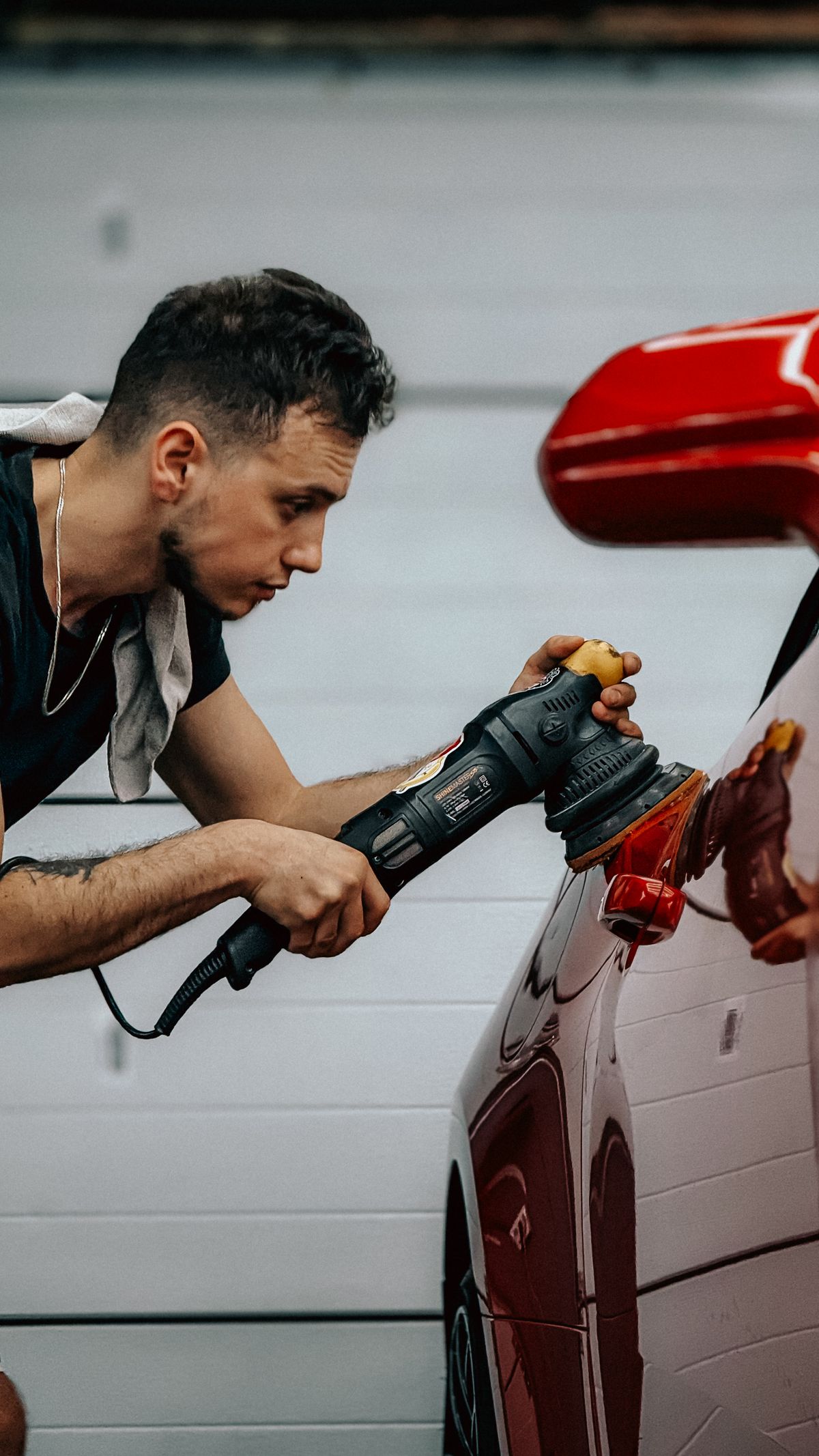
- Polish whatever the flashlight still shows. Start with a fine polish on a soft pad. Move up to a compound only if the etch is deep, and only after checking you have clear coat to spare. Coating shops measure paint thickness for this reason.
- Re-protect the panel. Acid removers and polishing strip wax and sealant. Leaving the paint bare makes the next round of spots bite faster.
If your spots dissolved in vinegar, they were mineral scale, the same deposit that forms on bathroom fixtures. The white spots on faucets guide covers the same kitchen-counter acid test from the fixture side.
Glass Is a Different Job
Windshields and side glass spot just as badly as paint, and in hard-water areas they often spot worse, because glass sheds water poorly and gets sprayed by sprinklers from below.
The rules shift in two ways. Glass is harder than clear coat, so it tolerates more aggressive treatment. A dedicated glass polish or a glass-specific spot remover is fine where you would hesitate on paint. And glass hides a second deposit: silica. In parts of the West and Southwest, spots on glass that don't respond to acid are often silica rather than calcium, and they need mechanical polishing to remove.
What you should never do is use a paint polish on glass and a glass polish on paint. They use different abrasives for different hardnesses. Keep the rubber and plastic trim around the glass out of any acid, too, because it stains.
Why a Hose-End DI Filter Beats a Whole-House Softener Here
This is the section that costs a softener sale, and it is worth being straight about.
A water softener doesn't remove dissolved minerals. It trades them. The EPA's description of cation exchange softeners is explicit: they remove calcium and magnesium "by exchanging them with sodium (or potassium) ions." Penn State Extension puts the added sodium at 7.5 milligrams per quart for each grain per gallon of hardness removed. On 15 gpg water, that is over 100 milligrams of sodium in every quart that goes onto your car.
When softened water evaporates on a panel, the sodium stays behind as a spot. Pure Water Products makes the same point from the treatment side: high-TDS water, softened or not, produces spotting. Softened spots are genuinely easier to live with than calcium spots. They are softer, they wipe off more readily, and they build less of a crust. But "easier to wipe off" is not "doesn't spot," and anyone selling a whole-house softener as a car-washing solution is overselling it.
Here is how the options compare for this one job:
| Option | What it does to the water | Result on paint | Cost logic |
|---|---|---|---|
| Untreated hard water | Nothing | Calcium spots; fastest route to etching | Free, but costs you in polishing |
| Whole-house softener | Swaps calcium and magnesium for sodium; total dissolved solids stay about the same | Softer sodium spots, easier to wipe off, not spot-free | Worth buying for the house, not for the car |
| Hose-end DI filter | Mixed-bed resin removes both positive and negative ions; output reads near zero TDS | Rinse water dries without residue | Resin is consumable; lasts longer on softer water |
| RO system with storage | Removes most dissolved solids | Near spot-free with most water | High upfront cost and slow flow; mostly used by commercial car washes |
A deionization filter is a canister of mixed-bed resin that screws onto the hose. The resin swaps every dissolved ion for hydrogen or hydroxide, which recombine as water. What comes out is close to pure, and it evaporates without leaving anything behind. That is the distilled row of the 3×3 test, on tap.
Three things to know before you buy one:
- Resin life depends on your water's total dissolved solids, not just its hardness. Twice the TDS uses up the resin twice as fast. Get a cheap handheld TDS meter so you can see your starting number and know when the output starts to rise.
- A softener in front of it doesn't stretch the resin much. Softening replaces the calcium and magnesium with sodium and leaves the total ionic load about the same, so DI resin has roughly as much to remove either way. An RO pre-filter does help, which is why commercial spot-free systems pair the two.
- Use it for the final rinse only. Wash with ordinary tap or softened water, then switch to DI for the last pass. That can cut resin use dramatically, because the final rinse is a small fraction of the water you use.
If you already own a softener, washing with softened water and rinsing with DI is the best of both. The soap lathers properly, the wash itself leaves softer residue, and the final rinse leaves nothing. If you don't own one, don't buy a softener for the car. Buy one if the rest of the house justifies it, and whether your hardness level actually does is a separate question with its own answer.
Prevention That Actually Works
Removal is the expensive half. These habits keep you in column A of the test grid.
- Wash in shade, on a cool car. Early morning or evening. A hot hood can flash-dry water before you reach it.
- Wash and dry one section at a time on hot or windy days, rather than soaping the whole car and rinsing at the end.
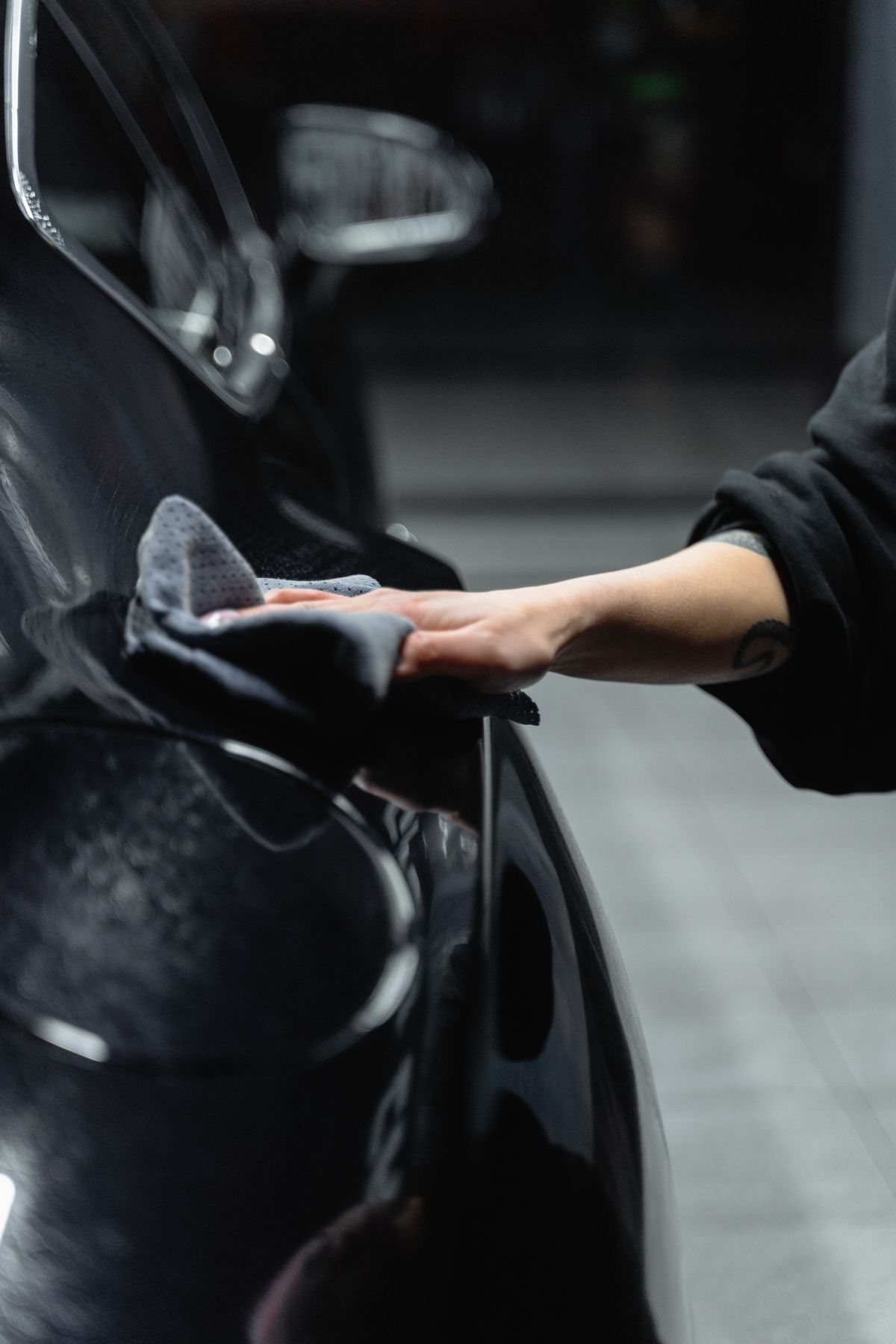
- Dry immediately with a large, plush microfiber drying towel. Blot or drag, don't scrub. A leaf blower clears mirror housings, badges and trim gaps, where water hides and runs out later.
- Use a drying aid or spray sealant as you dry. It lubricates the towel and leaves a slick layer that sheds water.
- Aim sprinklers away from the driveway. Sprinkler overspray is the classic cause of heavy etching, because it rewets the same spots every morning with untreated water and then bakes them all day.
- Keep the paint protected. Wax, sealant or a ceramic coating won't stop spots from forming. Hydrophobic coatings bead water into tight drops that can still dry as rings. What protection does is put a sacrificial layer between the deposit and the clear coat, so the damage lands on something replaceable.
What to Do Next
- Check your hardness number with a strip or your utility's annual report. It tells you how much time you have between washing and drying.
- Flashlight-check your worst panel after a water spot remover. A ring that stays on smooth paint is etched, and it needs polish, not more product.
- Run the 3×3 panel test if you want to know your real margin. One weekend tells you whether air-drying in shade is safe or a mistake on your water.
- Add a hose-end DI filter for the final rinse if you want truly spot-free results. It solves hard water spots on car paint more directly than any whole-house system, and it costs a fraction of one.
- Protect the paint and keep it away from sprinklers. Most permanent etching starts with a car parked in the same spot the lawn gets watered.
Frequently Asked Questions
Are hard water spots on a car permanent?
Not at first. A fresh spot is a thin mineral crust sitting on top of the clear coat, and a mild acid remover takes it off. It becomes permanent only once the deposit has sat long enough, usually through heat and repeated wetting, to etch a ring into the clear coat itself. At that point there is nothing left to dissolve, and the only fix is polishing the surrounding clear coat level with the bottom of the etch.
Is it safe to use vinegar on car paint for water spots?
Diluted and brief, yes. Mix white vinegar 1:1 with distilled water, apply it to a cool panel in the shade, leave it no more than a minute or two, then rinse and dry. Never let it dry on the paint, and expect it to strip wax or sealant, so re-protect the area afterwards. It only works on surface deposits. If a ring outline remains after two careful passes, the spot is etched and vinegar will not help.
Does a water softener prevent water spots on cars?
Not completely. A softener swaps calcium and magnesium for sodium, but the sodium stays dissolved, so softened water still leaves spots when it evaporates on paint. They are softer and easier to wipe off than calcium scale, which is a genuine improvement, but they are not spot-free. For a truly spotless rinse you need the dissolved solids removed, which is what deionization and reverse osmosis do.
Why does my car still get water spots after I dry it?
Usually because the panels dried before the towel reached them. A hot panel in sun can flash-dry a film of water in a minute or two, especially the roof and hood. Water also hides in mirror housings, trim gaps and door jambs and runs out as you drive, drying in streaks. Wash in shade on a cool car, work one section at a time, and blow out the gaps with a leaf blower or compressed air.
Will a clay bar remove water spots?
A clay bar can lift bonded mineral deposits that a chemical remover loosened but did not fully clear, and it removes other contamination that makes spots harder to treat. It does not remove etching, because an etch is a dip in the clear coat rather than something stuck on it. If the paint is smooth after claying and the ring is still visible under a flashlight, you need polish.