
White Spots on Faucets: Hard Water or Something Else?
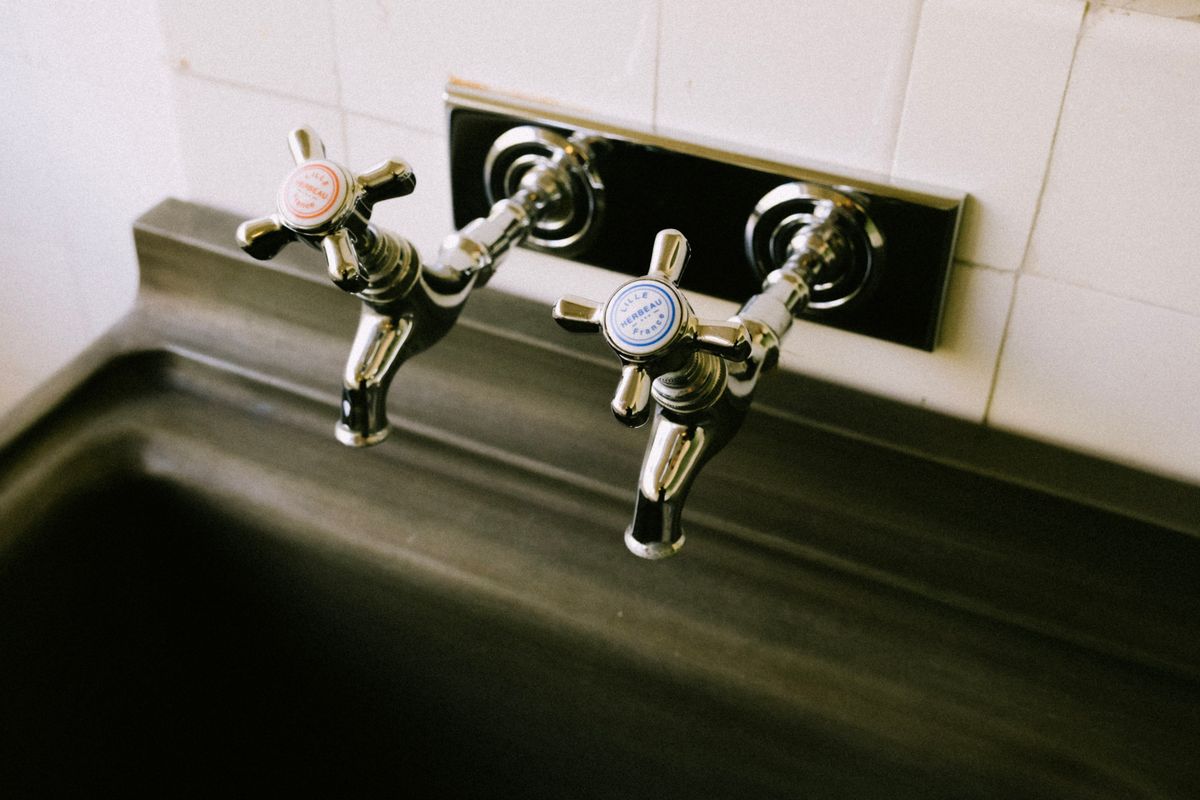
White spots on faucets are almost always limescale: calcium and magnesium left behind when hard water evaporates off the metal. But two other things look identical to the naked eye — dissolved silica and dried soap film — and neither responds to the same treatment. Before you buy anything, it's worth spending ten minutes finding out which one you actually have.
The reason this matters: a water softener eliminates one of the three completely, partially helps with a second, and does nothing at all for the third.
What Causes White Spots on Faucets?
Three culprits account for nearly every case.
Limescale (calcium carbonate). By far the most common. Hard water evaporates on the fixture and leaves its dissolved minerals behind as a chalky crust. It concentrates where water sits repeatedly — around the aerator, at the base of the spout, on showerhead nozzles. Hot water fixtures scale faster than cold ones, because calcium carbonate is one of the few compounds that becomes less soluble as temperature rises.
Silica. Dissolved silicon dioxide, common in parts of the West and Southwest and in some well water. It leaves a similar white haze, but it's glassy rather than chalky, it resists acid, and it forms a far thinner film. The giveaway is speed: silica spotting can appear within an hour of wiping a surface dry.
Soap and detergent film. Not a mineral deposit at all — dried surfactant residue, often mixed with the calcium-soap curd that hard water produces. It smears when you rub it rather than flaking, and it usually shows up on surfaces that get splashed with soapy water rather than plain water.
The 10-Minute Vinegar Test That Identifies Yours
You don't need a test kit for this one. You need white vinegar, a paper towel, and a timer.
- Pick a spotted fixture and dry it completely with a cloth.
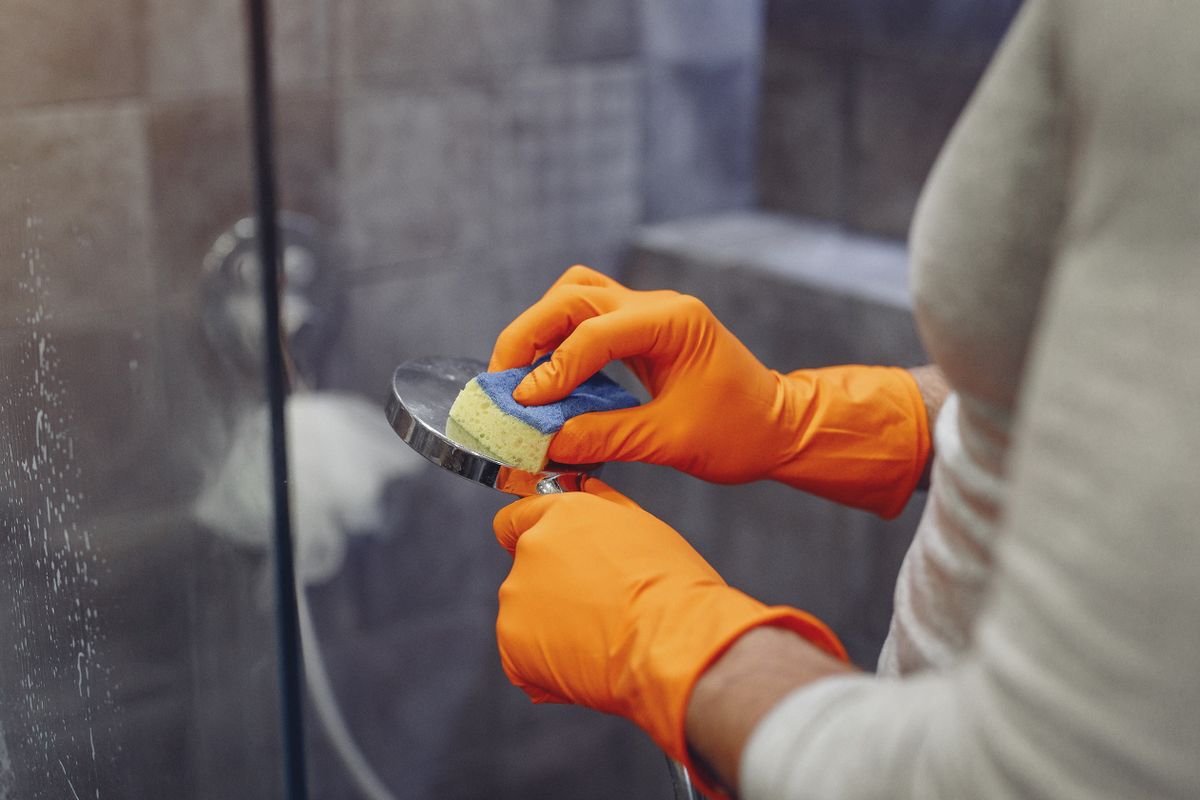
- Soak a paper towel in white vinegar and press it flat against the deposit. Leave it 10 minutes.
- Remove the towel and wipe.
Read the result:
| What happens | What it means | What fixes it |
|---|---|---|
| Deposit dissolves or wipes away easily | Limescale — ordinary hardness | Softening prevents it; vinegar removes existing buildup |
| Deposit barely changes, still hazy | Silica | Softening won't help; needs RO at point of use or manual polishing |
| Deposit smears into a film | Soap or detergent residue | Reduce soap dose; a softener helps indirectly by cutting how much you need |
That third row surprises people. On genuinely hard water, most households overdose soap because it won't lather — and the excess dries as film on every surface it touches. Fixing the lather problem often fixes the spotting problem too, which is why the soap-lather issue is worth understanding separately.
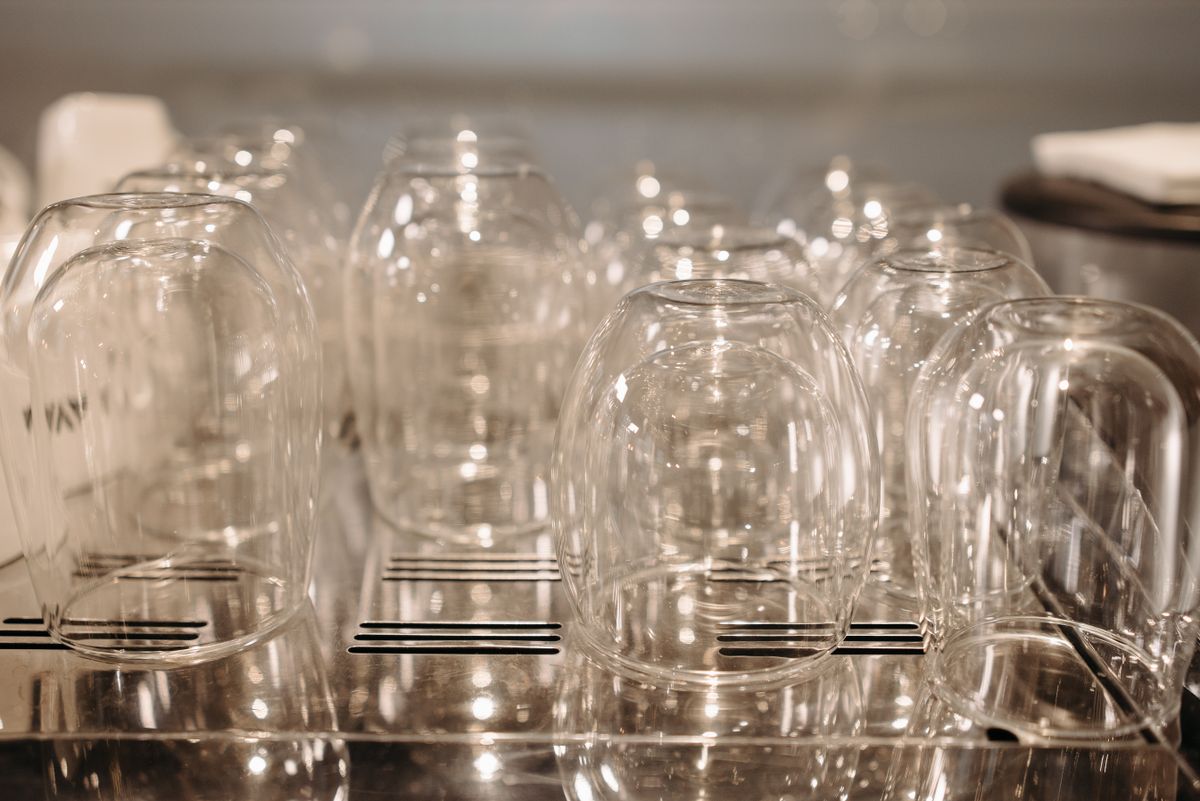
For a second data point, run the same test on a drinking glass straight out of the dishwasher. Cloudy glassware that clears with vinegar is mineral film; cloudy glassware that stays cloudy is etched, and etching is permanent damage caused by too much detergent, not too little.
How to Remove White Spots on Faucets Safely
For limescale, acid is the only thing that works, and household vinegar is strong enough for almost all of it.
- Light spotting: wipe with a 1:1 vinegar and water solution, then rinse and dry.
- Established crust: wrap the fixture in vinegar-soaked paper towel or a plastic bag of vinegar rubber-banded in place, leave 30 minutes, then scrub with a soft toothbrush.
- Aerator screens: unscrew and soak the whole assembly overnight. This is usually where the worst buildup hides, and a clogged aerator is the single most common cause of a weak kitchen tap.
Three warnings worth taking seriously. Never mix vinegar with bleach or any chlorine-based cleaner — the combination releases chlorine gas. Don't use abrasive pads on chrome or brushed nickel; you'll leave scratches that trap deposits and make the next round worse. And check the manufacturer's guidance before putting acid on anything with a coloured or coated finish, particularly matte black, oil-rubbed bronze, and gold-tone fixtures, where acid can strip the coating permanently.
Silica is a different job. It doesn't dissolve in vinegar, so removal means mechanical polishing with a non-scratch cream cleaner — and prevention means drying surfaces after use or treating at the tap with reverse osmosis, since whole-house softening leaves silica untouched.
Why They Come Back — and How Fast Tells You Something
Cleaning treats the symptom. The deposit returns because the water hasn't changed, and the rate of return is a free, surprisingly useful measurement.
Wipe a fixture completely dry, then check it daily:
- Visible haze within hours: likely silica, or extremely hard water combined with a dripping tap.
- Noticeable film in 3–7 days: hard to very hard water, roughly 10 gpg and up.
- Buildup over 3–4 weeks: moderately hard, in the 5–10 gpg range.
- Barely anything after a month: soft to slightly hard. Whatever you saw was probably soap film.
This isn't a substitute for a real measurement, but it's a good sanity check on one — and it costs nothing. When you're ready for an actual number, a home test strip or utility report gives you one in minutes.
Will a Water Softener Stop White Spots on Faucets?
For limescale, yes — that's precisely what ion exchange is for. A softener swaps the calcium and magnesium for sodium or potassium as water enters the house, so there's nothing left to deposit when it evaporates. The EPA's overview of cation exchange softeners describes the mechanism and the regeneration cycle it depends on.
Three honest caveats before you treat that as a purchase decision:
It won't clean what's already there. You still remove existing deposits once, manually. After that, new ones stop forming.
Spots can briefly get worse. Softened water gradually loosens old scale inside pipes, and some of it sheds downstream for a few weeks. It's temporary and it's a sign the system is working, but it alarms people who weren't warned.
It does nothing for silica. If your vinegar test pointed at silica, a softener is the wrong purchase. That's the single most useful outcome of running the test first.
Whether the fix is worth the cost depends on where your water actually falls on the hardness scale. Penn State Extension puts the practical softening range between roughly 3 and 20 grains per gallon — and the threshold question deserves a proper look before you spend anything.
What to Do Next
- Run the vinegar test on one fixture. Ten minutes tells you whether you're dealing with minerals, silica, or soap.
- Clean what's there with a vinegar soak, and pull the aerator while you're at it — it's almost certainly the worst of it.
- Get a hardness number from a test strip or your utility's annual report, and only then decide whether treatment is worth it. If the test pointed at silica or soap film, a softener won't solve what's bothering you.
If you're still working out what the underlying issue is, the fundamentals of hard water and what those minerals actually do is the place to start.
Frequently Asked Questions
How do you get white spots off faucets?
Soak a paper towel in white vinegar, wrap it around the fixture, and leave it 20 to 30 minutes before scrubbing with a soft brush. Vinegar dissolves calcium carbonate without scratching chrome. Skip abrasive pads and anything with bleach — bleach does nothing to mineral scale and can damage the finish.
Are white spots on faucets harmful?
No. Calcium and magnesium deposits are a cosmetic and maintenance problem, not a health one. The EPA regulates hardness as a secondary standard based on taste and appearance rather than safety. The real cost is invisible: the same minerals build up inside water heaters and appliances, where scale forces them to work harder.
Why do white spots come back so quickly after cleaning?
Because cleaning removes the deposit, not the cause. How fast they return is actually a rough hardness gauge — weeks means moderate hardness, days means high. If spots reappear within hours of drying a fixture, you are likely dealing with silica rather than ordinary hardness, and vinegar will not have touched it.
Will a water softener remove white spots on faucets?
It stops new calcium and magnesium scale forming, which eliminates the most common cause. It will not remove existing deposits — you still clean those off once — and it does nothing for silica, which stays dissolved through ion exchange. Existing buildup elsewhere in the plumbing can also shed for a few weeks after installation.
What is the difference between hard water spots and etching?
Hard water spots sit on top of the surface and dissolve in vinegar. Etching is microscopic damage to the surface itself and does not respond to any cleaner, because there is nothing left to dissolve. On glass, etching usually comes from too much detergent in soft water — the opposite problem from hardness.