
How to Sanitize a Water Softener
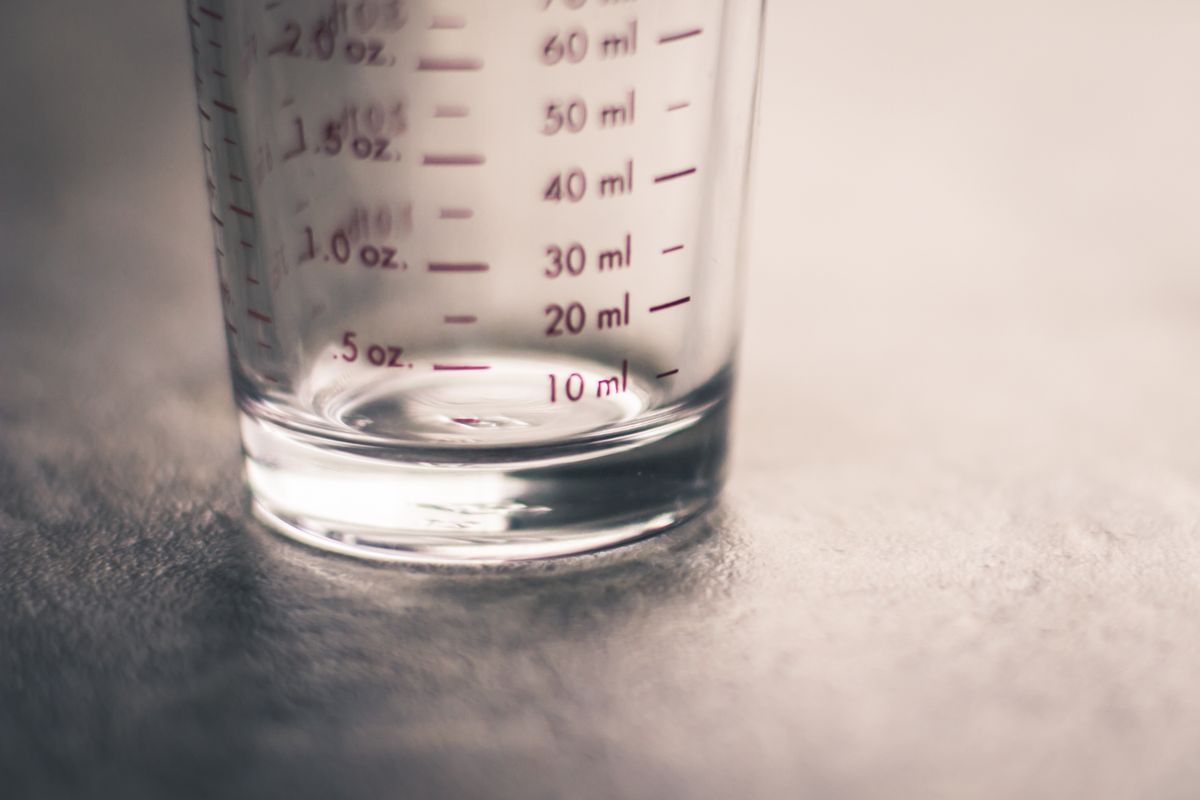
How to sanitize a water softener: pour a measured dose of plain unscented bleach into the brine well and run a manual regeneration. The standard manufacturer dose is 1.2 fluid ounces of 5.25% bleach per cubic foot of resin. The brine draw carries it through the resin, the rinses flush it to drain, and a chlorine check at a tap tells you when the water is back to normal. More bleach is not better. It is the most common way people damage the resin they are trying to protect.
The same procedure covers a new softener and one that has been contaminated. The difference is what comes before it and what test ends it.
Why the Dose Matters More Than the Method
Nearly every guide gets the method right: bleach in the brine well, regenerate, rinse. Where they go wrong is quantity, often "a cup of bleach" or "a good splash."
Softener resin is a polystyrene polymer, and chlorine attacks it. DuPont's technical note on preventing biological growth on ion exchange resins calls hypochlorite cleaning "a very intense treatment" for cation resins and says it "should be carefully controlled in order to prevent possible resin damage," meaning broken cross-links and lost exchange sites. That note is written for industrial plants that measure concentration, time the contact and rinse to a measured endpoint. A homeowner pouring from a jug can do none of that, which is why household manuals give a small, fixed dose that one regeneration rinses out.
What damage looks like, and how to tell it apart from other faults, is covered in how chlorine damages water softener resin. The short version: once resin has swollen and softened from oxidation, it does not recover.
How to Sanitize a Water Softener: Dosing Table by Tank Size
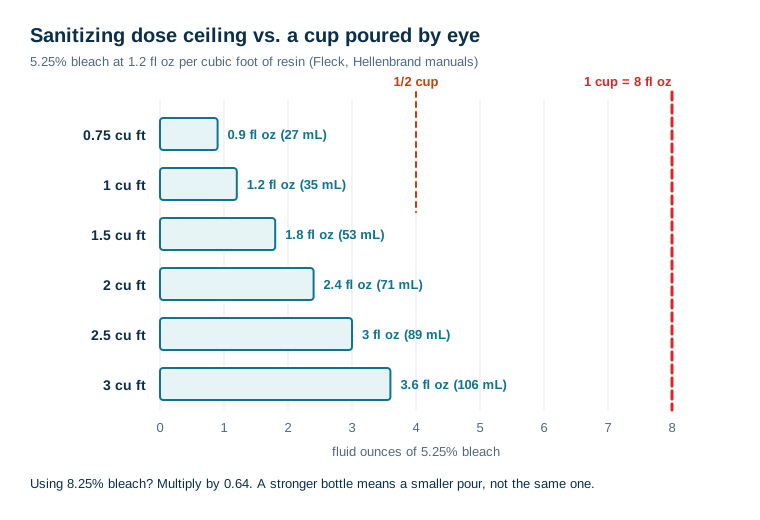
The manufacturer figure comes from the disinfection section of the Fleck 5800 SXT service manual: 1.2 fluid ounces (35.5 mL) of 5.25% sodium hypochlorite per cubic foot of polystyrene resin, or 0.8 fluid ounce for non-resinous exchangers. Hellenbrand's owner's manual uses the same 1.2 fluid ounce figure. Both say to adjust the dose if you use a stronger solution.
Most bleach sold today is stronger than 5.25%, so the table gives three strengths. Treat every figure as a ceiling, not a target.
| Resin volume | 5.25% bleach (manual figure) | 6% bleach | 8.25% bleach |
|---|---|---|---|
| 0.75 cu ft | 0.9 fl oz, 27 mL, about 1¾ tbsp | 0.8 fl oz, 23 mL | 0.57 fl oz, 17 mL |
| 1.0 cu ft | 1.2 fl oz, 35 mL, about 2½ tbsp | 1.05 fl oz, 31 mL | 0.76 fl oz, 23 mL |
| 1.5 cu ft | 1.8 fl oz, 53 mL, about 3½ tbsp | 1.6 fl oz, 47 mL | 1.15 fl oz, 34 mL |
| 2.0 cu ft | 2.4 fl oz, 71 mL, about ⅓ cup | 2.1 fl oz, 62 mL | 1.5 fl oz, 45 mL |
| 2.5 cu ft | 3.0 fl oz, 89 mL | 2.6 fl oz, 78 mL | 1.9 fl oz, 56 mL |
| 3.0 cu ft | 3.6 fl oz, 106 mL | 3.1 fl oz, 93 mL | 2.2 fl oz, 67 mL |
| Upper limit | 1.2 fl oz per cu ft | 1.05 fl oz per cu ft | 0.76 fl oz per cu ft |
Stronger bleach worked from the manual figure by ratio: 6% is 0.875 times the 5.25% dose, and 8.25% is 0.64 times. Round down, not up.
Finding your resin volume. It is usually on the tank label, the model sticker or the first page of the manual. If you only know the tank size or grain rating, these are the common pairings. Check your own label before relying on them.
| Tank size | Typical resin volume | Often sold as |
|---|---|---|
| 8 × 44 in | 0.75 cu ft | 24,000 grain |
| 9 × 48 in | 1.0 cu ft | 32,000 grain |
| 10 × 54 in | 1.5 cu ft | 48,000 grain |
| 12 × 52 in | 2.0 cu ft | 64,000 grain |
If you cannot find the resin volume at all, dose for the smaller size you think it might be. An underdose can be repeated. An overdose cannot be taken back.
What to use. Plain, unscented liquid chlorine bleach. Not scented, not "splash-less" or thickened gel products, and not bleach that is several years old, which has lost strength unpredictably. The Fleck manual also lists calcium hypochlorite (70% available chlorine) at a much smaller dose. Use it only if your own manual gives the figure. Some manufacturers specify their own sanitizer; if yours does, the manual wins over this table.
Two Reasons to Sanitize, One Procedure
Commissioning. A new softener, a softener with new resin, and one that has been opened for service have all been handled, stored and exposed. Hellenbrand's manual says every water softener should be disinfected after installation, before it treats drinking water. The Fleck manual adds that the materials themselves will not support bacterial growth, but the softener can pick up organic matter or bacteria from the water supply. Sanitizing at startup is the last step of the water softener startup procedure.
After contamination. A flood that reached the brine tank, a positive coliform test, a musty or rotten-egg smell that traces to the softener, a system left idle for months, or a well that has just been shock chlorinated. In these cases the source comes first. Sanitizing a softener while the well or the brine tank is still contaminated only resets the clock. If the well was shocked, the softener should have been on bypass during the shock, and protecting a softener during shock chlorination covers that sequence.
The procedure in the middle is the same for both. Only the preparation and the final test differ.
The Procedure, Step by Step
- Measure the dose. Find your resin volume and bleach strength, then read the dose from the table. Measure it in a marked cup or with measuring spoons. Do not pour from the jug.
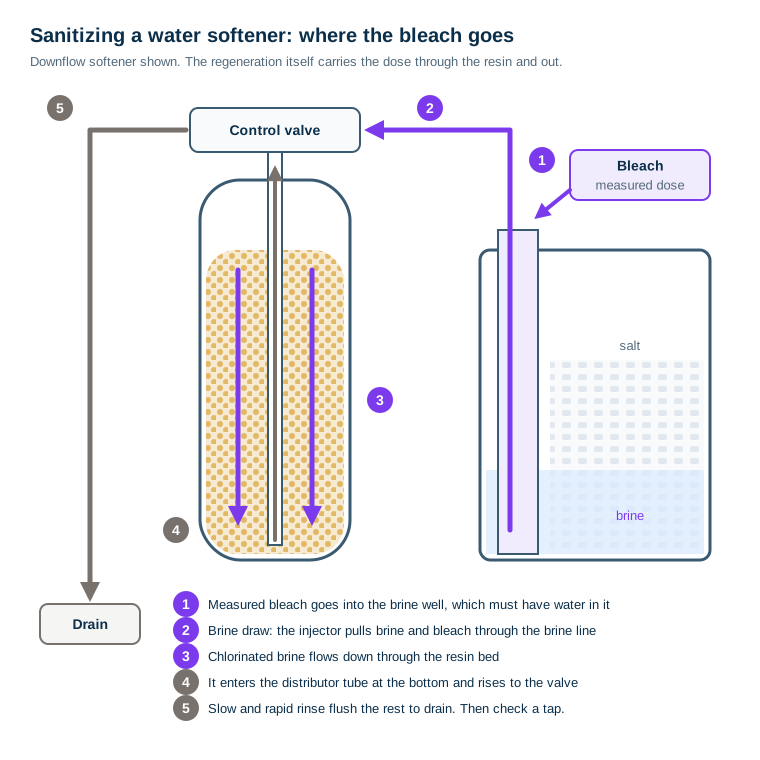
- Prepare the brine tank. For a contamination event, empty and clean it first, because a dirty brine tank reseeds the resin on the next regeneration. For commissioning, just confirm there is water in the tank. The Fleck manual notes the salt tank "should have water in it" so the solution can be carried into the softener.
- Pour the dose into the brine well. That is the tube inside the brine tank with the float assembly. Pouring onto the salt wastes most of the dose, and pouring into the resin tank skips the dilution.
- Start a manual regeneration. The Fleck manual says to backwash, then add the hypochlorite, then continue with the normal recharge. Hellenbrand says to add it and then press regenerate for a normal cycle. On most valves, adding the dose first and starting a full regeneration achieves the same thing, because the backwash comes before the brine draw.
- Let the whole cycle finish. The brine draw pulls the bleach through the resin. The slow and rapid rinses flush it to drain. Avoid using water during the cycle, since most valves send untreated water to the house while they regenerate.
- Flush and test for chlorine. Run the cold tap nearest the softener for several minutes, then test with a pool or spa free-chlorine strip or kit. Keep testing until the reading matches your normal water: zero on an unchlorinated well, or your utility's usual residual on city water. A faint bleach smell at first is normal; one that persists means more flushing.
- Return to service, or wait for the lab. For commissioning, you are done once the chlorine is back to normal. For contamination, collect a coliform sample from a tap after the softener and send it to a certified laboratory, as described under verification below.
Never combine bleach with a resin or iron cleaner in the same regeneration. Bleach labels warn against mixing with acids or ammonia, and many resin and rust cleaners are acidic. If you need both, run them in separate regenerations and let the first finish completely.
If the Smell Came Back: Sulfur and Musty Odors
A rotten-egg smell that appears only in softened water, or only after the softener has sat unused, is a common reason people look up this procedure. Sulfate-reducing bacteria can colonize a resin bed and brine tank, and sanitizing is part of the fix. It is not always the whole fix. If the smell is in the raw water too, it comes from the well or the water heater, and sanitizing the softener changes nothing. Why a sulfur smell remains after a water softener sorts out which case you have.
If the smell returns within a few weeks of a correct sanitizing, do not raise the bleach dose. Look for the source instead: a contaminated brine tank, a well that needs treatment, or a softener that sits idle for long stretches.
The Verification Test Before Drinking
How you decide the water is safe depends on why you sanitized.
| Scenario | Test | Back in drinking service when |
|---|---|---|
| New install, new resin or routine service | Free chlorine at a tap after the softener | Reading matches your normal supply |
| Musty or sulfur smell with no known contamination | Chlorine test, then a smell check over the following week | Chlorine back to normal and the odor has not returned |
| Flood, positive bacteria test, or after a well shock | Chlorine test, then a total coliform test by a certified lab | Chlorine back to normal and coliform absent |
For a private well, EPA recommends testing the well whenever you replace or repair part of the system, after flooding, and when you notice a change in taste, odor or color, using a laboratory certified for drinking water. A softener is part of that system. Take the sample from a cold tap after the softener, with the aerator removed, and follow the lab's collection instructions exactly. Use bottled water for drinking until the result is back.
What Sanitizing Cannot Do
- It cannot clean a contaminated well. If the source water carries bacteria, the softener is re-exposed the moment it returns to service.
- It cannot fix fouled or damaged resin. Iron fouling needs a resin cleaner, and oxidized resin needs replacing. Bleach makes oxidation worse.
- It does not make a softener a disinfection device. A softener does not kill bacteria in normal service. If the supply needs continuous disinfection, that is a separate system, usually UV installed after the softener.
- It does not remove sediment or biofilm from the brine tank. Physical cleaning does that. Sanitizing a dirty brine tank just bleaches the dirt.
Measure the dose, regenerate, rinse, test. That is the whole procedure. The one rule that prevents most sanitizing failures is to treat the table's figure as a ceiling.
Frequently Asked Questions
How much bleach do I put in my water softener to sanitize it?
Follow your manual first. Where it gives no figure, the Fleck 5800 SXT service manual specifies 1.2 fluid ounces (35.5 mL) of 5.25% household bleach per cubic foot of polystyrene resin, added to the brine well. A common 1 cubic foot softener therefore gets about 2.4 tablespoons. If your bleach is stronger, such as 8.25%, use proportionally less: about 0.76 fluid ounce per cubic foot.
Can too much bleach damage a water softener?
Yes. Chlorine is an oxidizer, and softener resin is a polymer that it breaks down. DuPont describes hypochlorite cleaning of ion exchange resin as a very intense treatment that must be carefully controlled to prevent resin damage. Pouring a cup or more into a household softener, or leaving bleach to soak in the resin tank, is a common self-inflicted cause of a swollen, mushy bed.
Where do you pour bleach in a water softener?
Into the brine well, the narrow tube inside the brine tank that holds the brine valve, not onto the salt and not into the resin tank. The brine tank needs water in it so the solution is drawn into the softener during the brine draw. Then start a manual regeneration so the brine carries the bleach through the resin and out to drain.
How often should you sanitize a water softener?
After installation, after any service that opens the system, after a flood or a positive bacteria test, and after the well is shock chlorinated. Hellenbrand's manual says every water softener should be disinfected after installation. Beyond those events, the Fleck manual notes that some softeners need periodic disinfection depending on the water, so a softener that develops a musty or sulfur smell is a candidate.
Is it safe to drink water after sanitizing a water softener?
Once the regeneration has finished, the rinse cycles have flushed the bleach out and a chlorine test at a tap reads the same as your normal water. On a well, that normally means zero. If you sanitized because of contamination, wait for a negative coliform result from a certified lab before drinking the water again.
Can I use hydrogen peroxide instead of bleach to sanitize a softener?
Only if your manufacturer allows it. Resin makers do publish hydrogen peroxide procedures for industrial ion exchange plants, with controlled concentration and contact time, but most household softener manuals specify chlorine bleach. Using an unapproved chemical can void a warranty, and strong peroxide also damages resin.
