
How to Protect a Softener During Well Shock Chlorination
Shock chlorination and a water softener do not mix, so the softener goes into bypass before any chlorine enters the well. It stays bypassed through the whole contact period and flush. It comes back only when a free chlorine test at a tap reads zero and the water runs clear. After that, sanitize it with the low dose in its manual. If it was left in service, flush it, regenerate it, and track its capacity over the next few months.
How chlorine damages resin at the bead level, and how to read a bed for it, is covered in how chlorine damages softener resin. This page is about the shock itself: one very strong dose, on a schedule you control.
Why a Shock Is a Different Problem From City Chlorine
A softener on chlorinated city water sees a residual of a few parts per million or less, all the time. A well shock is the opposite: a very high concentration, for one or two days.
- The dose. Oregon State University's well water program recommends an initial concentration of 50 to 100 ppm. Virginia Tech's shock chlorination guide sizes its bleach tables for about 200 ppm. Either is far above anything a resin bed is designed for.
- The contact time. Virginia Tech says to hold the chlorinated water in the system for 12 to 24 hours. Oregon State says 6 to 12. A softener left in service spends that whole time sitting in shock-strength water.
- The iron. Chlorine oxidizes dissolved iron into rust particles. A well that runs clear through a softener every day can send a slug of oxidized iron into the resin during a shock, and oxidized iron fouls the bed instead of exchanging on it.
- The debris. A shock loosens scale, sediment and biofilm in the well and pipes. The first flush often runs discolored.
The guidance does not all agree. Texas A&M AgriLife says you should "also disinfect most water treatment equipment, such as water heaters, softeners and pressure tanks." Virginia Tech's shock chlorination publication warns that the process "can potentially damage system components such as pressure tanks, water softeners, filters and filter media" and says to check with the manufacturer. Penn State Extension notes that some equipment "can be damaged or exhausted by high chlorine concentrations."
The two positions fit together. Keep the softener out of the shock-strength water, then disinfect it with the manufacturer's own dose. Hellenbrand's owner's manual, for example, specifies 1.2 fluid ounces of 5.25 percent bleach per cubic foot of resin, poured into the brine well and followed by a normal regeneration. That is a small, measured dose that is rinsed out in one cycle, not a 24-hour soak.
Shock Chlorination Water Softener Protection, Hour by Hour
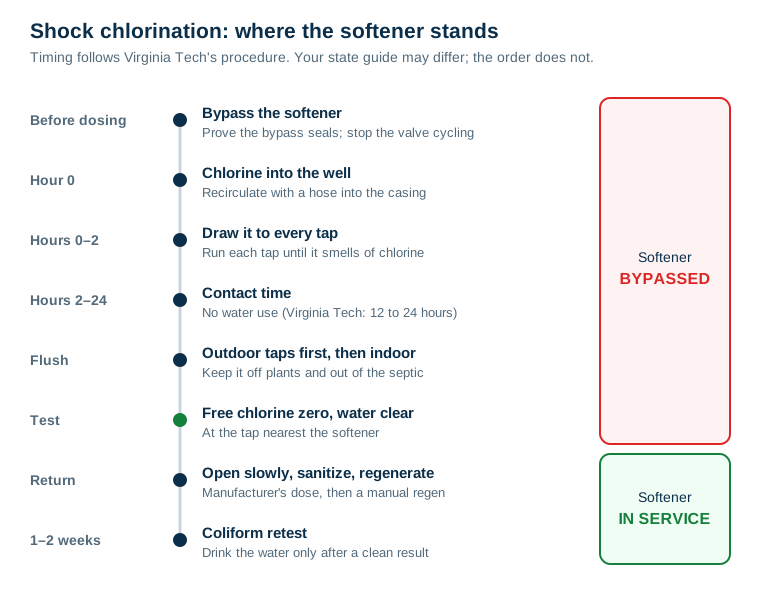
The times below follow Virginia Tech's procedure. If your state extension service or well contractor gives different contact times, keep their times and keep the softener steps the same.
| When | Well and plumbing | Softener |
|---|---|---|
| Before dosing | Store 12 to 24 hours of drinking water. Turn off the pump breaker before opening the well cap | Put it in bypass and check that the bypass actually seals |
| Hour 0 | Mix and pour the chlorine, recirculate with a hose into the well | Bypassed |
| Hours 0 to 2 | Open each tap until you smell chlorine, then close it | Bypassed. Chlorinated water is now in every pipe except the softener |
| Hours 2 to 24 | Contact time: no water use | Bypassed |
| Flush | Outdoor faucets first, then indoor, until the odor is gone | Bypassed |
| Test | Free chlorine reads zero at a tap near the softener, water runs clear | Still bypassed until both are true |
| Return | Normal use resumes | Open slowly, sanitize per manual, regenerate |
| 1 to 2 weeks | Coliform retest | Normal service |
Before Dosing: Prove the Bypass Works
This step is the one people skip, and it is where most "I bypassed it and it still got chlorinated" stories start.
- Know which bypass you have. A single-handle or push-button bypass on the valve, or a loop of three valves on the pipework. With a three-valve loop, the inlet and outlet valves must be closed and the bypass valve open.
- Test it before the chlorine goes in. Set it to bypass, then open a tap and watch whether the softener's meter or flow indicator moves. How to exercise a stiff valve and spot one that leaks through is in how to inspect and exercise a bypass valve.
- A bypass that leaks through lets chlorinated water into the resin tank for the whole contact period. If yours does, close the inlet and outlet isolation valves as well, or disconnect the unit.
- Stop the valve regenerating while it is isolated. Many controls can be unplugged for a day without losing settings, but check your manual first.
During Contact and Flushing
Leave the softener alone. Virginia Tech's flushing advice, and the protective step for homes with septic, both matter here:
- Flush through outdoor faucets first, to "a gravel road or other nonvegetated area," in Virginia Tech's words. Oregon State adds, "Don't use this water on plants."
- Limit what goes down the drains. Both sources recommend keeping chlorinated flush water out of the septic system where you can. The wider question of what a septic system can take is in water softener planning with a septic system.
- Flush the water heater too, or it will send chlorinated water into the hot side for days. Turn off its power or gas before you drain it.
The Test That Ends the Bypass
"No chlorine smell" is not a test. Noses adapt, and a residual you cannot smell can still be well above what the softener should see.
- Use a free chlorine test. Virginia Tech suggests a test kit for free chlorine from a hardware store or water equipment dealer. Pool test kits and strips work too.
- Use the right range. High-range strips help confirm the dose on the way in. Clearing the water needs a low-range test, one that reads down to a fraction of a ppm.
- Test at the tap nearest the softener, since that is the water that goes into it.
- Target: zero, or the same as before the shock. Well water normally carries no chlorine. Anything detectable means keep flushing.
- Also wait for clear water. Loosened iron and sediment are the other reason to keep the softener off line. Flush until a glass drawn at that tap stays clear.
Returning the Softener to Service
- Open the bypass slowly, partway first, so air and pressure come back gently.
- Sanitize it by the manual. Use the manufacturer's dose and method, not bleach left over from the well.
- Run a manual regeneration. It rinses the sanitizer through and restores capacity after the unit has sat idle. The steps for common valves are in how to start a manual regeneration safely.
- Plug it back in and check the clock, if you unplugged it.
If the Softener Was Already Exposed
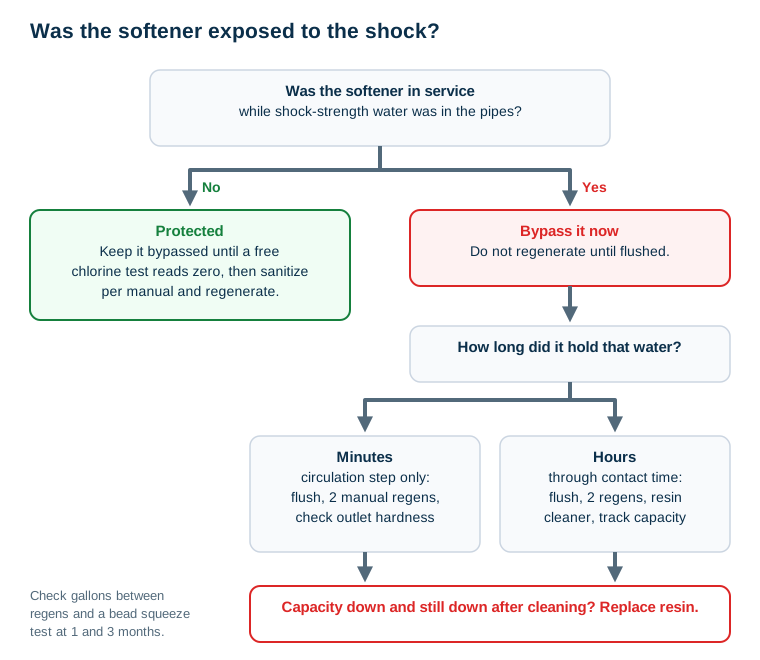
First, stop the exposure. Put the softener in bypass now, even partway through the contact period. Do not start a regeneration while chlorinated water is still in the pipes. It would only pull more of it through the bed.
Then work out how much it took. The damage chlorine does builds with both concentration and time. A rough comparison helps set expectations, though it is only arithmetic, not a published figure:
- A softener that held 100 ppm water for 12 hours saw about 1,200 ppm-hours.
- A softener on city water at 1 ppm sees about 8,760 ppm-hours in a year.
- So one full shock soak is in the region of a couple of months of city-water chlorine, delivered in a day.
A few minutes of shock water during the circulation step is a small fraction of that.
After flushing, bring it back and run two manual regenerations back to back. Then measure:
- Hardness at the outlet just after regeneration. Zero or near it means the bed is still exchanging.
- Gallons between regenerations, compared with what the valve delivered before the shock. A drop that persists is lost capacity.
- A bead squeeze test on a resin sample at one month and three months. Soft, deformable beads are the sign of oxidative damage. The method is in the chlorine resin guide linked at the top of this page.
- Brown water or iron at the taps after regeneration, which means oxidized iron from the shock is in the bed. A resin cleaner is the fix for that part. See resin and iron cleaners.
When to replace the resin. If capacity has fallen and stays down after cleaning, the beads are damaged and no cleaner will restore them. The bed needs replacing, on the timetable of the lost capacity rather than straight away. A bed that still softens fully to its old gallon count can stay in service. Just keep checking it.
The Repeat-Shock Trap
A single shock after a well repair, a flood or a positive coliform test is manageable. Wells with iron bacteria are often shocked every few months, and a softener exposed to every one of them is on a short life.
- Bypass every time, not just the first time.
- If shocks keep failing, the cause is usually a persistent source such as a failed well cap, a cracked casing or iron bacteria established in the formation. Virginia Tech makes the same point: shocking does not fix a continuing source of contamination. What that means for treatment is in iron bacteria in well water.
- If the answer is continuous chlorination, the softener then sees chlorine every day. Hellenbrand's troubleshooting table lists chlorine as a cause of resin "mushing" and recommends a dechlorination system ahead of the softener.
- UV is the chemical-free alternative for continuous disinfection. It adds nothing the resin can react with, but it only works on clear water, so it sits after the softener. Choosing a UV system and the pretreatment it needs depends on your iron, hardness and sediment.
What Bypassing the Softener Does Not Protect
- Carbon filters and RO membranes. Chlorine is removed by carbon, which uses it up, and it attacks many RO membranes. Bypass or disconnect them too.
- The water heater and pressure tank. They are part of the system being disinfected. Flush them rather than bypass them.
- Your drinking water. Bypassing the softener protects the resin, not you. Do not drink the water until the flush is complete and a coliform retest comes back clean. Virginia Tech says to retest one to two weeks after the shock. Penn State suggests 10 to 14 days, then again in two to three months.
With shock chlorination and a water softener in the same house, the order never changes: bypass, shock, flush, test to zero, and only then bring the softener back and sanitize it the manufacturer's way.
Frequently Asked Questions
Should I bypass my water softener when shocking my well?
Yes. Put the softener in bypass before any chlorine goes into the well, and leave it bypassed until the plumbing has been flushed and a free chlorine test at a tap reads zero. Shock chlorination runs at 50 to 200 ppm, and chlorine damages resin in proportion to how strong it is and how long it sits. The softener can then be sanitized separately using the low dose in its own manual.
Will shock chlorination ruin my water softener?
One exposure rarely ruins a bed outright, but it does cause real, permanent damage, and it also oxidizes any dissolved iron in the water into particles that foul the resin. How much damage depends on the strength and how long the chlorinated water sat in the tank. A softener that soaked through a 12 to 24 hour contact period took far more than one that saw a few minutes of circulation.
How do I sanitize a water softener after shocking the well?
Follow the manufacturer's procedure, not the well dose. Hellenbrand's manual, for example, calls for 1.2 fluid ounces of 5.25 percent household bleach per cubic foot of resin, poured into the brine well, followed by a normal regeneration. That delivers a small, controlled dose that is rinsed out by the regeneration. Some manufacturers specify their own sanitizer instead, so check yours.
How long after shock chlorination can I use my water softener?
Only after the house plumbing has been flushed and a free chlorine test reads zero at a tap near the softener, and the water is running clear. That is usually after the 12 to 24 hour contact time and several hours of flushing. Then open the bypass slowly and run a manual regeneration before relying on it.
Do I need to shock chlorinate the water softener too?
Guidance differs. Texas A&M AgriLife says to disinfect softeners along with the well. Virginia Tech and Penn State Extension say to check with the manufacturer about how to bypass or protect equipment. The approach that satisfies both is to keep the softener out of the full-strength shock and disinfect it with the manufacturer's own lower dose afterwards.
Why is my softened water brown after shocking the well?
Chlorine turns dissolved iron into rust particles and loosens scale and sediment in the well and pipes. If that water reached the softener, the bed has trapped iron particles that it releases during backwash or passes through to the taps. Keep the softener bypassed until the water runs clear, then run a resin cleaner and a regeneration if it was exposed.
