
Why Laundry Feels Stiff After Washing
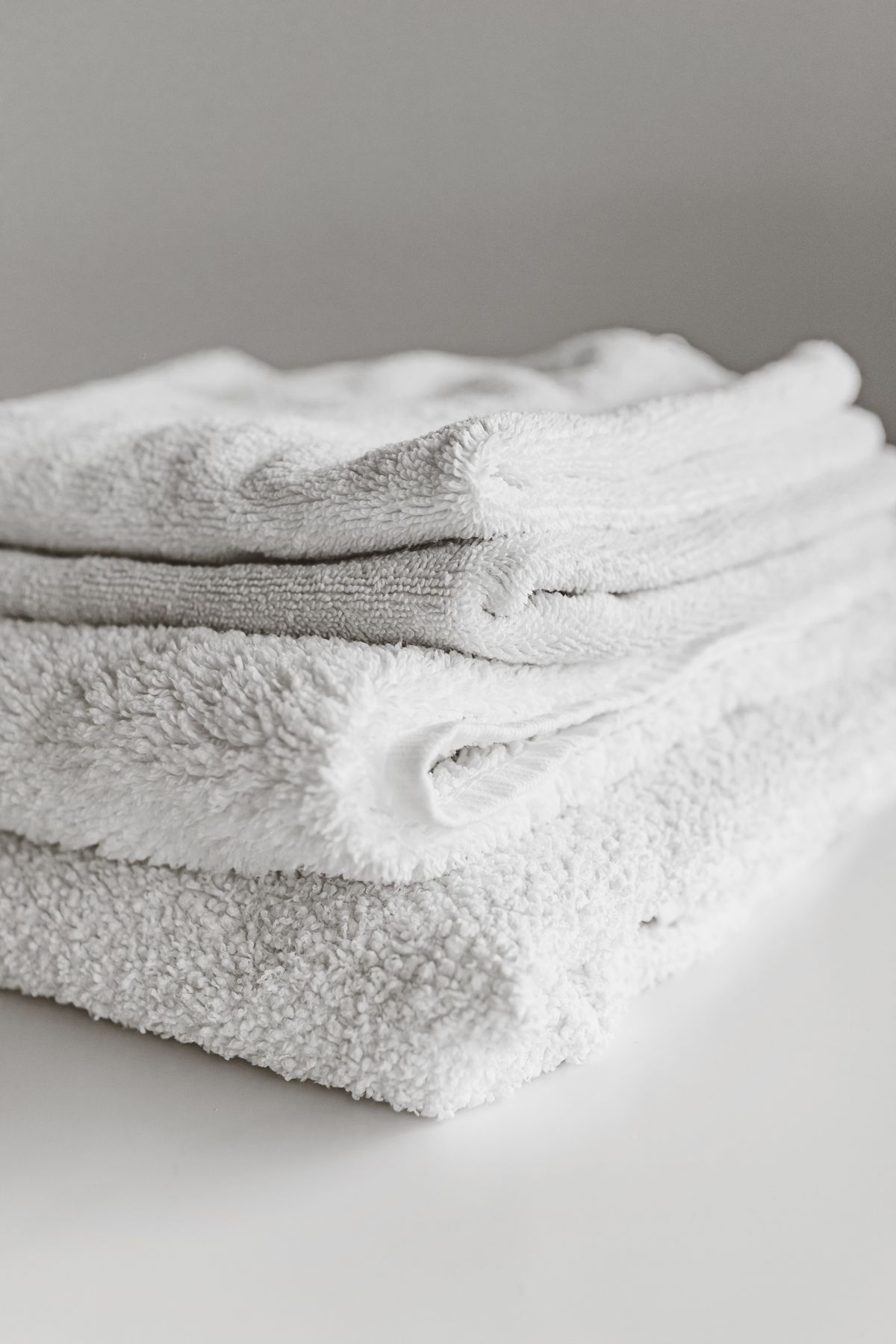
Laundry stiff after washing is not under-rinsing. It is calcium soap curd: hardness minerals react with detergent to form an insoluble compound that bonds into the fibre and does not rinse out. Every wash adds a layer. Towels lose absorbency, whites go grey, and the fabric feels crunchy dry no matter how many rinse cycles you add.
The reason more rinsing does not help is chemical rather than mechanical. The residue is not sitting loose in the fabric waiting to be flushed — it has already precipitated onto the fibres.
What Is Actually in the Fabric
When soap or detergent meets calcium and magnesium, part of the surfactant is consumed forming an insoluble metal salt instead of cleaning anything. University of Nebraska Extension's guidance on hard water describes the practical result plainly: the precipitate lodges in the fabric after washing and makes it stiff and rough, while the soil that was never lifted causes the graying of whites and the dulling of colours. Their drinking water hardness publication covers the chemistry alongside the household consequences.
Three effects compound over time:
- Stiffness. Curd deposits between and inside the fibres, reducing how freely they move against each other. Terry loops that should stand up and separate get glued flat.
- Lost absorbency. The same coating is hydrophobic, which is why an old towel pushes water around instead of soaking it up.
- Greying and dulling. Detergent consumed by hardness is detergent not removing soil, so a fraction of every load's dirt stays behind and accumulates.
Fabric softener makes all three worse rather than better. It works by depositing a cationic waxy film on the fibre, which masks the roughness for a few days while adding another layer that water cannot penetrate. On hard water it is treating the symptom with more of the cause.
The Strip-Wash That Proves It
This is the test, and the drain water is the evidence. Run it on towels you believe are clean — that is the entire point.
What you need: a bathtub or top-loader, very hot water, washing soda (sodium carbonate), borax, and no detergent at all.
Method
- Weigh the dry towels first on a kitchen or bathroom scale and write the number down. This is the measurement most people skip, and it is the one that turns an impression into data.
- Fill the tub with the hottest water the fabric tolerates — check the care label, most cotton towels take 60°C / 140°F.
- Add roughly a quarter cup each of washing soda and borax per bathtub of water and stir until dissolved. No detergent. Detergent is what you are removing.
- Submerge the towels and agitate every 30 minutes for four hours, or until the water cools.
- Photograph the water before you drain it. On genuinely hard water it turns grey-brown and often cloudy, from items that went in visibly clean.
- Rinse in the machine on a plain cycle, no detergent, then dry and weigh again.
What the numbers tell you
A meaningful drop in dry weight is accumulated residue leaving the fabric. Alongside it, the towels should feel distinctly softer and absorb water on contact instead of resisting it for a second or two first. If the water stayed clear and the weight barely moved, hardness is not what is stiffening your laundry — look at detergent overdosing, fabric softener buildup, or over-drying instead.
One warning worth taking seriously: this is a harsh process. Keep it to cotton towels, sheets and workwear. Keep it away from wool, silk, elastane, activewear with technical membranes, and anything with a water-repellent finish.
The Detergent Money Hardness Is Costing You
Hardness minerals consume detergent before any cleaning begins, so the dose genuinely has to rise on hard water. The arithmetic is worth running with your own numbers, because it usually surprises people.
Work it like this. Take your loads per week, multiply by 52 for annual loads. Take your detergent cost per bottle divided by the number of label doses it contains, which gives cost per dose. Then multiply annual loads by cost per dose, and compare that against the same figure at the dose you would use on soft water.
A worked example, with the assumptions visible so you can substitute your own:
| Input | Hard water household | Same household, softened |
|---|---|---|
| Loads per week | 6 | 6 |
| Loads per year | 312 | 312 |
| Detergent doses per load | 1.5 (overdosed for lather) | 0.75 |
| Cost per label dose | $0.22 | $0.22 |
| Annual detergent spend | $103 | $51 |
That is roughly $52 a year on detergent alone in this example, before counting fabric softener nobody needs on soft water, and before counting towels replaced early because they never recovered. Substitute your own load count and detergent price — the ratio is what matters, and the ratio is close to two to one.
Two honest caveats. The 1.5-dose figure is what overdosing typically looks like in practice, not a measured average, so check your own habit before trusting the total. And the saving on its own does not pay for a softener — it is one line in a larger case, alongside water heater efficiency and appliance life.
Fixing It Without Changing the Water
If you are not treating the water, four changes make a real difference, in rough order of effect.
Cut the detergent, then find the floor. Reduce by a third and run a fortnight. If whites stay white, cut again. Stop one step above where greying starts. Most hard water households are somewhere well above the dose they actually need, because they raised it chasing lather rather than cleanliness — the same instinct that shows up when soap will not lather in the shower.
Add washing soda to the wash. Roughly a quarter cup per load sequesters calcium so your detergent is not wasted neutralising it. This is the single most effective per-load change on hard water.
Use white vinegar in the rinse, not the wash. About half a cup, in the rinse compartment. In the wash it just neutralises your detergent. Never alongside chlorine bleach.
Stop using fabric softener. On hard water it adds a hydrophobic film without touching the mineral load. Wool dryer balls do the mechanical part without coating anything.
Wash warmer where the fabric allows. Calcium carbonate precipitates more readily in hot water, but detergents also work substantially better, and on balance a warm wash with a correct dose beats a cold wash with an excessive one.
When Treatment Becomes the Answer
Stiff laundry alone rarely justifies a softener. Stiff laundry plus aerators that clog every six weeks, spotted glassware and a scaling water heater is a different calculation, because those costs are simultaneous and a single ion exchange softener addresses all of them at once.
If you do soften, two things to expect. Old towels stay stiff until you strip-wash them once — the residue already bonded in does not leave on its own. And cut your detergent dose by roughly half on day one, or you will simply trade mineral residue for detergent residue and wonder why nothing improved.
Before spending anything, confirm hardness is genuinely the cause. Several laundry and household complaints get blamed on hardness incorrectly — iron in particular stains laundry orange-brown and is completely unaffected by softening. Get a number first with a home hardness test, then check it against the threshold where treatment pays.
What to Do Next
- Run the strip-wash on your oldest towels, weighing them before and after and photographing the water. One afternoon, and the result is unambiguous either way.
- Cut your detergent by a third and hold it there for two weeks. Most households find nothing gets dirtier.
- Add washing soda to the wash and vinegar to the rinse as standing practice on hard water, and drop fabric softener entirely.
- If the strip-wash water ran brown, get a hardness measurement and treat the laundry as one symptom among several rather than the whole problem.
Frequently Asked Questions
Why are my towels stiff and scratchy after washing?
Two causes, usually together. Hard water reacts with detergent to form calcium soap curd, which bonds into the fibre and survives rinsing. And because hard water suppresses lather, most households overdose detergent, leaving more residue to bond. Fabric softener compounds it by coating the fibres in a waxy film that blocks absorbency without addressing the mineral load.
Does vinegar in the rinse cycle soften towels in hard water?
It helps, and the mechanism is real — acetic acid dissolves mineral residue and strips existing soap curd. Add about half a cup of white vinegar to the rinse, never to the wash alongside detergent, where the acid simply neutralises the surfactant. It treats each load individually, so it is maintenance rather than a fix. Never combine vinegar with any chlorine bleach.
Should I use more or less detergent in hard water?
More per load than a soft water household, but far less than most people actually use. Hardness minerals consume detergent before any cleaning happens, so the dose has to rise — but past a point the excess simply becomes residue. Start at the label dose for your hardness band, then cut back until whites start to grey, and settle just above that.
What is a laundry strip-wash and does it work?
It is a long hot soak in water with washing soda and borax, no detergent, that lifts accumulated mineral and soap residue out of the fibre. It works, visibly — the water turns grey-brown. It is also harsh, so it belongs on towels, sheets and workwear rather than delicates, activewear or anything wool, and once or twice a year rather than routinely.
Will a water softener make my towels soft again?
It stops new soap curd forming, so laundry washed after installation comes out noticeably softer. It does not remove years of accumulated residue already bonded into old towels — those need one strip-wash to reset, after which they stay soft. Cut your detergent dose by roughly half at the same time, or you will simply replace mineral residue with detergent residue.