
How Much Soap and Detergent to Use With Soft Water
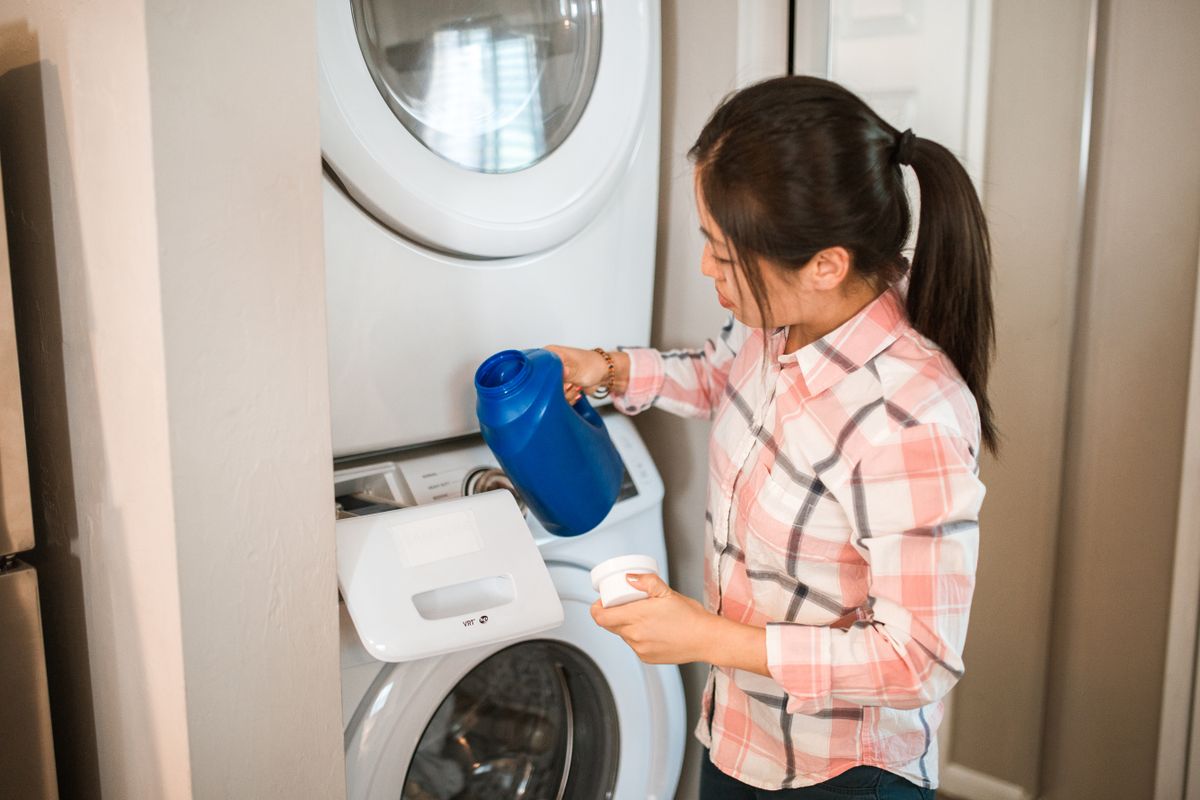
How much detergent with soft water? About half for laundry, and half or less for the dishwasher. Industry-funded lab testing found laundry detergent could be cut by 50 percent on softened water with the same or better stain removal. Dishwasher detergent savings reached 70 percent. On soft water, the right dose is the label's lowest line, not the one you used on hard water.
That saving is real, but it only happens if you change the scoop. Most households do not, and they then blame the softener for problems caused by too much product. This page gives a starting dose for each product, works out what the cut is worth in a year, and shows how to tell overdosing apart from a genuine fault.
Why the Dose Can Drop So Far
Detergents are built to cope with hard water. Part of every dose goes to "builders" and chelants that tie up calcium and magnesium so the surfactant can clean. Tide says it plainly: people in hard water areas need to use more detergent, and under- or over-dosing "can result in poor cleaning and stain removal".
Remove the hardness and that allowance is spare. The Water Quality Research Foundation's summary of its laundry and dishwasher testing reports:
- Laundry: on softened water, detergent could be reduced by 50 percent, and washing done at 60°F instead of 100°F, with the same or better stain removal.
- Dishwashers: detergent savings of up to 70 percent compared with hard water. Softening was up to about six times more effective at reducing spotting than raising the detergent dose.
Two caveats. The foundation is the research arm of the water treatment industry, so treat the figures as a best case. And these were lab tests on set soils. Your starting point should be conservative, then you find your own floor.
How Much Detergent With Soft Water: Starting Doses by Product
These are starting points, not measured results for your water. They assume you were dosing for moderately hard water before. Run each for two weeks, then cut again if results hold.
| Product | Hard-water habit | Soft-water starting dose | How to measure it |
|---|---|---|---|
| HE liquid laundry detergent | Line 3 to 5 on the cap, or the "hard water" dose | Half: the lowest line (usually line 1) for a normal load | Use the cap lines, not a free pour |
| Laundry powder | Full scoop | Half scoop | Level the scoop |
| Laundry pods | 1 pod, 2 for big loads | 1 pod for full, heavy loads only | Pods cannot be halved; switch to liquid for small loads |
| Fabric softener | Full cap | None, or a quarter cap | Soft water already leaves fabric soft |
| Laundry boosters (washing soda, borax, water conditioners) | Scoop per load | None | They exist to soften water; your softener already did |
| Dishwasher powder or gel | Both cups filled | Main cup half full; skip the pre-wash cup | Mark the halfway point on the cup |
| Dishwasher pods | 1 per load | 1 per full load; consider powder or gel instead | Run fewer, fuller loads |
| Dishwasher rinse aid | Highest setting | Lowest or second-lowest setting | Most machines have a dial under the cap |
| Dishwasher "hard water" additives | Added each load | None | Stop them entirely |
| Hand dish soap | Long squeeze | A few drops in a sink of water | Lather builds fast |
| Hand soap | Full pump | Half pump | Foaming dispensers help |
Shampoo, conditioner and body wash follow the same logic. Their starting doses, and the adjustment period hair goes through, are in washing hair and skin with soft water.
The HE washer rule. High-efficiency machines use little water, so surplus suds have nowhere to go. The machine senses them and adds rinses or pauses to break them down. On soft water, that means a hard-water dose gives you longer cycles, more water, and still a film on the fabric.
Pods are the awkward product. They are sized to work across a wide range of hardness, so on soft water each one is more than a normal load needs. You cannot split them. If you like pods, keep them for full, heavily soiled loads and use a measured liquid for the rest.
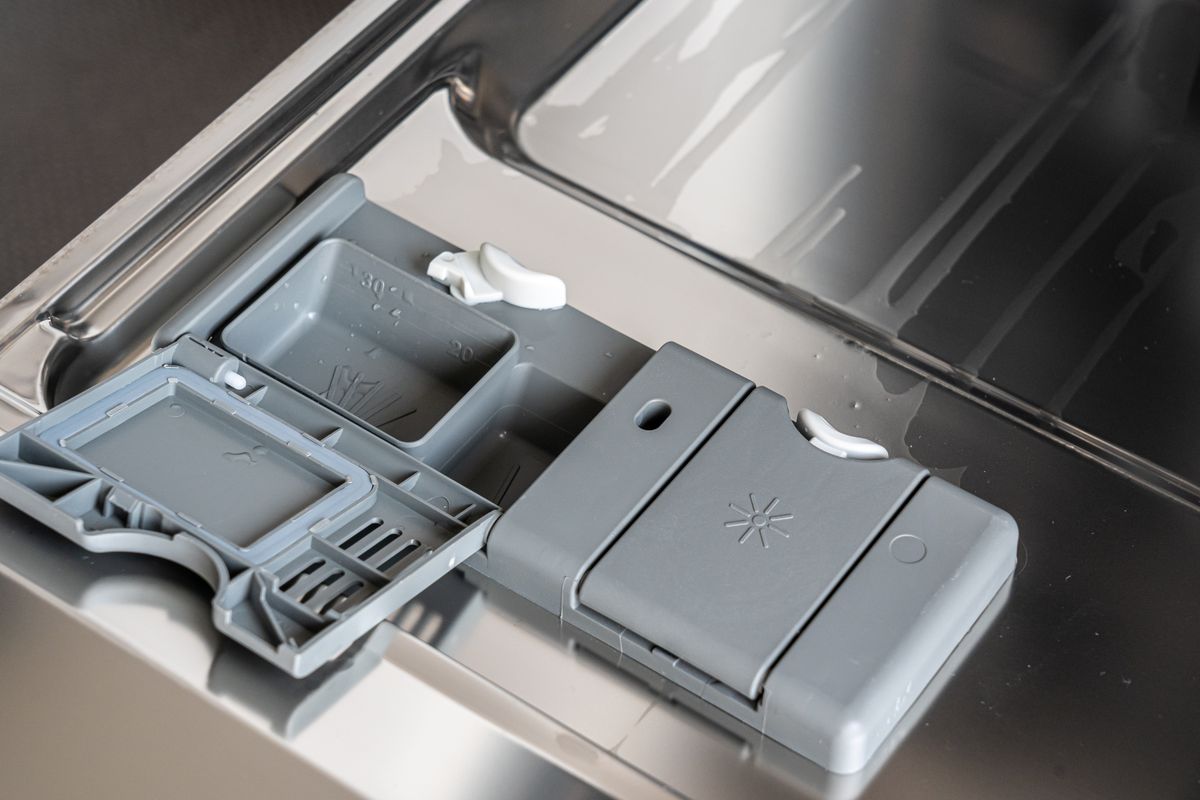
Dishwashers need the biggest cut and the most care. Soft water with a hard-water dose of dishwasher detergent is the classic cause of etching. That is permanent cloudiness on glass that no rinse removes. Half the main cup is a sensible start. Also check whether your machine has a water hardness setting, and set it to soft. Machine-by-machine settings are covered in how to adjust a dishwasher after installing a softener.
When Your Water Is Only Partly Soft
The table assumes the water reaching the appliance tests close to zero. That is not always true, and the right dose sits between the hard and soft figures when it is not.
- Blend valve set to leave some hardness. Many control valves can mix a little untreated water back in, often leaving 1 to 3 grains per gallon. At that level, start at the soft-water dose anyway. A grain or two uses up very little detergent. Add a quarter back only if whites start to grey.
- Laundry on a hard-water branch. Some houses tee the laundry or an outside line off before the softener. Test the washer's tap. If it reads the same as your raw water, nothing on this page applies to that machine, and you should keep your hard-water dose.
- A softener running out of capacity. If hardness creeps back before each regeneration, loads washed late in the cycle behave like hard-water loads. The fix is the softener's settings, not a bigger scoop.
- Hot water only partly soft in the first days. A tank water heater holds hard water for a few days after the softener goes in. Hot washes in that window are not a fair test of the new dose.
A drop-count test kit tells you which of these you have in a couple of minutes. Test at the tap that feeds the appliance, not at the softener.
Liquid, Powder or Pods on Soft Water
The format matters more on soft water, because the goal is to measure a smaller amount accurately.
| Format | On soft water | Best use |
|---|---|---|
| Liquid | Easy to measure to the cap line; dissolves at any temperature | Everyday loads; the easiest to fine-tune |
| Powder | Contains builders that tie up hardness, most of which is now unnecessary; can leave residue in cold, short cycles | Warm washes; measure level scoops |
| Pods | Fixed, generous dose; cannot be adjusted | Full, heavily soiled loads only |
| Dishwasher gel or powder | Lets you fill the cup halfway | The simplest way to cut dishwasher dose |
| Dishwasher tablets | Fixed dose, usually with rinse aid and softening agents built in | Full loads; watch glassware for etching |
If you like the convenience of pods, it is worth keeping a bottle of liquid for small and lightly soiled loads. On soft water, that combination usually gives the best results for the least money.
What the Cut Is Worth in a Year
This is an illustrative calculation. The prices are assumed round figures for mid-range US products, not quotes. Replace them with what you actually pay per load (bottle price divided by the number of loads on the label).
Household assumed: 300 laundry loads and 250 dishwasher loads a year.
| Item | Hard-water spend | Soft-water spend | Saving |
|---|---|---|---|
| Laundry detergent: $0.20 per label dose, used at 1.5 doses (hard) vs 0.75 (soft) | $90 | $45 | $45 |
| Dishwasher detergent: $0.22 per load, cut by half | $55 | $28 | $27 |
| Fabric softener: $0.10 per load, dropped | $30 | $0 | $30 |
| Laundry booster: used on 1 load in 3 at $0.12, dropped | $12 | $0 | $12 |
| Rinse aid: two bottles a year cut to one | $10 | $5 | $5 |
| Total | $197 | $78 | about $119 |
Leave out fabric softener if you never used it, and the saving is closer to $90. The lesson is the ratio, not the dollar figure. Most of the saving is in laundry detergent and fabric softener, and all of it depends on changing the dose. A household that keeps pouring the same amount saves nothing, and this is why ownership cost models count detergent savings as zero unless you commit to the cut.
For scale, that saving pays for part of a year's salt, not for the softener. It is one line in a larger case, alongside water heater protection and fixtures that stop scaling.
Overdose Symptoms That Look Like Soft Water Problems
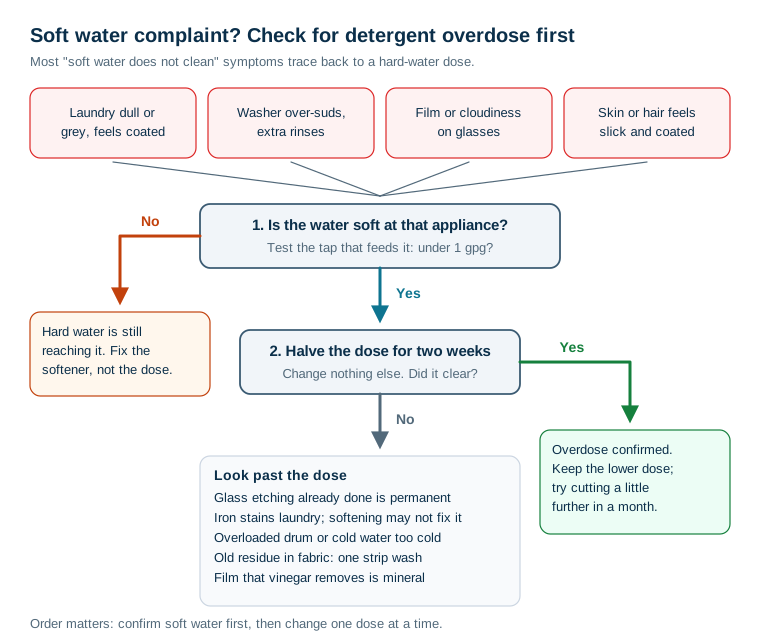
Here is why this page matters beyond money. Most complaints that "soft water does not clean properly" are overdose symptoms. On hard water, excess detergent was partly used up by the minerals. On soft water it stays in the load.
| What you see | Why overdose causes it on soft water | What to do |
|---|---|---|
| Dull, grey or faintly coated laundry | Surfactant residue stays in the fibre and holds soil | Halve the dose; add an extra rinse for a week |
| Stiff or scratchy towels | Detergent residue, often old hard-water curd too | Halve the dose; strip wash old towels once |
| Over-sudsing, extra rinses, long cycles | HE washer sensing surplus foam | Halve the dose; use HE detergent only |
| Filmy glasses that vinegar clears | Residue or remaining hardness | Halve the dish dose; check the water is soft |
| Cloudy glasses that nothing clears | Etching from soft water plus excess detergent and heat | Cut the dose; the damage already done is permanent |
| Sticky residue in the detergent drawer or gasket | Product not fully dissolving and rinsing | Cut the dose; clean the drawer |
| Slick feeling on skin that will not rinse | Too much body wash for soft water | Use a third of the old amount |
Stiff laundry has a twist on newly softened water. Towels washed for years on hard water are full of old soap curd. They stay stiff until that residue comes out, and a hard-water dose on soft water can make them worse before they get better. Why laundry feels stiff after washing covers the strip wash that resets them.
Glassware needs the same order of checks. A film that dissolves in white vinegar is mineral or residue. Cloudiness that does not is etching, and it will not come back out. If you still see white spots on fixtures and dishes after the dose is right, the cause may be something a softener does not remove. Why white spots remain after softening works through those causes.
Finding Your Own Floor
The table gets you close. Your water, machine and soil levels decide the rest. A simple method:
- Confirm the water is soft at the kitchen and laundry taps. A test strip or drop kit should read under 1 grain per gallon. If it does not, no dose change will fix the problem.
- Set the starting dose from the table and change only one product at a time.
- Hold it for two weeks, about ten laundry loads, so one heavy load does not mislead you.
- Cut another quarter if whites stay white, smells are gone, and glasses come out clear.
- Stop one step above the point where results slip. That is your floor, and it is often lower than people expect.
- Re-check if anything changes. A new detergent brand, a new washer, or a softener that has stopped regenerating all move the floor. If results slip suddenly after months of being fine, test the water before adding detergent back.
What Softening Will Not Change
Soft water lets detergent work. It does not replace it, and it does not fix everything:
- Stains still need treatment. Grass, blood, grease and tannin stains need enzymes, pre-treating and the right temperature. Hardness removal helps, but it is not a stain remover.
- Bleach and oxygen boosters are unaffected. They whiten and disinfect. Use them as before if you need them.
- Iron and manganese stains come from the water, not from hardness. A softener removes only limited dissolved iron, and orange or brown staining may need separate treatment.
- Sanitising needs heat or chemistry. Washing cooler on soft water is fine for everyday loads. It is not a substitute for a hot wash where hygiene matters.
Cut the dose, check the result, and keep the bottle's lowest line as your new normal. That is where the promised saving comes from.
Frequently Asked Questions
How much laundry detergent should I use with soft water?
Start at half of the dose you used on hard water, which usually means the lowest line on the cap or the dose the label gives for soft water or a normal load. Industry-funded testing for the Water Quality Research Foundation found that on softened water, laundry detergent could be cut by 50 percent and washed at 60°F instead of 100°F with the same or better stain removal. Run two weeks at half, then cut again if clothes still come out clean.
Can you use too much detergent with soft water?
Yes, and it is the most common soft-water complaint. On soft water, none of the detergent is lost to hardness, so a hard-water dose leaves surplus. That shows up as over-sudsing in high-efficiency washers, extra rinse cycles, dull or coated fabric, filmy glasses, and over time etching on glassware. Cutting the dose usually fixes all of these.
Do I still need rinse aid with a water softener?
Usually much less. Rinse aid helps water sheet off dishes, which matters most with hard water spots. On soft water, turn the rinse aid setting down to its lowest or second-lowest setting and see whether dishes still dry without spots. Some households stop using it, although dishes may dry a little slower, especially plastics.
Should I use detergent pods with soft water?
Pods are a fixed hard-water-safe dose you cannot split, so on soft water each pod is more than a normal load needs. Use them only for full, heavily soiled loads, or switch to liquid or powder, which let you measure half a dose. Never cut a pod open; the film is part of the product and the contents are concentrated.
How much money do you save on detergent with a water softener?
Only as much as you cut the dose. If you keep using the same amount, you save nothing. In the illustrative example on this page, a family doing 300 laundry loads and 250 dishwasher loads a year saves roughly $90 a year by halving laundry detergent, cutting dishwasher detergent and dropping hard-water boosters. Use your own prices and load counts.
Why do my glasses look cloudy after installing a water softener?
Either a film or etching. A film that wipes off or dissolves in white vinegar is residue, often from too much detergent or leftover hardness. Cloudiness that will not come off is etching, permanent surface damage that soft water plus excess detergent and high heat can cause. Cut the dishwasher dose, use a lower wash temperature if your machine allows it, and stop using any hard-water booster.
