
Cloudy Glasses After Dishwashing: Etching or Hard Water?
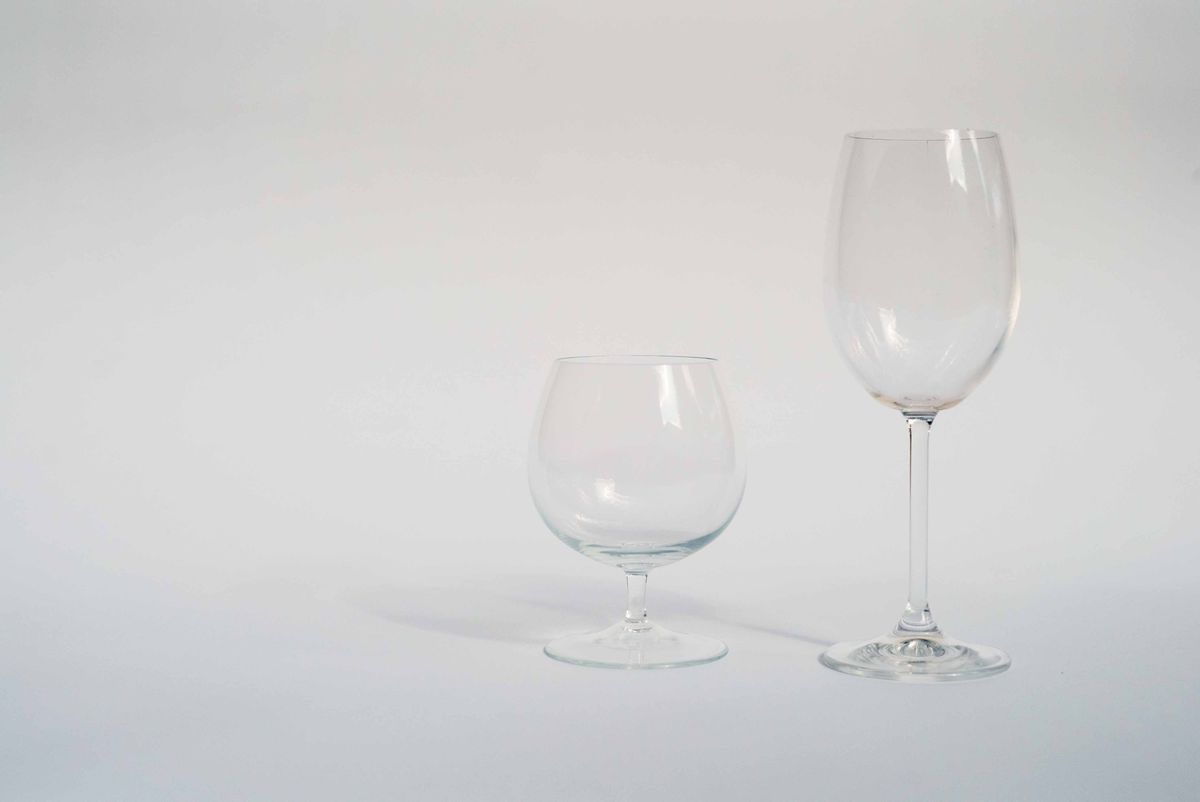
Cloudy glasses after dishwashing come from one of two causes, and they have opposite remedies. Hard water film is a mineral deposit sitting on top of the glass, and it wipes off with acid. Etching is permanent damage to the glass itself, driven by soft water and too much detergent, and nothing removes it. A single vinegar test tells you which one you have in about five minutes.
The reason this matters more than it sounds: if your glasses are etched and you install a water softener to fix them, you will make the problem worse rather than better. That is the counterintuitive part almost every guide skips.
The 5-Minute Vinegar Test That Settles It
Do this before you buy anything or change any setting.
- Pick your worst glass — the cloudiest one in the cupboard.
- Soak a cloth in undiluted white vinegar. Not diluted, not a spray cleaner. Plain 5% white vinegar.
- Rub one clearly defined patch — say, one side of the glass from rim to base — for a full 30 seconds. Set a timer; people consistently give up at ten seconds and get a false result.
- Rinse in warm water and dry with a lint-free cloth.
- Hold it against a window and compare the treated patch with the untreated side.
| What you see | What it is | What it means |
|---|---|---|
| Treated patch is visibly clearer | Hard water mineral film | Removable. Your water is hard and the machine is not rinsing it away |
| Patch is slightly clearer, haze remains underneath | Film over early etching | Both are happening. Cut the detergent dose now |
| No difference at all | Etching | Permanent. Those glasses are not coming back |
| Amber or oil-slick colouring, unchanged by vinegar | Silica film — early-stage etching | The warning shot. Change your settings before it progresses |
That third row is the one that saves money. If a 30-second acid rub does nothing, no product on the shelf will do anything either, and you should stop buying them.
What Cloudy Glasses Actually Look Like Under Magnification
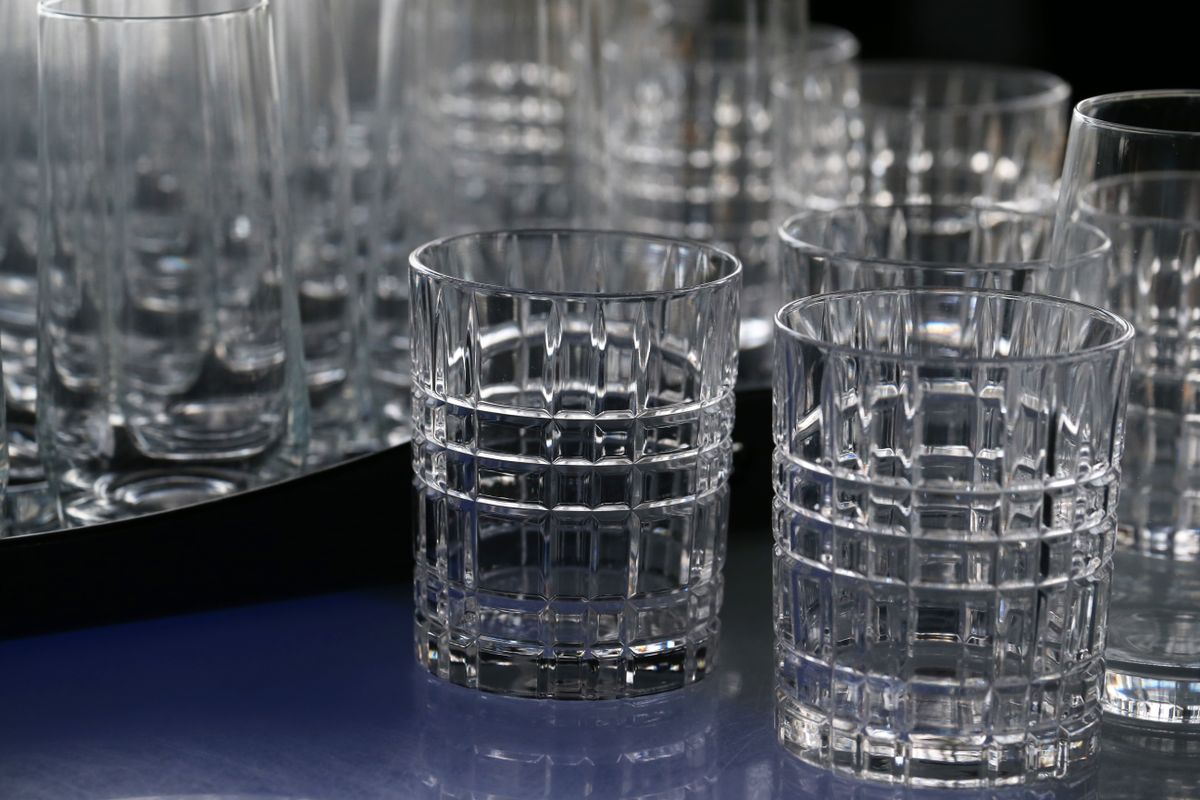
Your phone's macro mode, or a cheap clip-on macro lens, makes this obvious in a way the naked eye does not. Photograph the same square centimetre of glass under a strong side light and the three surfaces look entirely different.
Mineral film appears as discrete deposits with visible edges — patches, spots and drip trails that follow the direction water ran as it dried. Light catches the boundary of each deposit. The pattern is uneven because it maps where water pooled, so deposits sit heavier in the base curve of a glass and along the rim.
Etching has no edges. The whole surface carries a uniform frosted quality, like very fine sandblasting, and it looks identical everywhere the water touched. There are no trails and no spots, because the damage is not something that landed on the glass — it is the glass.
Silica film, the intermediate stage, shows the strangest signature of all: an amber to multicoloured sheen like oil on water, often with faint coloured lines tracing stress points in the glass. It is genuinely iridescent when you tilt it. This is the stage worth catching, because the conditions that produce silica film are the conditions that go on to etch.
One practical note on interpretation: if the deposit pattern differs between the top and bottom rack, you have a rinsing problem rather than a water problem. Minerals do not choose a rack.
Why Soft Water Etches Glass — The Part Guides Get Backwards
Here is the sequence that catches people out. A household has hard water and cloudy glasses. They install a softener. The glasses get worse, and now they are permanently ruined.
The mechanism is straightforward once you see it. Dishwasher detergent is strongly alkaline, and alkalinity is what attacks glass — it strips metal ions out of the surface, leaving it microscopically rough. In hard water, a large share of each detergent dose is consumed neutralising calcium and magnesium before it can do anything else. Remove the hardness and that same dose arrives at the glass at full strength.
Three factors multiply together:
- Detergent dose. The dose printed on the box assumes moderately hard water and a full, soiled load. On softened water it is a substantial overdose. Glassware specialists advise dropping to as little as a third of the fill mark.
- Temperature. Alkaline attack accelerates with heat. Above roughly 140F the rate climbs quickly.
- Soil level. Counterintuitively, pre-rinsing everything spotless makes etching worse. Food soil consumes detergent. A load of clean, empty glasses with a full detergent dose is close to the worst case you can construct.
So the household that softened its water, kept the same detergent dose, ran the sanitise cycle and pre-rinsed everything did four things at once, each of which increases etching. This is also why glasses often etch in a brand-new dishwasher: modern machines use less water per cycle, which concentrates the same detergent charge.
If you softened recently and are also seeing white spots and soap scum that did not go away, that combination points at dosing rather than at the softener failing.
Rescuing Cloudy Glasses That Are Only Filmed
If the vinegar test came back positive, the film is recoverable, and you have two levels of intervention.
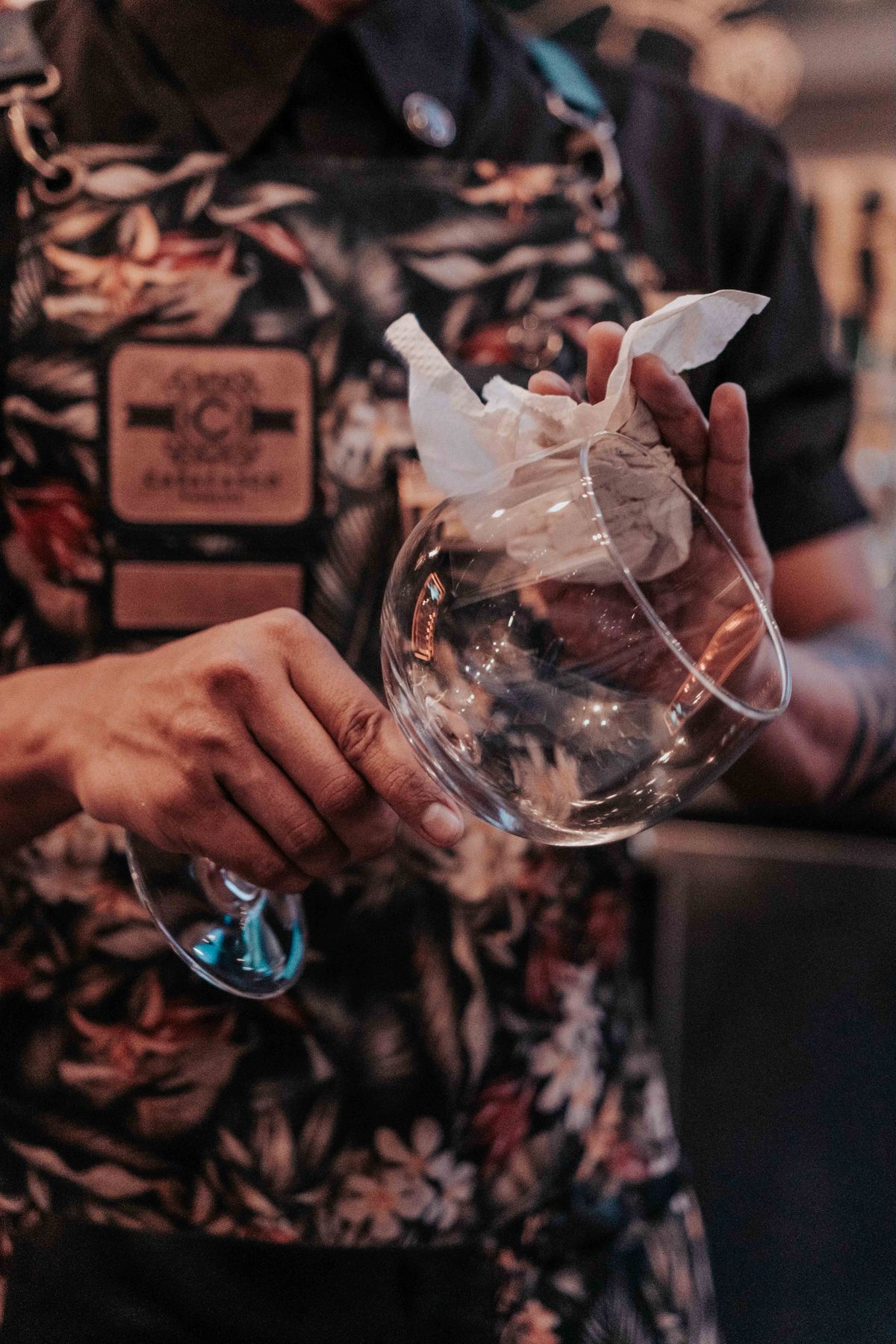
For a few glasses: soak them in one part white vinegar to one part warm water for 15 to 30 minutes, then wash by hand and dry immediately with a microfibre cloth. Heavy deposits may need an hour. Keep gold-rimmed, hand-painted and leaded crystal glassware out of the acid entirely — it attacks the decoration and the lead-bearing surface.
For a whole cupboard: run the load through the dishwasher with citric acid in place of detergent. GE's own service guidance is to place citric acid in the detergent dispenser, load the filmed glassware with no metal items in the machine, and run a full cycle with no detergent at all. Citric acid powder is sold as a canning ingredient and costs very little. Keep metal out — aluminium and some finishes react with it.
Repeat once if the first pass improves things without finishing the job. If a second pass achieves nothing more, what remains is etching underneath the film.
Settings That Stop It Happening Again
Once you know which problem you have, the fix is a set of machine settings rather than a product.
| Setting | If you have hard water film | If you have etching |
|---|---|---|
| Detergent dose | Full dose, and check hardness — you may need more than the mark | One third to one half of the mark |
| Rinse aid | Essential. Fill it and raise the setting | Essential. It shortens contact time |
| Wash temperature | Hotter helps dissolve and rinse minerals | Keep at or below 140F |
| Pre-rinsing | Fine | Stop. Scrape only — soil protects glass |
| Loading | Load normally | Under-load, so rinsing reaches everything |
| Cycle | Normal or heavy | Shortest cycle that still gets things clean |
The two columns genuinely conflict, which is exactly why guessing is expensive. A household treating etching as if it were hardness runs hotter cycles with more detergent and destroys another set of glasses.
One more variable matters if you have hard water and no softener: hardness above roughly 10 grains per gallon overwhelms most detergents no matter how you dose them, and no rinse aid compensates. Working out where your hardness actually sits is the difference between adjusting settings and needing equipment. If you have never measured it, a titration kit gives you a number in minutes.
What to Do Next
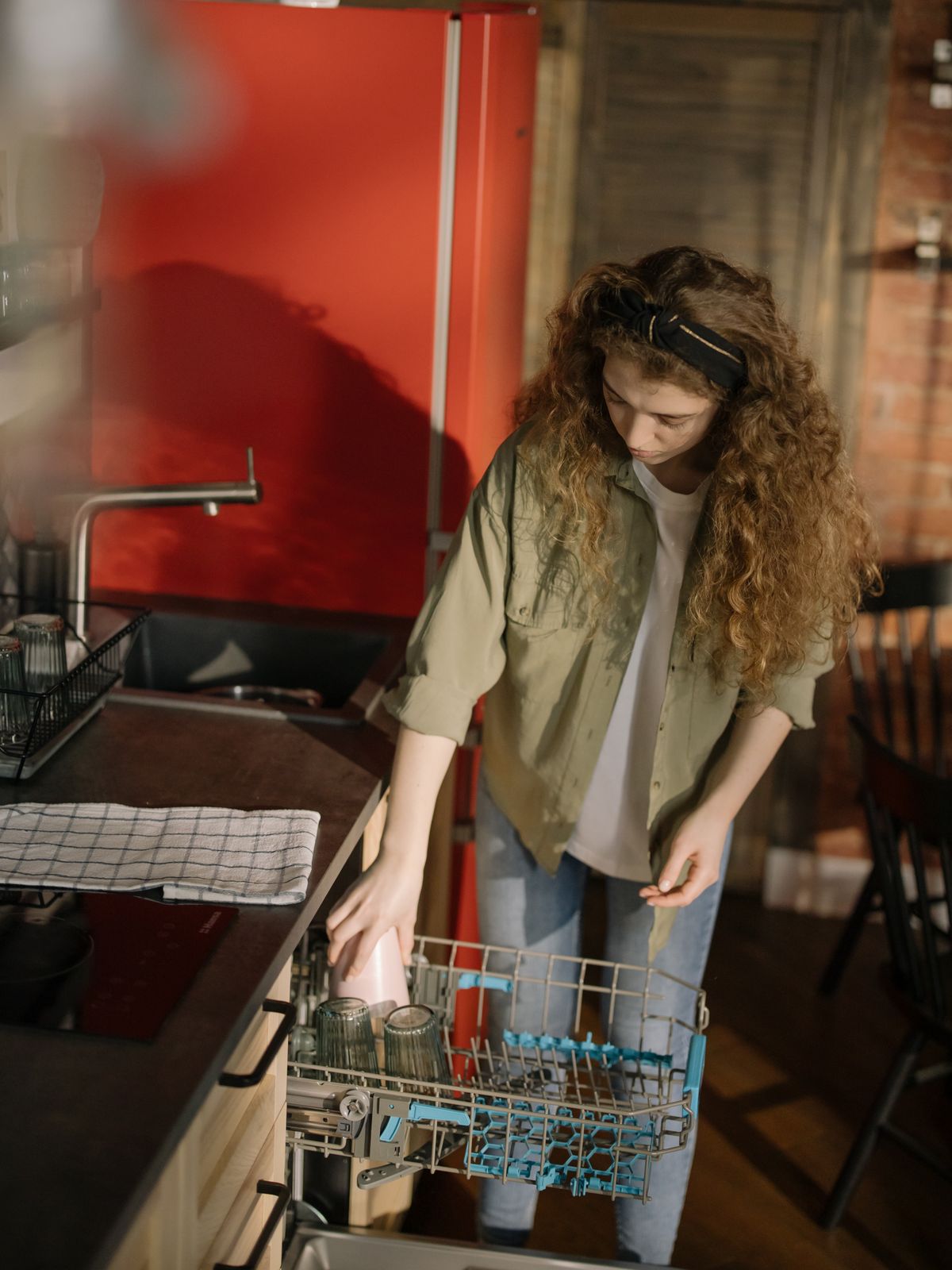
- Run the vinegar test on your worst glass today. Thirty seconds of rubbing, then compare against a window. Everything else depends on that answer.
- If it is film, run a citric acid cycle on the whole cupboard, fill the rinse aid, and measure your hardness.
- If it is etching, cut the detergent dose immediately, drop the wash temperature, and stop pre-rinsing. The glasses you have are finished; the next set does not have to be.
- If plates and cutlery are coming out coated too, the diagnosis is broader than glassware and belongs in the dishwasher film workflow, which isolates detergent, rinse aid and hardness in a single cycle.
Frequently Asked Questions
How do you tell if a glass is etched or just has hard water film?
Wet a cloth with undiluted white vinegar and rub one section of the glass for about 30 seconds, then rinse and dry it. If that patch is now clearer than the rest of the glass, you have mineral film and it is removable. If the patch looks exactly the same, the glass is etched and no cleaner will fix it. Hold the glass up to a window afterwards — film sits on the surface and reflects light unevenly, while etching diffuses light through the whole wall of the glass.
Can etched glass be repaired or restored?
No. Etching is the loss of metal ions from the glass surface, which leaves it microscopically rough. Nothing dissolves back into that surface. Polishing compounds and cerium oxide can improve very light etching on thick glass if you have the patience, but on thin drinking glasses the effort is not worth it and aggressive polishing makes the surface worse. The realistic response is to replace the glasses and change the conditions that etched them.
Does a water softener cause cloudy glasses?
It can, indirectly, if you keep the same detergent dose after installing one. Softened water plus a full detergent charge is a far more aggressive wash chemistry than hard water plus the same dose, because there is no hardness left to consume the detergent. Cut the dose to roughly a third to a half of what you used before, keep the wash temperature at or below 140F, and the etching risk drops sharply.
Why did my glasses suddenly go cloudy when nothing changed?
Something almost always changed. The three common triggers are a detergent reformulation, a new dishwasher that runs hotter or uses less water per cycle, and an empty rinse aid reservoir. A change in the municipal supply — a switch of source or treatment plant — can also shift hardness by several grains with no notice to customers. Check the rinse aid first, since it is the cheapest possibility to eliminate.
Is white residue on glassware safe to drink from?
Calcium and magnesium deposits are not a health concern; they are the same minerals already in the water you drink. Detergent residue is a different matter. If the film returns on a rinse-only cycle with no detergent in the machine, you are looking at minerals rather than soap. If you can taste soap on a glass, the cause is detergent overdose or a rinse failure, not hardness.