
Best Acid Neutralizers for Well Water, Chosen by Starting pH
The best acid neutralizers for well water are matched to the starting pH. Between about 6.0 and 6.9, a calcite tank does the job. AFWFilters' GreenFlo pH 15 upflow needs no drain, and its Digital pH 15 is the backwashing alternative. Below about 6.0, the same tanks need a calcite and Corosex blend. Below about 5.3, a soda ash feed pump replaces the tank. Every calcite option also adds hardness. On an example well at pH 6.0 that is up to about 5 gpg. The softener after it has to be sized for the water leaving the neutralizer, not the water in the test.
Disclosure: Hard Water Solved may earn a commission if you buy through links on this page, at no extra cost to you. It does not change which products we include or how we rank them. Read our disclaimer.
Best Acid Neutralizers for Well Water at a Glance
| Pick | Type | Media | Service flow (seller) | Best for |
|---|---|---|---|---|
| AFWFilters GreenFlo pH 15 | Upflow, no drain or power | 1.5 cu ft calcite | 3.2 gpm max | pH 6.0 to 6.9, small households |
| AFWFilters Digital pH 15 | Backwashing, Fleck 5600SXT | 1.5 cu ft calcite, Corosex blend optional | 3.2 gpm; 4.4 gpm backwash | pH down to about 5.3 with the blend |
| AFWFilters Digital pH 20 | Backwashing, Fleck 2510SXT | Calcite | "High-flow" | Larger households |
| AFWFilters 48k softener + backwashing neutralizer | Two tanks, one order | 1.5 cu ft calcite and 1.5 cu ft resin | not stated | Hard and acidic wells |
AFWFilters sells its calcite neutralizers on Amazon under the listing "AFWFilters Acid Neutralizer for Well Water pH Filter Calcite". The listing did not show which tank and valve it ships on our check, so match the model to the table above before ordering.
How These Neutralizers Were Chosen
Method. Nothing on this page was physically tested by us. Picks are compared on the media, service flow and backwash flow their seller publishes, and the added hardness is calculated from the reaction chemistry for an example well.
- Included: whole-house calcite or calcite-blend neutralizers sold on Amazon, with a stated service flow we could read on the seller's own page.
- Not ranked: the Oceanic Water Systems 1.5 cu ft upflow calcite neutralizer (Check price on Amazon) and the LiquaGen 7 gpm automatic backwashing calcite neutralizer (Check price on Amazon). Both listings are live, but we could not find a service-flow figure for either outside Amazon.
- Dropped: a Premier 1.5 cu ft manual-backwash calcite listing whose page would not open.
- Prices are not listed here because they change often. Use the buttons to see the current price on Amazon.
Why acidic water needs its own stage at all, and the corrosion signs that confirm it, are covered in why low-pH well water needs separate treatment. This page is about which unit to buy and what it does to the rest of the system.
Starting pH Decides the Media
Neutralizer media differ in strength, and the stronger the media, the lower the pH it can correct. Penn State Extension describes the tanks as filled with limestone or marble chips, magnesium oxide "or other alkaline material". It also notes that the treatment "will increase the hardness of the water, but this is necessary for proper corrosion control."
| Starting pH | Media | Hardness added per 1 mg/L of CO₂ neutralized | Sodium added | Upkeep |
|---|---|---|---|---|
| About 6.0 to 6.9 | Calcite (calcium carbonate) | up to 2.27 mg/L (0.13 gpg) | none | Top up calcite |
| About 5.3 to 6.0 | Calcite with Corosex (magnesium oxide) | between 1.14 and 2.27 mg/L, depending on the blend | none | Top up; Corosex can overshoot neutral |
| Below about 5.3, or no added hardness wanted | Soda ash (sodium carbonate) feed pump | none | about 1.05 mg/L | Mix solution, service pump, check pH |
The per-milligram ratios come from the reaction chemistry. The 5.3 floor for blended media is the figure used in the site's guide to low-pH treatment; AFWFilters offers its blend "for pH levels less than 6".
Two readings on your test set the amount: pH and alkalinity. Together they give the free carbon dioxide, which is the acid the neutralizer has to consume. How the two numbers interact, and why the same pH can mean very different treatment, is explained in interpreting pH and hardness together.
The Second Problem: Sizing the Softener That Follows
This is where most neutralizer pages stop and most installations go wrong. A calcite bed turns acid into hardness, and the softener has to remove it.
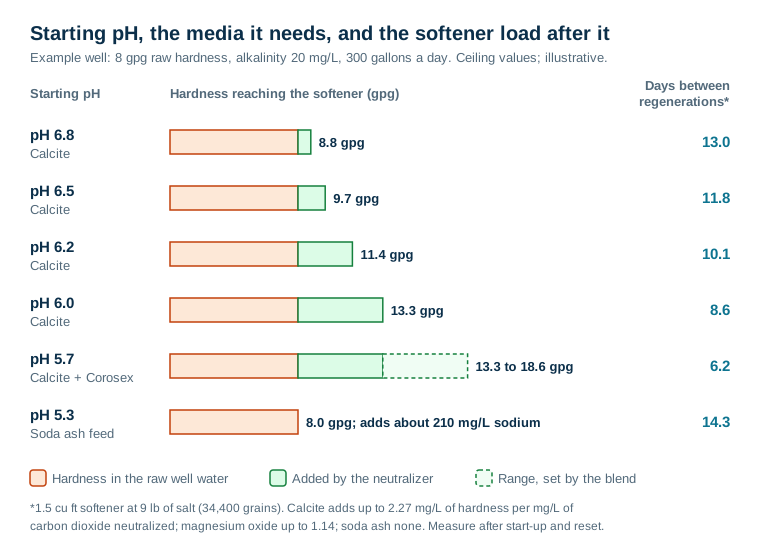
The example below uses one well and changes only its pH. It has 8 gpg of hardness and 20 mg/L of alkalinity, and four people use 300 gallons a day. Carbon dioxide is estimated as 2 × alkalinity × 10^(6.0 − pH). The added hardness is the ceiling, as if every milligram of carbon dioxide were neutralized. That is the figure to design to before the system has run. Softener capacities are the Hellenbrand figures the site uses elsewhere: 22,930 grains for 1.0 cu ft at 6 lb of salt and 34,400 grains for 1.5 cu ft at 9 lb.
| Starting pH | Free CO₂ (est.) | Media | Hardness added (ceiling) | Design hardness | 1.0 cu ft: days between regenerations | 1.5 cu ft: days between regenerations |
|---|---|---|---|---|---|---|
| Raw well, no neutralizer | n/a | none | 0 | 8.0 gpg | 9.6 | 14.3 |
| 6.8 | 6.3 mg/L | Calcite | 0.8 gpg | 8.8 gpg | 8.7 | 13.0 |
| 6.5 | 12.6 mg/L | Calcite | 1.7 gpg | 9.7 gpg | 7.9 | 11.8 |
| 6.2 | 25.2 mg/L | Calcite | 3.4 gpg | 11.4 gpg | 6.7 | 10.1 |
| 6.0 | 40 mg/L | Calcite | 5.3 gpg | 13.3 gpg | 5.7 | 8.6 |
| 5.7 | 80 mg/L | Calcite + Corosex | 5.3 to 10.6 gpg | up to 18.6 gpg | 4.1 | 6.2 |
| 5.3 | 200 mg/L | Soda ash | 0 (about 210 mg/L sodium) | 8.0 gpg | 9.6 | 14.3 |
Illustrative. Substitute your own pH, alkalinity and metered water use. Real neutralizers stop short of the ceiling as the water nears neutral.
What the table tells you:
- Down to about pH 6.5, the effect is small. Under 2 gpg is added. A softener sized with a little margin copes without change.
- At pH 6.0, the softener's work rises by two-thirds. A 1.0 cu ft unit drops from nearly 10 days between regenerations to under 6. The 1.5 cu ft size is the safer choice.
- On a pH 5.7 well, the blend sets the outcome. At the top of its range it more than doubles the hardness. Soda ash avoids the hardness entirely and swaps it for sodium.
- Salt rises with it. On the 1.5 cu ft unit at 9 lb a regeneration, the raw 8 gpg uses about 230 lb of salt a year. At the pH 6.0 design figure of 13.3 gpg that becomes about 380 lb.
Two steps keep the softener right. First, fit a sample tap between the neutralizer and the softener. Second, after the neutralizer has run for two weeks, test hardness there and program the softener to that reading. The full step-by-step method, including what happens if the softener is set to the raw number, is worked through in water softener vs acid neutralizer.
The Picks
AFWFilters GreenFlo pH 15 Upflow: best for pH 6.0 to 6.9 with no drain
- Media and tank: 1.5 cu ft of calcite in a 10x54 tank
- Head: in-out valve with no moving parts, upflow, no backwash and no wastewater
- Service flow: 3.2 gpm maximum; the seller's guide is 1 to 2 bathrooms and 2 to 4 people
- Upkeep: AFWFilters says the calcite needs replenishing "at least once a year on average"
- Where sold: the AFWFilters store, which also offers a high-flow GreenFlo pH 20
Water enters at the bottom and rises through the bed, which keeps it from packing as fast as a downflow tank would. With no valve, no drain and no outlet, it fits where a drain line is hard to run. Calcite dissolves more slowly as the water nears neutral, which makes it hard to overdo.
Watch for: the bed can still pack or channel over time, and there is no automatic way to loosen it. Wrong for: pH under 6.0, where plain calcite falls short, and houses whose peak flow regularly passes 3.2 gpm.
AFWFilters Digital pH 15 on a Fleck 5600SXT: best backwashing pick, and the one for a blend
- Media and tank: 1.5 cu ft of calcite in a 10x54 polyglass tank; a calcite and Corosex blend is offered for pH below 6.0
- Valve: Fleck 5600SXT digital, with LCD display
- Service flow: 3.2 gpm; backwash flow needed: at least 4.4 gpm
- Seller's guide: 1 to 2 bathrooms, 2 to 4 people
- Where sold: the AFWFilters store, which also offers a mechanical Fleck 5600 version
Backwashing lifts and rinses the bed on a schedule. That keeps calcite from cementing together and flushes out the fines and any iron the bed has caught. That suits a blended bed: magnesium oxide is the more reactive media, and regular backwashing keeps the bed from packing. AFWFilters' own page notes that the system adds hardness and that a softener may be recommended afterwards.
Watch for: the 4.4 gpm backwash. Measure what your pump sustains before buying. Wrong for: low-yield wells and homes without a drain and outlet near the tank.
AFWFilters Digital pH 20 on a Fleck 2510SXT: best for larger households
- Tank: 12x48 calcite tank on a Fleck 2510SXT digital valve, listed by AFWFilters as its "high-flow" system
The 2510SXT is a larger-bodied valve than the 5600SXT, and the 12-inch tank gives more calcite for contact time at higher flow. Choose it when a 3.2 gpm rating is plainly below your peak. AFWFilters' listing page did not give a service-flow figure for it, so ask for one and compare it with your measured peak before ordering. Its larger tank also needs more backwash flow than the 10-inch models.
AFWFilters 48k softener + backwashing neutralizer: best for buying both stages at once
- Contents: Fleck 5600SXT 48,000-grain softener with 1.5 cu ft of 10% crosslink resin, a 1.5 cu ft backwashing pH neutralizer and a brine tank with safety float; blended media offered for pH under 6
- Warranty: 5 years on the control head, 10 years on the mineral tank
- Also offered: an upflow-neutralizer version
On a well that is both hard and acidic, the pair cost slightly less than AFWFilters' 48k softener and Digital pH 15 bought apart when we checked. Its 1.5 cu ft softener is the size the table above favours from pH 6.0 down. Watch for: order it with two tanks, not a single "neutralizing softener" that mixes the media in one bed. Two tanks let you test hardness between the stages and reset the softener.
The Flow Rating Sellers Bury
Neutralizers are sized on contact time. Water has to stay in the calcite long enough to dissolve what it needs. That is why AFWFilters rates a 1.5 cubic foot tank at only 3.2 gpm of service flow. A softener in the same 10x54 tank is rated at about twice that: AFWFilters quotes 6.5 gpm of service flow for its 1.5 cu ft fine-mesh softener.
The practical effect is a pH that looks fine in a slow test and falls during the morning rush. A shower, a dishwasher and a toilet refill together can pass 3.2 gpm. While they run, part of the water goes through with too little contact and reaches the copper still acidic.
Three ways to handle it:
- Size up. Choose the 20 size or a high-flow model when your measured peak is above the rating.
- Measure peak, not average. Time how long the house takes to fill a 5-gallon bucket with the busiest combination of fixtures running, or read the meter over a minute.
- Test the outlet under load. Take a pH reading at the sample tap while water is running hard, not after the line has been still.
Six Numbers to Have Before You Order
Each pick above can be the right one or the wrong one depending on six figures. Collect them first:
| Number | Where it comes from | What it decides |
|---|---|---|
| pH | Lab test of raw water | Calcite, blend or soda ash |
| Alkalinity | Same test | How much CO₂, so how much hardness is added and how fast media is used |
| Hardness | Same test | Whether a softener is needed after the neutralizer, and its size |
| Iron and manganese | Same test | Whether an iron stage is needed and which goes first |
| Peak household flow | Bucket test or meter reading | Tank size: 15 or 20 |
| Pump's sustained flow | Bucket test at an outside tap, timed over several minutes | Upflow or backwashing; whether a 4.4 gpm backwash is possible |
If the test is more than a year old, or was a strip test, order a lab panel. Strip readings are coarse, and near pH 6.0 a few tenths of a unit decide between plain calcite and a blend.
Running Costs
| Item | Figure | How often |
|---|---|---|
| Calcite top-up | sold by AFWFilters in 0.5 cu ft bags | At least yearly per AFWFilters; Penn State says weeks to months, depending on water |
| Extra softener salt | about 230 lb a year rising to about 380 lb on the pH 6.0 example | Every year the neutralizer runs |
| Backwash water | 4.4 gpm or more per backwash | On the valve's schedule (backwashing models only) |
| Soda ash, if used | depends on dose | As the solution tank empties |
The calcite cost rises as pH falls. A well at 6.0 has about six times the carbon dioxide of one at 6.8 in the example above. It uses media correspondingly faster, which is why checking the bed level a few months after start-up matters.
Who Should Buy None of These
- Wells with pH under about 5.3. Even a blended bed adds large amounts of hardness there and wears quickly. A soda ash feed pump injected ahead of the pressure tank, as Penn State describes, is the usual answer, and it is a different purchase.
- Households on a sodium-restricted diet, considering soda ash. At pH 5.3 in the example above, soda ash could add about 210 mg/L of sodium. Treat drinking water separately, or discuss it with a doctor.
- Radon or sulfur wells that will be aerated anyway. Aeration strips carbon dioxide and raises pH. Retest pH after an aerator before buying a neutralizer.
- Wells with iron bacteria or heavy iron. Iron coats calcite and slime clogs it. Deal with those first, or put the iron filter first if its media tolerates your raw pH.
- Anyone without a pH, alkalinity and hardness test. Stained fixtures can come from copper or iron, and the fix differs.
How a softener copes with the rest of a well's chemistry once the pH is right is covered in water softener for well water.
Choose the best acid neutralizer for well water by its starting pH and your peak flow. Then give the softener after it the hardness it will actually receive. For most wells between 6.0 and 6.9, that means a 1.5 cubic foot calcite tank, upflow or backwashing, and a softener programmed from the sample tap rather than the original test.
Frequently Asked Questions
What is the best acid neutralizer for well water?
For pH between about 6.0 and 6.9, a calcite neutralizer. An upflow model such as AFWFilters' GreenFlo pH 15 needs no drain or power. A backwashing model such as the Digital pH 15 on a Fleck 5600SXT keeps the bed loose and flushes out fines. Below about 6.0 the calcite needs a Corosex (magnesium oxide) blend, and below about 5.3 a soda ash feed pump is the usual answer.
Does an acid neutralizer make water hard?
Calcite and magnesium oxide neutralizers do. They raise pH by dissolving calcium and magnesium carbonate into the water. Calcite adds up to 2.27 mg/L of hardness for each mg/L of carbon dioxide it neutralizes, and magnesium oxide up to 1.14. On an example well at pH 6.0 that is up to about 5.3 gpg. Soda ash adds no hardness but adds sodium.
Do I need a water softener after an acid neutralizer?
Often, yes. If the well was already hard, the neutralizer makes it harder. Even on soft water, a low starting pH can add enough hardness to leave scale. Test hardness after the neutralizer has run for a couple of weeks, and set any softener to that number rather than the raw well test.
How often do you add calcite to an acid neutralizer?
It depends on how acidic the water is and how much you use. Penn State says refilling can range from weeks to months. AFWFilters says its upflow tank needs replenishing at least once a year on average. Check the media level a few months after installation to learn your own rate.
What size acid neutralizer do I need?
Size it on your peak flow, not on bathrooms alone. AFWFilters rates its 1.5 cubic foot calcite tanks at 3.2 gpm of service flow, because the water needs contact time with the calcite. If the house regularly draws more than that, choose a larger tank or a high-flow model, or acidic water will slip through during showers and laundry.
