
Best Cabinet Water Softeners for Tight Utility Rooms
The best cabinet water softeners are the EcoPure EP42 for most households, the Aquasure Harmony Lite for the tightest spaces, and the Tier1 All-in-One cabinet for one or two people. Each puts the resin tank inside the salt bin, so it fits where a two-tank system will not. The trade is less salt storage, more refills, and a resin tank you cannot reach without emptying the cabinet first.
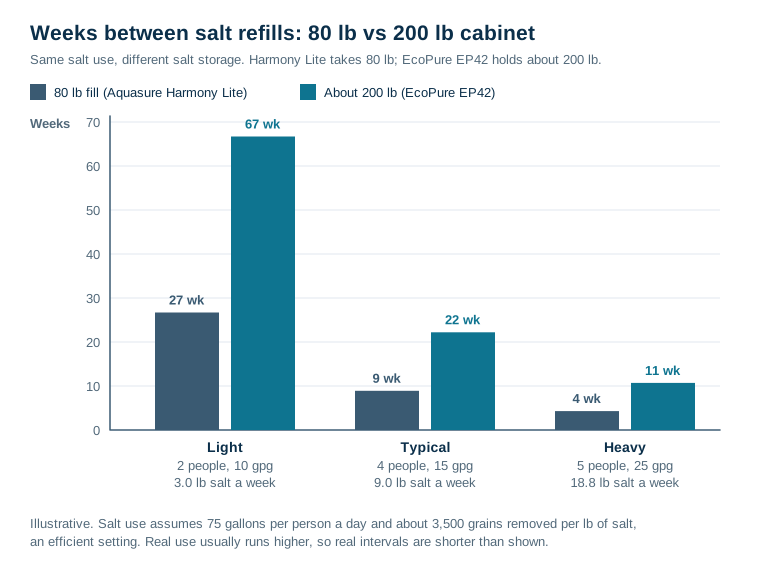
That trade is the whole buying decision. A cabinet that holds 80 lb of salt needs a refill about every 9 weeks for a family of four. One that holds about 200 lb goes about 22 weeks. This page ranks each pick on that number, on floor space, and on what servicing it involves, not on the grain rating printed on the box.
Disclosure: Hard Water Solved may earn a commission if you buy through links on this page, at no extra cost to you. It does not change which products we include or how we rank them. Read our disclaimer.
How These Picks Were Chosen
Methodology. Every pick is a salt-based, ion-exchange cabinet softener listed on Amazon.com, with an owner's manual or maker spec sheet available. We compared salt storage, the salt dose behind the grain rating, floor area, valve type and warranty terms, taken from manuals and listings. Nothing was physically tested. Excluded: salt-free conditioners, two-tank systems, and units that are discontinued or showed as unavailable on Amazon.
Prices are not listed here because they change often. Use the buttons to see the current price on Amazon.
Three cabinet units that often appear on lists like this one are left out:
- Whirlpool WHES40E. Its Amazon listing could not be confirmed as in stock, Lowe's no longer sells it, and Whirlpool's 40,000-grain cabinet now sells at farm stores as the WHES405.
- WaterBoss 900. It is a strong cabinet on paper, with a published 10 gpm at a 15 psi drop and a 5-year parts warranty, but its Amazon listing shows it as currently unavailable.
- GE GXSH40V. GE lists it as no longer manufactured, and Amazon shows it as unavailable.
Best Cabinet Water Softeners at a Glance
| EcoPure EP42 | Aquasure Harmony Lite | Tier1 All-in-One 24k | |
|---|---|---|---|
| Best for | 3–5 people, the fewest refills | Tight height or width | 1–2 people who want a metered valve |
| Rated capacity | 42,000 grains | 34,000 grains | 24,000 grains |
| Salt storage | About 200 lb (retail listings) | 80 lb fill (manual) | Not published |
| Size (H × W × D) | 48 × 15 × 20.5 in | 43 × 10.5 × 18.5 in | 44.6 × 11.4 × 18.9 in |
| Inlet | 1 in NPT | 1 in yoke (3/4 in on request) | 3/4 in |
| Clear-water iron | Up to 11 ppm (maker) | Not rated on the base model | Not rated |
| Warranty | 1 year, 5 with registration and cleaner use; 10-year tanks | 1 year, 5 with registration in 60 days | Not confirmed |
| Amazon | Check price on Amazon | Check price on Amazon | Check price on Amazon |
The three cabinets differ more in salt storage than in grain capacity. That is the number that decides how often you carry a bag down the stairs.
1. EcoPure EP42: Best Cabinet Water Softener for Most Homes
The EP42 is the biggest cabinet on this list, and that is why it wins. Retail listings put its salt storage at about 200 lb, which is two and a half times the Harmony Lite's fill. For a family of four on 15 gpg water that is roughly five months between refills, against about two months.
EcoPure is the retail brand of Ecodyne, the company that also builds Whirlpool's softeners. The EP42 uses Ecodyne's demand-learning control, which EcoPure calls AutoSense. It is sold for city or well water, rated for up to 11 ppm of clear-water iron, and has a 1 in NPT connection, so it does not choke a 1 in main.
Read the grain rating carefully. Ecodyne-built cabinets quote their headline capacity at the top salt dose. In the Whirlpool WHES33 manual, built on the same platform, the 33,000-grain rating needs 14.1 lb of salt per regeneration. At 8.3 lb the same unit gives 27,600 grains. At 2.6 lb it gives 13,000. Expect the EP42's 42,000 to work the same way, and size from the middle of its range, as set out in advertised vs usable softener capacity.
Service access. The resin tank stands inside the salt storage tank. Valve parts such as the nozzle and venturi come out from the top. Replacing the resin tank, or re-bedding it, means scooping out the salt and the brine first. Ecodyne valves are proprietary, so parts come from Ecodyne or third-party sellers, not from a plumbing supply counter.
Warranty. EcoPure's standard cover is one year, extendable to five years if you register the unit and keep buying EcoPure cleaner. The tanks are warranted for 10 years. Keep the cleaner receipts if you want the extension to count.
Skip it if your space is narrower than 15 in or lower than about 48 in plus room to open the lid. It is the bulkiest cabinet here. Its smaller sibling, the EcoPure EP31, uses the same 48 × 15 × 20.5 in cabinet with 31,000 grains and an 8 ppm iron rating. It saves money, not space.
2. Aquasure Harmony Lite: Best for the Tightest Spaces
The base AS-HL34A is sold at Aquasure's own store. The Amazon listing is the version with a pleated sediment pre-filter, which costs more.
The Harmony Lite is 43 in tall with the valve on, 10.5 in wide and 18.5 in deep. Aquasure says that height fits under wall cabinets with the salt lid open, which none of the other cabinets here can claim. At 194 sq in, its floor footprint is about two-thirds of the EP42's.
The control is the same Aquatrol metered valve Aquasure fits to its two-tank Harmony range. The Harmony Lite owner's manual gives the valve alone 20 gpm at a 15 psi drop and a working pressure of 25 to 125 psi. That is a generous valve for a cabinet this size.
The catch is salt. The manual says 80 lb, two bags, fills the brine tank. A family of four on 15 gpg uses about that in 9 weeks at an efficient setting. A heavy household uses it in about 4. If the cabinet is in a basement down a flight of stairs, that is the number to think about before you buy.
Warranty. One year on the valve, electronics and resin if you do not register. Five years if you register with Aquasure within 60 days of purchase. The manual adds a five-year replacement warranty on the system. Resin and internal valve parts are not covered when the water carries iron, manganese or chlorine above the levels Aquasure specifies.
Skip it if your household is more than four people, or your water is very hard. Aquasure sizes it for 1–3 bathrooms and up to 4 people.
3. Tier1 All-in-One Cabinet 24k: Best for One or Two People
The Tier1 is the smallest bed here: 0.75 cu ft of resin, sold as 24,000 grains. At an efficient 6 lb per cubic foot that is about 15,750 grains per regeneration. For two people on 10 gpg water, using about 1,500 grains a day, that is a regeneration roughly every 9 to 10 days after a day of reserve. That is a comfortable interval. For four people on hard water it is not.
The case for it is the valve and the shape. It uses a digital metered valve with an LCD, it bypasses automatically during regeneration, and its 11.4 in width fits a gap the EP42 cannot. Its 3/4 in connections suit a small house plumbed in 3/4 in pipe.
What we could not confirm. Tier1 does not publish the cabinet's salt storage in the materials we found, and we could not source the warranty terms for this model. Ask the seller for both before you buy. Tier1's two-tank softeners carry a 1-year valve warranty, extendable to 5 years with registration, and the cabinet may follow the same structure, but treat that as unconfirmed.
Value warning. When we checked, it cost more than the larger EP42 and much more than the Harmony Lite. You are paying for the narrow cabinet and the meter, not for capacity. If neither of those matters, the Harmony Lite does the same job for less.
How to Work Out Your Own Refill Interval
The chart above uses three sample households. Your own number takes three steps:
- Daily hardness load. Multiply people by 75 gallons a day, then by your hardness in grains per gallon. Four people on 15 gpg is 4,500 grains a day.
- Weekly salt. Multiply by 7 and divide by the grains your salt setting removes per pound. At an efficient setting that is about 3,500, so 31,500 grains a week needs about 9 lb of salt.
- Weeks per fill. Divide the cabinet's salt storage by that weekly figure. For 80 lb, about 9 weeks. For 200 lb, about 22.
Treat the answer as the best case. Older valves, high salt settings and regenerations with capacity still unused all burn more salt. Annual water softener salt cost runs the same maths in dollars.
Cabinet vs Two-Tank: How Much Floor Space You Really Save
The usual reason to buy a cabinet is space, so it is worth measuring how much you save. Drawn to scale, the three picks take 194 to 308 sq in of floor. A two-tank 32,000-grain softener, with an 8 in resin tank and a 15 in brine tank 2 in apart, needs a box of about 375 sq in before any clearance.
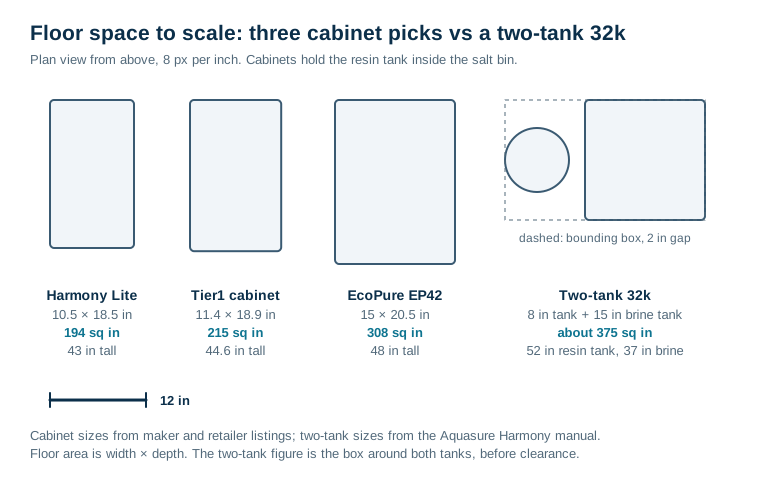
So the Harmony Lite saves about half the floor of a small two-tank unit, and the EP42 saves less than a fifth. Height matters as much as floor. A 32,000-grain two-tank unit has a resin tank about 52 in tall with the valve on, and you need room above it to lift the valve off. The full clearance rules, including the space for a drain and a bypass, are in how much space a water softener needs.
If you are choosing between a closet, a garage and a basement, check the location before the model. Freezing, a drain within reach and an outlet decide more than the cabinet does. The trade-offs are set out in basement, garage, crawl space or closet.
The Service-Access Question Nobody Lists
Every cabinet here stands the resin tank inside the salt bin. That design is what makes it compact, and it changes three jobs:
- Cleaning the brine tank. On a two-tank unit you tip out a separate brine tank. On a cabinet, you scoop the salt and brine out of the same box that holds the resin tank, working around it.
- Replacing resin. Resin usually outlasts the valve, but chlorine and iron shorten its life. On a cabinet, the salt must come out before the resin tank can be lifted. On a two-tank unit, you bypass, depressurize and lift the tank out without touching the salt.
- Valve repairs. Cabinet valves are mostly proprietary. One dealer's price list for big-box valve parts still includes the nozzle and venturi, the rotor disc and the seal kit as separate spares. Repairs like these are affordable, provided the parts are still made. Two-tank systems on Fleck or Clack valves draw on parts sold by many suppliers.
None of this is a reason to avoid a cabinet. It is a reason to keep the salt low before any planned service, and to check that the brand still sells parts for the model before you buy it.
Which Cabinet Water Softener Should You Buy?
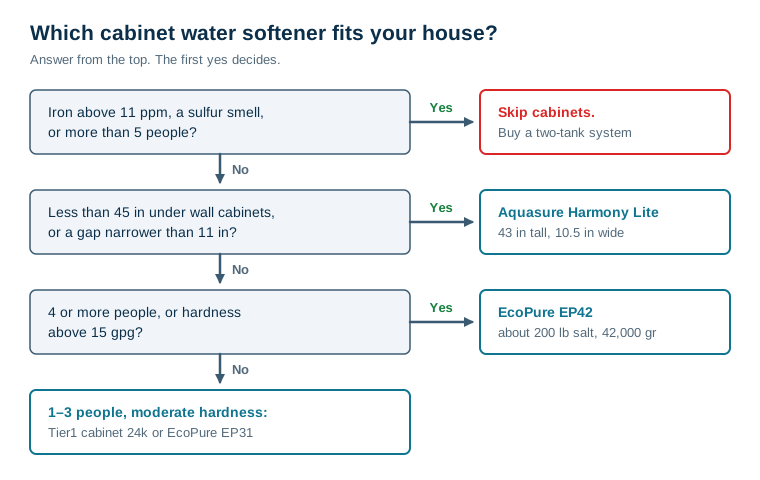
Work through it in that order:
- Rule the cabinet out first. Iron above the unit's rating, a sulfur smell or a large household all point to a two-tank system or a pre-treatment stage.
- Then measure height. If the softener must sit under wall cabinets, the Harmony Lite is the only pick here that leaves the lid usable.
- Then size for people and hardness. Four or more people, or water above about 15 gpg, wants the EP42's bigger bed and salt store.
- Otherwise, a small household can choose between the Tier1 cabinet for its meter and narrow width, or the EP31 to save money.
Before you order, work out your daily hardness load and size from usable grains, not the box rating. How to size a water softener walks through it with the reserve included.
Who Should Buy None of These
A cabinet softener is the wrong buy if:
- You have room for two tanks. You will get a bigger brine tank, an easier resin swap and a wider choice of valves for similar money.
- Your well water carries oxidized iron, manganese or hydrogen sulfide. A softener is not the treatment for those. Test first and treat them ahead of the softener.
- Your household is large or your water is extremely hard. Small cabinet beds regenerate too often, and the salt runs out fast.
- You want the water to be safe to drink, not just soft. Softening removes hardness, not bacteria, nitrate or lead. The University of Nebraska–Lincoln Extension guide to water softening lists what a softener cannot remove.
For most tight utility rooms, the best cabinet water softener is the one whose salt you will actually keep topped up. Pick on salt storage and fit first, then check the grain rating at a realistic salt dose.
Frequently Asked Questions
Are cabinet water softeners any good?
Yes, for the right house. A cabinet softener uses the same ion exchange as a two-tank unit, so the water it delivers is just as soft. The trade-offs are size and service. The resin bed is usually smaller, the salt storage is smaller, and the resin tank sits inside the salt bin, so replacing the resin or the tank means emptying the cabinet first. For one to four people on moderately hard water in a tight space, those trade-offs are easy to live with.
How often do you add salt to a cabinet water softener?
It depends on how much salt the cabinet holds and how much your household uses. A typical family of four on 15 gpg water uses about 9 lb of salt a week at an efficient setting. An 80 lb fill, like the Aquasure Harmony Lite takes, lasts about 9 weeks at that rate. A cabinet that holds about 200 lb, like the EcoPure EP42, lasts about 22 weeks. Check the level monthly anyway, because real use usually runs higher than the best case.
Is a cabinet water softener better than a two-tank softener?
Only when space decides it. A two-tank system takes more floor, but it usually has a larger brine tank, a resin tank you can lift out without touching the salt, and on many models a Fleck or Clack valve with parts sold everywhere. If you have room for two tanks, the two-tank unit is usually the easier one to own. If you have a narrow closet or a spot under wall cabinets, the cabinet wins because it fits.
Can a cabinet water softener handle well water?
Some can, within limits. The EcoPure EP42 is rated for up to 11 ppm of clear-water (dissolved) iron and is sold for city or well water. None of the cabinets here is built for oxidized iron, manganese at high levels, hydrogen sulfide or bacteria. Test the well first. If iron is above the cabinet's rating, or the water smells of sulfur, put an iron filter ahead of the softener or buy a two-tank system designed for it.
How long do cabinet water softeners last?
Makers of shelf-brand cabinet units commonly estimate about 8 to 10 years. The tanks are usually warranted for 10 years, but the valve and electronics carry much shorter cover, often one year unless you register the unit or meet a cleaner-use condition. Life depends on chlorine in the supply, iron, and whether parts for the valve are still sold when it needs a seal kit.
