
Best Water Softener and Filter Combos, and When to Buy Them Separately

The best water softener and filter combos are the AFWFilters Fleck 5600SXT 48k with a backwashing carbon tank for chlorinated city water, the Oceanic 64k Fleck with an upflow carbon tank where there is no spare drain, and the Aquasure Harmony 48k fine-mesh softener with a pleated sediment pre-filter for well water. Each keeps every stage in its own housing, so you can replace one part without the others.
That matters because the parts in a combo wear out on different clocks. A cartridge lasts months, carbon lasts years, and resin protected by carbon can outlast the decade. A combo that seals carbon and resin into one cabinet makes you live with the shortest life of the two.
Disclosure: Hard Water Solved may earn a commission if you buy through links on this page, at no extra cost to you. It does not change which products we include or how we rank them. Read our disclaimer.
How These Combos Were Chosen
Methodology. Every pick is a salt-based softener sold with a filtration stage as one Amazon.com listing. Only combos where each stage can be serviced on its own were eligible. We compared resin type, carbon or filter type and volume, valve make, and published replacement intervals from listings, manuals and maker product pages. Nothing was physically tested. Excluded: hybrid units with carbon sealed inside the softener cabinet, salt-free conditioners, and listings shown as unavailable. Prices are not listed here because they change often. Use the buttons to see the current price on Amazon.
Three combos you may see elsewhere are not here:
- EcoPure EPHS hybrid softener and filter. Its carbon media sits inside the softener cabinet and, in the maker's words, "never needs replacing". That is the design this page warns against. Amazon also shows it as currently unavailable.
- SpringWell water filter and salt softener combo. Amazon shows it as currently unavailable.
- Fleck 5600SXT 64k bundled with a Culligan filter housing. Amazon shows it as currently unavailable. It was a third-party bundle; Culligan supplied only the filter housing.
Best Water Softener and Filter Combos Compared
| AFWFilters 48k + backwashing carbon | Oceanic 64k + upflow carbon | Aquasure 48k fine mesh + sediment | |
|---|---|---|---|
| Best for | Chlorinated city water | City water, no spare drain | Well water with sediment or iron |
| Softener valve | Fleck 5600SXT, metered | Fleck 5600SXT, metered | Aquasure Aquatrol, metered |
| Resin | 1.5 cu ft, 10% crosslink | 10% crosslink, 64k | Fine mesh, 48k |
| Filter stage | 1.5 cu ft activated carbon, 10 × 54 in tank, backwashing | 2 cu ft coconut-shell carbon, 12 × 52 in, upflow | Pleated sediment cartridge |
| Removes chlorine? | Yes | Yes | No |
| Filter replacement | No published interval | No published interval | Washable cartridge, change on pressure drop |
| Amazon | Check price on Amazon | Check price on Amazon | Check price on Amazon |
Size the softener half of any combo from your own hardness and household, not the grain number on the listing. The method is in how to size a water softener.
The Replacement Timeline Inside a Combo
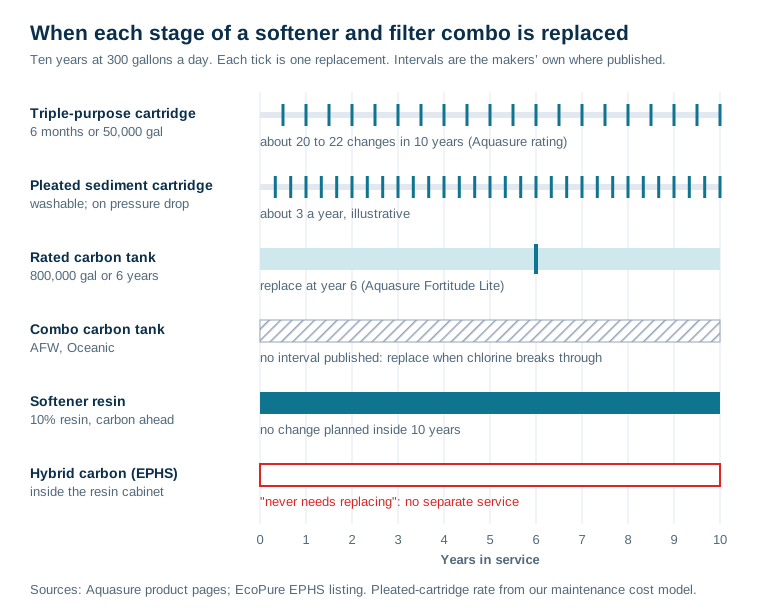
Read down the chart and the mismatch is plain:
- A cartridge stage changes many times a decade. Aquasure's own sediment, carbon and zinc cartridge is rated at 50,000 gallons or 6 months. At 300 gallons a day that is about 20 changes in ten years.
- A carbon tank changes once or twice. Aquasure rates its Fortitude Lite carbon tank at 800,000 gallons or 6 years. That is the only whole-house carbon tank rating we found in maker literature. The carbon tanks in the AFWFilters and Oceanic combos have no published interval. You replace the media when chlorine starts to get through.
- Softener resin with carbon ahead of it rarely needs changing inside ten years. Chlorine is what usually shortens resin life, and the carbon removes it first.
A combo that seals carbon and resin into one cabinet ties the shortest-lived part to the longest. That is why every pick below keeps them in separate housings.
1. AFWFilters Fleck 5600SXT 48k + Backwashing Carbon: Best for City Water
Buy it on Amazon: the Combo Package Fleck 5600SXT 48,000 Grain Softener and Backwashing Carbon Filter, sold on Amazon through the AFWFilters store.
This is two complete systems that share one box. The carbon tank is a 10 × 54 in tank with 1.5 cu ft of activated carbon, which AFWFilters says reduces chlorine, herbicides, pesticides and taste and odour chemicals. The softener is a second 10 × 54 in tank with 1.5 cu ft of 10% crosslink resin under a metered Fleck 5600SXT. A separate brine tank comes in 14 in square, 18 × 33 in or 18 × 40 in round.
Why it ranks first. Each tank has its own valve and can be serviced alone. The carbon tank backwashes, which lifts out trapped sediment and keeps the bed from packing. That backwash needs a drain and an outlet, and it should be scheduled to finish before the softener regenerates. The schedule is explained in running a carbon filter and water softener together.
Check the backwash limit. Pentair's Fleck 5600SXT specification sheet gives a maximum backwash of 7 gpm and lists filter tanks up to 10 in diameter. The 10 in carbon tank here sits inside that limit. A bigger carbon tank on the same valve would not.
Warranty. AFWFilters lists a five-year warranty on the Fleck 5600SXT controls. Its standard tank warranty is ten years.
Skip it if your utility uses chloramine. Standard carbon handles it poorly. AFWFilters sells a catalytic carbon version of this combo on its own store, but we could not confirm it on Amazon. The detail is in how chloramine affects a water softener.
2. Oceanic 64k Fleck + Upflow Carbon: Best Where There Is No Spare Drain
Buy it on Amazon: the Whole House Fleck Water Softener + Upflow Carbon Filtration System (12" x 52", 64,000 Grain).
The Oceanic package pairs a metered Fleck 5600SXT softener with 10% crosslink resin and a separate 12 × 52 in tank holding 2 cu ft of coconut-shell carbon. The carbon tank is upflow: water enters at the bottom and rises through the bed. Oceanic's listing says that means no backwash, no electricity, no drain line and no wastewater from the filter.
Why it suits some houses better. A second backwashing tank needs a second drain connection and a second outlet. In a tight utility room that may not exist. An upflow tank needs only the plumbing.
The trade-off. An upflow bed is never backwashed, so any sediment that reaches it stays there. On water that carries grit, put a sediment cartridge ahead of the carbon. The listing gives a recommended service flow of up to 14 gpm for households of three to seven. Oceanic also sells a 32k version with a 9 × 48 in, 1 cu ft carbon tank for smaller homes.
Skip it if you want a published warranty. We could not find Oceanic's warranty terms. Ask the seller before you buy.
3. Aquasure Harmony 48k Fine Mesh + Pleated Sediment Pre-Filter: Best for Well Water
Buy it on Amazon: the Aquasure Harmony Series 48,000 Grain with Fine Mesh Resin and Pleated Sediment Pre-Filter, model AS-HS48FMP on Aquasure's own store.
This is a different kind of combo. The filter stage is a pleated sediment cartridge, not carbon, so it does nothing about chlorine. What it does is catch sand, grit and rust flakes before they reach the softener. The softener uses fine-mesh resin, which Aquasure rates for up to 10 ppm of iron, under its Aquatrol metered valve. Aquasure sizes it for three to four bathrooms and up to five people.
Why it is here. Each stage is serviced on its own. Aquasure sells its 30-micron pleated replacement cartridges as washable, in two-packs of 10 in cartridges. Confirm which size your bundle takes. The cartridge is changed when the pressure drop across it climbs, not on a calendar.
Warranty. The Harmony owner's manual gives two years unregistered and five years on the valve, electronics and resin if you register, plus ten years on the resin and brine tanks. Resin and internal valve parts are not covered when the softener is used to remove iron or manganese above the levels Aquasure specifies. Check your iron result against the manual before relying on that cover.
Skip it if you are on chlorinated city water and want chlorine removed. Choose one of the carbon combos instead.
Combo or Separate Units?
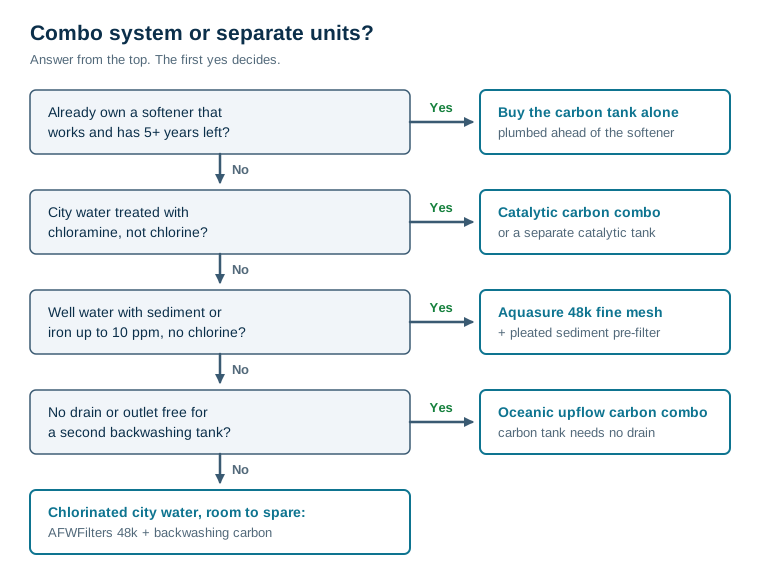
A combo makes sense when you need both jobs and own neither. Separate units win in three cases:
- You already have a working softener. A carbon tank alone, plumbed ahead of it, costs much less than replacing both. Check the order in carbon filter before a water softener.
- The two jobs need different sizes. A large household on lightly chlorinated water may need a big softener and a small carbon tank. Combos come in matched pairs.
- Your water has a problem a combo does not cover. Iron above the resin's rating, hydrogen sulfide, manganese or bacteria each need their own stage, in a set order. The order is in should the filter go before or after the softener.
Installing a Combo: Order, Bypasses and Drains
A combo arrives as two or three tanks, and the installer's job is to put them in the right order and make each one serviceable.
- Sediment first, if there is one. It protects everything downstream, and a cartridge housing is the cheapest stage to service.
- Carbon next. It takes chlorine out before the water reaches the resin.
- Softener last, then the house. Leave outdoor taps on hard, unfiltered water if you can. Watering the lawn with softened, carbon-filtered water spends media and salt for nothing.
- A bypass on every tank. You will service the carbon on a different day from the softener. A single bypass for the whole train means the house loses water each time.
- Drains for every backwashing tank. The AFWFilters carbon tank and the softener both send water to drain, so both need an air gap at a drain or standpipe. The Oceanic upflow carbon tank does not.
- Power for every electronic valve. Two Fleck 5600SXT heads need two outlets, or one outlet with room for both transformers.
Budget the floor space as well. The AFWFilters combo is two 10 × 54 in tanks, each about 62 in tall with its valve, plus a brine tank. Side by side with an 18 in brine tank, that is 38 in of tank before any gaps, so plan on 3 to 4 ft of wall.
What a Combo Costs You in Pressure
Every stage in series takes some pressure. A softener and a carbon tank together lose more than either alone, and a sediment cartridge adds more as it loads. In a house that already has weak pressure, a combo can push the shower below comfortable. Ask for the pressure drop of each stage at your peak flow and add them up before you buy.
Upflow carbon and backwashing carbon behave differently here too. A backwashed bed stays loose. An upflow bed is never backwashed, so if grit reaches it, its pressure drop slowly rises. A sediment cartridge ahead of it is cheap insurance.
What to Check Before You Buy Any Combo
- Separate valves. Each tank should have its own control head or bypass, so one can be serviced while the other runs.
- Carbon type and volume. Standard activated carbon for chlorine. Catalytic carbon for chloramine. More media means longer life.
- Resin crosslink. Even with carbon ahead, 10% crosslink resin gives a margin if the carbon is replaced late.
- A published replacement interval. If the seller cannot say how long the carbon lasts, plan to test for chlorine after the filter every few months.
- Backwash timing. Two backwashing tanks need their regeneration times set apart, or the second tank starves for flow.
Who Should Buy None of These
- Anyone with a working softener. Add the filter stage on its own.
- Homes on chloramine without a catalytic option. Standard carbon will let it through.
- Wells with sulfur, manganese, high iron or bacteria. Test first, then build the treatment in order.
- Anyone expecting drinking-water purification. Whole-house carbon improves taste and removes chlorine. It is not a substitute for a point-of-use system certified for lead or other contaminants. The EPA explains how utilities use chloramines in drinking water and why they persist in the pipes.
The best water softener and filter combos are the ones where every stage can be serviced on its own schedule. Buy the combo for the convenience of one purchase, then treat it as separate machines from day one.
Frequently Asked Questions
Is a water softener and filter combo worth it?
It is worth it when you need both jobs and have neither unit yet. A combo is sized and priced as one package, and on a good one each stage keeps its own tank and valve, so you can service the carbon without touching the softener. It is not worth it if you already own a softener with years of life left. Adding a carbon tank ahead of it costs less than replacing both.
Should the carbon filter go before or after the water softener?
Before. Carbon removes chlorine, and chlorine slowly breaks down softener resin. With the carbon first, the resin never sees it. The usual order is sediment filter if needed, then carbon, then the softener, then the house. Every combo on this page is plumbed that way.
How often do you replace the carbon in a whole-house combo?
It depends on the chlorine level and how much water you use. Aquasure rates one of its whole-house carbon tanks at 800,000 gallons or 6 years, whichever comes first. The carbon tanks in the AFWFilters and Oceanic combos have no published interval. Test total chlorine after the carbon every few months and replace the media when it starts to show.
Do softener and filter combos work on chloramine?
Only if the carbon is catalytic and the tank is large enough. Standard activated carbon removes free chlorine well but chloramine slowly. If your utility uses chloramine, which it will say in its annual water quality report, choose a catalytic carbon tank. AFWFilters sells a catalytic version of its 48k combo on its own store.
Can a softener and filter combo treat well water?
A softener with a sediment pre-filter can, within limits. The Aquasure Harmony 48k with fine-mesh resin is rated by the maker for up to 10 ppm of iron, with a pleated sediment cartridge ahead of it. Carbon combos are mostly for chlorinated city water. Well water with sulfur, manganese or bacteria needs its own treatment, chosen from a full water test.
