
Should a Water Filter Go Before or After a Softener?
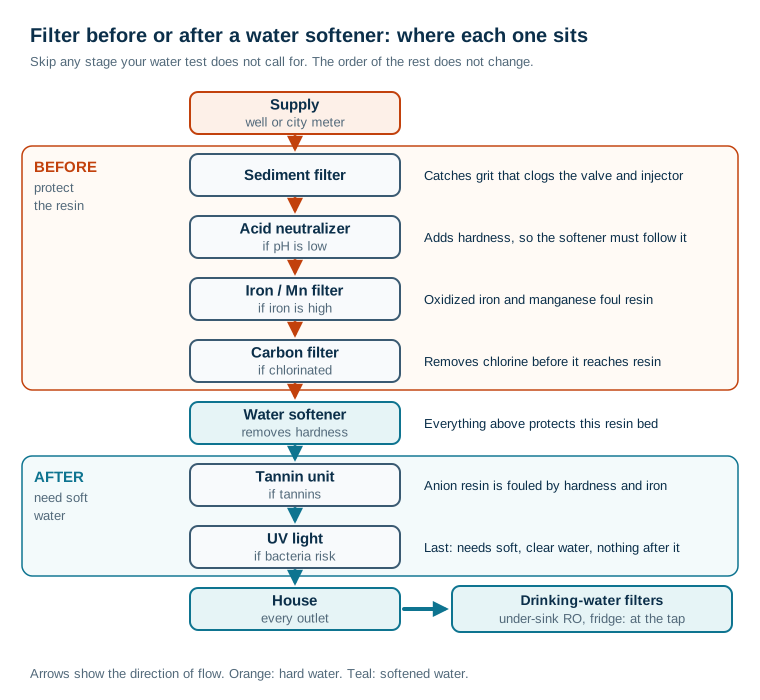
The answer to filter before or after water softener depends on the filter type. Filters that protect the resin go before the softener: sediment, carbon on chlorinated water, iron and manganese filters, and acid neutralizers. Filters that need soft water, or that only treat drinking water, go after it: tannin units, UV lights, under-sink RO and fridge filters. Preference has nothing to do with it; the chemistry decides.
That is why generic answers disagree. "Filters go before" is right for a sediment filter and wrong for a UV light. The table below places ten common types and gives the reason for each, so you can check your own setup line by line.
Filter Before or After Water Softener: The Decision Table
| Filter type | Position | Why | What happens if it is reversed |
|---|---|---|---|
| Sediment filter (spin-down or cartridge) | Before, first in line | Grit clogs the softener valve, injector and bed | Scored seals, a blocked injector, hard water bypassing through a stuck valve |
| Carbon filter, city water | Before | Removes free chlorine, which slowly breaks down resin | Chlorine reaches the resin every day, and the bed swells and loses capacity over years |
| Catalytic carbon, chloramine | Before | Standard carbon is weak on chloramine; catalytic carbon is sized for it | Same resin damage as chlorine, more slowly |
| KDF media | Before, usually paired with carbon | Sold for free chlorine reduction ahead of carbon | Its chlorine job happens after the resin has already been exposed |
| Iron, manganese or sulfur filter (air injection, birm, greensand) | Before | Oxidized iron and manganese foul softener resin | Resin coats orange or black, capacity falls, brown water after regeneration |
| Acid neutralizer (calcite) | Before | It raises pH by dissolving calcium carbonate, which adds hardness | The house gets harder water than the raw supply |
| Tannin filter (anion resin) | After | Hardness and iron foul anion resin | Calcium carbonate and iron coat the tannin resin within a season |
| UV disinfection | After, last | Hardness and iron coat the quartz sleeve and block the light | Scaled sleeve, lower UV dose, and water treated for bacteria before other equipment can recontaminate it |
| Drinking-water filters (under-sink RO, fridge, pitcher) | After, at the tap | They treat one tap and last longer on soft water | Membranes and cartridges scale and clog; nothing else in the house benefits |
| Polishing carbon, well water | Either, usually after | No chlorine to protect the resin from, so it is a taste and odor stage | Little harm either way; after is simpler to service |
The first five rows share one principle, and so do the last four. Everything ahead of the softener exists to deliver clean, oxidant-free, iron-free water to the resin. Everything after it either needs soft water to work or only serves drinking water.
The Three Questions That Place Any Filter
If your filter is not in the table, or the product name does not make clear what it is, three questions settle it. Ask them in order.
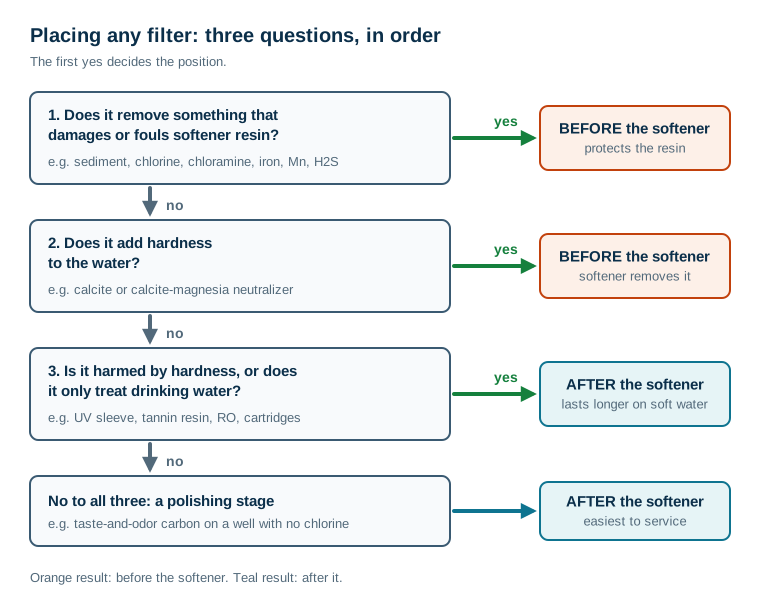
- Does it remove something that damages or fouls softener resin? Sediment, chlorine, chloramine, iron, manganese and hydrogen sulfide all qualify. If yes, the filter goes before.
- Does it add hardness to the water? Calcite and calcite-magnesia neutralizers do, by design. If yes, it goes before, so the softener removes what it adds.
- Is it harmed by hardness, or does it only treat drinking water? UV sleeves, anion tannin resin, RO membranes and small cartridges all last longer on soft water. If yes, it goes after.
A filter that answers no to all three is a polishing stage. Place it after the softener, where it is easier to service and sees cleaner water.
Carbon Before the Softener: Right on City Water, Optional on a Well
Chlorine is the reason carbon goes first. Free chlorine is an oxidant, and softener resin is a polymer that slowly breaks down under oxidation. The process is years long at tap-water levels, but it is real, and the evidence shows up as a swollen, mushy bed with lower capacity. Put the carbon ahead of the softener and the resin sees none of it.
On a private well with no chlorination, that reason disappears. Carbon then only removes taste, odor or specific organic compounds, and it can sit on either side. Most installers put it after the softener, where soft water keeps the carbon bed from picking up scale.
Two cautions for city water:
- Chloramine is not chlorine. Many utilities now disinfect with chloramine, which standard carbon removes poorly. Use catalytic carbon sized for it, or accept that some reaches the resin.
- One tank or two? Some combination units stack carbon over resin in one tank. That works for chlorine, but you cannot replace the carbon without disturbing the resin. The trade-offs are in how a carbon filter and water softener work together, and packages that keep each stage separate are compared in choosing a softener and filter combo with every stage in its own housing.
The Acid Neutralizer Trap
This is the placement mistake that makes water harder. A calcite neutralizer corrects acidic well water by letting it dissolve calcium carbonate from the media bed. The pH rises, and so does the hardness, because dissolved calcium is hardness.
Put the neutralizer after the softener and the house receives water that is harder than the raw well water. Scale, spots and poor lather come back, even though the softener is working perfectly. The fix is to move the neutralizer before the softener and size the softener for the hardness after neutralization, not the raw well figure. Water softener vs acid neutralizer covers how much hardness a neutralizer typically adds and how to test for it.
Why UV and Tannin Units Want Soft Water
UV works by shining light through a quartz sleeve into the water. Anything that coats the sleeve or absorbs the light reduces the dose that reaches bacteria. VIQUA, a UV manufacturer, lists ideal water quality for UV as hardness below 7 grains per gallon (120 ppm), total iron below 0.3 mg/L, manganese below 0.05 mg/L and turbidity below 1 NTU, and recommends a 5-micron filter ahead of the unit. On hard well water, that means the softener and any iron filter go first, and UV goes last, so nothing downstream of it can recontaminate the water.
A UV light does not remove anything. It inactivates microorganisms at the moment the water passes the lamp. That is why it must be last: anything installed after it, including a softener with a resin bed and brine tank, is a place where bacteria can grow again.
Tannin units use anion resin, which catches negatively charged organic matter. Hardness and iron foul that resin. The usual order on a tannin well is iron filter, softener, then tannin unit, although combination units that mix both resins in one tank are also sold.
When Iron Can Skip the Separate Filter
A softener can remove some iron. Penn State Extension's guide to iron and manganese in private water systems says softeners work best for iron when the pH is above 6.7, hardness is 3 to 20 grains per gallon and dissolved iron is below 5 mg/L. It adds a warning that matters for placement: "Oxidized forms of iron and manganese will foul the softener resin."
That warning has a practical consequence. Any device that adds air or chlorine to the water before the softener must remove the iron it oxidizes. An aerator or chlorine feed with no filter behind it, or an undersized iron filter that lets oxidized iron through, is worse for the softener than no iron treatment at all. If you add an oxidizing step, the filter that follows it must be sized for the full iron load. The Fleck 5800 SXT service manual makes the same call from the valve maker's side: if piping is clogged with iron, "a separate iron filter unit should be installed ahead of the water softener," and "a prefilter should be used on installations in which free solids are present."
Two Common Setups, Placed
Most homes need only a few of the ten rows. These are the two layouts that come up most often:
| Supply | Typical problems | Order |
|---|---|---|
| City water | Hardness, chlorine or chloramine taste | Carbon (catalytic if chloramine) → softener → under-sink RO or fridge filter at the kitchen |
| Private well | Hardness, iron, low pH, bacteria risk | Sediment → neutralizer if pH is low → iron filter if iron is high → softener → UV last |
On city water, a sediment filter is optional unless the main has been disturbed or the water carries visible grit. On a well, the sediment filter is usually worth having, because sand and scale flakes arrive with the pump. The UV light only goes in when a bacteria test or the well's construction calls for it. Everything else on the list is added when a test result, not a sales visit, says it is needed.
Plumbing Details That Make the Order Work
Getting the order right on paper is half the job. These details decide whether it works in the basement:
- Give each unit its own bypass. You should be able to isolate the carbon tank without cutting soft water, and the softener without cutting the iron filter.
- Add pressure gauges before and after the sediment filter. A rising pressure drop across it is the only reliable reminder to change it. The gauge layout and micron choice are covered in a sediment prefilter before a softener.
- Check backwash flow for every backwashing tank. Iron filters, carbon tanks and softeners each need a minimum backwash flow. On a well, the pump has to supply it, and two tanks should never backwash at the same time.
- Decide what the outdoor taps get. Irrigation usually branches off ahead of the softener, and on many wells ahead of the whole treatment line, so you are not softening and filtering lawn water.
- Keep drinking-water filters at the tap. An under-sink RO or fridge filter fed from a softened line lasts longer and treats the water you drink.
For a full well system, with pressure tank, neutralizer, iron filter, softener, tannin and UV in one line, see the complete sequence in well water treatment train order.
What Filter Order Cannot Fix
The right order gets each device clean feed water. It does not add capabilities the equipment does not have:
- A softener still only removes hardness and a limited amount of dissolved iron. It does not remove chlorine, bacteria, lead, nitrate or arsenic, wherever it sits.
- A carbon filter does not disinfect. It removes chlorine, which means water after it has no residual protection against bacteria.
- UV does not work on dirty water. If the pre-treatment is wrong, putting UV last does not make up for it.
- A sediment filter finer than your sediment needs clogs faster, starves the softener's backwash and drops house pressure.
Test the water before buying a single filter. Hardness, iron, manganese, pH, chlorine or chloramine, and bacteria decide which of the ten rows apply to your house. The order of those rows is fixed.
Frequently Asked Questions
Does a sediment filter go before or after a water softener?
Before. A sediment filter is the first piece of equipment after the pressure tank or meter, because sand, grit and scale flakes clog the softener's valve, injector and resin bed. Pick a micron rating that catches your sediment without choking flow. A very fine cartridge on a sandy well clogs fast and starves the softener's backwash.
Should a carbon filter be before or after a water softener?
On chlorinated city water, before. Chlorine slowly oxidizes softener resin, and a carbon filter ahead of the softener removes it first. On a well with no chlorine, the position matters much less, and many installers put carbon after the softener as a polishing stage for taste and odor.
Can I put a whole-house filter after the water softener?
Yes, if it is a type that does not need to protect the resin. Tannin units, UV lights, polishing carbon on well water and all drinking-water filters work better after the softener, because soft water does not scale or foul them. Sediment, chlorine-removing carbon, iron filters and acid neutralizers belong before.
Does a UV light go before or after a water softener?
After, and last in the line. Hardness and iron coat the quartz sleeve and block the UV light. VIQUA lists ideal water quality for UV as hardness below 7 grains per gallon, iron below 0.3 mg/L and manganese below 0.05 mg/L, which is usually what the softener and iron filter ahead of it deliver.
Does an iron filter go before a water softener?
Yes. Iron removal goes ahead of the softener, because oxidized iron fouls softener resin. Penn State Extension says softeners handle dissolved iron best below about 5 mg/L, with pH above 6.7 and hardness between 3 and 20 grains per gallon. Above that, or with any oxidized iron, a dedicated iron filter should come first.
Does an acid neutralizer go before or after a water softener?
Before. A calcite neutralizer raises pH by dissolving calcium carbonate into the water, which adds hardness. The softener after it removes that added hardness. If the neutralizer sits after the softener, the house gets harder water than before, and scale returns downstream.
