
Best Whole-House Well Water Systems: 4 Complete Builds From Your Water Test

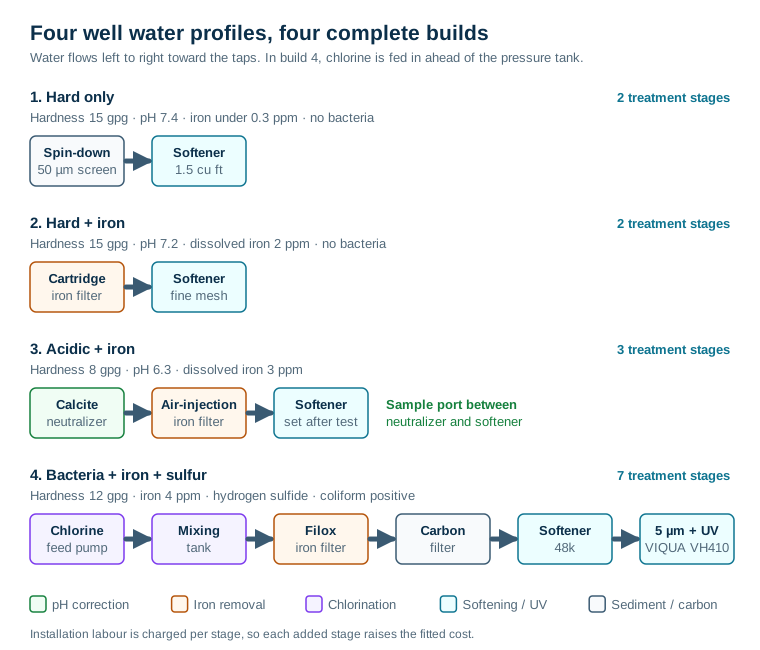
The best whole-house well water systems are not single products. They are short sequences of equipment chosen from your water test. Four profiles cover most private wells. Hard water alone needs a spin-down filter and a softener. Hard water with up to 3 ppm of dissolved iron needs a cartridge iron filter ahead of a fine-mesh softener. Acidic, iron-bearing water needs a neutralizer, an iron filter and a softener. A well with bacteria, iron and sulfur needs chlorination, filtration, a softener and UV. The order matters as much as the parts.
Disclosure: Hard Water Solved may earn a commission if you buy through links on this page, at no extra cost to you. It does not change which products we include or how we rank them. Read our disclaimer.
Best Whole-House Well Water Systems at a Glance
| Well profile | Typical test | Build, in order |
|---|---|---|
| 1. Hard only | 15 gpg, pH 7.4, iron under 0.3 ppm | Spin-down screen, softener |
| 2. Hard + iron | 15 gpg, pH 7.2, iron 2 ppm dissolved | Cartridge iron filter, fine-mesh softener |
| 3. Acidic + iron | 8 gpg, pH 6.3, iron 3 ppm | Calcite neutralizer, air-injection iron filter, softener |
| 4. Bacteria + iron + sulfur | 12 gpg, iron 4 ppm, sulfide, coliform | Chlorine feed, mixing tank, iron filter, carbon, softener, 5 µm filter, UV |
How These Builds Were Chosen
Method. Nothing on this page was physically tested by us. Each build uses equipment whose limits are stated in the seller's own spec page, owner's manual or warranty, and every stage has to meet the limit of the stage after it.
- Included: whole-house equipment sold new, with a stated iron, manganese, sulfide, pH or flow limit we could read.
- Tank stages: neutralizers, air-injection iron filters and chlorination packages are taken from AFWFilters' own store, which lists exact specs. AFWFilters also sells on Amazon, but we did not match each tank to an Amazon listing, so those stages carry no Amazon link.
- Installation: labour is charged per stage. Fixr gives $150 to $1,000 of base labour for fitting a softener, a fair guide for each stage. Treat it as illustrative; ask for itemised quotes.
- Excluded: any "all-in-one" well filter that claims to handle bacteria without a disinfection stage, and the iSpring WGB32BM plus UVF55FS bundle, which suits only lighter wells (see profile 4).
- Prices are not listed here because they change often. Use the buttons to see the current price on Amazon.
The order these builds follow is not a matter of taste. Each stage changes the water for the one after it, and well water treatment train order sets out the full 12-position sequence and what breaks when a stage is moved. This page applies that sequence to four wells.
Start From the Test, Not the Box
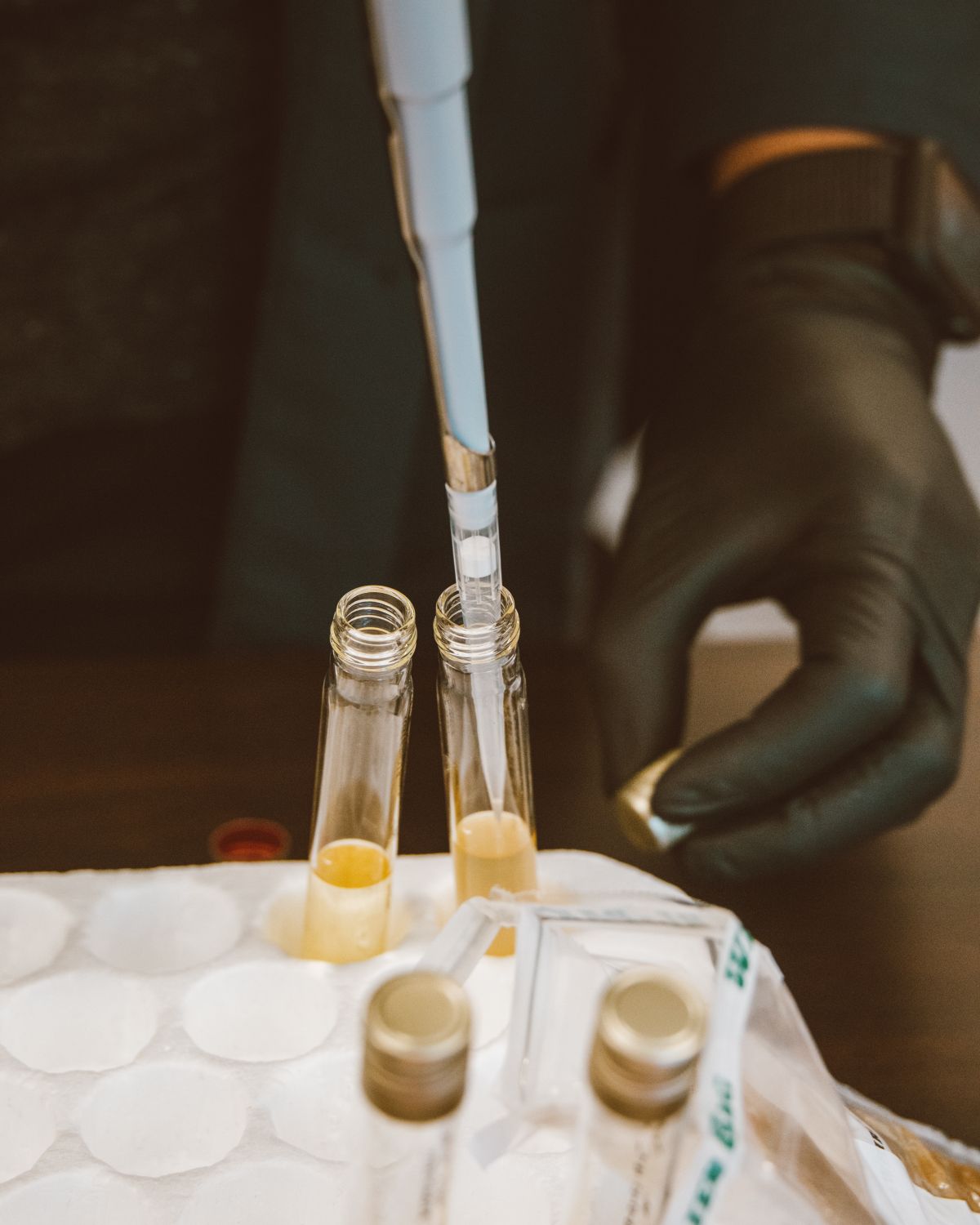
Every stage in these builds is there because a number on the lab report put it there. EPA advises testing a private well every year for total coliform bacteria, nitrate, total dissolved solids and pH. That baseline is not enough to choose equipment. You also need hardness, total and dissolved iron, manganese, hydrogen sulfide, alkalinity and turbidity. Which panel to order, and how to read it, is covered in the water test panel to order before treatment.
Three readings sort a well into one of the four profiles below:
- pH under about 6.8: profile 3. Many iron media need near-neutral water, and acidic water attacks copper plumbing whatever else is in it.
- Coliform bacteria or a sulfur smell: profile 4. No filter on this page disinfects except the UV stage, and UV cannot work on water that still carries iron.
- Dissolved iron over 0.3 ppm: profile 2, or 3 or 4 if one of the readings above also applies.
If none of those apply and hardness is the only issue, you are in profile 1.
One caution before buying anything. Well water is not fixed. A dry summer, a new well nearby or a failing casing can change iron and bacteria results from one season to the next, as explained in why well water chemistry changes. Buy for the worst result you have seen, not the best, and retest after the system goes in.
Profile 1: Hard Water, Nothing Else
Typical test: hardness 15 gpg, pH 7.4, iron under 0.3 ppm, no bacteria. Build: pressure tank, spin-down sediment screen, softener.
| Stage | Pick | What its maker states | Amazon |
|---|---|---|---|
| Sediment | iSpring WSP50ARB | 50 µm 316L stainless screen, automatic flushing module, built-in scraper, brass top | Check price on Amazon |
| Softener | AFWFilters Fleck 5600SXT 48k, 10% crosslink resin | 1.5 cu ft resin on a metered Fleck 5600SXT valve | Check price on Amazon |
This is the build to resist adding to. A hard well with clean chemistry needs nothing more, and every extra tank adds media, maintenance and another backwash for the pump to supply.
Why a spin-down, not a cartridge: a 50 µm screen catches well sand and grit, and the automatic flush clears it to drain without anyone opening a housing. A 5 µm cartridge here would load up quickly on a sandy well and could choke flow to the softener.
Running costs: softener salt, and the occasional screen clean. 10% crosslink resin is a reasonable choice on an unchlorinated well and does not need to be fine mesh when there is no iron.
Wrong for: any well with measurable dissolved iron. Standard resin on iron fouls over time, so move to profile 2.
Profile 2: Hard Water With Iron Up to 3 ppm
Typical test: hardness 15 gpg, pH 7.2, dissolved iron 2 ppm, no bacteria, no sulfur smell. Build: pressure tank, cartridge iron filter, fine-mesh softener.
The cartridge iron filters below are three-stage housings: sediment, an iron-reducing cartridge and carbon. They are the simplest way to take iron off the softener's plate, and both are rated to about 3 ppm.
Home Master HMF3SDGFEC: best cartridge iron filter for most homes
- Maker's ratings: up to 3 ppm of iron, manganese and hydrogen sulfide, 15 gpm maximum flow, 1-inch ports.
- Cartridges: a four-layer sediment cartridge (25 down to 1 micron), a radial-flow iron cartridge and a carbon stage. Home Master recommends annual replacement.
- Warranty: two-year limited, per Home Master.
The four-layer sediment cartridge gives it more dirt-holding capacity than a single-layer cartridge, which matters on a well that sheds silt. Watch for: the 3 ppm ceiling is a ceiling, not a target. On a well that sits near it, expect to change cartridges sooner than once a year.
iSpring WGB32BM: the alternative with a manganese rating
- Maker's ratings: iron up to 3.0 ppm and manganese up to 1.0 ppm, both reduced to 0.01 ppm, per iSpring; 15 gpm; about 100,000 gallons per cartridge set, roughly a year for a family of four.
- Warranty: one year.
Choose it over the Home Master when the test shows manganese as well as iron, because iSpring states a separate manganese ceiling.
The softener after it
AFWFilters Iron Pro 48k, fine mesh. With the cartridge filter taking out most of the iron, the softener is a back-stop. Fine mesh still earns its place because no cartridge is perfect, and any iron that slips through is released more cleanly at regeneration.
The salt-free alternative: SpringWell well filter + FutureSoft
SpringWell pairs an air-injection iron filter with its FutureSoft salt-free conditioner. Its sizes are 12 gpm (1 to 4 bathrooms) and 20 gpm (4 or more), and it lists a pH range of 6.5 to 10 and 25 to 80 psi. SpringWell rates its WS iron filters for up to 8 ppm of iron and 1 ppm of manganese, with hydrogen sulfide. It carries a lifetime warranty against defects.
It costs much more than the cartridge build, and a salt-free conditioner reduces scale build-up without removing hardness. Buy it for higher iron, for a sulfur smell or to avoid salt, not to save money. Wrong for: profile 4 wells where a UV maker asks for softened water.
Profile 3: Acidic Water With Iron
Typical test: hardness 8 gpg, pH 6.3, dissolved iron 3 ppm. Build: pressure tank, calcite neutralizer, air-injection iron filter, softener, with a sample port between the neutralizer and the softener.
The pH reading changes everything here. The cartridge filters in profile 2 do not state a pH floor in the material we could read, and SpringWell's combination lists 6.5 as its lowest pH, above this well's 6.3. So the neutralizer goes first and the iron filter after it.
| Stage | Equipment | What the seller states |
|---|---|---|
| Neutralizer + softener | AFWFilters combo: Fleck 5600SXT 48k softener and 1.5 cu ft backwashing pH neutralizer | 10% crosslink resin; blended media offered for pH under 6; 5 years on the control head, 10 on the tank |
| Iron filter | AFWFilters Air Injection Iron Filter, Silver Series | 10x54 tank, 1.0 cu ft of Filter-Ag Plus based media, Fleck 5600SXT; iron up to 8 ppm, manganese 2 ppm, hydrogen sulfide 4 ppm |
Size the softener after the neutralizer, not from the well test. A calcite neutralizer raises pH by dissolving calcium carbonate, which adds hardness. The 8 gpg on the report will be higher at the softener. Program it after measuring at the sample port once the neutralizer has run in. How a softener copes with the rest of a well's chemistry is covered in water softener for well water.
Running costs: calcite is used up as it works and has to be topped up. AFWFilters' upflow neutralizer page says the media needs replenishing "at least once a year on average". Add softener salt.
Watch for: backwash flow. Three backwashing tanks on one well means three draws on the pump. They can be timed for different nights, but each must get its full backwash flow when it runs.
Wrong for: pH below about 5.3. Calcite blends stop being enough there, and a soda ash feed takes over.
Profile 4: Bacteria, Iron and Sulfur
Typical test: hardness 12 gpg, iron 4 ppm, hydrogen sulfide present, coliform bacteria detected. Build: chlorine feed (ahead of the pressure tank), mixing tank, iron filter, carbon filter, softener, 5 µm filter, UV.
This is the profile where shortcuts fail. Chlorine oxidises the iron and sulfide and disinfects. The mixing tank gives it time to react. The iron filter catches what the chlorine turned into particles. Carbon then strips the leftover chlorine before it reaches the resin. The softener protects the UV sleeve, and UV is the last line of defence.
| Stage | Equipment | What the seller states | Amazon |
|---|---|---|---|
| Chlorine feed, mixing tank, Filox iron filter, upflow carbon, 48k softener | AFWFilters whole-house chlorine injection package | Treats up to 9 gpm; needs at least 6.5 gpm for backwash; 2510SXT digital valve | not linked |
| UV | VIQUA VH410 | 14 gpm at 40 mJ/cm² and 18 gpm at 30 mJ/cm², at 95% UV transmittance | Check price on Amazon |
| 5 µm filter ahead of UV | Any 5 µm sediment cartridge housing | Required ahead of the VH410 by VIQUA's manual | any brand |
Check the backwash first. The package needs 6.5 gpm of backwash flow. Measure what your pump sustains before ordering. A well that cannot hold that flow needs smaller tanks, or storage.
UV last, and only on prepared water. The VIQUA owner's manual asks for iron under 0.3 ppm, hardness under 7 gpg, manganese under 0.05 ppm, turbidity under 1 NTU and UV transmittance over 75% at the lamp. It also requires a 5 µm sediment filter ahead of the chamber. Everything before the UV in this build exists to meet those limits. VIQUA rates the lamp for about 9,000 hours and tells owners to replace it every year. The standard VH410 is not on NSF's Standard 55 listing; the certified versions carry a "-V" suffix and are Class B.
A UV lamp does not fix the well. A positive coliform result also calls for a wellhead inspection and shock chlorination. Bacteria usually get in through a defect, and the treatment train manages the water rather than closing the gap.
The cheaper starter, and why it rarely fits this profile. iSpring sells its WGB32BM cartridge filter with its UVF55FS 12 gpm UV as one bundle. It is not ranked, because it suits only a well with light bacteria, iron under 3 ppm and no sulfur smell. Even then, water harder than 7 gpg still needs a softener before the UV, which the bundle does not include.
What the All-in-One Well Filters Leave Out
Single-box "well water systems" are sold as complete answers. Their own ratings show where each one stops:
| Product | Iron limit stated | Other limits stated | What it does not cover |
|---|---|---|---|
| Home Master HMF3SDGFEC | 3 ppm | Manganese and hydrogen sulfide within the same 3 ppm | Hardness, bacteria, acidic water (no pH floor stated) |
| iSpring WGB32BM | 3.0 ppm | Manganese 1.0 ppm | Hardness, bacteria, acidic water |
| SpringWell well filter + FutureSoft | 8 ppm | Manganese 1 ppm; pH 6.5 to 10 | Hardness removal, bacteria, pH under 6.5 |
| AFWFilters Air Injection Silver | 8 ppm | Manganese 2 ppm, hydrogen sulfide 4 ppm | Hardness, bacteria; pH limit not stated |
None of them disinfects, and none removes hardness. That is why profile 4 needs a chlorination stage and a UV, and why profiles 1 to 3 each still end with a softener.
Running Costs by Profile
| Profile | Recurring item | How often |
|---|---|---|
| 1 | Softener salt; spin-down screen clean | as the brine tank empties |
| 2 | Cartridge set (Home Master or iSpring) | about yearly, sooner near 3 ppm |
| 3 | Calcite top-up | at least yearly, per AFWFilters |
| 4 | UV lamp (S410RL-HO) | yearly, per VIQUA |
| 4 | Chlorine solution and 5 µm cartridges | as used |
Profiles 3 and 4 also carry more maintenance time: checking the calcite level, the chlorine tank and the UV controller.
Who Should Buy None of These
- Anyone without a recent full test. Buying a profile 2 build for a well that is actually acidic leaves the plumbing corroding behind a new iron filter.
- Wells with tannins or high nitrate. Neither is handled by any build here. They need anion resin, or a point-of-use reverse osmosis unit for drinking water.
- Wells pumping visible sand. Fix the well, or add a coarse separator ahead of the pressure tank, before buying media tanks that sand will pack.
- Low-yield wells. If the pump cannot sustain the backwash flow of the largest tank, every build except profile 1 needs storage and a booster pump designed in first.
- Wells that test positive for bacteria more than once after shocking. That points to a well defect, and the money belongs in repairing the well before any treatment train.
The best whole-house well water system is the shortest sequence that meets every limit on your report, in the order each stage needs. Read your profile from the test, check current prices for the build above, and add a stage only when a number calls for it.
Frequently Asked Questions
What is the best whole-house water filtration system for well water?
There is no single best unit, because wells differ. For hard water with no iron, a sediment spin-down and a softener are enough. For dissolved iron up to about 3 ppm on water at neutral pH, a three-stage cartridge iron filter ahead of a fine-mesh softener works. Acidic water needs a neutralizer first, and a well with bacteria and sulfur needs chlorination, filtration and UV. Choose from a full lab test, not from the box.
How much does a whole-house well water system cost?
It depends on how many stages your test calls for. A hard-only well needs a spin-down screen and a softener, while a well with bacteria, iron and sulfur needs a chlorination package, a softener, a sediment filter and UV, and costs several times as much. Labour adds to every stage: Fixr gives $150 to $1,000 of base labour for fitting a softener, a fair guide per stage. A single installer visit for a packaged system often costs less than the per-stage sum. Equipment prices change often, so check current prices before budgeting.
Do I need a water softener if I have a well water filter?
Only if the water is hard. Iron and sediment filters do not remove calcium and magnesium. If the test shows more than about 7 gpg, a softener protects fixtures, the water heater and any UV lamp sleeve. A salt-free conditioner reduces scale build-up but does not remove hardness, so it is not a substitute where a UV system's maker asks for softened water.
What should I test well water for before buying a filter system?
At minimum, total coliform bacteria, nitrate, pH and total dissolved solids, which EPA advises testing every year. For choosing equipment, add hardness, iron (total and dissolved), manganese, hydrogen sulfide, alkalinity and turbidity. Each of those numbers decides whether a stage is needed and where it goes.
Can one whole-house filter remove iron, sulfur and bacteria?
Not reliably. Cartridge iron filters in this guide are rated for about 3 ppm of iron and do not disinfect. Bacteria need chlorination or UV, and UV needs clear water with iron under 0.3 ppm and hardness under 7 gpg, according to VIQUA's manual. A well with all three problems needs several stages, usually chlorine feed, contact time, an iron filter, carbon, a softener and UV last.
Is a whole-house well water system worth it?
When the test shows a real problem, usually yes. Iron staining, scale, corrosion from acidic water and bacteria all have costs: ruined fixtures, failed water heaters, pinhole leaks and health risk. A system built only from stages the test calls for avoids paying for media and maintenance you do not need.
