
Well Water Treatment Train Order
The well water treatment order runs:
- well and pump
- aeration
- chemical feed injection
- pressure tank
- sediment screen
- retention tank
- acid neutralizer
- iron, manganese and sulfide filter
- carbon filter
- water softener
- UV disinfection
- kitchen reverse osmosis
Most wells need only some of these stages. Whichever ones you install keep this order, because each stage prepares the water for the one after it. Move one and the next stage fails.
This is the reference page for the whole sequence. The softener's own placement on a well is covered in more detail in where to install a softener on a well water system. The pretreatment stages immediately ahead of it are in sediment and iron filters before a softener.
The Well Water Treatment Order in One Diagram
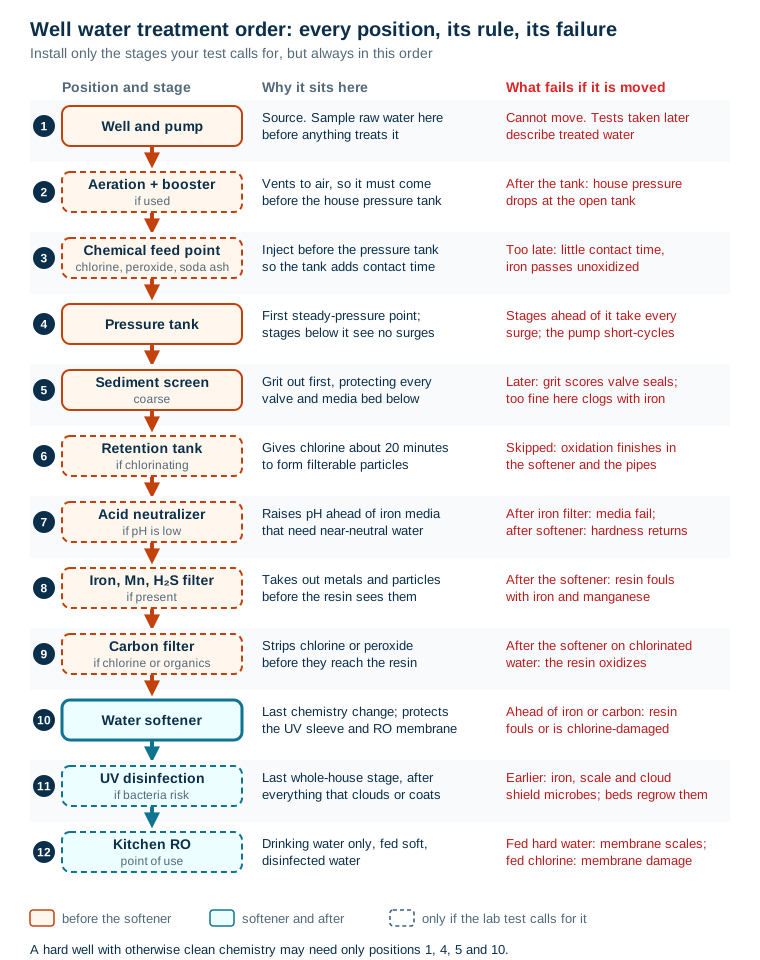
Four rules produce the whole sequence. If you remember them, you can place any stage, including ones not shown here.
- Stages that break pressure come before the pressure tank. An open aeration tank vents to the air, so everything after it has to be repressurized.
- Stages that change the chemistry come before the stages that depend on it. pH correction comes before oxidation. Oxidation comes before the filter that catches the particles. Chlorine removal comes before the resin.
- Stages that protect another stage go before it. Sediment removal protects every media bed and valve. The softener protects the UV sleeve and the RO membrane.
- Disinfection is last. Only point-of-use drinking water treatment comes after it.
Position by Position: The Rule and the Failure
Most wells skip half of these positions, and the dashed boxes in the diagram are the optional ones. A hard well with clean chemistry might need only positions 1, 4, 5 and 10.
| # | Stage | Why it sits here | What fails if it is moved |
|---|---|---|---|
| 1 | Well and pump | The source. Take raw samples here | Not movable. A test taken further down describes a treated mix, not your well |
| 2 | Aeration (atmospheric tank and booster pump) | It vents to the air, so it must come before the house pressure tank | After the pressure tank, the house loses pressure at the open tank. The fix is a second pump, which is what position 2 already has |
| 3 | Chemical feed injection point (chlorine, peroxide or soda ash) | Injected before the pressure tank so the tank adds contact time. Penn State Extension places soda ash feed "before the pressure tank" | Injected late, the chemical has too little contact. Iron leaves unoxidized and gets past the filter |
| 4 | Pressure tank | The first point of steady pressure. Every stage after it sees stable pressure, not pump surges | Treatment placed before it takes every surge and can cause the pump to cycle rapidly |
| 5 | Coarse sediment screen | Grit comes out first, protecting every valve and media bed downstream | Placed later, sand scores valve seals and packs media beds. A fine cartridge here clogs with iron that the iron filter is meant to catch |
| 6 | Retention tank (only with chlorination) | Gives chlorine time to turn dissolved iron and sulfide into filterable particles | Skipped or undersized, the oxidation finishes inside the softener and the house plumbing |
| 7 | Acid neutralizer | Raises pH ahead of iron media that need near-neutral water | After the iron filter, the media underperform at low pH. After the softener, the neutralizer adds hardness back that nothing removes |
| 8 | Iron, manganese or sulfide filter | Removes metals and particles before the resin sees them | After the softener, the resin fouls with iron and manganese |
| 9 | Carbon filter | Strips residual chlorine or peroxide and removes organics and odor | After the softener on chlorinated water, the resin oxidizes and breaks down |
| 10 | Water softener | The last chemistry change. It protects the UV sleeve and the RO membrane from scale | Ahead of iron or carbon, the resin fouls or is damaged by chlorine. After UV, water is softened after disinfection |
| 11 | UV disinfection | Last whole-house stage, after everything that clouds or coats | Earlier in the train, iron, scale and turbidity shield microbes, and media beds downstream can grow bacteria again |
| 12 | Kitchen reverse osmosis | Point-of-use polishing for drinking water only | Fed hard water, the membrane scales. Fed chlorinated water without its carbon prefilter, the membrane is damaged |
Two positions are not in the table because they are branches, not stages. Outdoor taps are usually teed off after the pressure tank, or after the iron filter if raw water stains the siding, so irrigation does not use up softener capacity. Sample ports belong between stages, especially between a neutralizer and a softener. There you can measure the hardness the neutralizer adds and set the softener to it. That measurement is worked through in water softener vs acid neutralizer.
Four Example Trains, Built From Test Results
The master order is easier to follow when you see it filled in. Each well below is a typical lab profile, not a specific property, and each train uses only the positions its results call for.
Well A: hard, otherwise clean. Hardness 15 gpg, pH 7.4, iron under 0.3 ppm, no bacteria. Train: 1 → 4 → 5 → 10. Pressure tank, coarse sediment screen, softener. Nothing else is needed, and adding stages would only add maintenance.
Well B: acidic, iron-bearing and moderately hard. pH 6.3, iron 3 ppm dissolved, hardness 8 gpg. Train: 1 → 4 → 5 → 7 → 8 → 10. The neutralizer brings the pH up to what the iron media need, and the iron filter protects the resin. The softener is set for the hardness leaving the neutralizer, not the raw 8 gpg. The neutralizer adds hardness, so measure between stages 7 and 10.
Well C: sulfur smell, iron and a positive coliform test. Hydrogen sulfide present, iron 4 ppm, hardness 12 gpg, coliform bacteria detected. Train: 1 → 3 → 4 → 5 → 6 → 8 → 9 → 10 → 11. Chlorine injection with a retention tank oxidizes the sulfide and iron, the filter catches the particles, carbon removes leftover chlorine before the softener, and UV finishes. The bacteria also call for a wellhead inspection and a shock chlorination. A lamp downstream does not fix a defect in the well.
Well D: radon and low pH, soft. Radon in water above the level your state recommends treating, pH 6.4, hardness 2 gpg. Train: 1 → 2 → 4 → 5. An aeration tank strips the radon and, as a side effect, some of the carbon dioxide. Retest pH after the aerator before adding a neutralizer. Aeration alone may bring the pH up enough, and a calcite bed would add hardness this soft well does not need.
Two points apply to all four trains. Every stage number comes from a lab result, and none is there as a precaution. The softener is always sized on the water that reaches it, which in trains B and C is not the water that came out of the ground.
When you get to buying, complete systems matched to these four well profiles shows the equipment for each train, and the installed and yearly running cost of each train shows what it costs to own.
Aeration and the Retention Tank: The Two Most Often Misplaced
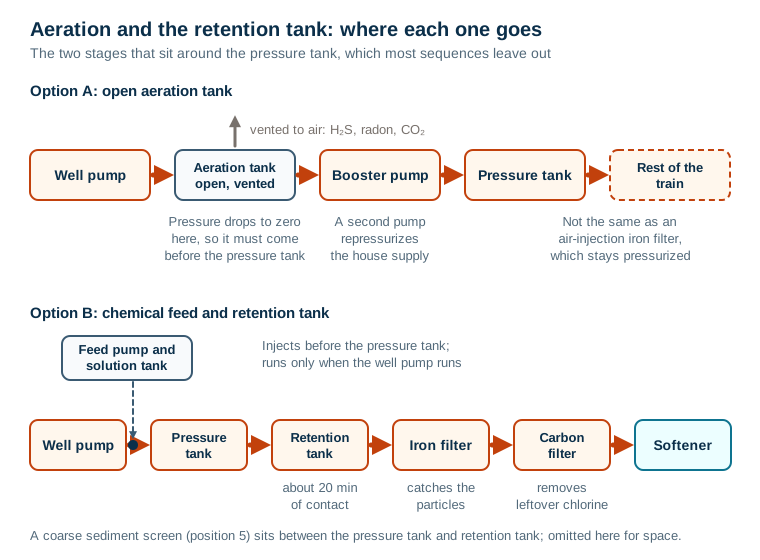
Most online sequences start at the pressure tank, so they miss the two stages that sit around it.
Aeration here means an open, vented tank where water is sprayed or bubbled through air. Hydrogen sulfide, radon and carbon dioxide leave through the vent, and dissolved iron starts to oxidize. Stripping carbon dioxide also raises pH, which can reduce the need for a neutralizer. The catch is that the tank is at atmospheric pressure. The well pump fills it, and a separate booster pump draws from it to feed the house pressure tank. That is why aeration sits at position 2, between the well pump and the pressure tank.
Do not confuse this with an air-injection iron filter. That design draws a small pocket of air into the filter's own tank and works under full pressure at position 8. It does not vent the house supply and needs no second pump.
Chemical feed injects a solution with a metering pump wired to run only when the well pump runs. NDSU Extension says chlorine needs "approximately 20 minutes of contact time" to form particles that can be filtered. It also says a standard 42-gallon pressure tank can provide that contact time if water is forced through it. At higher flow, a pressure tank holds too little water to give 20 minutes. A dedicated flow-through retention tank is then sized from peak flow: 6 gallons a minute for 20 minutes needs about 120 gallons. The particles formed in the retention tank are caught by the backwashing filter at position 8. Leftover chlorine is removed by carbon at position 9, before it reaches the resin. Why that matters is covered in how chlorine damages softener resin.
NDSU also notes that chlorine oxidizes iron fastest at about pH 8.0 and manganese at about 8.5. NDSU adds that soda ash injected with the chlorine raises the pH to those levels. On an acidic, chlorinated well, that often makes a calcite tank at position 7 unnecessary.
The pH Question: Neutralizer Before the Iron Filter
Published orders disagree here. Some retailer guides put the iron filter first and the neutralizer second. The deciding factor is the pH floor of the iron media. NDSU states that if pH is below 6.8, greensand "will probably not filter out the iron and manganese adequately." With media like that, the neutralizer has to come first or the iron filter works poorly.
Some air-injection designs and catalytic media are sold for lower pH. If your iron filter's specification sheet allows your raw pH, the iron filter can come first. It then catches iron before it reaches the calcite, which reduces the chance of iron coating the calcite. If the sheet does not allow your raw pH, the neutralizer goes first. The iron stage itself is covered in water softener vs iron filter and can a water softener remove manganese. Why acidic water needs its own stage is in why low-pH well water needs separate treatment.
The UV Question, Settled: Always Last
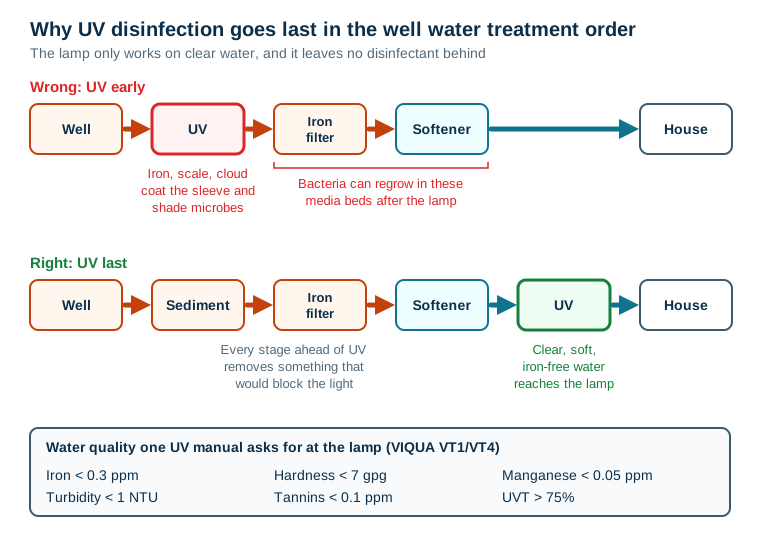
UV kills or inactivates microorganisms only if the light reaches them. Anything that clouds the water or coats the quartz sleeve around the lamp blocks it. The VIQUA owner's manual for its VT1 and VT4 systems lists the water quality it expects at the UV:
| Parameter | Maximum at the UV |
|---|---|
| Iron | under 0.3 ppm |
| Hardness | under 7 gpg, and "if total hardness exceeds 7 gpg, the water should be softened" |
| Manganese | under 0.05 ppm |
| Turbidity | under 1 NTU |
| Tannins | under 0.1 ppm |
| UV transmittance | over 75% |
Almost every stage in the train is there to meet one or more of those limits. That alone puts UV after all of them. There is a second reason, and it is the one that settles the question. UV leaves no residual disinfectant. Water that has passed the lamp is protected only until it meets something that can grow bacteria again, such as a carbon bed, a softener's resin or a sediment cartridge. A UV installed at the start of the train disinfects water that then passes through several media beds. Installed last, it treats the water just before it goes into the house plumbing.
The only thing after UV is point-of-use treatment such as a kitchen RO unit. How RO and a softener work together is covered in reverse osmosis and a water softener together.
Two cautions apply to UV even in the right position. It does not treat water that bypasses it, such as a raw outdoor tap line. And a UV unit does not fix the well defect that let bacteria in. A positive bacteria test should prompt a wellhead inspection and shock chlorination, not just a lamp.
Carbon, the Softener and Tannins
Carbon before or after the softener depends on what the carbon is for.
- Removing chlorine or peroxide from a feed system: before the softener, at position 9. That protects the resin. Placement is covered in carbon filter before a water softener.
- Polishing taste and odor on unchlorinated water: either side of the softener works. Always keep it upstream of UV, because carbon beds can grow bacteria.
Tannin resin is an anion exchange stage. It usually sits right after the softener, or shares its tank as a mixed bed, and always comes before UV, since tannins cut UV transmittance. See can a water softener remove tannins.
The softener comes after everything that would foul or damage the resin, and before the stages that scale shortens the life of: the UV sleeve, the RO membrane and the water heater. A salt-free conditioner in position 10 needs the same protection ahead of it; salt-free setups that hold up on well water lists the pretreatment each one depends on.
Outdoor Taps, Bypasses and Backwash Water
Order is the main decision, but three plumbing details decide whether the system can be serviced and whether the well can keep up with it.
- A bypass on every stage. You will service stages one at a time. A three-valve or built-in bypass on each lets the rest of the train keep running.
- Staggered backwash times. An iron filter, a neutralizer and a softener each backwash from the same pump. Set their regeneration times at least an hour apart, with upstream stages first. The scheduling detail is in sediment and iron filters before a softener.
- Backwash flow the pump can supply. Every backwashing stage needs a minimum flow from the well. If the pump cannot supply it, the order can be correct and the stage will still fail. See how well pump flow limits backwashing.
What the Right Order Cannot Do
A correct well water treatment order only lets each stage do its job. It cannot make up for a stage that is the wrong size, the wrong media or not needed at all.
- Order does not replace testing. Every optional stage depends on a lab result. Without iron, manganese, pH, hardness and bacteria numbers, you do not know which positions to fill. See can a water softener be used on private well water.
- Order does not fix undersizing. An iron filter rated below your iron level still passes iron, whatever its position.
- The softener still cannot stand in for any other stage. It removes hardness and a little dissolved iron. It does not correct pH, remove oxidized iron, bacteria or sulfide, or disinfect. See can a water softener remove iron.
- The water can change after installation. A train designed on one test can outgrow its settings. See why well water chemistry changes.
Get the lab results first. Choose the stages the numbers call for, and put them in the well water treatment order above. Add sample ports between stages so you can check each one against the stage before it.
Frequently Asked Questions
What is the correct order for well water treatment?
The usual order is well and pump, aeration if used, the chemical feed injection point if used, the pressure tank, a coarse sediment screen, a retention tank if chlorinating, an acid neutralizer, the iron, manganese or sulfide filter, a carbon filter, the water softener, then UV disinfection. A reverse osmosis unit at the kitchen sink comes after all of that. Most wells need only some of these stages, but the ones you install keep this order.
Does UV go before or after a water softener?
After. UV should be the last whole-house stage. Hardness, iron, manganese, tannins and cloudiness either coat the quartz sleeve or shield microorganisms from the light. One UV manufacturer's manual calls for iron below 0.3 ppm, hardness below 7 gpg, manganese below 0.05 ppm and turbidity below 1 NTU, and says water above 7 gpg should be softened first.
Does a sediment filter go before or after the pressure tank?
Normally after it. The pressure tank should be the first thing the water reaches after the pump so every treatment stage sees steady pressure rather than pump surges. The exception is a well that pumps sand, where a spin-down separator may go ahead of the tank to protect the tank and switch.
Should the acid neutralizer go before or after the iron filter?
Usually before. Many oxidizing iron filter media need near-neutral water. NDSU Extension warns that greensand will probably not remove iron and manganese adequately below pH 6.8. Raising the pH first lets the iron filter work. Check your iron media's specification sheet for its pH floor, because some media and air-injection designs tolerate lower pH.
Where does a carbon filter go in a well water system?
If it is removing chlorine or peroxide from a chemical feed system, it goes after the retention tank and iron filter and before the softener, because chlorine damages softener resin. If it is only polishing taste and odor on unchlorinated water, it can go before or after the softener. It should always be upstream of UV.
Where does the retention tank go?
After the chlorine injection point, the pressure tank and the coarse sediment screen, and before any filter that is meant to catch the oxidized iron. The retention tank's job is to give chlorine time to react. NDSU Extension says about 20 minutes of contact is needed to form filterable particles.
