
Why Private Well Chemistry Changes Over Time
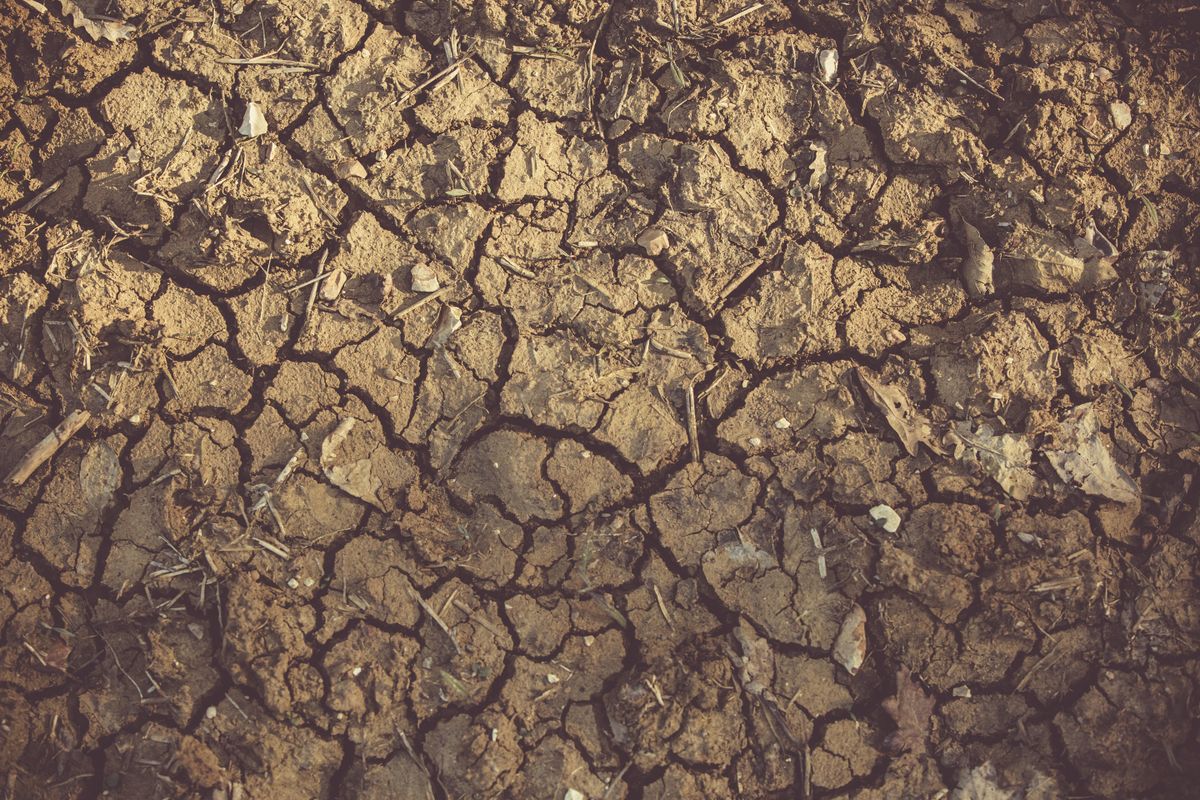
Well water chemistry changes because a well draws from moving groundwater, not a sealed tank. Recharge and drawdown shift hardness, iron and pH through the year. Drought, heavy pumping, nearby drilling, a cracked casing or new land use can change them for good. A softener or filter set from a test taken years ago may no longer match the water, and the fix is to retest when something changes.
This page covers why the numbers move and when to retest. How to take a hardness sample that reflects your well is covered in how to test hardness in private well water.
An Illustrative Year: Hardness, Iron and pH Against Rainfall
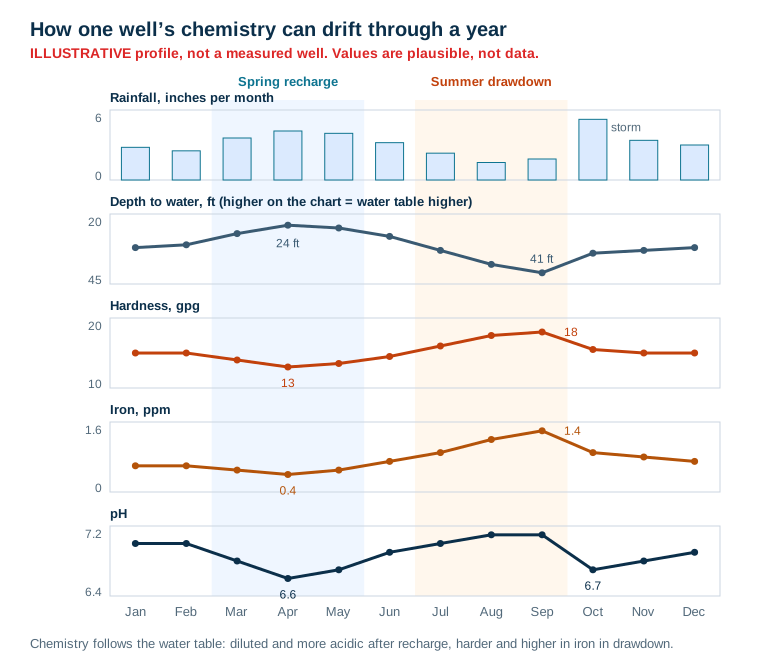
This chart is illustrative, not a measured well. It shows a typical pattern for a moderately shallow well in a region with wet springs and dry late summers. The numbers are plausible for such a well and consistent with the mechanisms described below, but no specific well produced them. Your well's pattern could be smaller, larger or reversed.
The pattern:
- Spring recharge (March to May). Rain and snowmelt raise the water table, from 32 ft below the surface to 24 ft on this chart. Hardness falls from 15 to 13 gpg, because more of the water is recent recharge that has spent little time in contact with rock. The pH dips from 7.0 to 6.6. Recharge water carries carbon dioxide from the soil.
- Summer drawdown (July to September). Rain eases, household and irrigation use rises, and the water level falls to 41 ft. Hardness climbs to 18 gpg and iron from 0.4 to 1.4 ppm. The pump is drawing more of the older, more mineralized water.
- Autumn storm (October). A single heavy month raises the level and dilutes the water again, and pH drops briefly.
What that drift does to a softener set in April. Suppose the valve was programmed from the April test: 13 gpg of hardness and 0.4 ppm of iron. With a common allowance of 4 gpg per ppm of iron, that is a compensated hardness of about 14.6 gpg. By September the same arithmetic gives 18 + (4 × 1.4) = 23.6 gpg, about 60% more load than the valve expects. The softener regenerates on schedule and still lets hardness through for the last part of each cycle. How iron changes that calculation is covered in how iron changes water softener sizing.
A system that "worked for years and suddenly didn't" may still be working correctly. The water it was set for has changed.
Wet Seasons and Heavy Rain
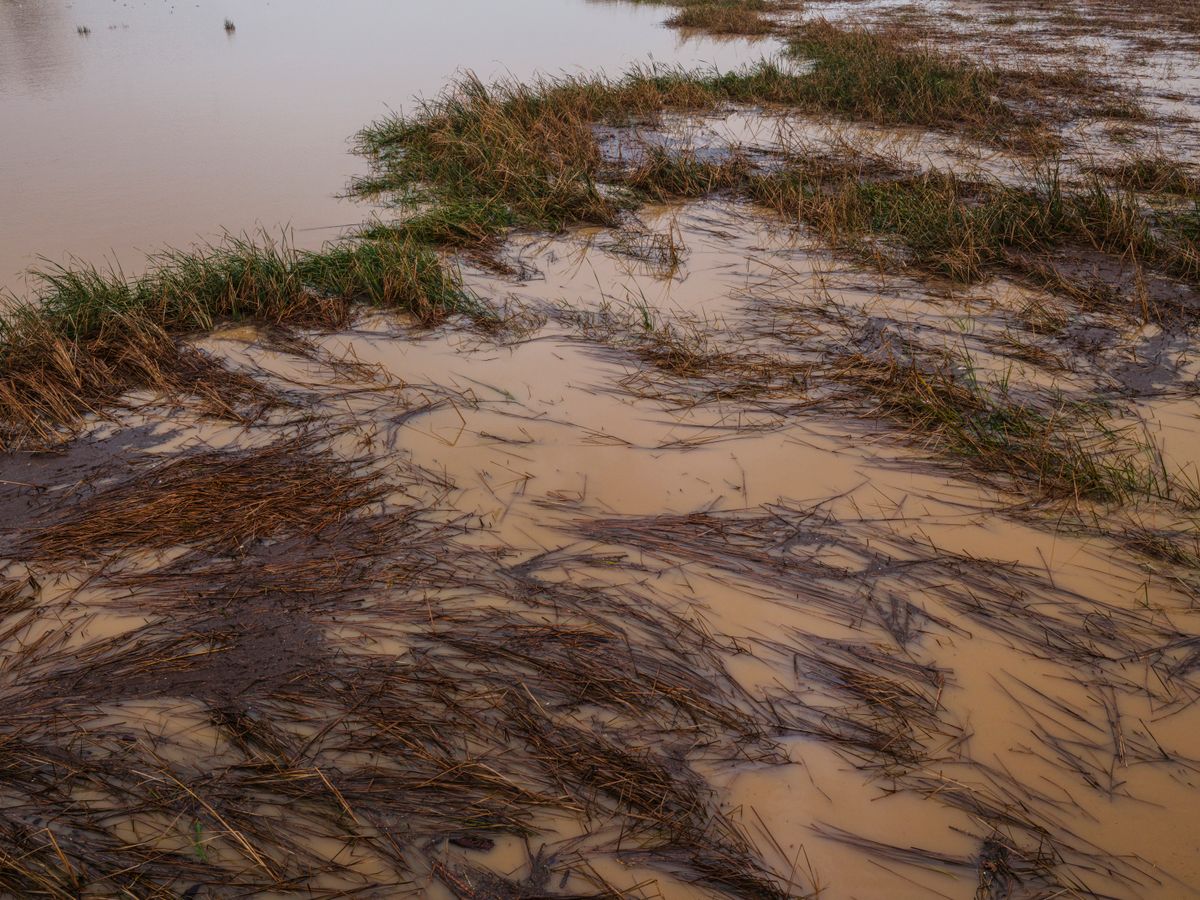
Recharge is the main reason for seasonal variation. A wet period does four things to a well:
- It dilutes. New recharge has had less time to dissolve minerals, so hardness and total dissolved solids usually fall.
- It lowers pH. Water that has passed through soil picks up carbon dioxide. On a well with little buffering, that can push pH down far enough to start dissolving copper. The consequences are covered in why low-pH well water needs separate treatment.
- It raises the water table into different zones. Rock that was dry in summer is wet again, and iron and manganese from those layers can dissolve into the well water.
- It can bring the surface down with it. A shallow well, a loose cap or a cracked casing gives surface water a short path down. The signs are cloudiness, sediment or an earthy smell after heavy rain. What arrives with it is the bigger concern: bacteria and, in farm country, nitrate.
Flooding is the extreme case. CDC lists flooding near the well as a reason to test. Treat a well that was under floodwater as contaminated until a bacteria test says otherwise.
Drought and Heavy Pumping
The reverse of recharge is drawdown. As the water table falls, the well draws water from farther away and often from deeper. That water has had longer to dissolve minerals, so hardness and dissolved metals tend to rise.
Drought. The USGS modeled what drought does to arsenic risk in private wells and published the results in a 2021 study. Under drought conditions, the estimated number of people exposed to elevated arsenic from domestic wells in the lower 48 states rose from about 2.7 million to 4.1 million. The probability of high arsenic increased with the length of the drought. Arsenic is not something a softener treats, and it has no taste, smell or color. A drought is a reason to test for it even if the well has never shown it.
Seasonal pumping. A USGS study of public-supply wells in Modesto, California and Albuquerque, New Mexico found that some wells showed seasonal variation in contaminant concentrations linked to heavier summer pumping. Those were municipal wells pumping far more than a house does. The mechanism still applies to a private well. Pumping harder pulls water from a wider area, and the mix of water reaching the pump changes.
In a household, the heavy-pumping season usually coincides with lawn irrigation, garden watering and pool filling. That is also when a softener has the most water to treat.
Changes Around and Inside the Well
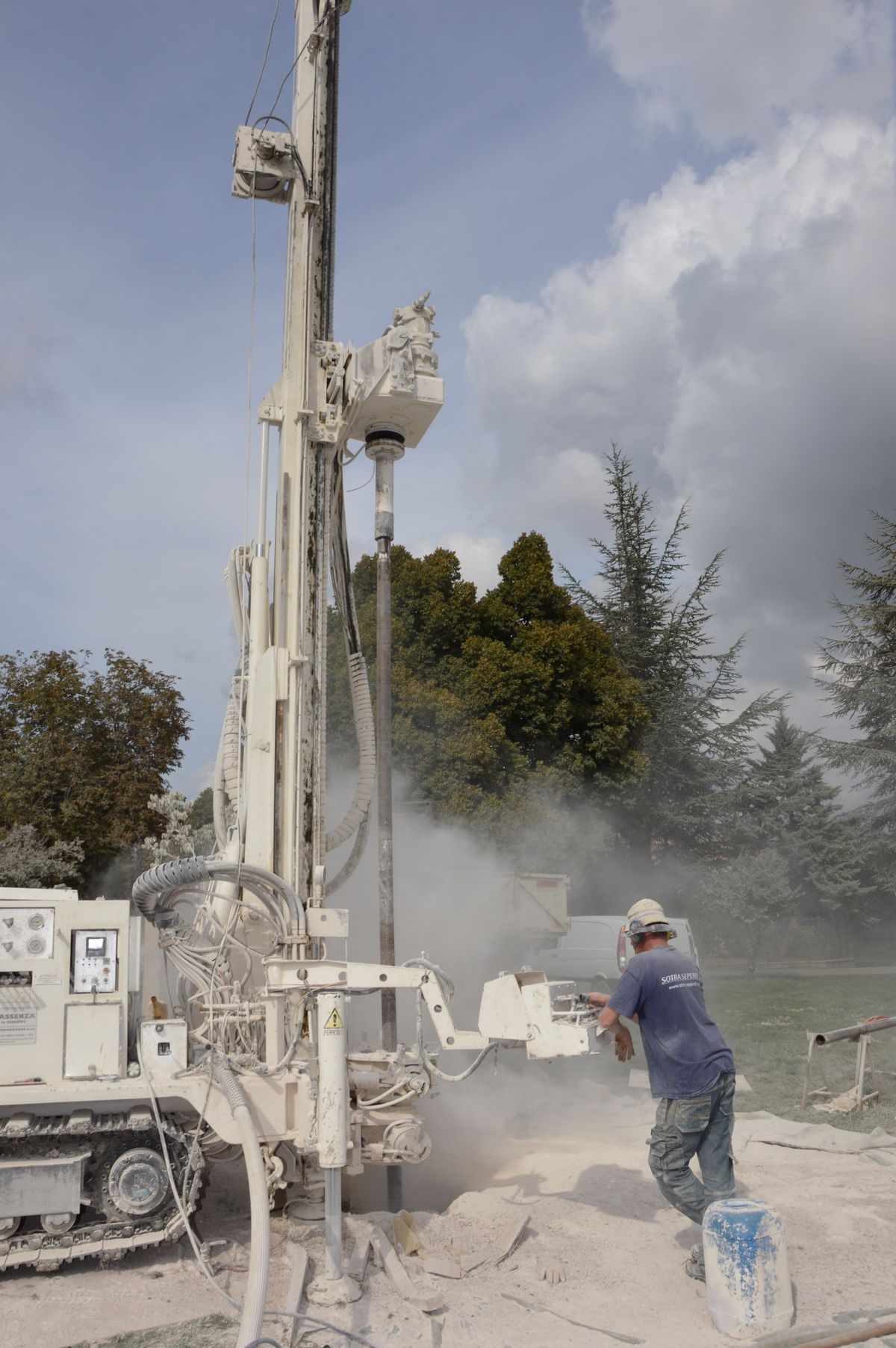
The causes in the two sections above come and go. These tend to leave the water permanently different.
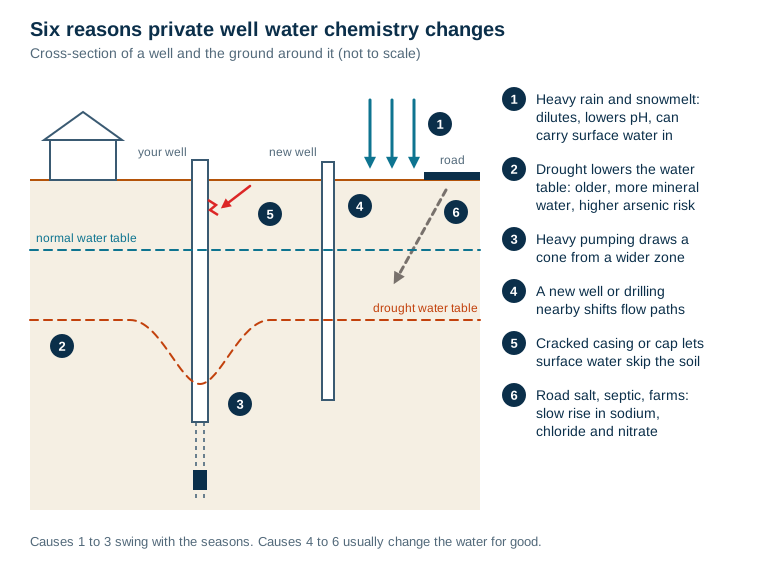
Nearby drilling, blasting and construction. A new well next door, road cuts, quarry blasting or large-scale excavation can change the flow paths that feed your well. The first sign is often sediment or cloudiness. Sometimes the water just tastes or stains differently. CDC lists "land disturbances" near the well as a reason to test.
A failing casing, cap or grout seal. Steel casing corrodes, grout shrinks, and caps crack or get knocked by mowers. Each gives shallow groundwater or surface water a route into the well that bypasses the soil's filtering. The typical signature is a well that was stable for years and now changes after every heavy rain.
Well work. A replacement pump set at a different depth, a deepened well, hydrofracturing to increase yield, or a casing repair can each change which water reaches the pump. CDC recommends testing after you "replace or repair any part of your well system."
The well's own biology. Iron bacteria can colonize a well and its plumbing over time. They bring slime, odor and iron staining that was not in the original test. See iron bacteria in well water.
Land use around the well. Road salt raises sodium and chloride over years of winters. A new septic field, livestock area or fertilized field upslope can raise nitrate and bacteria. These changes are slow, so you usually find them on a lab report, not by taste.
How Well Water Chemistry Changes Show Up in Your Equipment
Treatment equipment often shows a change before you notice anything in the water. Match what you see to the likely cause, then test:
| What you notice | Likely change in the water | Test for |
|---|---|---|
| Hardness at the tap before the softener is due to regenerate | Hardness or iron up | Hardness and iron, compared with the valve setting. See why hardness returns before the next regeneration |
| Orange or brown staining returns after years without it | Iron up, or iron now arriving oxidized | Dissolved and total iron, pH |
| Black specks or streaks appear | Manganese up | Manganese |
| Blue-green staining or a first-draw metallic taste | pH down | pH, alkalinity, first-draw copper and lead |
| Cloudy or muddy water after rain | Surface water reaching the well | Coliform bacteria and turbidity; wellhead inspection |
| New rotten-egg smell | Sulfide or sulfate-reducing bacteria | Hydrogen sulfide |
| Salty taste in winter or spring | Road salt | Sodium and chloride |
| Iron filter backwashing dirty but staining still getting through | Iron above the filter's rating | Total iron, manganese, pH |
Rule out the equipment itself before you blame the water. An injector that no longer draws brine or resin fouled by iron can produce the same symptoms. How to check if your water softener is working separates the two.
Retest Triggers: Events, Not Just the Calendar
A fixed annual test is the minimum. CDC recommends testing every year for total coliform bacteria, nitrates, total dissolved solids and pH. An annual test cannot catch a change that happens the month after it. These events should prompt a new panel whenever they happen:
| Trigger | Why | What to add to the panel |
|---|---|---|
| Flooding at or near the wellhead | Surface water may have entered the well (CDC) | Coliform bacteria, nitrate, turbidity |
| Cloudy, muddy or discolored water after heavy rain | Possible casing, cap or seal failure | Coliform bacteria, turbidity, then a wellhead inspection |
| Drought, or a noticeably lower water level | Drawdown changes the water the pump draws (USGS) | Hardness, iron, manganese, arsenic |
| Nearby drilling, blasting, excavation or a new well | Land disturbance near the well (CDC) | Full panel including bacteria |
| Any well repair or replacement: pump, casing, cap, depth | Repairs can change the source and introduce bacteria (CDC) | Bacteria, plus hardness, iron and pH |
| New taste, color or smell | The water has changed (CDC) | Match the panel to the symptom table above |
| Treatment equipment starts underperforming | The water may have outgrown the settings | Hardness, iron, manganese, pH |
| Shock chlorination of the well | The chemistry after disinfection may differ | Bacteria after flushing, then iron and pH. See shock chlorination and a water softener |
| Pregnancy or an infant in the house | CDC recommends testing | Nitrate, bacteria, lead |
| New land use nearby: septic, livestock, road salting | Slow-building contamination | Nitrate, bacteria, sodium, chloride |
For a well that feeds a softener or iron filter, add hardness, iron and manganese to the annual test. Those are the numbers the equipment is programmed with, and checking them every year catches slow drift. What a full well panel should include is covered in test iron and manganese before sizing a softener.
What to Do When the Numbers Have Moved
If hardness or iron is up modestly, reprogram the softener's hardness setting to the new compensated figure. That is often the whole fix. Use the higher of your recent readings if the well swings with the seasons.
If the new numbers exceed a rating, reprogramming is not enough. Examples are iron above what the softener is rated to handle, or pH below what an iron filter's media tolerates. That usually means adding a stage, and the order matters. See well water treatment train order. If the new numbers call for rebuilding the whole train, complete systems for the most common well water profiles shows what a matched set costs.
If bacteria or surface water are involved, find and fix the well defect before changing any treatment. Disinfection added downstream of a cracked casing treats the symptom and leaves the well open to contamination.
If the change is seasonal, set the equipment for the worst season, not the best. A softener set for September hardness costs a little more salt in April. One set for April lets hardness through in September.
What One Retest Cannot Tell You
One sample is a snapshot of one day. It cannot tell you whether a change is seasonal or permanent. It also says nothing about the months you did not sample, and it is only as good as the sampling. A hardness sample drawn after the softener, or an iron sample left standing, gives a wrong number no matter what the well is doing.
Two samples in opposite seasons, taken the same way, tell you far more than one. If a trigger event happens, test soon after it and again a few months later. The second result shows whether the well has returned to normal or settled at a new level.
Well water chemistry changes are normal for a private well. Test after the events that change it, compare the results with the settings on your equipment, and adjust the equipment when the numbers move.
Frequently Asked Questions
Can well water quality change over time?
Yes. Private well water changes with the seasons as recharge and drawdown shift which water the pump draws. It can also change permanently after drought, heavy pumping, nearby drilling or construction, damage to the well casing, or changes in land use such as road salting or a new septic field. Hardness, iron, pH, bacteria and even arsenic can all move.
Why did my water softener suddenly stop working on well water?
If the softener is regenerating and using salt but hard water is coming through before the next regeneration, the water may have become harder or picked up more iron than the unit was set for. Test hardness and iron again and compare them with the numbers programmed into the valve. Also check the softener itself, because a clogged injector, fouled resin or empty brine tank produces the same symptom.
Does drought affect well water quality?
It can. As the water table falls, a well can draw water that has spent longer in contact with rock or come from a different zone, which often changes hardness and dissolved metals. A USGS study estimated that the number of people exposed to elevated arsenic from private domestic wells in the lower 48 states could rise from about 2.7 million to 4.1 million during drought.
How often should well water be tested?
CDC recommends testing at least once a year for total coliform bacteria, nitrates, total dissolved solids and pH. It also recommends testing after flooding, land disturbance nearby, any repair or replacement of part of the well system, or a change in taste, color or smell. If you run a softener or iron filter, add hardness and iron to the annual test so you can check the equipment settings.
Can heavy rain change well water?
Yes, especially in shallow wells and wells with damaged casings or caps. Heavy rain and snowmelt can carry surface water, bacteria and sediment into the well and dilute the mineral content. Cloudy or muddy water after rain is a reason to test for bacteria and have the wellhead inspected, not just to change a filter.
Can a neighbor's new well affect my water?
It can. A new well or heavy pumping nearby can lower the local water table and change the flow paths feeding your well. That can shift the mineral content, stir up sediment or change how much water you have. CDC lists land disturbances near your well as a reason to test.
