
Can Scale Buildup Reduce Household Water Pressure?
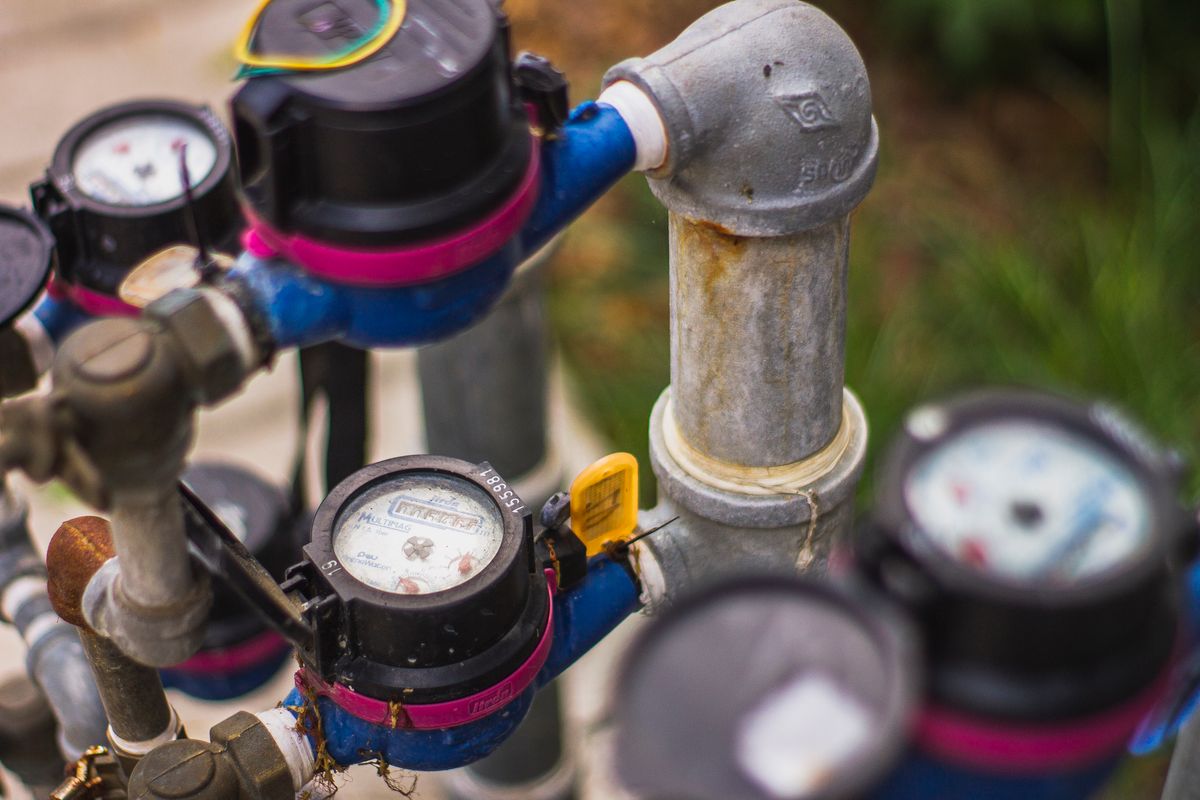
Scale reducing water pressure is real, but it is a slow process measured in years, and it restricts flow rather than pressure. That distinction is what makes the problem diagnosable. A pressure gauge on an outside hose bib, read twice — once with everything off and once with water running — separates mineral buildup from every other cause of weak water in about ten minutes.
The most useful thing to know before you start: if the change was sudden, it is not scale. Scale does not narrow a pipe over a weekend.
Pressure and Flow Are Not the Same Thing
Almost every confused low-pressure diagnosis starts here, so it is worth thirty seconds.
Pressure is the force pushing water through the system, measured in psi. It is set by your utility or by your well pump, and it exists whether water is moving or not.
Flow is the volume actually arriving, measured in gallons per minute. It depends on pressure, on pipe diameter, and on every restriction between the main and the fixture.
Scale does not reduce the pressure in your system. It reduces the bore of the pipe, and a narrower pipe delivers less volume at the same pressure. What you experience in the shower is lost flow, and your brain interprets that as lost pressure because they feel identical.
Why this matters practically: scale shows up on the second gauge reading, not the first. With nothing running, water is static, no friction losses apply, and a badly scaled pipe reads almost the same as a clean one. Open a tap and the scaled pipe's reading collapses while the clean one barely moves. Anyone who takes only a static reading, sees 55 psi, and concludes the system is fine has missed the entire signature of a restriction.
The Two-Gauge Test
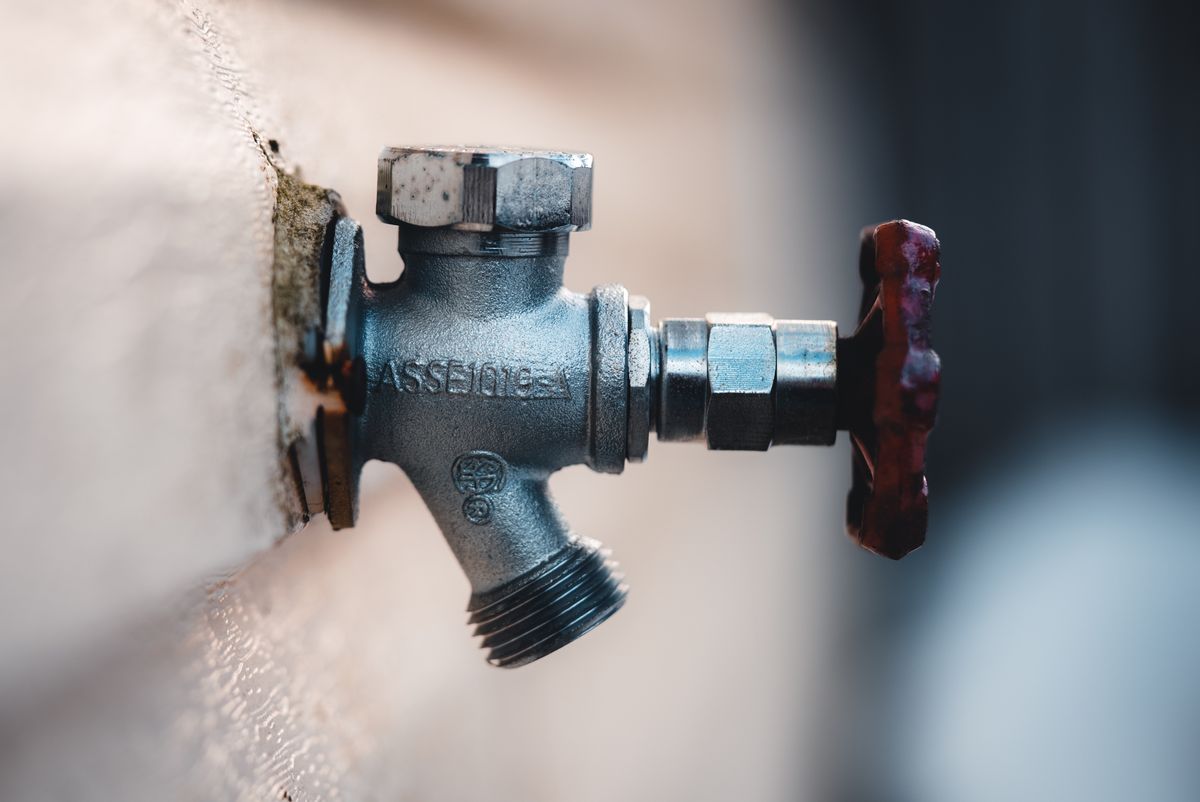
You need a screw-on water pressure gauge — the kind sold for hose bibs, costing a few dollars. Every hardware store has them.
Reading one — static pressure.
- Turn off every water-using fixture and appliance in the house. Dishwasher, washing machine, ice maker, irrigation.
- Screw the gauge onto an outside hose bib, preferably the one closest to where the supply enters the house.
- Open the bib fully and let the needle settle for 10 seconds.
- Record the number.
Reading two — flowing pressure.
- Leave the gauge on the bib, still open.
- Have someone open the cold side of a bathtub spout fully — a tub, not a sink, because it has the least restrictive outlet in the house.
- Read the gauge again while that water runs.
- Record the drop.
| Static | Drop when flowing | Most likely cause |
|---|---|---|
| 40–60 psi | Drops 5–10 psi | Normal. Your plumbing is fine; the complaint is at a fixture |
| 40–60 psi | Drops 20+ psi | A restriction between the main and the house — scale, a part-closed valve, or undersized supply |
| Under 30 psi | Drops little | Supply-side pressure problem. Utility issue, failed PRV, or well pump settings |
| Over 80 psi | Any | Pressure is too high, not too low. Fit or service a pressure-reducing valve |
| 40–60 psi | Drops 20+ psi only when hot runs | Water heater or hot-side restriction |
The second row is where scale lives. A large static-to-flowing gap is the fingerprint of a narrowed pathway, because friction losses only appear when water moves.
Before concluding it is scale, check the two cheap explanations for the same reading: the main shut-off valve or the meter valve part-closed (very common after any plumbing work), and a pressure-reducing valve failing gradually. Both mimic a restriction exactly and both cost far less to fix.
Fixture-by-Fixture Isolation
The gauge tells you whether the whole house is restricted. This table tells you where.
| Pattern | What it points at | First thing to check |
|---|---|---|
| Every fixture weak, hot and cold | Main supply, meter valve, PRV, or the service line | Gauge test above; then the main valve position |
| One fixture weak, everything else fine | That fixture | Aerator, cartridge, or its own supply stop |
| All hot weak, all cold strong | Water heater | Outlet nipple, sediment, tankless heat exchanger |
| Upstairs weak, downstairs fine | Marginal pressure plus elevation | Static reading — every floor costs about 0.43 psi per foot |
| Weak only when another fixture runs | Undersized pipe or a shared restriction | Pipe sizing on that branch |
| Got worse gradually over 10+ years | Genuine scale or galvanized corrosion | Age and material of the supply piping |
| Got worse within weeks | Not scale | Valve, cartridge, PRV, or utility-side work |
That last pair is the whole diagnostic in two rows. Scale is a decade-scale process; if your pressure changed this season, look for something that also changed this season.
Two fixture-level checks are worth doing before anything expensive, because they resolve a large share of complaints outright. Unscrew and clean the aerator on any weak faucet — a blocked aerator screen is the first thing a plumber checks and often the last. And on a weak shower, remove the head and measure the bare arm, which takes the head out of the equation entirely.
Scale Reducing Water Pressure: What Happens Inside the Pipe
Scale reducing water pressure begins with calcium carbonate depositing on the inside wall of a pipe wherever water is heated, agitated, or left standing. Three properties of that process govern the timeline.
It is temperature-driven. Calcium carbonate is unusual in becoming less soluble as water gets hotter. That is why hot lines, water heaters and heat exchangers scale several times faster than cold lines carrying the same water, and why a house can have a clear cold supply and a badly restricted hot one.
It compounds. A rough scaled surface nucleates further deposition more readily than smooth copper, so the rate accelerates as the layer thickens.
Geometry punishes it. Flow through a pipe falls off far faster than the diameter does, so a deposit that removes a quarter of the cross-section costs considerably more than a quarter of the delivered volume. Small-bore lines — half-inch branch runs, and especially the three-eighths supply stops under sinks — feel it long before the main does.
Even so, the honest timescale in a residential system with water above 15 grains per gallon is years to decades on cold lines. Anyone quoting you dramatic figures over short periods is describing industrial boiler conditions, not house plumbing.
One important confusion to clear up: in older houses, most severe supply restriction is not scale at all. It is corrosion inside galvanized steel pipe, which builds a thick internal rust layer, and it happens regardless of water hardness. The two look similar on a gauge, but they have different causes and the same remedy. If your house still has galvanized service piping, it is worth reading the EPA's Lead and Copper Rule material before planning any replacement, because galvanized lines that were ever downstream of a lead service line carry their own separate replacement requirements.
The Honest Limit: A Softener Will Not Give You Pressure Back
This is the part that gets left out of most articles on the subject, and it is the part you most need.
A water softener works by ion exchange, swapping calcium and magnesium for sodium before the water enters your plumbing. The EPA's description of the process makes the boundary clear: it changes the water going in. It has no effect on deposits already bonded to the inside of a pipe.
There is no safe domestic method of dissolving established scale out of a supply line either. Acid strong enough to remove it attacks solder joints, brass fittings, and galvanized pipe walls that corrosion has already thinned. Products marketed for descaling household plumbing are working on the appliance end — kettles, heat exchangers, water heaters — where the deposit is accessible and the vessel is designed for it.
So the accurate statement is:
- Scale that has narrowed a pipe is permanent until that pipe is replaced.
- A softener stops the loss getting worse, which is a genuine reason to install one if you are staying in the house.
- If a run of galvanized pipe is the restriction, the fix is repiping that run, and no water treatment substitutes for it.
Telling someone their pressure will come back after softening is the most common bad advice in this niche. It is also easy to disprove — the gauge readings do not change after installation, because the pipe is the same pipe.
Where a softener does deliver measurable improvement is in the appliances downstream: the water heater, the dishwasher, the washing machine, and the small-bore fixture parts that you can actually clean or replace. That is a real return, and it is worth checking whether your hardness number justifies it on those grounds rather than on a pressure promise. It is also worth ruling out the household problems that get blamed on hard water and are not before you commit to anything.
What to Do Next
- Buy a hose bib pressure gauge and take both readings — static with everything off, then flowing with a tub running. Write down both numbers.
- Check the main and meter valves are fully open before believing any restriction diagnosis. This is free and it resolves more cases than it should.
- Use the isolation table to work out whether the problem is whole-house, hot-side, or one fixture. Clean the aerator and the showerhead first; those cost nothing.
- Date the change honestly. Sudden means a valve, a cartridge, or the utility. Gradual over ten years or more in an old house means the pipe itself, and that is a plumbing decision rather than a water treatment one.
Frequently Asked Questions
How much can scale actually reduce water pressure?
Scale reduces flow rather than pressure, and the distinction matters because it changes the diagnosis. An eighth of an inch of deposit around the wall of a half-inch pipe removes roughly a quarter to a third of the cross-sectional area, and because flow through a pipe falls much faster than diameter does, the effect on delivered volume is larger than that fraction suggests. What you feel in the shower is lost flow. A gauge at the hose bib with nothing running will still show close to full pressure.
How long does scale take to restrict a pipe?
Years to decades, not months. In water above 15 grains per gallon a half-inch copper line can lose a meaningful fraction of its bore in five to ten years, and hot water lines scale several times faster than cold because calcium carbonate becomes less soluble as temperature rises. This timescale is the single most useful diagnostic fact in the article: if your pressure changed noticeably within the last few weeks or months, scale is not what changed.
Will a water softener restore water pressure I have already lost?
No. A softener prevents further deposition; it does not dissolve what is already inside the pipe. Nothing you can safely put through domestic plumbing removes established scale from a supply line. If a pipe run is genuinely restricted, the remedy is replacing that run. Installing a softener is still worth doing to stop the loss continuing, but anyone who tells you it will bring pressure back is selling rather than diagnosing.
What is normal household water pressure?
Most residential systems sit between 40 and 60 psi static, with 30 to 80 psi generally considered acceptable. Below 40 psi, fixtures start to feel weak; above 80 psi, you risk damage to appliances and valves, and many jurisdictions require a pressure-reducing valve above that point. Measure with an inexpensive gauge screwed onto an outside hose bib with every fixture in the house shut off — that is your static pressure.
Why does only my hot water have low pressure?
That pattern points at the water heater or the hot side specifically, and it is the most common genuinely scale-related pressure complaint. Hot water lines scale faster, the heater's outlet nipple is a frequent restriction point, and on a tankless unit the heat exchanger's narrow passages block long before any pipe does. Sediment in a storage tank can also partially block the outlet. If cold is strong at the same fixture and hot is weak, stop looking at the supply and start at the heater.