
Why Is Well Water Often Hard?
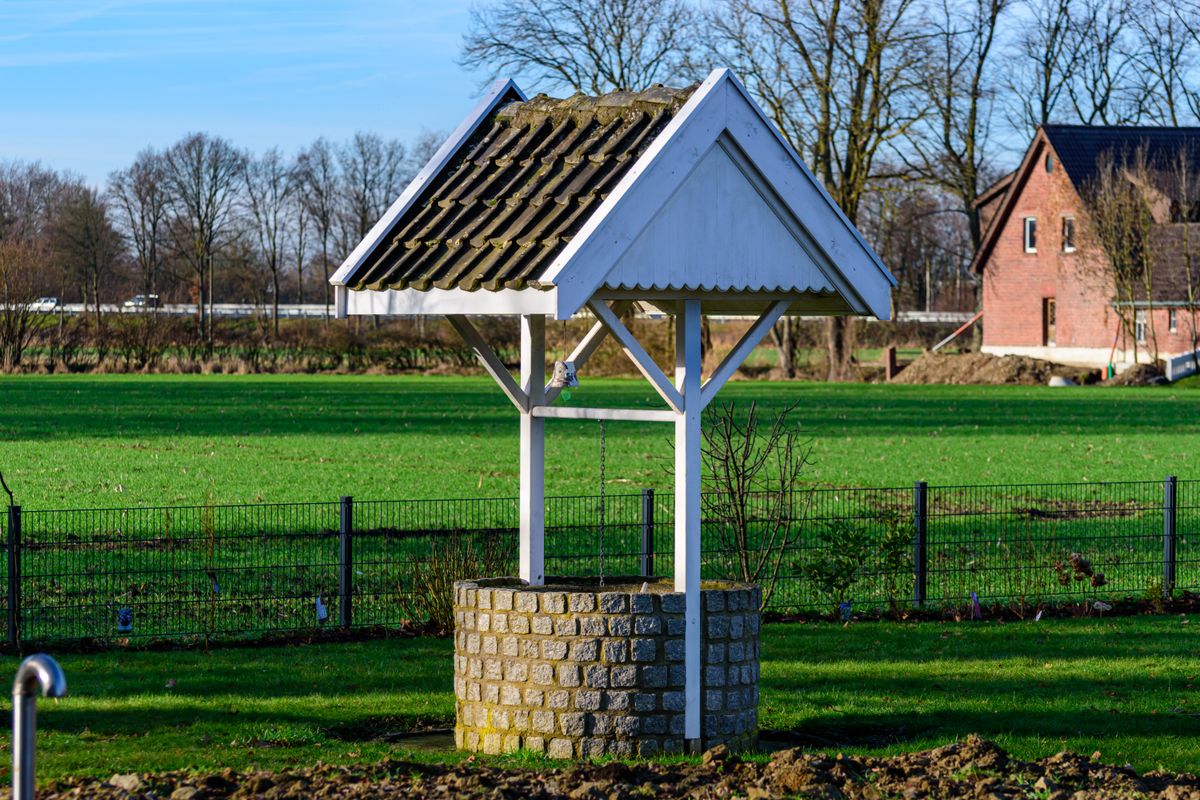
Why is well water hard? Because groundwater is rain that has turned slightly acidic in the soil and then spent years — sometimes centuries — dissolving the rock around it. Where that rock is limestone or dolomite, it picks up enough calcium and magnesium to be hard or very hard. Where the rock is granite or quartz sand, it usually doesn't.
That second sentence is the one most guides skip, and it's the one that matters for your treatment. The geology that sets your hardness also decides what else is in the water — and hardness rarely arrives alone.
The Chemistry: How Rain Becomes Hard Water
Pure rain is a poor solvent for rock. What changes it is the soil.
As rain falls it picks up a little carbon dioxide from the air. It picks up much more as it percolates through soil, where roots and microbes respire and hold CO2 at concentrations many times higher than the atmosphere. The result is weak carbonic acid. The USGS description of the Floridan aquifer puts it plainly: rain takes on carbon dioxide from organic matter in soil, forming weak carbonic acid that dissolves the limestone and dolomite below — over geological time, enough to carve caves and sinkholes.
The reaction is simple:
CaCO₃ (calcite) + H₂O + CO₂ → Ca²⁺ + 2HCO₃⁻
Dolomite does the same thing with magnesium. The calcium and magnesium stay dissolved, and that is your hardness. The bicarbonate is why hard well water scales so readily when heated: warming drives the CO₂ back out and the reaction runs in reverse, dropping calcite onto your water heater element.
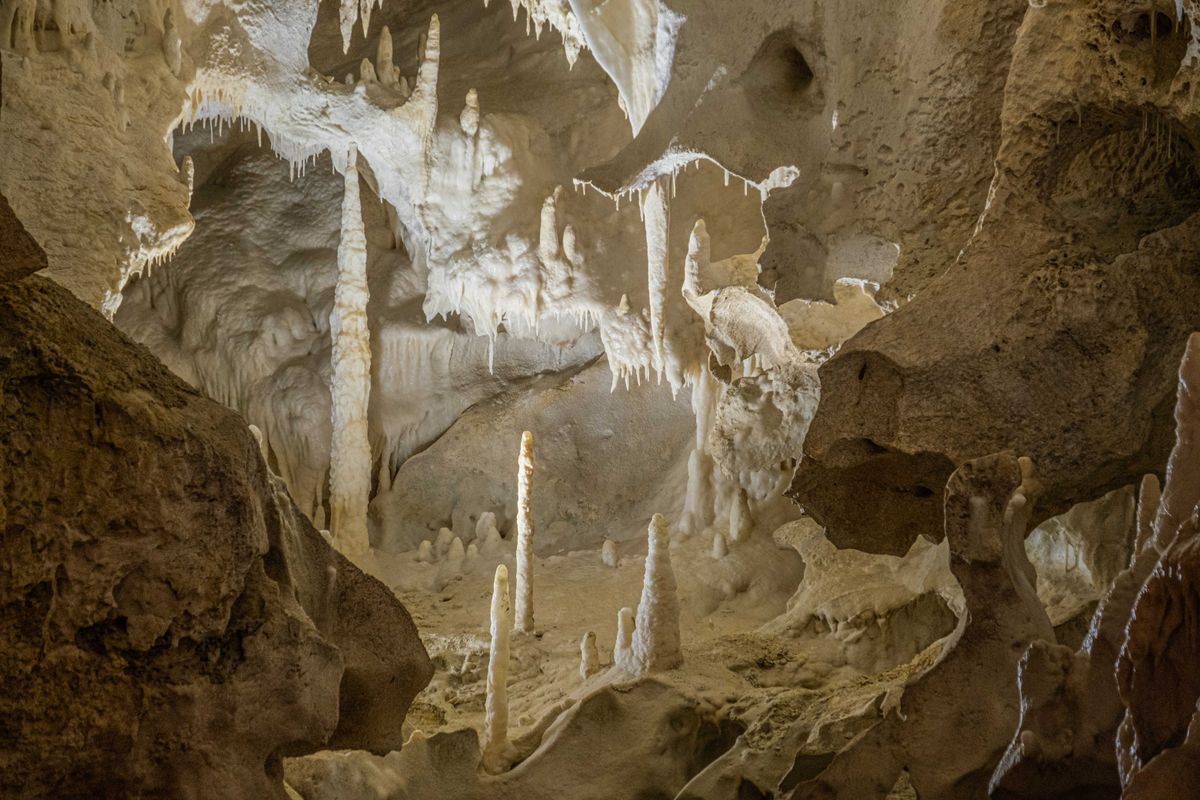
Three things set how far that reaction goes:
- The rock. No carbonate minerals, no significant hardness, however long the water sits.
- Residence time. Groundwater moves feet per day or less. Water that has been underground for decades has had time to approach saturation with calcite.
- The CO₂ supply. Water that stays sealed off below the soil can only dissolve as much rock as its original charge of carbonic acid allows. More soil CO₂ means more dissolving power.
Why city water is often softer
Many municipal systems draw from rivers and reservoirs. Surface runoff reaches a stream in hours or days, never picks up the soil's CO₂ load in the same way, and spends that time in contact with the atmosphere rather than rock. Some utilities in hard-water regions also soften at the plant. A city pumping from the same carbonate aquifer as the farms around it gets the same hard water unless it treats it — the difference is the source, not the pipe.
Why "deeper is harder" is only half true
Deeper water is usually older, so it has had more time to dissolve minerals. But in some sedimentary aquifers, deep water passes through clays that exchange calcium for sodium — a natural softening process — and arrives soft, sodium-rich and high in bicarbonate. A neighbour's well 200 feet deeper can test harder or softer than yours. Depth is a clue, not an answer.
Why Is Well Water Hard in Some Regions and Soft in Others?
This is the table the plan for your treatment should start from. Ranges are generalised from USGS regional aquifer studies and hardness mapping; individual wells within the same region can differ by a factor of ten, so treat it as a prediction to confirm, not a result.
| Aquifer type | Where it dominates | Typical hardness | What usually rides along |
|---|---|---|---|
| Carbonate rock (limestone, dolomite) | Floridan (FL, south GA), Edwards (central TX), Ozarks, much of IN, OH, KY, TN, WI, IA | Hard to very hard: roughly 10–25 gpg (170–430 mg/L) | Hydrogen sulfide in deeper and confined zones; sulfate where gypsum is present; high alkalinity |
| Glacial deposits (sand, gravel, till) | Upper Midwest, Great Lakes states, northern Plains, parts of NY and New England | Moderately hard to very hard where the drift carries ground-up limestone: roughly 7–20+ gpg | Iron and manganese — very common; arsenic in pockets |
| Basin-fill (alluvial valley sediments) | Arizona, New Mexico, Nevada, inland California, west Texas | Hard to extremely hard: often 15–30+ gpg | High total dissolved solids, sulfate; arsenic and fluoride in parts of the region |
| Crystalline bedrock (granite, schist, gneiss) | New England, the Piedmont from Virginia to Georgia, the Adirondacks | Soft to moderately hard: roughly 1–7 gpg | Low pH, iron, manganese, radon, arsenic and uranium |
| Coastal plain sands | Atlantic and Gulf coasts from New Jersey to Texas | Usually soft: under 3.5 gpg, except where the sands contain shell or limestone layers | Low pH, iron, tannins in shallow wells near wetlands, hydrogen sulfide in some deep wells |
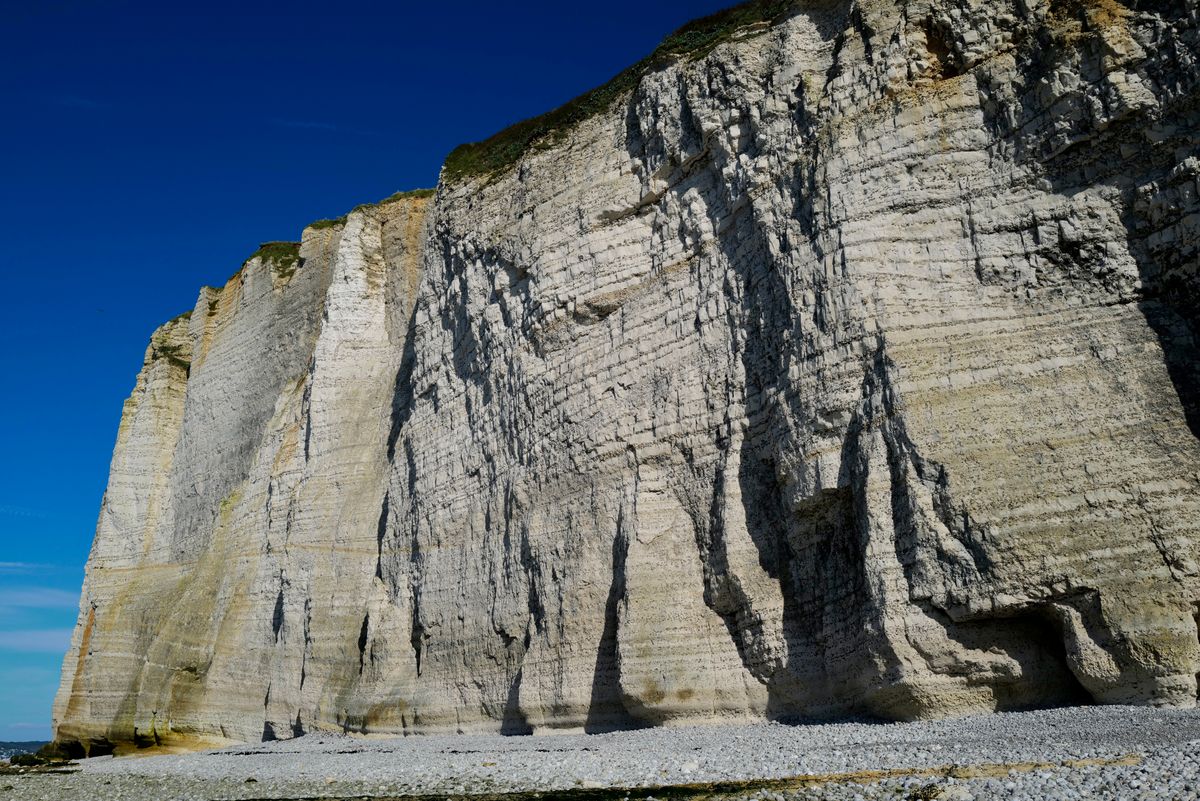
The USGS national assessments put numbers on the right-hand column:
- Glacial aquifer system — 25 states, used by tens of millions of people. The USGS 2017 fact sheet found manganese high relative to its secondary standard in about 50% of the study area and iron high in about 47%. If you're on a glacial well, assume iron and manganese until a test says otherwise.
- Southeastern Coastal Plain — pH was below 6.5, acidic and potentially corrosive, in about 37% of the study area (USGS Fact Sheet 2016-3076). In the Gulf Coast's Coastal Lowlands system, pH missed the 6.5–8.5 range in about 27%, typically on the low side.
- New England crystalline rock — the USGS study of bedrock wells in New England, New York and New Jersey found arsenic at or above the 10 µg/L federal limit in 13.3% of 2,054 wells, and radon at or above 4,000 pCi/L in 33% of 943 wells. The same geology that keeps the water soft is what puts those elements in it.
A Soft Well Is Not a Clean Well
Owners on granite and coastal sands often test their hardness, see a low number, and conclude the water is fine. That is exactly the wrong inference.
Soft groundwater is soft because it moved through rock with nothing to neutralise its carbonic acid. That same unbuffered water is the reason it tends to be acidic — and acidic water dissolves copper and lead from plumbing, which is where blue-green stains in the tub and pinhole leaks in copper lines come from. Low hardness on a crystalline or coastal well is a flag to check pH, not a reason to stop testing.
It is also worth knowing that many "hard water" complaints on wells aren't hardness at all. Orange staining is iron, black specks are manganese, a rotten-egg smell is hydrogen sulfide, and tea-coloured water is usually tannins. None of them show up on a hardness strip, and a softener fixes only some of them.
Why Testing Only for Hardness Sizes the Wrong System
A hardness number on its own will give you a softener sized for water you don't have. Three reasons.
Iron eats capacity. Dissolved (ferrous) iron is removed by softener resin, but it occupies exchange sites the same way calcium does — so a common dealer sizing convention adds about 3–5 grains of "compensated hardness" for every 1 mg/L of iron. A well at 12 gpg with 2 mg/L of iron is sized as roughly 20 gpg. Oxidised iron is worse: Penn State Extension's softening guidance notes that red, oxidised iron will clog the resin, and recommends filtering it out before the softener.
Low pH has to be fixed first. A softener doesn't raise pH, so acidic water leaves it just as corrosive as it went in. The usual fix is a neutralising filter, and the most common kind works by dissolving calcite — which adds hardness back by design. Put the neutraliser first, then size the softener for the hardness after neutralising, not before. Test only the raw water and the softener ends up too small.
Some things aren't a softener's job. Ion exchange swaps calcium and magnesium for sodium or potassium. It does not remove hydrogen sulfide odour, tannins (which need a different resin), arsenic, radon, nitrate or bacteria. On a well, a softener is often one stage in a treatment train rather than the whole answer.
What to Test on a Private Well
Nobody else is going to do this for you. The EPA is explicit that private well water quality is not federally regulated — over 43 million Americans rely on private wells, and every one of those owners is responsible for their own testing.
For sizing any treatment, test the raw water for:
- Hardness, in grains per gallon — a titration kit is accurate enough; the at-home methods are covered here.
- Iron, split into dissolved and total if the lab offers it.
- Manganese.
- pH.
- Total dissolved solids.
- Hydrogen sulfide — test at the wellhead or first draw, because it escapes from a sample quickly.
- Tannins, if the water has a yellow or tea tint.
Then add whatever your aquifer type in the table above points at: arsenic, radon and uranium on crystalline bedrock; arsenic and fluoride in the Southwest basins; plus bacteria and nitrate on every well. Several of those need a certified lab rather than a strip or kit — where a home test is enough and where it isn't matters most for exactly these parameters.
Bottom Line
So, why is well water hard? Because acidic groundwater dissolves carbonate rock, and it does it slowly, over the years it spends underground. The useful part is that the same geology predicts the rest of your water: carbonate and basin-fill wells run hard, glacial wells run hard with iron and manganese, and granite and coastal wells often run soft but acidic.
Find your aquifer type, test for everything it predicts, and only then decide whether your number is high enough to justify a softener — and what has to go in front of it.
Frequently Asked Questions
Is all well water hard?
No. Hardness depends on the rock the water moves through, not on the fact that it comes from a well. Wells in limestone and dolomite, or in glacial deposits full of carbonate rock, are usually hard to very hard. Wells in granite and other crystalline bedrock, or in the quartz sands of the Atlantic and Gulf coastal plains, are often soft — but soft well water frequently comes with low pH, iron or radon instead.
Is well water harder than city water?
Often, but not because of the well itself. Many city supplies draw from rivers and reservoirs, where water has spent days rather than years in contact with rock and has not picked up carbon dioxide from the soil. Some utilities also soften before distribution. Cities that pump from the same carbonate aquifer as their rural neighbours deliver water just as hard unless they treat it.
Does a deeper well mean harder water?
Not reliably. Deeper water has usually been underground longer, which gives it more time to dissolve minerals, but in some aquifers deep water passes through clays that swap calcium for sodium and comes out softer than shallow water. Depth changes the chemistry in both directions, so the only way to know is to test the well you actually have.
Can you put a water softener on well water?
Yes, and on hard well water it is common. The catch is sequencing. Oxidised iron fouls softener resin, acidic water needs neutralising first, and hydrogen sulfide, tannins, arsenic, radon and bacteria all need their own treatment because a softener removes none of them. Test the full panel before choosing a size or a configuration.
Why did my well water get harder?
The usual causes are a change in where the water comes from rather than a change in the rock. A drought or heavy pumping can lower the water table and draw from a deeper, more mineralised zone; a replacement pump set at a different depth can do the same. A neutralising filter that uses calcite also adds hardness by design. Retest to confirm the change before adjusting any equipment.