
What Causes a Hard Water Ring in the Toilet?
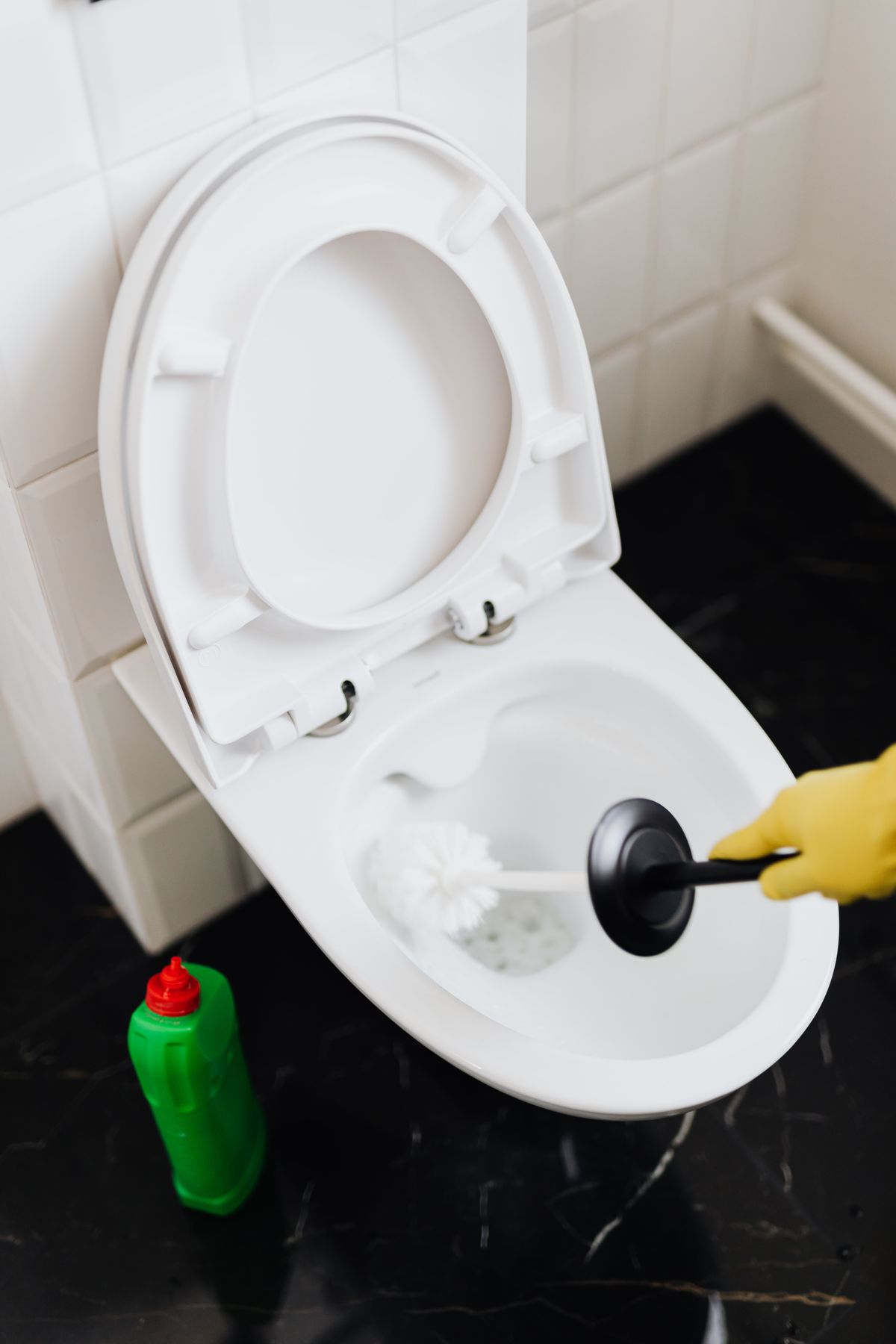
A hard water ring in the toilet is a mineral deposit that forms exactly where the water surface meets the porcelain, and its colour identifies which mineral you are dealing with. White or grey is calcium and magnesium. Orange or rust-brown is iron. Black or dark brown is manganese. Pink is not a mineral at all. Each one dissolves in different chemistry, which is why one cleaner works spectacularly on one household's ring and does nothing in the house next door.
Why a Hard Water Ring in the Toilet Sits at the Waterline
The ring is not random, and understanding the mechanism explains most of the removal advice that follows.
Standing water in a toilet bowl is in constant slow evaporation at its surface. As water molecules leave, the dissolved minerals they held do not — they stay behind and concentrate in a thin band right at the interface. That band is also where the water is most oxygenated, because it is in contact with air, so dissolved iron and manganese oxidise there and drop out of solution as coloured solids.
Two consequences follow directly:
- The waterline is a moving target. Every flush drops and refills the bowl, so the deposit builds across a band an inch or two wide rather than a single line. In a rarely used bathroom the level is more stable, and the ring is narrower and harder.
- The deposit is layered. A ring that has been there for years is not one substance. Calcium scale traps iron oxide, which traps more calcium. Removing it often takes two passes with different chemistry, and the second pass reveals a colour the first one hid.
There is a third factor people miss. Toilet bowls are vitreous china, which is glazed and non-porous when new, but decades of abrasive cleaning micro-scratch that glaze. Once scratched, the surface holds deposits mechanically as well as chemically, and the ring returns faster each time. This is the argument against reaching for scouring powder as a first move.
The Stain Colour Chart
Look at the ring in good light, ideally with the water lowered so you see it dry. Match the colour before you buy anything.
| Colour | What it is | Where it comes from | What removes it |
|---|---|---|---|
| Chalky white or grey | Calcium and magnesium carbonate | Dissolved hardness in the supply | Acid — white vinegar, citric acid, or a phosphoric acid bowl cleaner |
| Pink or salmon | Serratia marcescens, an airborne bacterium | Not the water. Thrives in low-chlorine, damp conditions | Bleach or a disinfecting cleaner. Acid does nothing |
| Orange to rust brown | Iron oxide | Iron in the supply, commonly well water | A reducing agent — oxalic acid or a rust remover. Bleach makes it worse |
| Dark brown to black, slick | Manganese oxide | Manganese in groundwater | Oxalic acid or a dedicated manganese remover |
| Black, fuzzy, above the waterline | Mould | Bathroom humidity | Bleach or a mould cleaner. Not a water problem |
| Blue-green streaks | Copper | Corrosive water attacking copper pipe | Investigate the water chemistry; the stain is a symptom of pipe corrosion |
Two of those rows are the ones most often misdiagnosed.
Pink is bacteria, not iron. Serratia marcescens is airborne and colonises damp surfaces with low disinfectant residue. Households on well water, or at the far end of a municipal distribution system where chlorine residual has decayed, see it most. No amount of water treatment for hardness touches it, and it returns within days if the bowl is not disinfected.
Iron and bleach are a bad combination. Chlorine bleach oxidises dissolved iron, which is exactly the wrong direction — it converts a soluble form into an insoluble stain and sets it into the glaze. If your ring is orange and you have been fighting it with bleach-based cleaners, you have been fixing it in place. Use a reducing agent instead.
The concentrations involved are small. The EPA's secondary drinking water standards set iron at 0.3 mg/L and manganese at 0.05 mg/L, and those limits exist specifically because staining begins around there — well below any level you would taste. Penn State Extension's guide to iron and manganese is the reference worth reading if you are on a private well, because the treatment order for those two minerals relative to a softener genuinely matters.
Matching the Cleaner to the Stain
Whatever the colour, one preparation step doubles the effectiveness of everything else: get the water out of the way.
- Turn off the supply valve behind the toilet.
- Flush once. The bowl empties and does not refill.
- Push the remaining water round the trap with a toilet brush, or sponge it out.
- Treat the exposed ring directly.
Applying cleaner to a full bowl dilutes it into two gallons of water. Applying it to a dry ring keeps it at full strength against the deposit. This one step is the difference between a product that "does not work" and the same product working in twenty minutes.
For white calcium rings: pour two cups of undiluted white vinegar over the ring, or make a paste of citric acid powder and a little water and press it on with a cloth. Leave for 30 minutes to overnight for a heavy ring. Scrub with a nylon brush, then restore the water and flush. A pumice stone finishes stubborn edges — keep both the stone and the porcelain wet throughout, and use light pressure.
For orange iron rings: use an oxalic acid product, sold as a rust stain remover, and follow the contact time on the label. Wear gloves; oxalic acid is a genuine skin irritant. Do not reach for bleach at any stage of this job.
For black manganese: oxalic acid again, usually with longer contact. Manganese deposits are slick and often smear rather than lift on the first pass, so expect two applications.
For pink bacteria: disinfect rather than descale. A bleach-based cleaner left for ten minutes, followed by a scrub under the rim where the colony seeds itself, then repeat weekly for a month. Cleaning only the visible ring leaves the source under the rim intact.
Never Mix Acid Cleaners With Bleach
This warning belongs in the middle of the article rather than the end, because the colour chart above sends different households towards acid and towards bleach, and some rings need both in sequence.
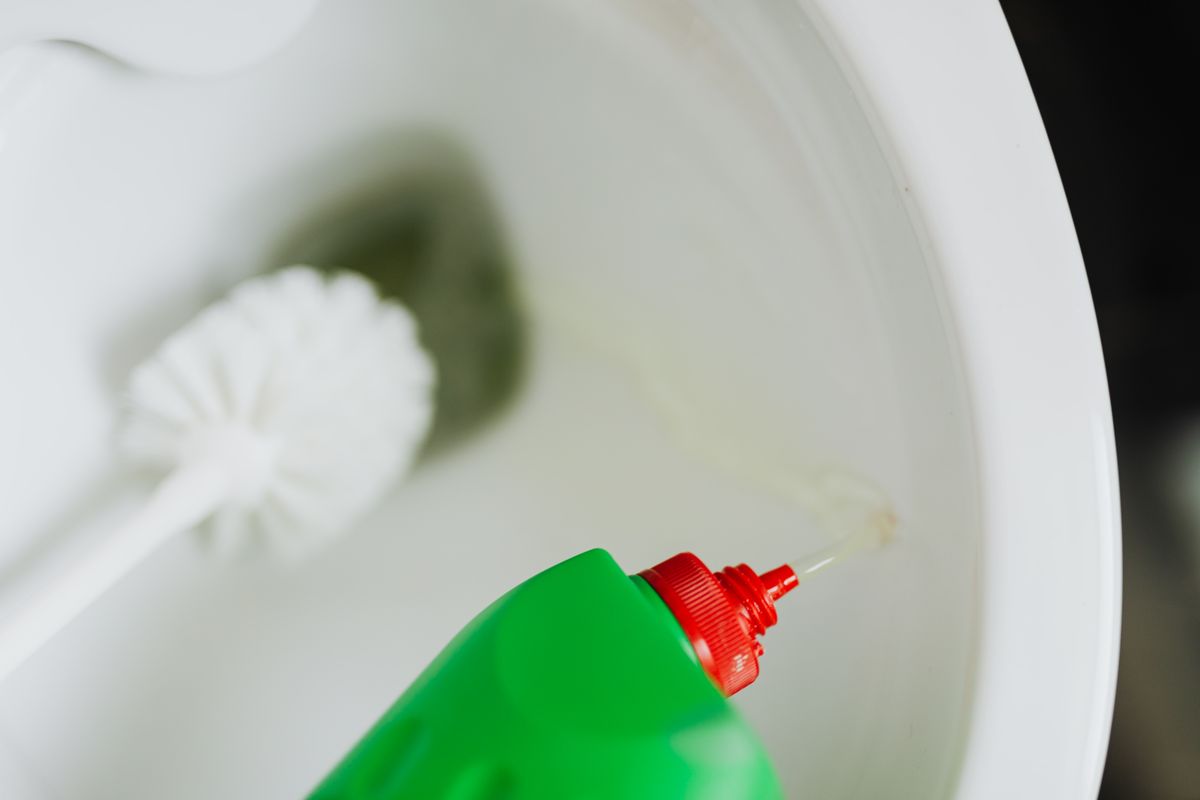
Mixing an acidic toilet bowl cleaner with a chlorine bleach product releases chlorine gas. In a small, poorly ventilated bathroom, at floor level, over a bowl you are leaning into, this is a serious exposure and it happens to people every year. The two categories are easy to confuse because both are sold as toilet cleaners in similar bottles.
If a ring genuinely needs both treatments — a mixed iron and bacterial stain, for instance — the safe sequence is:
- Apply the first product and give it its full contact time.
- Scrub, then flush at least twice.
- Refill and flush again, so no residue of the first product remains.
- Ventilate the room, then apply the second product.
Never layer one on top of the other, and never combine them in a bucket "to save time". The same applies to mixing bleach with ammonia-based cleaners, which produces chloramine vapour.
Stopping the Toilet Ring Returning
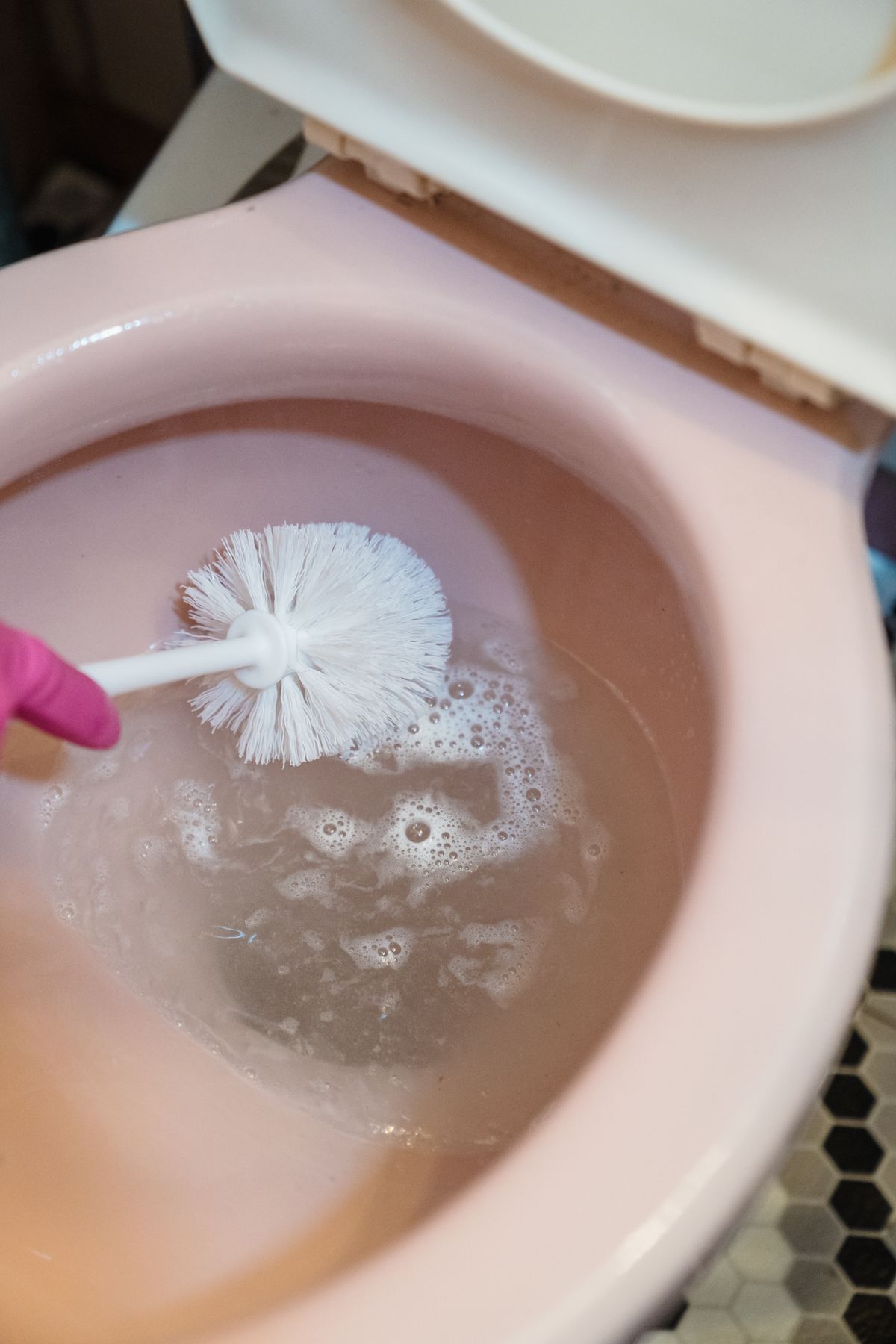
Three habits genuinely slow regrowth, and one common suggestion does not work.
Brush the waterline every few days. Ten seconds with a dry-ish brush before the deposit has hardened prevents the layer that later needs acid. This is the highest-return habit by a wide margin, because fresh scale is soft.
Do not leave in-tank drop-in tablets. They release chlorine continuously, which degrades the flapper and fill valve, and on iron-bearing water they oxidise iron in the tank so it arrives in the bowl already as a stain. If you want a continuous product, use an in-bowl rim hanger instead, which does not sit in contact with the tank components.
Deal with a running fill valve immediately. A toilet that trickles constantly moves fresh mineral-bearing water past the waterline all day, which multiplies deposition. It is also, per EPA WaterSense, one of the largest single sources of household water waste — a silently running toilet can waste hundreds of gallons a day.
The habit that does not help: adding vinegar to the tank weekly. The tank is not where the ring forms, the vinegar is diluted to near-uselessness by the time it reaches the bowl, and prolonged acid contact shortens the life of the rubber components.
If the ring returns within two or three weeks no matter what you do, the maintenance answer has run out. That regrowth interval is telling you something measurable about the water, and it usually shows up elsewhere at the same time — as spotting on faucets and as scale in the water heater. At that point, getting an actual hardness and iron number is more useful than another cleaner.
What to Do Next
- Lower the water and photograph the dry ring in daylight. Colour under bowl water is misleading; colour in air is not.
- Match it to the chart and buy one product, not four. Acid for white, oxalic for orange and black, bleach for pink.
- Treat the exposed ring, give it the full contact time on the label, and never mix product categories.
- Write the date on the inside of the tank lid. If a ring reappears in under a month, work out whether your hardness level actually justifies treatment — and rule out the other household problems that get blamed on hard water before you spend anything.
Frequently Asked Questions
What is the fastest way to remove a hard water ring from a toilet?
Lower the water level first, then treat the exposed ring directly. Switch off the supply valve, flush once so the bowl drains, and push the remaining water round the trap with a toilet brush. Now the ring is in open air rather than under six inches of water, so a cleaner applied to it stays at full strength instead of being diluted. A pumice stone rubbed on wet porcelain finishes what the chemical starts. Skipping the water-lowering step is why most attempts fail.
Will a pumice stone scratch the toilet bowl?
Not on vitreous china if both the stone and the surface stay wet, because pumice is softer than the glaze. It will scratch enamelled steel, acrylic and any coloured or matte finish, and a dry pumice stone will scratch anything. Test on a small patch below the waterline where nobody looks. If you hear grinding rather than feel smooth glide, stop and add more water.
Why does the ring come back so quickly after cleaning?
Because cleaning removes the deposit without changing the water that made it. The regrowth interval is useful information in itself: a visible ring returning within two to three weeks suggests hardness well above 10 grains per gallon, or iron above about 0.3 mg/L. Returning after three to six months is normal maintenance in moderately hard water. Note the date you clean it and the date you next see it — that interval is a free measurement.
Is the black ring in my toilet mold or manganese?
Position tells you. Manganese deposits sit at or below the waterline, feel slick rather than fuzzy, and smear when you rub them. Mould grows above the waterline and under the rim where it is damp but not submerged, and it has texture. Manganese also stains laundry and shows up in other fixtures at the same time; mould stays local to the bathroom. Manganese above 0.05 mg/L is enough to stain, which is a very small amount.
Does a water softener stop toilet rings?
It stops white calcium rings, which are the most common kind, and it removes low levels of dissolved iron and manganese along the way. It does nothing about pink Serratia bacteria staining, and it will be quickly overwhelmed by iron above roughly 3 mg/L or by iron that has already oxidised into particles before it reaches the softener. Identify the mineral first — installing a softener against the wrong stain colour is a common and expensive mistake.