
How Does a Whole-House Water Softener Work?
How does a water softener work? A whole-house water softener passes every gallon through a tank of resin beads that trade sodium for calcium and magnesium, the minerals that cause scale. When the beads are full of hardness, the softener regenerates: strong salt brine floods the resin, forces the calcium and magnesium off, reloads the beads with sodium and sends the hardness to drain. Softening is an exchange, not a removal. That one fact explains the sodium in softened water, the white dust from humidifiers and why a TDS meter barely moves.
Everything else a softener does, from its meter to its brine tank, supports those two cycles. Here is one gallon through the first cycle, then the second cycle run in full.
How Does a Water Softener Work? The Two Cycles
A softener has two tanks and a control valve on top of the taller one.
- The mineral tank holds the resin: a bed of small plastic beads, typically polystyrene, with fixed negative charges on their surfaces. The beads hold loosely attached positive ions, and those ions are what get traded.
- The brine tank holds salt and a few inches of water. It does nothing until regeneration.
- The control valve routes the water. In service, it sends water through the resin to the house. During regeneration, it moves through a series of positions that send water, brine and rinse water through different paths.
EPA's page on cation exchange water softeners sums up the two halves: the softener removes calcium and magnesium "by exchanging them with sodium or potassium ions," and then goes through a regeneration process "to flush the system of excess ions and recharge with new sodium ions."
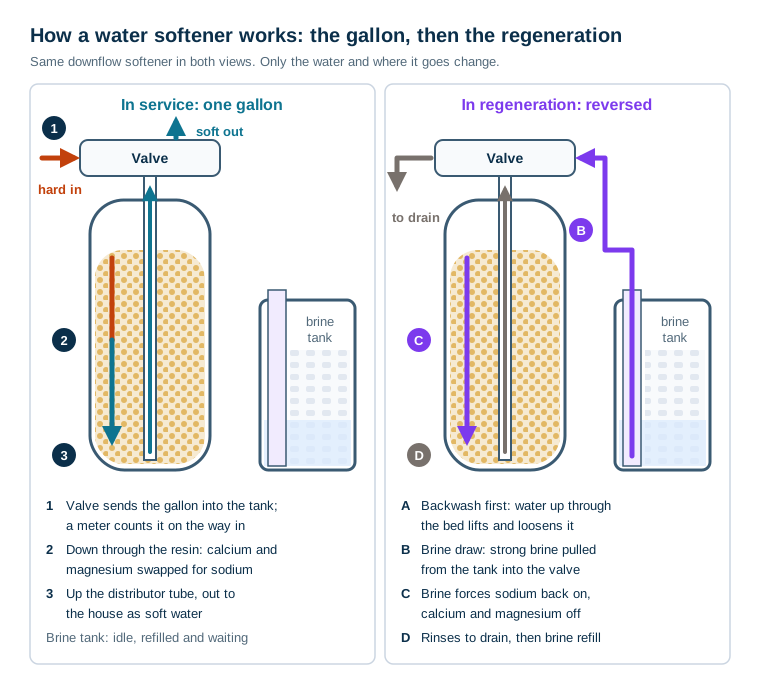
Follow One Gallon Through a Whole-House Softener
1. Into the valve. The gallon comes off the main line, through the bypass valve set to service, and into the control valve. On a metered softener, a turbine or paddle wheel counts it as it passes. That count is how the softener later knows when to regenerate.
2. Down through the resin. The valve sends the gallon into the top of the mineral tank, where it spreads out and flows down through the bed. Near the top of the bed, the beads that still hold sodium meet calcium and magnesium. Each calcium or magnesium ion carries a charge of +2. Each sodium ion carries +1. So each hardness ion that sticks to the resin displaces two sodium ions into the water. By the time the gallon is partway down the bed, the hardness is gone.
The part of the bed doing the work is a band, sometimes called the exchange zone. Resin above it is already full of hardness. Resin below it still holds sodium. Over days of use, that band moves slowly down the tank. When it reaches the bottom, hardness starts to leak through, and the softener is exhausted.
3. Up the distributor tube. At the bottom of the tank the softened gallon enters a slotted basket on the end of the distributor tube, a pipe that runs up the middle of the tank. The slots let water in and keep resin beads out. The gallon rises through the tube back into the valve. The anatomy of that tube, the basket and the top screen is covered in inside a water softener mineral tank.
4. Out to the house. The valve sends the gallon out to the plumbing. Every fixture downstream, including the water heater, gets water with the calcium and magnesium replaced by sodium.
The whole trip takes a few seconds. What changed in the water, and what did not, is the more interesting part.
What Happens at the Resin Bead
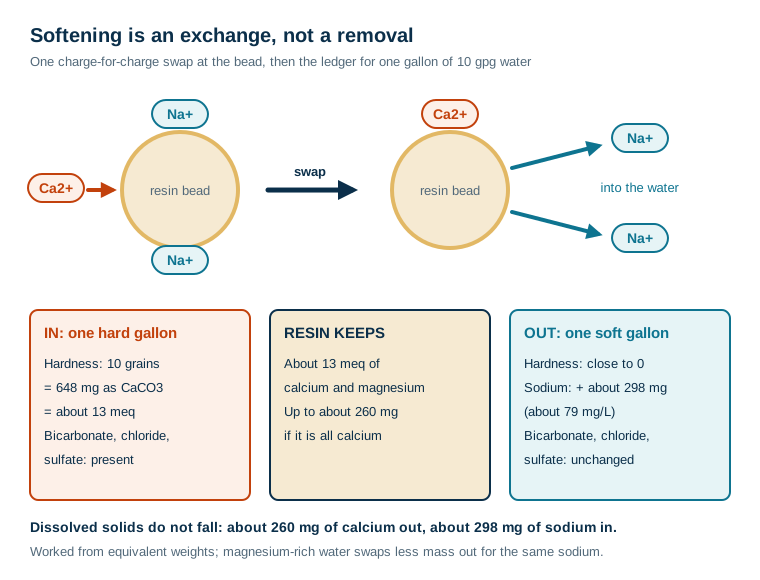
The resin holds sodium only loosely. Calcium and magnesium carry double the charge and are held more tightly, so when hard water passes, the resin prefers them and lets the sodium go. That preference is what makes softening work in service.
The same preference is what makes regeneration difficult. To push calcium back off, the softener has to overwhelm the resin's preference with a huge excess of sodium. That is why regeneration uses strong brine rather than slightly salty water, and why a softener uses far more salt, by weight, than the hardness it removes.
The brine tank is where that excess sodium comes from. After each regeneration the valve refills the tank with a measured volume of water, which sits on the salt for hours and dissolves it until the brine is saturated, roughly a quarter salt by weight. The amount of water refilled sets how much salt the next regeneration uses. That salt dose, not the size of the tank, decides how much of the resin's capacity gets restored each time. A heavier dose recharges more of the bed but wastes more salt per grain of hardness removed, which is the trade-off behind every efficiency setting on a modern valve.
Exchange, Not Removal: What Stays in the Water
The ledger in the diagram is worth working through, because it explains three things softener owners notice.
Take one gallon of water at 10 grains per gallon of hardness. Ten grains is about 648 mg expressed as calcium carbonate, or about 13 milliequivalents of hardness. The resin swaps that for 13 milliequivalents of sodium, which is about 298 mg of sodium per gallon, or about 79 mg/L. That matches the rule of thumb of about 7.9 mg/L of sodium per grain per gallon removed.
If all of that hardness was calcium, the resin kept about 260 mg of calcium and released about 298 mg of sodium. The bicarbonate, chloride and sulfate that were dissolved alongside the calcium pass straight through, because the resin only trades positive ions.
Consequence 1: softened water contains sodium in proportion to the hardness. Very hard water produces noticeably more sodium after softening. Potassium chloride in the brine tank swaps potassium in instead.
Consequence 2: total dissolved solids do not fall. They stay about the same, or rise slightly. That is why a TDS meter is useless for checking a softener, and why an ultrasonic humidifier still throws white dust on softened water. The minerals in the dust are now mostly sodium compounds instead of calcium ones.
Consequence 3: softened water still leaves residue when it evaporates. The spots are softer and wipe off more easily, because sodium salts do not bond to glass and metal the way calcium carbonate scale does, but they are not zero.
The full list of what ion exchange cannot touch, contaminant by contaminant, is in what a water softener does not remove.
How the Softener Knows the Resin Is Full
A resin bed has a fixed capacity, rated in grains of hardness. A softener sold as 32,000 grains typically contains about 1 cubic foot of resin, though the capacity actually delivered depends on how much salt each regeneration uses.
The Fleck 5800 SXT service manual describes how a metered valve decides. The control "calculates the system capacity by dividing the unit capacity... by the feed water hardness and subtracting the reserve." Worked through:
| Step | Example |
|---|---|
| Unit capacity | 32,000 grains |
| Divided by feed hardness | ÷ 10 gpg = 3,200 gallons |
| Minus the reserve | – 400 gallons (roughly one day for a family of four) |
| Regenerate after | about 2,800 gallons |
A timer softener skips the arithmetic and regenerates every set number of days. That wastes salt when the house uses little water, and lets hardness through when it uses a lot. Either way, if the hardness setting is wrong, the softener regenerates too early or too late, which is behind many "softener stopped working" complaints.
Regeneration: Running the Exchange in Reverse
When capacity runs out, the valve cycles through its positions, usually overnight. The names vary by manufacturer. The Fleck manual lists backwash, brine and slow rinse, rapid rinse and brine tank refill.
- Backwash. Water runs up through the bed, the opposite direction to service. It lifts and loosens the beads, washes out sediment, and goes to drain.
- Brine draw and slow rinse. The injector in the valve pulls saturated brine from the brine tank and sends it through the resin. The flood of sodium overwhelms the resin's preference for calcium. Calcium and magnesium come off, sodium goes back on. The spent brine, now carrying the hardness as calcium and magnesium chloride, goes to drain. A slow rinse follows the brine through the bed.
- Rapid rinse. Fast downflow water rinses out the last of the brine and packs the bed back down.
- Brine refill. Fresh water refills the brine tank so salt can dissolve before the next regeneration.
This is the same equilibrium as in service, pushed the other way by concentration. It is why regeneration sends salty water to drain, and why EPA notes that regeneration "can use 25 gallons of water or more per day, or up to 10,000 gallons per year." The positions, timings and valve internals are covered stage by stage in how water softener regeneration works.
Why Both Halves Explain Most Faults
Once you see the two cycles, most softener problems sort into one half or the other.
| Symptom | Which half failed | Usual causes |
|---|---|---|
| Hard water, salt level not dropping | Regeneration: no brine drawn | Salt bridge, clogged injector, no water in the brine tank |
| Hard water, salt dropping normally | Service: water bypassing the resin | Bypass valve partly open, cracked distributor tube, channeling in the bed |
| Hard water only near the end of the cycle | Capacity math | Hardness set too low, reserve too small, resin losing capacity |
| Salty taste after regeneration | Regeneration: incomplete rinse | Short rinse time, drain line restriction |
| Resin beads at the taps | Service: the bed is escaping | Broken distributor basket or top screen |
| Brown or orange water after regeneration | Regeneration: iron released | Iron fouling the resin |
What the Mechanism Cannot Do
The limits follow directly from the chemistry.
- It only trades positive ions. Anions such as chloride, sulfate, nitrate and bicarbonate pass through, so a softener does not lower total dissolved solids or improve a salty or bitter taste.
- It does not filter. Sediment, bacteria and viruses are not captured by ion exchange. Sediment fouls the bed, and bacteria can grow in a neglected softener.
- It does not remove chlorine. Chlorine passes through and slowly oxidizes the resin.
- It handles only limited iron. Dissolved iron is exchanged like hardness, but oxidized iron coats the beads and fouls them.
- It does not change pH meaningfully. Acidic water stays acidic and needs its own treatment.
Understand the swap and the reverse swap, and you understand the softener. The salt recharges the resin. The resin softens the water. Everything else in the cabinet exists to move water between those two jobs.
Frequently Asked Questions
How does a water softener work in simple terms?
Hard water flows through a tank of small resin beads that hold sodium. The beads grab calcium and magnesium, which cause scale, and release sodium in their place, so the water leaving the tank is soft. When the beads are full of hardness, the softener rinses them with strong salt brine, which pushes the hardness off and reloads them with sodium. The hardness goes down the drain.
Does a water softener remove minerals from water?
It removes calcium and magnesium, but it puts sodium (or potassium) in their place, so the total amount of dissolved minerals does not drop. For each grain per gallon of hardness removed, softened water gains about 7.9 mg/L of sodium. That is why softened water still leaves residue when it dries, and why a TDS meter shows little or no change after a softener.
Why does a water softener need salt?
The salt is not what softens the water. It recharges the resin. During regeneration, salt dissolved into strong brine floods the resin with so much sodium that it displaces the calcium and magnesium the beads collected. Without salt, the resin fills with hardness and stops softening.
How often does a water softener regenerate?
Whenever it has used up its capacity. A metered softener counts gallons and regenerates after it has treated its capacity in grains divided by your hardness, minus a reserve. For example, 32,000 grains of capacity on 10 grain per gallon water is about 3,200 gallons before reserve. A timer model regenerates on a fixed schedule whether or not the resin is spent.
Where does the hardness go when a water softener regenerates?
Down the drain. The brine pushes the calcium and magnesium off the resin, and the regeneration rinses carry them out as a salty solution along with the excess brine. EPA notes that regeneration can use 25 gallons of water or more per day, depending on the unit and settings.
Does softened water have salt in it?
It contains sodium, not salt grains or brine. The sodium comes from the swap on the resin, and the amount depends on how hard the water was before softening. A softener that is working properly does not send brine to the taps. If the water tastes salty, the softener has a rinse or brine fault.
