
How Water Softener Regeneration Works
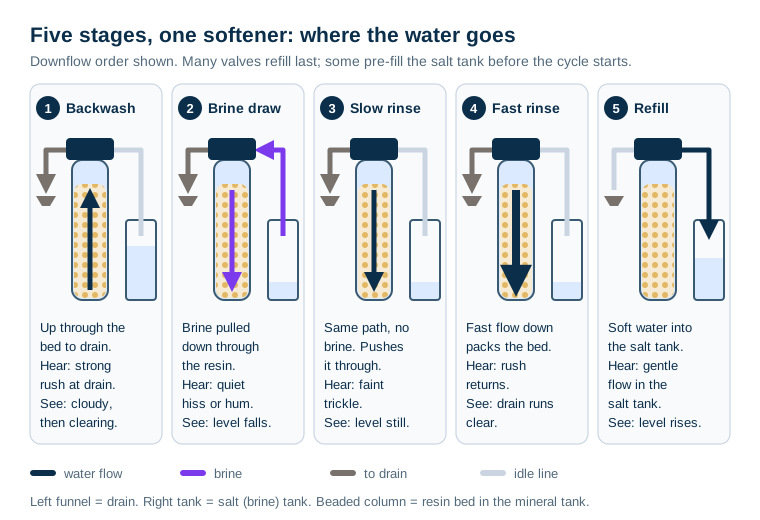
Here is how water softener regeneration works: the control valve runs five stages, each sending water through the resin tank in a different direction or at a different speed. Backwash lifts and cleans the bed. Brine draw floods it with salt solution that strips off the calcium and magnesium. Slow rinse and fast rinse flush the brine and hardness to the drain. Refill puts water back in the salt tank to make brine for next time.
Each stage has a job, a sound and a visible sign, and each one leaves a recognisable symptom when it fails. That makes this the reference page for almost every softener fault: find the stage that did not do its job and you have found the problem. The walkthrough below is written to be read while standing next to a running unit.
What Regeneration Has to Undo
A softener works by ion exchange. The resin in the mineral tank is a bed of small plastic beads covered in exchange sites. In service, those sites hold sodium. As hard water flows down through the bed, the beads grab calcium and magnesium and release sodium in their place. That is the whole softening process, and it is why a softener removes hardness and not much else.
The sites are finite. Once most of them hold calcium and magnesium, the bed is exhausted and hard water starts coming through. Regeneration reverses the exchange by overwhelming the bed with sodium.
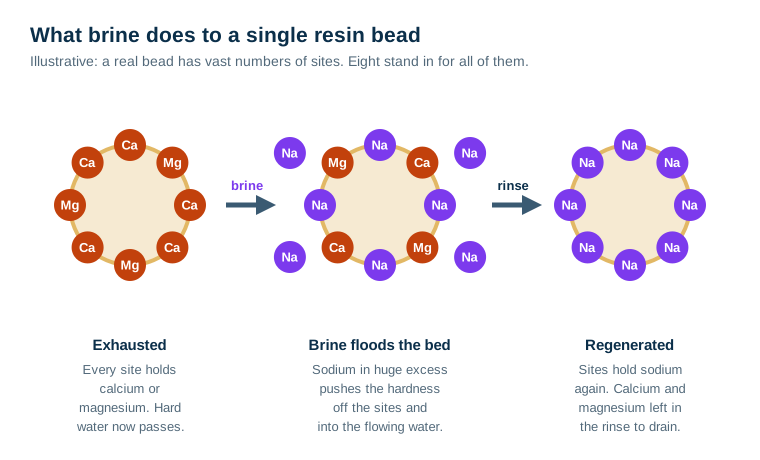
Penn State Extension's guide to water softening describes it simply: the brine flushes through the resin and carries the calcium and magnesium away with it. The chemistry is only half the story, though. The other stages exist to prepare the bed for the brine and to clean up after it.
How Water Softener Regeneration Works, Stage by Stage
| Stage | What the water does | Typical length | Water it uses | Why it exists |
|---|---|---|---|---|
| 1. Backwash | Flows up through the bed, fast, to the drain | GE: generally 3 to 10 min | Drain flow rate x minutes | Lifts and loosens the bed, flushes sediment and some iron, undoes channels |
| 2. Brine draw | Brine is pulled from the salt tank and flows down through the resin | Combined with slow rinse: 45 to 75 min on Clack's table | The brine made at the last refill | Strips calcium and magnesium off the resin |
| 3. Slow rinse | Plain water follows the brine down the same path, slowly | Part of the same timed step | A slow trickle for most of an hour | Pushes the brine through the whole bed so none of it is wasted |
| 4. Fast rinse | Flows down fast to the drain | 3 to 6 min on Clack's table | Drain flow rate x minutes | Packs the bed and flushes out the last salt |
| 5. Refill | Treated water flows into the salt tank | A few minutes to about 20 (GE) | About one gallon per 3 lb of salt | Makes the brine for the next regeneration |
The durations come from two manufacturers. GE's description of its five recharge stages gives fill as a few minutes to about 20, brining as 30 to 100 minutes and backwash as generally 3 to 10 minutes. Clack's WS1 control valve manual sets the times automatically from the salt dose: on a downflow softener, 45, 60 or 75 minutes of brine draw and slow rinse, with backwash and rinse times that rise with the dose.
Two points in that table matter more than they look:
- Brine draw and slow rinse are one step on the valve. Fleck and Clack both run them as a single timed position. The injector draws brine until the salt tank is empty down to its air check, then the same flow continues with plain water. There is no motor movement between them.
- Water use is set by flow controls. A small washer in the drain port, the drain line flow control, fixes the backwash and fast rinse rate whatever the supply pressure. Multiply its rating by the minutes and you have that stage's water. The refill is set by the salt dose: Fleck's parts list rates its 0.25 gpm brine refill control at 0.75 lb of salt per minute, which works out to about 3 lb of salt dissolved per gallon. Penn State puts the whole cycle at about 50 gallons, and how much water regeneration uses breaks that total down.
Why the Brine Stage Is Slow on Purpose
Owners watching their first regeneration are often surprised that the stage doing the real work is the quiet one, and that it runs for most of an hour. That slowness is designed in.
Ion exchange is not instant. For sodium to push calcium and magnesium off a bead, the brine has to be in contact with that bead long enough for the exchange to happen, and it has to reach every bead from the top of the bed to the bottom. If brine rushed through at backwash speed, most of it would go straight to the drain having touched only part of the bed. So the injector meters the brine in slowly, and the valve holds that slow rate for the whole brine draw.
The slow rinse follows for the same reason. When the salt tank has been drawn down to its air check, there is still a slug of concentrated brine sitting in the upper part of the resin. Plain water at the same slow rate pushes that slug down through the rest of the bed, so the salt already paid for keeps working instead of being flushed out early. Only once the brine has passed all the way through does the fast rinse take over to pack the bed and wash out what is left.
That is why a regeneration that looks slow is usually a healthy one, and why the brine step is the last place to look for time savings.
What You Hear and See at Each Stage
If you start a regeneration manually, you can follow it with your ears and a flashlight. The steps for doing that safely on common valves are in how to manually regenerate a water softener.
| Stage | What you hear | At the drain | In the salt tank |
|---|---|---|---|
| Valve moving between stages | A short motor whirr and click, a few seconds to a couple of minutes | Flow changes or stops | No change |
| Backwash | Strong, steady rush of water at the drain | Full flow, often cloudy or tinted at first, then clearing | No change |
| Brine draw | Quiet: a faint hiss or hum at the valve | Small, steady flow | Water level falling steadily |
| Slow rinse | Same faint sound | Same small flow, salty | Level stays at the air check and stops falling |
| Fast rinse | The rush returns | Full flow, running clear | No change |
| Refill | Gentle trickle, from the salt tank rather than the drain | Nothing | Water level rising |
The salt tank is the most useful thing to watch. Mark the water level with a pencil before the cycle. It should fall during brine draw, stop, and then rise during refill. That one observation confirms that the injector, the brine line and the refill control all worked.
When a Stage Fails: The Symptom It Leaves
| Stage that failed | What goes wrong | Symptom you notice later | First thing to check |
|---|---|---|---|
| Backwash | Flow too weak or too short, or no flow | Sediment or iron building in the bed, hardness breaking through early, channeling | Drain line restriction, drain flow control, supply pressure |
| Brine draw | Little or no brine drawn | Salt level not dropping, water in salt tank stays high, hard water within days | Injector and screen, brine line air leak, pressure below about 25 psi |
| Slow rinse | Cut short | Brine not fully used; weaker regeneration for the salt spent | Programmed step time, injector condition |
| Fast rinse | Too short or too weak | Salty taste at the first tap after regeneration | Rinse time, drain restriction |
| Refill | Too little, too much, or none | Salt tank dry and no brine next time, or salt tank overfilling | Refill flow control, float, programmed refill time |
| Valve drive | Valve stops between stages | Continuous flow to drain, same step on the display for hours | Motor, gears, position sensor |
Two of those rows lead to the most common complaints on this site. A brine draw failure is the usual reason a softener "runs" but the water is still hard. A valve that stops moving is a drive fault: the motor, gears or position sensor, rather than the water path.
Upflow, Pre-Fill and Twin Tanks Change the Order
The five-stage downflow sequence is the most common, but not the only one.
- Refill first. GE lists fill as its first stage, and Clack offers a pre-fill option that starts the refill two hours before the regeneration time so the brine has time to form. Treated water is still available during that period.
- Extra backwash. A Clack WS1 set up as a downflow softener always runs two backwashes, one before brining and one after. The Fleck 5600SXT runs one.
- Upflow brining. On an upflow softener the brine goes up through the bed instead of down, and Clack runs a single backwash after brining. The chemistry is the same; the direction changes.
- Twin tanks. One tank regenerates while the other stays in service, so the house never switches to hard water during a cycle.
Whatever the order, the jobs are the same: loosen and clean, strip the hardness with brine, rinse, and make brine for next time.
What Starts a Regeneration
The valve decides when to regenerate in one of two ways. A timer control regenerates on a fixed schedule of days, whatever the house has used. A metered, or demand-initiated, control counts gallons and regenerates when the calculated capacity is used up, usually at the next programmed regeneration time. Most metered valves also have a day override, a maximum number of days between regenerations, as a backstop. How to work out whether yours is regenerating at the right interval is in how often a water softener should regenerate.
The part that decides the regeneration once it starts is the control valve, the piston or rotor that switches between these flow paths. How a water softener control valve works explains the mechanism behind every panel in the diagram above.
What Regeneration Does Not Do
- It does not sanitize anything. Brine strips hardness; it does not disinfect the resin, the tank or the salt tank.
- It does not fully remove iron or organic fouling. Backwash flushes some iron, but iron and manganese that stick to the resin build up over time and need a resin cleaner or a filter ahead of the softener.
- It does not restore worn-out resin. Resin damaged by chlorine or physically broken down loses capacity that no amount of brine brings back.
- It does not extend what a softener removes. Penn State notes that softeners "will not necessarily remove any of the more serious drinking water contamination problems." Regeneration only resets the ability to remove hardness.
Once you can picture which way the water is moving at each stage, most softener problems sort themselves into one row of the failure table. Watch one regeneration with a pencil mark on the salt tank and an ear to the drain, and you will know which stages your softener is doing properly.
Frequently Asked Questions
What are the stages of water softener regeneration?
Backwash, brine draw, slow rinse, fast rinse and brine refill. Backwash lifts and cleans the resin bed with water flowing upward to drain. Brine draw pulls salt solution from the brine tank down through the resin. Slow rinse pushes that brine through at the same gentle rate. Fast rinse packs the bed and flushes out the last of the salt. Refill puts water back into the salt tank to make brine for next time. Some valves refill first instead of last.
What actually happens to the resin during regeneration?
The resin beads have exchange sites that hold calcium and magnesium once they are exhausted. During brine draw the bed is flooded with a large excess of sodium, which pushes the hardness off the sites into the water flowing to the drain. After rinsing, the sites hold sodium again and the resin can soften water until it is exhausted once more.
Is it normal to hear water running when a softener regenerates?
Yes. Backwash and fast rinse send a steady, strong flow to the drain that sounds like a tap running hard. Brine draw and slow rinse are much quieter, often just a faint hiss. Refill sounds like a gentle trickle into the salt tank. Clicks and short motor whirrs between stages are the valve moving. Grinding, banging or a motor that runs continuously are not normal.
How much water does a softener use to regenerate?
Penn State Extension puts it at about 50 gallons per regeneration cycle, and the EPA says regeneration can use 25 gallons a day or more, up to 10,000 gallons a year. Most of it goes down the drain during backwash and rinsing. Demand-initiated softeners that regenerate only when capacity is used up waste far less than timer units cycling on a fixed schedule.
Does regeneration clean or sanitize the softener?
No. Backwash flushes loose sediment and some iron out of the bed, and brine strips hardness off the resin, but regeneration does not disinfect anything. Bacteria, iron fouling and organic fouling need a separate cleaner or sanitizing procedure. A softener also cannot remove contaminants that ion exchange does not target, however often it regenerates.
Can I use water while my softener is regenerating?
You can, but on most single-tank softeners the water you draw during most of the cycle bypasses the resin and is hard. It can also pull water pressure away from the regeneration. That is why most units are set to regenerate in the early morning. Twin-tank softeners keep supplying softened water because one tank stays in service while the other regenerates.
