
Inside a Water Softener Mineral Tank
Inside a water softener mineral tank there are six parts: the pressure vessel, a central distributor tube, a slotted bottom basket, a top screen, the resin bed, and an empty space above the resin called freeboard. Some tanks also have gravel under the resin. Water runs down through the resin and back up the tube. Most resin tank faults come from the tube, the basket or the fill level.
A tank you cannot see into is easy to misjudge. Owners open one, find it only part-full, and assume resin has gone missing. Or they see gravel in a neighbour's tank and wonder whether theirs needs it. Here is what should be in there, top to bottom.
Inside a Water Softener Mineral Tank, Top to Bottom
Take the control valve off a typical downflow softener and look down. This is the order you meet things in.
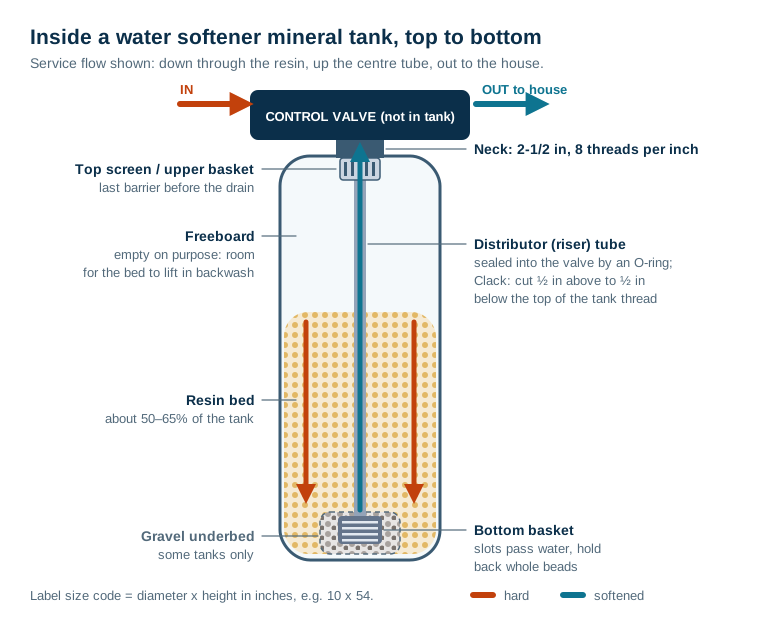
| Layer | What it is | What it does | What goes wrong |
|---|---|---|---|
| Control valve (not in the tank) | Screws onto the tank neck | Routes water in, out, to drain and from the brine tank | Leaks at the tank O-ring; cracks if frozen |
| Top screen or upper basket | Slotted cap under the valve | Spreads incoming water; stops resin escaping to drain during backwash | Clogs with fines; breaks, letting resin out the drain |
| Freeboard | Empty space above the resin | Room for the bed to lift and loosen in backwash | Too little after overfilling; too much after resin loss |
| Resin bed | Millions of small plastic beads | Swaps calcium and magnesium for sodium | Fouls, fractures, channels, wears out |
| Distributor (riser) tube | Plastic pipe from the valve to the tank floor | Carries treated water back up to the valve | Cracks, slips, O-ring leaks |
| Bottom basket | Slotted fitting on the foot of the tube | Lets water in, keeps resin out | Collapses or cracks, letting resin into the house |
| Gravel underbed (some tanks) | Graded stones around the basket | Supports and spreads flow around the basket | Traps the tube so it cannot be reseated |
The size code on the label is diameter by height in inches. Pentair's whole-house softener spec sheet lists resin tanks as "dia x h": 10 x 44, 10 x 54 and 12 x 48. It also gives the neck thread as 2-1/2 inch, 8 threads per inch, which is why valves from different brands fit the same tanks.
The vessel itself sits at full house pressure all day, and its neck threads carry the whole valve. The valve makers set the working range. Clack gives 20 to 125 psi for its WS1, and the tank must be rated at least that high. A hairline crack at the neck threads is one of the freeze injuries that only shows once pressure returns.
The Distributor Tube and Bottom Basket
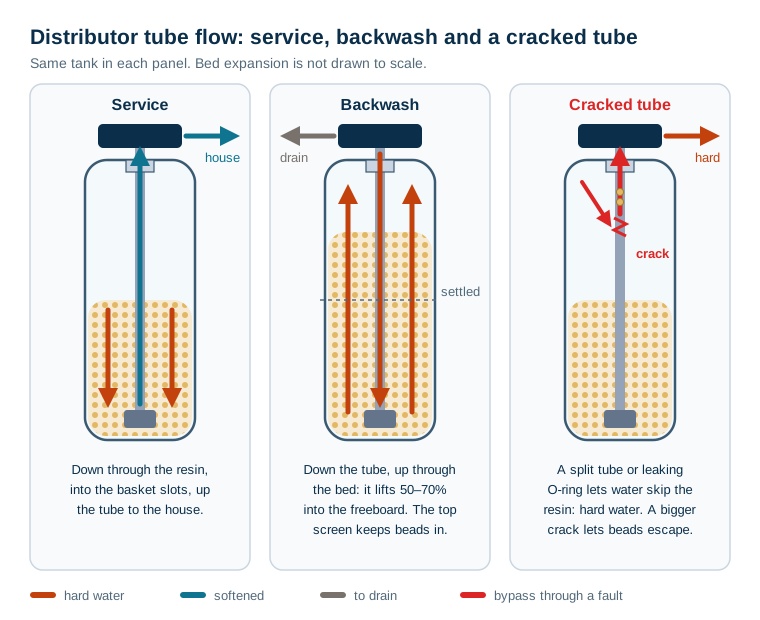
These two parts carry every drop of softened water. They are also the only thing between the resin bed and your plumbing.
How water moves. In a downflow softener in service, water enters at the top, soaks down through the resin, gets into the slots of the bottom basket, and climbs the distributor tube back to the valve on its way to the house. In backwash the flow goes the other way, down the tube and up through the bed, which lifts it. How the valve switches between these paths is covered in how a water softener control valve works.
Why the tube's top end matters. The tube is sealed into the valve by an O-ring. Its length is not arbitrary. The Clack WS1 service manual says the tube can be cut from ½ inch above to ½ inch below the top of the tank thread. The Fleck manual tells installers to refer to the spec sheet for cutting height. A tube cut too short never reaches the O-ring properly. One left too long gets crushed when the valve goes on.
What a crack does. A split tube or a leaking tube O-ring gives water a route from the top of the tank to the outlet that skips the resin. The Fleck 5600SXT service manual lists "leak at distributor tube" among the causes of hard water, with the fix: "Make sure distributor tube is not cracked. Check o-ring and tube pilot." A bigger crack, or a broken basket, also opens a path for beads. That is the classic source of amber specks in aerators and toilet tanks.
Diagnosing escaped resin is a separate job, with its own volume check and clean-up. It is covered step by step in why resin beads appear in household plumbing.
The bottom basket's slots are the resin filter. They are sized to pass water and hold back a whole bead. That only works while beads stay whole. Resin that has broken down into fragments slips through or plugs the slots, which you notice first as falling pressure.
The Top Screen
The top screen is the smallest part and the easiest to forget. It sits in the tank neck, directly under the valve, and during backwash it is the last barrier before the drain line. The Clack manual notes that its valve has a bayonet lock for upper distributor baskets, so they cannot work loose.
Signs it has failed: resin beads in the drain line or the floor drain after a regeneration, but none at the taps. That points to the top screen or to too much backwash flow, not to the distributor tube.
Signs it is plugged: low pressure through the softener that returns in bypass, and a crust of fines or iron on the screen when the valve is lifted.
The Resin Bed and How Full the Tank Should Be
The resin is a bed of polystyrene beads with sulfonic acid exchange sites. Purolite's C100E product data sheet describes its softening resin as a gel polystyrene cation resin in sodium form, with a particle size of 300 to 1200 µm and a shipping weight of about 50 to 52.5 lb per cubic foot.
Correct resin fill by tank size. Pentair's spec sheet pairs these:
| Tank (dia x h) | Resin | Approx. weight of resin* | Resin as share of gross tank volume** |
|---|---|---|---|
| 10" x 44" | 1.0 cu ft | 50–53 lb | about 50% |
| 10" x 54" | 1.5 cu ft | 75–79 lb | about 61% |
| 12" x 48" | 2.0 cu ft | 100–105 lb | about 64% |
* From Purolite's 50–52.5 lb/ft³ shipping weight. ** Worked as a plain cylinder of the nominal size. Real tanks have domed ends and wall thickness, so their inside volume is smaller and the true share is somewhat higher.
A parts supplier, SoftenerParts, says much the same from the field: the resin level should be at least half the tank, typically 50 to 65 percent full.
The 48,000-grain label is a resin volume, not a promise. Pentair rates the same 1.5 cubic foot bed at 24,300 grains on 5.2 lb of salt and 48,600 grains on 23.4 lb. The number on the box is the top of that range.
Freeboard: The Empty Space Is Supposed to Be There
Everything above the resin is freeboard, and it has a job. During backwash the bed has to lift, loosen and re-sort, or it packs down and water cuts channels through it. Purolite's data sheet calls for up-flow backwash to expand the bed "between 50 and 70%", and warns that care is needed "to avoid loss of resin through the top of the vessel by over expansion of the bed". In a 10 x 54 inch tank with the bed at about 61% of the height, a 50% expansion already takes the resin to about nine tenths of the tank, which is why the fill level has so little margin.
That gives two opposite faults:
- Too little freeboard (overfilled after a rebed): the bed cannot expand, backwash does little, and beads get pushed against the top screen or out to drain.
- Too much freeboard (resin has escaped): capacity falls in proportion, and hardness returns early.
If the bed never lifts, it compacts. Water then takes the easy paths, which is how resin channeling starts.
Measuring it. With the unit bypassed and depressurised and the valve off, lower a marked dowel to the top of the bed and measure the drop from the tank neck. Compare it with a known-good tank of the same size, or work it out from the resin volume. Measure after the bed has settled, not straight after a backwash.
The Gravel Underbed Debate
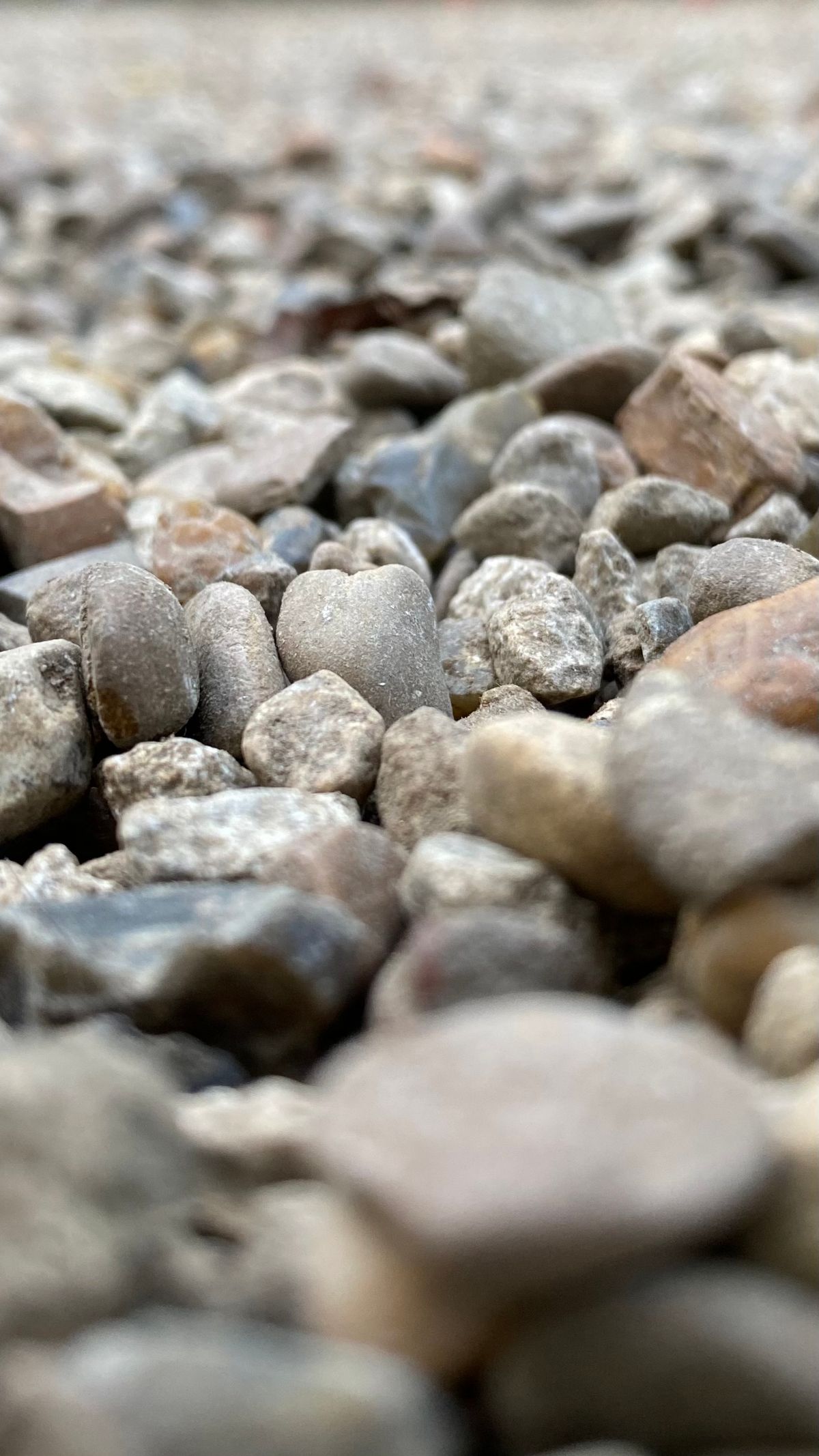
Open ten old softeners and one or two will have a layer of small stones under the resin. Owners replacing resin reasonably ask whether theirs needs it.
When gravel helps:
- Backwashing filters. Filter tanks commonly use a graded underbed to spread flow and protect the bottom distributor from the media and the fines it releases.
- Larger and commercial tanks, with higher flows and bottom distributors that were designed around an underbed.
- Tanks built for it. If the manufacturer's parts list includes underbedding, use it at the stated weight.
When it is unnecessary:
- Most residential softener tanks. The bottom basket slots already hold back whole resin beads, so the gravel does nothing the basket is not already doing.
- When space matters. Gravel takes up volume that would otherwise hold resin or freeboard.
The practical argument against it. SoftenerParts' view is that under 5 percent of residential softeners have gravel. The problem they describe is service: if the valve comes off and the distributor tube slides up an inch or two, you cannot push it back down through packed gravel. The only fix is emptying the tank. A gravel-free tank lets the tube be pushed back down through wet resin.
The rule that ends the debate: do what the tank was built with. Adding gravel to a basket designed without it steals freeboard. Leaving it out of a tank designed for it can leave the basket unprotected.
Some dealer systems go further and split the tank itself. The Hague WaterMax review shows a three-compartment tank where only one compartment holds softening resin and the others hold carbon, KDF or other media. On a tank like that, the layer order above does not apply as drawn.
What You Can Check Without Emptying the Tank
With the softener in bypass, depressurised and the valve lifted off:
- Look at the top screen. Broken slots, fines or iron crust?
- Check the tube is centred and stands up to the correct height for your valve.
- Measure freeboard with a marked dowel.
- Look at the resin surface. Clean amber beads are good. A brown crust, mush or clumps mean fouled or worn resin, and resin life and replacement explains how to judge it.
- Inspect the tube O-ring and tank O-ring before the valve goes back on, and lubricate them with silicone grease only, as the Fleck manual specifies.
What you cannot check without emptying the tank is the bottom basket and the lower half of the tube. If the evidence points there, such as beads at the taps or hard water with a clean, full bed, the tank has to come apart.
The Limits of a Look Inside
A tank that looks right can still perform badly. Resin can hold its shape and colour while having lost much of its exchange capacity, and nothing you see through the neck will measure that. The tank tells you about construction: tube, basket, screen, fill level. Capacity is proven with a hardness test and a count of gallons between regenerations, not by eye.
The reverse also holds. A half-empty-looking tank is normal. Resin at the taps, or a tank that can no longer soften for as many gallons as it used to, is the real signal that something inside has broken.
Frequently Asked Questions
What is inside a water softener resin tank?
A pressure vessel holding a bed of ion exchange resin beads, a central distributor or riser tube that runs from the control valve to the tank floor, a slotted bottom basket on the end of that tube, and usually a top screen or basket under the valve. The top part of the tank is empty space called freeboard, left so the resin can lift and loosen during backwash. Some tanks also have a layer of gravel under the resin.
Does a water softener need gravel in the resin tank?
Most residential softeners do not. Their bottom distributor slots are sized to hold back normal resin beads, so the gravel has nothing to do. Gravel is more common in larger tanks and in backwashing filters, where it spreads flow and protects the bottom distributor. Its main drawback in a home tank is that it locks the distributor tube in place: if the tube slides up during service, you cannot reseat it without emptying the tank.
How full should a water softener resin tank be?
Roughly half to two thirds full of resin, with the rest left empty as freeboard. Pentair's spec sheet puts 1.0 cubic foot of resin in a 10 by 44 inch tank, 1.5 cubic feet in a 10 by 54 and 2.0 cubic feet in a 12 by 48. Worked out against the tank's volume, each of those leaves a large empty space above the bed. That space is intended, not a sign of lost resin.
What does the distributor tube do in a water softener?
It connects the control valve to the bottom of the tank. In a downflow softener, water enters at the top, passes down through the resin, enters the slotted basket at the bottom and returns up the tube to the valve and out to the house. During backwash the flow reverses. If the tube cracks or its O-ring leaks, water can bypass the resin, giving hard water, and resin can escape into the house plumbing.
How much resin is in a 48,000 grain water softener?
Usually 1.5 cubic feet. The 48,000 figure is a maximum rating at a high salt dose. Pentair's spec sheet rates its 1.5 cubic foot model at 48,600 grains with 23.4 lb of salt, but only 24,300 grains at 5.2 lb. So a 48,000 grain label tells you the resin volume more than the capacity you get day to day.
Can I replace the resin in my softener myself?
Yes, if you can lift the valve off the tank and handle about 75 to 80 pounds of wet resin for a 1.5 cubic foot bed. Purolite lists its softening resin at roughly 50 to 52.5 pounds per cubic foot as shipped. The critical steps are keeping the distributor tube centred and seated while you pour, cutting it to the height the valve maker specifies, and not overfilling past the correct freeboard.
