
Can a Water Softener Be Moved to a New House?

Yes, you can move a water softener to a new house. It disconnects at the bypass valve and reinstalls like a new one. What decides whether you should is the new water, not the logistics. A unit sized correctly for 12 grain water can be badly undersized on 30 grain water, so test the new supply before you pay anyone to transport it.
Check two other things early. First, whether it is yours to take: a rented unit is not, and a sale agreement may treat a plumbed-in softener as a fixture. Second, whether the warranty survives the move, because many do not.
Move a Water Softener to a New House Only If It Fits the New Water
A softener's size is a match between its resin capacity and the hardness your household puts through it each day. Change either one and the match changes.
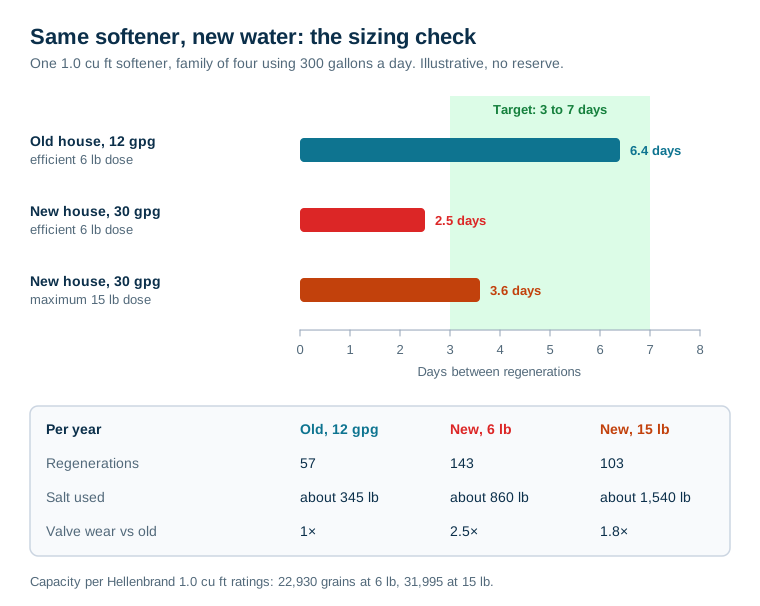
Worked example. A family of four uses about 300 gallons a day, and owns a 1.0 cubic foot softener. Hellenbrand's published ratings for a 1.0 cu ft unit are 22,930 grains at a 6 lb salt dose and 31,995 grains at 15 lb, in its H125 owner's manual.
| Old house, 12 gpg | New house, 30 gpg, 6 lb dose | New house, 30 gpg, 15 lb dose | |
|---|---|---|---|
| Hardness load per day | 12 × 300 = 3,600 grains | 30 × 300 = 9,000 grains | 9,000 grains |
| Days between regenerations | 22,930 ÷ 3,600 = 6.4 | 22,930 ÷ 9,000 = 2.5 | 31,995 ÷ 9,000 = 3.6 |
| Regenerations per year | 57 | 143 | 103 |
| Salt per year | about 345 lb | about 860 lb | about 1,540 lb |
These figures ignore reserve capacity, so real intervals are a little shorter. The pattern is what matters. In the old house the unit sat comfortably inside the 3-to-7-day window that sizing a water softener aims for. In the new house it either cycles every two and a half days on an efficient dose, or reaches three and a half days only by burning more than four times the salt. Either way the valve does roughly twice the work.
The softener still softens. It is just the wrong size now, and moving it carries the mismatch to the new basement.
The Four Numbers That Decide It
Get these before you book the move.
- New hardness. From a lab test, or from the utility's annual water quality report if the new house is on city water. Well water needs its own test.
- Iron and manganese. Many softeners are rated for only modest dissolved iron. Water-Right, for example, lists a 1.0 ppm maximum iron for its Impression units. Well water above your unit's limit needs an iron filter ahead of it.
- Chlorine or chloramine. Moving from a well to city water exposes the resin to an oxidant for the first time. Without a carbon prefilter, expect a shorter resin life.
- Household daily use. Read the new meter over a week once you are in, or estimate from the old house if the household is the same.
| What you find | Decision |
|---|---|
| Similar hardness, no iron, same household | Move it and reprogram the hardness |
| Harder, but days between regenerations stay at 3 or more | Move it; raise the salt dose if needed and accept higher salt use |
| Harder, and days between regenerations fall below 3 | Leave it or sell it. Buy a unit sized for the new water |
| Iron or manganese above its rating | Move it only with an iron filter planned ahead of it |
| Chlorinated or chloraminated city water, coming from a well | Move it with a carbon prefilter, or expect resin replacement sooner |
| The new house already has a softener | Inspect that one first. It may be the better unit to keep |
If there is already a softener in the new house, how to inspect an existing softener after moving in covers how to judge it. Two softeners in series gains nothing.
Check the Warranty and the Paperwork Before Unplugging
Warranty. Several published softener warranties end when the unit leaves the house it was installed in. Hellenbrand's warranty states that coverage "terminates if you sell or otherwise transfer the system or if the system is moved from the original installation site." The WaterBoss limited warranty is issued "to the original owner at the original location site" and is not transferable to other sites. Assume your coverage ends at the old address unless your own document says otherwise. The details of reading one are in how to read a water softener warranty.
Ownership. A rented or leased softener belongs to the dealer. Arrange a transfer or a return with them rather than moving it yourself.
The sale. Whether a plumbed-in softener stays with the house depends on your purchase agreement and local practice. If you plan to take it, make sure the paperwork says so. This is not legal advice. Ask your agent or attorney if the wording is unclear.
Removing It From the Old House
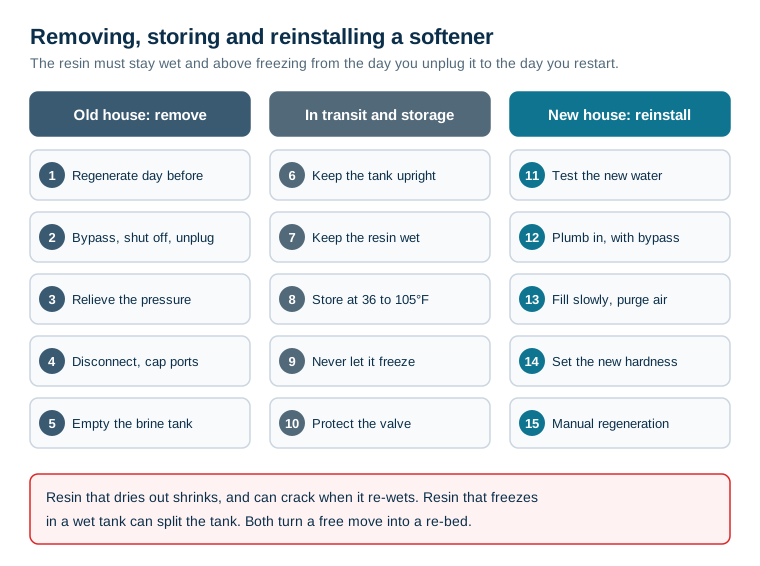
- Regenerate the day before. A fresh regeneration leaves the resin fully recharged and the tank full of clean rinse water, which is the best state to store it in.
- Put the unit in bypass, shut off the supply and unplug it.
- Relieve the pressure. Open a cold tap downstream, or start a manual backwash briefly, so the fittings are not under mains pressure when you undo them.
- Disconnect and cap. Undo the inlet and outlet at the bypass, the drain line and the brine line. Cap or tape the valve ports so nothing gets in.
- Leave the old house with water. If the softener came out of a loop, the loop still needs joining with a jumper or a bypass so the next owner has water. Do not leave open pipe ends.
- Empty the brine tank. Scoop out the salt, siphon or bail out the water, and lift out the brine well and float. A full brine tank is heavy and slops in transit.
Weight. A mineral tank full of wet resin and water is heavy. A 1.0 cu ft unit is a two-person lift. If you siphon off free water to lighten it, leave the resin itself wet.
Transport and Storage: Keeping the Resin Alive
Resin is the part of a softener that a move can quietly ruin. Two things damage it:
- Drying out. DuPont's guidance on ion exchange resin storage conditions warns that resin exposed to air dries and shrinks, and that dried resin is vulnerable to bead breakage when it re-swells too fast. Keep the tank capped with water in it.
- Temperature. The same guidance recommends indoor storage between 2 and 40°C, about 36 to 105°F. Below freezing, the water around the beads freezes. In a sealed softener tank, that means a real risk to the tank as well as the resin. A moving truck in winter or a summer storage unit can break either limit.
In practice:
- Keep the mineral tank upright so the resin bed and the distributor stay in place.
- Move it in the car or the heated part of the move, not a cold trailer overnight in January.
- Store it in the house, not the garage, until it is plumbed in.
- Protect the valve head. It is the most expensive single part and the easiest to crack. Wrap it and keep boxes off it.
- For storage beyond a few weeks, keep the tank sealed and full. Plan a regeneration and a thorough rinse before it goes back into service.
Reinstalling at the New House
Treat it as a new installation, because to the plumbing it is one.
- Test the new water if you have not already, and check the sizing numbers above.
- Plan the location. It needs a drain within reach of the drain line, an air gap at the drain, a standard outlet, a spot above freezing, and space for salt deliveries.
- Plumb it in with a bypass. If the house has no softener loop, this is plumbing work, and it may need a permit in your area.
- Fill slowly and purge the air. Bring water in gradually with the valve in backwash so trapped air and any disturbed fines leave through the drain.
- Program for the new water. Enter the new hardness, including any iron allowance your manual gives, plus the time of day and the regeneration time.
- Add water and salt to the brine tank, then run a manual regeneration. Watch the brine level drop during the draw stage to confirm the injector and brine line are working.
- Test the softened water the next day, and again the day before the next scheduled regeneration.
The full sequence, including valve-specific details, is in the water softener startup procedure.
When to Leave It Behind
Moving a softener makes sense when it is fairly young, owned, and suited to the new water. Leave it, sell it with the house, or scrap it when:
- The new water is much harder, and the unit would regenerate less than three days apart.
- The new supply carries iron, manganese or chloramine the unit was never set up for, and you are not adding pretreatment.
- It is old. A unit near the end of its valve or resin life is not worth paying to move and reinstall.
- It is a timer model. A move is a natural point to upgrade to demand-initiated regeneration.
- The new house already has a softener that inspects well.
- Reinstallation needs new plumbing, a drain run or an electrical outlet. That labour can approach the price of a basic new unit.
What moving it cannot fix: a softener only removes hardness. If the new water has bacteria, nitrate, arsenic or lead, the unit you bring will not address them. Test for those separately, especially on a private well.
So, can you move a water softener to a new house? Yes, if the numbers say it fits the new water. Test first, check the warranty and the paperwork, keep the resin wet and warm on the way, and program it for the water it will actually be softening.
Frequently Asked Questions
Can you take a water softener with you when you move?
Physically, yes. A whole-house softener disconnects at its bypass valve and can be reinstalled elsewhere. Before you do, check three things: whether your sale agreement treats it as a fixture that stays with the house, whether it is rented or leased rather than owned, and whether the new water suits it. Many warranties also end when the unit leaves its original installation site.
Is it worth moving a water softener?
It is worth it when the unit is fairly young, owned outright, and suited to the new water: similar hardness, no iron beyond what it can handle, and a household of similar size. It is usually not worth it when the new supply is much harder, carries iron or chloramine the old one never saw, the unit is near the end of its life, or the new house already has a softener. Removal and reinstallation labour can approach the cost of a basic new unit.
How do you prepare a water softener for moving?
Run a manual regeneration the day before so the resin is freshly recharged. Then put the unit in bypass, shut off the water, unplug it and relieve the pressure. Disconnect the plumbing, cap the ports, and empty the brine tank of salt and water. Keep the mineral tank upright, keep the resin wet, and do not let the unit freeze in the truck or in storage.
Can a water softener be stored?
Yes, for months, if the resin stays wet and the temperature stays above freezing. Resin manufacturer DuPont recommends storing ion exchange resin between 36 and 105 degrees Fahrenheit and warns that resin exposed to air dries out and shrinks, and can break when it re-swells. Keep the tank sealed and upright in a heated space, then regenerate it before use.
Do I need to reprogram a water softener after moving?
Yes. Test the new water's hardness and iron, then enter the new hardness, including any iron allowance your manual specifies, the time of day and the regeneration time. If the new water is much harder, check how often the unit will regenerate. If it would be less than about every three days, the unit is undersized for its new home.
Does a water softener warranty transfer to a new house?
Often not. Several published softener warranties apply only to the original owner at the original installation site. Hellenbrand's warranty, for example, states that coverage terminates if the system is moved from the original installation site, and WaterBoss's warranty is not transferable to other sites. Read your own document before you move the unit.
