
Why There Is No Water After Softener Installation
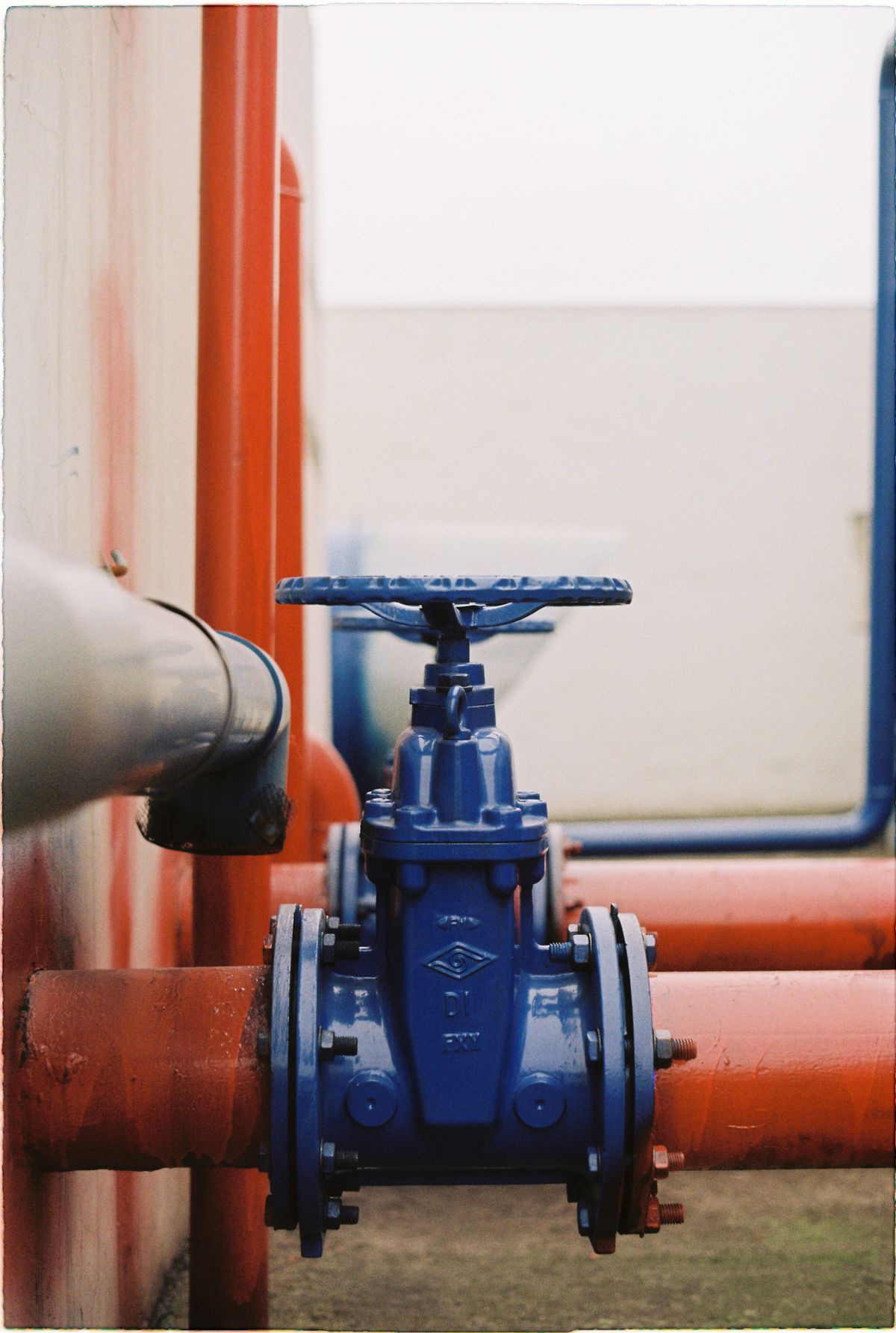
No water after installing water softener equipment almost always means a valve is in the wrong position or a screen is blocked by debris the installation knocked loose. Start at the bypass: put it fully into bypass. If water returns, the problem is in the softener; if not, it is upstream. Then work backward through the main, isolation valves and inlet.
Stay calm and work in order. This is nearly always fixable in under an hour, and you can usually get water back to the house in the first five minutes.
First Five Minutes: Get Water Back to the House
Before diagnosing anything, restore supply. Diagnosis goes faster when the household is not waiting on you, and the bypass test is the first diagnostic step anyway.
Put the softener into bypass. Bypass routes water around the unit and straight to the house. How you do it depends on the design:
| Bypass type | How to set bypass | What it looks like |
|---|---|---|
| Single lever or rotating handle | Turn to the position marked BYPASS | One valve body behind the control head |
| Push-pull knob or plunger | Push or pull as marked; often labelled with arrows | Two knobs or a single plunger at the back |
| Two knobs (inlet and outlet) | Turn both to BYPASS | Common on newer valve designs |
| Three-valve copper or PEX loop | Close inlet valve, close outlet valve, open the middle bypass valve | Three separate valves in the supply pipe |
Move it fully, not partly. Most no-water cases after installation involve a bypass left between positions. Push or turn it until it stops. If it will not move, do not force it — a cracked bypass body is a much bigger problem than a stuck one.
Then open a cold tap on the lowest floor and wait thirty seconds. Air and spitting at first are normal after the lines have been drained.
What the result tells you:
- Water flows in bypass: the fault is in the softener, its connections, or its screens. Diagnose at leisure with the house supplied.
- Still no water in bypass: the fault is upstream of the softener — the main, the meter, a PRV, the well system, or an isolation valve. The softener may be completely innocent.
- A trickle only: a partly closed valve or heavy debris. Keep going through the checks below.
No Water After Installing Water Softener: 8 Checks in Technician Order
Technicians do not check the most likely item first — they check the fastest one first, because a thirty-second check that rules out a cause is worth more than a thirty-minute one that might. Here is that order.
| # | Check | Time | Tools |
|---|---|---|---|
| 1 | Bypass position | 30 seconds | None |
| 2 | Main shutoff fully open | 1 minute | None |
| 3 | Inlet and outlet isolation valves | 1 minute | None |
| 4 | Control display: is it mid-regeneration? | 1 minute | None |
| 5 | Direction of flow: inlet and outlet correct | 2 minutes | Torch |
| 6 | Check valves and flexible connectors | 5 minutes | Torch |
| 7 | Inlet screen, meter and piston for debris | 20–40 minutes | Screwdriver, bucket, towels |
| 8 | Frozen or kinked supply line | 5 minutes | Hands, hairdryer |
1. Bypass position. Covered above. If bypass restores water and switching back to service kills it again, the fault is inside the softener side — carry on to checks 4 to 7.
2. Main shutoff fully open. Gate valves need many turns to open fully; people stop at the first sign of flow. Quarter-turn ball valves should sit with the handle parallel to the pipe. After a softener install, the main has usually been off and on, so check it is truly open. A partially seated old gate valve can also drop its disc — the handle turns but the valve stays shut. If the handle spins without resistance, that is the likely cause, and it needs a plumber.
3. Inlet and outlet isolation valves. Many installers fit separate shutoffs on either side of the softener. One of them is often left closed after testing. Every valve between the main and the house should be fully open, except a middle bypass valve on a three-valve loop.
4. Is the valve mid-regeneration? New units are often started with a manual regeneration to condition the resin. Look at the display: a cycle name or step counter (backwash, brine, rinse, refill) means the valve is regenerating. Most single-tank valves still pass untreated water to the house during regeneration, but some designs pass very little. Your manual will say how to advance the cycle to service. Do not unplug the unit mid-cycle as a shortcut; on some valves that leaves the piston in a regeneration position until power returns.
5. Inlet and outlet reversed. The valve or bypass body is marked IN and OUT, or with an arrow in the direction of flow. Reversed plumbing does not always stop flow, but it forces water up through the resin backward and in some configurations restricts it severely or pushes resin into the outlet. A quick look settles it. Reversal needs re-plumbing, not a valve adjustment.
The Inlet Screen Debris Case
This is the fault that surprises people, because the installation looked perfect and the softener is new.
Why it happens. Shutting off the main and turning it back on creates a surge. That surge breaks loose scale that has sat in old galvanised or copper pipe for decades. Cutting pipe leaves burrs and shavings. Soldering leaves beads of solder and flux. Thread tape shreds when fittings are overtightened. All of it travels downstream on the first rush of water and stops at the first narrow passage — which, after a softener install, is the control valve inlet, a bypass screen or the water meter's turbine.
Why it spikes after main-line work. A softener install is often combined with other work: a new main valve, a PRV, a water heater. Every one of those involves draining and refilling the lines. The more work done at once, the more debris is released. Houses with old galvanised pipe are especially prone.
What the manufacturer says. Pentair's Fleck 5600SXT service manual lists "inlet of control plugged due to foreign material broken loose from pipes by recent work done on plumbing system" as a cause of lost water pressure, with removal and cleaning of the piston and control as the correction. The same manual's start-up procedure tells the installer to run water through a nearby tap in bypass before putting the unit in service, specifically to flush out solder and other foreign material. When that flush is skipped, this is the result.
How to clear it.
- Put the unit in bypass and unplug the control.
- Depressurise the softener. Most valves have a way to do this — often by starting a manual regeneration briefly while in bypass, or by opening a sampling port. The manual will say. Never open a pressurised valve.
- Put towels down and a bucket under the valve. A little water will come out.
- Check any inlet screen in the bypass or yoke. Remove it and rinse.
- Remove the turbine meter or meter cartridge if your valve has one. Solder and shavings often jam the turbine. A jammed meter usually does not block flow on its own, but it will stop the unit counting gallons.
- Remove the piston assembly only if your manual covers it and you are comfortable. Debris lodged against the piston and seals is the classic case. Note the orientation before removing anything.
- Reassemble, return to service slowly, and open a cold tap to purge the air.
If you find resin beads rather than grit, that is a different problem: resin escaping from the tank through a damaged distributor tube or bottom screen. It needs a service visit, and the beads that reached the house are dealt with in resin beads in household plumbing.
Preventing a repeat. A sediment prefilter ahead of the softener catches this debris before it reaches the valve — useful in houses with old pipe or frequent main work. Penn State Extension's guide to water softening also warns that turbid water can clog the resin itself with mud and clay, so the same filter protects the bed as well as the valve. See a sediment prefilter before a softener for when it is worth fitting.
Check Valves, Connectors and Frozen Lines
6. Check valves and flexible connectors. A check valve fitted backward is a complete, silent blockage — water cannot pass at all. Check valves carry an arrow on the body that must point toward the house. Some installers fit one in the softener loop; look for it. While you are there, inspect flexible stainless or rubber connectors: a sharply kinked connector behind the tank can pinch almost shut. Connectors with small internal bores can also restrict flow, though they rarely stop it completely.
7. Inlet screen, meter and piston. Covered in the debris section above.
8. Frozen or kinked supply line. Softeners installed in garages, crawl spaces or against outside walls in winter can freeze, especially the new section of pipe that nobody insulated. A frozen line is cold to the touch and may frost on the outside. Warm it with a hairdryer, never a flame, and insulate afterward. The Fleck manual also warns that the unit itself cannot be subjected to freezing conditions — a frozen control valve can crack.
Less common, still seen:
- A new PRV set very low or installed backward
- A well pump that lost prime or tripped a breaker when the system was drained
- A plugged whole-house filter that was installed at the same time
- A push-fit fitting that slipped partly off a pipe end — this usually leaks rather than blocks, so look for water on the floor
When Bypass Works but Service Does Not
This is the most common outcome: water in bypass, none or very little in service. Everything points at the softener side.
| What you observe | Likely cause |
|---|---|
| No flow at all in service | Piston stuck in a regeneration position, debris against piston, reversed check valve in loop |
| A trickle in service | Heavy inlet debris, partly closed outlet valve, crushed or wrong-size connector |
| Normal flow for a minute, then drops off | Debris moving and lodging, or resin beads packing the outlet |
| Flow with water going to drain continuously | Valve stuck in backwash or rinse — see water softener constantly draining |
| Weak but steady flow, never zero | A restriction rather than a blockage — see low water pressure after a water softener |
A sharp question to ask yourself. Did water flow in service at any point after installation? If it did and then stopped, debris moved or the valve started a cycle. If it never did, suspect a valve position, a reversed fitting, or a check valve pointing the wrong way.
Restoring Supply If the Bypass Itself Is Faulty
Sometimes the bypass valve is the part that is broken — cracked, seized, or installed with an internal part missing. Then bypass does not restore water, and the house needs another route.
Option 1: three-valve loop. If the installer fitted separate inlet, outlet and bypass valves, use those. Close inlet and outlet, open the middle valve.
Option 2: remove the softener temporarily. Shut off the main, open a low tap to depressurise, unplug the unit, and disconnect the softener from its bypass or yoke. Many manufacturers sell a bypass jumper or loop fitting that connects the inlet and outlet ports directly. Failing that, a plumber can bridge the pipes. This is not a job to improvise with a garden hose at mains pressure.
Option 3: shut off the softener branch if the plumbing allows it and some fixtures are fed upstream. Rarely possible in a typical house, but worth knowing.
Protect the water heater. If the hot lines or the heater were drained during installation, do not restore power to an electric water heater until it has refilled and a hot tap runs without spitting. Dry-fired elements burn out almost immediately. Gas heaters should likewise be refilled before the burner is relit.
Expect air. When supply returns, every faucet will spit and sputter at first. That is normal and clears in minutes. Purge it in the right order — the method is in air in water lines after a softener.
What You Should Not Do
- Do not force a stuck bypass. Bypass bodies are plastic on many units and crack under a wrench.
- Do not open any part of the valve under pressure. Bypass and depressurise first.
- Do not unplug the control mid-regeneration to "reset" it. The piston may stay in a regeneration position.
- Do not run the house on a softener with a cracked bypass that is dripping or weeping; it gets worse, not better.
- Do not assume the softener is defective. New units rarely fail on day one. Installation positions and debris account for nearly all of these calls.
The limit of self-diagnosis. If the main valve disc has dropped, a check valve needs re-plumbing, the inlet and outlet are reversed, or the piston is damaged, that is plumbing or valve work. If you get to the end of this list with no water in service, the checklist in when to call a water softener technician will help you describe exactly what you have ruled out, which shortens the call considerably.
At the Unit, In Order
- Move the bypass fully to BYPASS and open a low cold tap.
- Water in bypass: the softener side is the problem. No water in bypass: go upstream.
- Confirm the main shutoff is fully open and its handle is not spinning freely.
- Open every isolation valve between the main and the house.
- Read the display for a regeneration step; advance to service per the manual.
- Check the IN and OUT markings and the arrow on any check valve.
- Look for kinked connectors and frozen pipe.
- Depressurise and clear the inlet screen, meter and piston of debris.
- Protect the water heater before restoring power if it was drained.
- Purge air from the lowest fixture up once water is back.
No water after installing a water softener feels like an emergency, and for the household it is — but it is almost never a failed softener. Bypass first, then work backward through the valves, then clear the debris the installation knocked loose. Most homes have water again before the kettle has boiled, and the rest have a precise list of what is and is not the problem.
Frequently Asked Questions
Why do I have no water after installing a water softener?
In most cases a valve is in the wrong position: the bypass is halfway between service and bypass, the main shutoff was not fully reopened, or an inlet or outlet isolation valve is still closed. The next most common cause is debris knocked loose during installation blocking the control valve inlet, a screen or a meter. Less often, the inlet and outlet are reversed, a check valve is fitted backward, or the valve is stuck partway through its first regeneration.
How do I get water back while my softener is being fixed?
Put the softener in bypass. Water then flows around the unit to the house untreated. If the unit has a three-valve bypass, close the inlet and outlet valves and open the middle bypass valve. If the bypass valve itself is the problem, the softener can be depressurised and removed, and the bypass ports bridged with a jumper or loop fitting so the house has water while the unit is diagnosed.
Does a water softener stop water flow during regeneration?
Most single-tank softeners send untreated water through an internal bypass to the house during regeneration, so you get hard water at somewhat reduced pressure rather than none. Some valve designs pass little or nothing while regenerating. If you have no water and the display shows a regeneration step, check the manual for your valve and let the cycle finish or advance it to service.
What happens if a water softener is installed backwards?
With inlet and outlet reversed, many valves still pass water, but it flows through the resin in the wrong direction. That can push resin beads into the house plumbing, give poor or no softening, and in some designs restrict flow badly. Inlet and outlet are marked on the valve or bypass with arrows or labels, and the arrow should point in the direction of flow toward the house.
Can debris block a water softener after plumbing work?
Yes. Turning the main off and on again, cutting pipe and soldering all dislodge scale, solder, shavings and PTFE tape, which then travel to the first narrow passage downstream. Manufacturer troubleshooting tables list an inlet plugged by material broken loose from pipes by recent plumbing work as a cause of lost pressure. The fix is to depressurise the unit, remove the piston or inlet screen and clean it.
Is it safe to leave my water heater on when there is no water?
If the water heater is still full, it is safe; no water is being drawn out. The risk arises if the hot water lines or the heater itself were drained during the installation. An electric water heater must never be powered while its tank is empty, because the elements burn out within seconds. Refill the tank and bleed air from a hot tap before restoring power.