
Signs a Water Softener Needs Professional Service

When to call a water softener technician: when the fix means taking the control valve off a pressurised tank, when the mineral tank is cracked or bulging, when a leak will not stop with the bypass closed, when the repair falls inside the warranty's exclusions, or when contamination is involved. Salt, brine tank, settings and screen problems are almost always DIY.
That leaves most faults in the do-it-yourself pile. The honest part is being clear about the ones that are not.
The Three Reasons a Job Leaves the DIY Pile
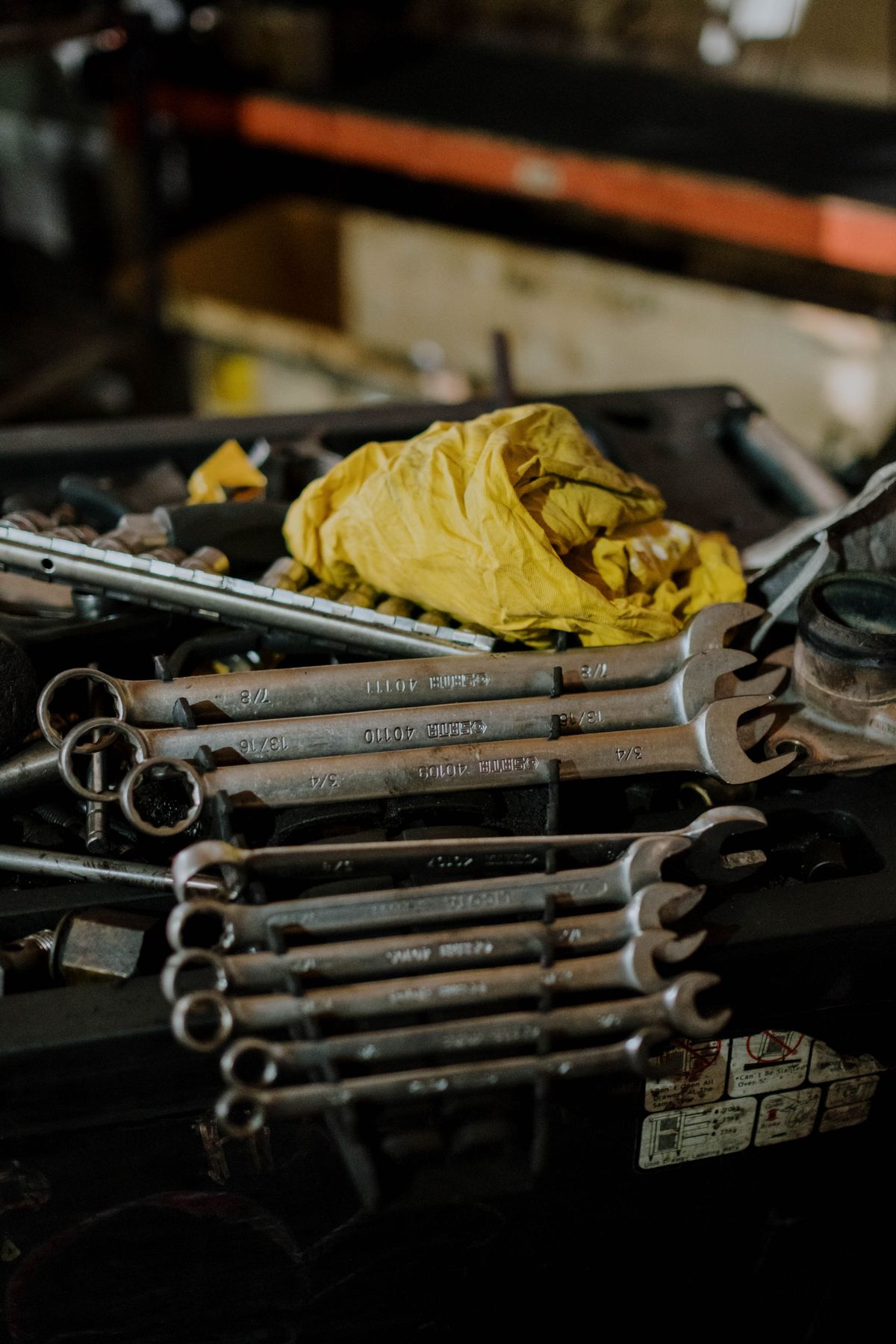
Difficulty is rarely the real reason to call someone. Most softener repairs are mechanically simple. What matters is what happens if the repair goes wrong, and that comes down to three risks.
1. Water damage exposure. The mineral tank and control valve sit under full house pressure all day, often in a basement with a finished floor above or beside it. A brine tank holds a few gallons at atmospheric pressure. A mistake there means a mop. A cross-threaded valve on a mineral tank, or an O-ring pinched during reassembly, means mains water running for as long as it takes someone to notice. The question to ask: if I get this wrong, does water stop by itself?
2. Contamination risk. The softener sits on the drinking water supply for the whole house. Most repairs do not open it to anything nasty, but a few do: a flooded basement that submerged the unit, a drain line with no air gap that could siphon waste water back, a bacterial result on a well test, or a resin bed that has grown slime. Those jobs involve sanitising and, sometimes, the rules on backflow and drain connections. The EPA's guidance for private drinking water wells is the reference for what to do when a well supply may be contaminated. A softener repair is not the moment to improvise.
3. Warranty language. Softener warranties are more restrictive than most owners realise. The published WaterBoss limited warranty is typical. It does not cover service call or labour costs. It excludes damage from improper installation and from "unreasonable use, abuse, or neglect by the owner". It also withdraws its obligations if the supply contains sand, bacterial iron, tannins or similar substances that were not pretreated. Opening the valve yourself is not automatically a void, but a failure that follows it is easy to argue into one of those exclusions. Read your own warranty before you touch a screwdriver.
The rule of thumb. If a mistake would flood the floor, touch the drinking water, or hand the manufacturer a reason to refuse a claim, it belongs further down the table.
The Triage Table

These are the faults this site covers, sorted by who should fix them and why. "Caution" means an owner can do it, but should read the manual first, isolate the unit, and stop if anything does not match what they expected.
| Fault | Pile | Why |
|---|---|---|
| Salt bridge or crust | DIY | Unpressurised tank, no parts, nothing to break except the tank wall if you use a metal bar |
| Salt mushing / sludge in brine tank | DIY | Brine tank cleanout with a bucket |
| Softener not using salt | DIY | Nearly always a bridge, a blocked injector screen, or a brine line fitting |
| Using too much salt | DIY | Settings: hardness, salt dose, refill time |
| No water in brine tank | DIY | Injector, refill flow control or float. Small, cheap parts |
| Water still hard / only some taps soft | DIY | Bypass position, settings and testing come first |
| Error code or blank display | DIY first, then call | Power, transformer and reset are owner steps. A motor or board fault is not |
| Air in faucets after service | DIY | Bleed the lines. Nothing is wrong |
| Sediment prefilter clogged | DIY | Change the cartridge on pressure drop |
| Brine tank full of water or overflowing | Caution | Float and injector are DIY. A valve that will not stop refilling is internal |
| Making noise | Caution | Normal cycle noises are fine. Grinding or a motor straining can mean a valve fault |
| Bypass valve leaking | Caution | O-ring replacement is simple, but the bypass is your isolation point. If it fails open you need the main shut-off |
| Drain line leaking | Caution | Easy to reconnect. Must keep a proper air gap, which is a backflow requirement |
| Low pressure after softener | Caution | Prefilter and bypass checks are DIY. An undersized valve or a crushed distributor is not |
| Water hammer after softener | Caution | Often the valve's fast closing. Arrestors are plumbing work |
| Will not regenerate | Caution | Clock, settings and power are DIY. A dead drive motor or a jammed piston is technician work |
| Stuck in regeneration / constantly draining | Call, after one reset | Almost always worn seals and spacers or a jammed piston inside the valve |
| Leaking at the control head or tank neck | Call | Full house pressure. Resealing means removing the valve from the tank |
| Resin beads in household plumbing | Call | Broken distributor tube or upper basket. The valve comes off and the bed is disturbed |
| Resin replacement (re-bed) | Call unless experienced | Heavy, messy, and the distributor tube must be reset correctly or beads reach your taps |
| Cracked or bulging mineral tank | Call now | Replace, do not repair. It can fail completely |
| Unit flooded, or bacteria on a well test | Call | Sanitising, and possibly the supply, not just the softener |
What moves a fault between piles. The same symptom can sit in different piles depending on what the first checks find. A softener that "will not regenerate" because the clock was reset by a power cut is a one-minute DIY fix. The same symptom caused by a stripped drive gear is not. Do the owner-level checks first, then decide.
The DIY Pile: What Almost Anyone Can Do
These faults share three features: the parts involved are not under pressure, a mistake is visible and reversible, and nothing about them affects the warranty.
- Anything in the brine tank. Bridges, sludge, a stuck float, a dirty brine well. The full cleanout sequence is in how to clean a water softener brine tank.
- Settings. Hardness, time of day, regeneration time, salt dose. The manual lists them and a wrong setting cannot damage anything.
- The injector screen and nozzle. Behind a cap on the side of the valve on most models. Take a photo before dismantling, rinse the parts clear, and never push metal through the holes.
- Prefilters. Changing a sediment cartridge is the same job as any filter housing. The change rule is in when to replace a sediment prefilter.
- Testing. Raw against soft, early and late in the cycle. Most "the softener has stopped working" calls turn out to be a bypass left half-open or a setting that no longer matches the water. The test method is in how to check if your water softener is working.
- Resin cleaner on iron-bearing water. It goes down the brine well and the softener does the rest.
All of the routine items on that list appear in the water softener maintenance schedule. Following it prevents most of what appears lower down the table.
The Caution Pile: What Makes These Riskier
These are still owner jobs for someone reasonably handy. The risk is that each one sits right next to something that is not.
The bypass valve. Replacing its O-rings is a small job, but the bypass is what isolates the softener. If you take it apart without closing the main shut-off, or it will not reseal, you have lost the only valve between the softener and mains pressure. Know where the house main is before starting, and have the replacement O-rings in hand.
The drain line. Pushing a line back onto its fitting is trivial. Where it discharges is not. A softener drain needs an air gap above the receiving drain, so waste water cannot be siphoned back into the valve. That is a backflow protection matter, not a tidiness one. If your line runs straight into a standpipe with no gap, fixing that is worth doing properly.
Refill and brine problems. The float, brine line and injector are DIY parts. If the brine tank keeps filling with the float working, the cause is a valve that is not closing the refill port, and that is internal.
Noise. Hissing, gurgling and a motor clicking through positions are normal during regeneration. Grinding, a motor that strains or stalls, or knocking in service are symptoms of internal wear.
Stop and call if a part does not match the manual's diagram, a fitting will not seal on the second attempt, or water appears anywhere you did not expect it.
The Call-Someone Pile, and Why It Is There
Removing the control valve from the mineral tank. This is the dividing line. Resealing a leaking tank neck, replacing a distributor tube, re-bedding resin and clearing a broken upper basket all need it. The valve threads into a fibreglass tank. Cross-threading it, over-tightening it or leaving the distributor tube a few millimetres out of position all produce either a leak under pressure or resin beads in the plumbing. It is not difficult for someone who does it weekly. It is a gamble for someone doing it once.
Internal valve rebuilds. Pistons, seals and spacer stacks wear, and they are the usual cause of a softener that runs to drain constantly or sticks mid-cycle. Kits exist, and some owners fit them successfully. Seal stacks go in one way, and a wrong order gives exactly the fault you were trying to fix. On a valve under warranty, this is the manufacturer's or dealer's job.
Mineral tank damage. A bulge, a soft spot or a crack in the tank is not something to monitor. Fibreglass pressure tanks can fail suddenly. Shut off the supply to the softener, bypass it, and replace the tank.
Anything involving contamination. A unit that has been under floodwater, a well test that came back positive for bacteria, or a slimy resin bed with an odour. The fix involves sanitising the softener, and possibly the well and plumbing, with a method matched to the equipment. Penn State Extension's overview of water softening notes that periodic cleaning with chlorine bleach can deal with bacterial mats, but also tells owners to read the manufacturer's instructions before adding any chemical, because bleach also damages resin.
Electrical faults. A dead display after the transformer and outlet have been checked, a burnt smell, or a motor that will not turn. Parts are model-specific, and a wrong board or motor is expensive to return.
What a technician cannot fix either. Worth saying plainly: a service visit does not make an undersized softener adequate, does not make a softener treat water it was never meant to treat, such as high iron without pretreatment, and does not make softened water safe from contaminants it does not remove. If the problem is the water rather than the equipment, the answer is a water test and the right treatment, not a repair.
Before the Technician Arrives
A service visit is usually charged by the hour or by the call. Every question the technician does not have to ask saves you money and gets a faster diagnosis.
- Put the unit in bypass if it is leaking or running to drain, and note the time.
- Write down the model and serial number. They are on a label on the valve or the tank.
- Find the installation date and the warranty. Receipts, the manual, or a dealer sticker.
- Record raw and softened hardness, with the date you tested.
- Photograph the display, including any error code, and the valve from each side.
- Note when the fault started and what changed around then: a power cut, plumbing work, a new salt, a household change.
- Bring your maintenance log. Gallons between regenerations over recent months often points straight at the cause.
- Clear access to the valve, both tanks, the drain and the bypass.
Choosing who to call. For a dealer-sold unit, check whether the warranty requires that dealer. Otherwise, an independent water treatment specialist who stocks parts for your valve brand is usually a better first call than a general plumber for internal faults. A plumber is the right call for relocation, reconnection, drain and air-gap work. Ask whether the technician holds a Water Quality Association certification, and ask for a quote that separates parts from labour.
When to Call a Water Softener Technician: The Line, In Order
- Do the owner checks first: power, bypass position, settings, salt, brine tank, injector screen, and a raw against soft test.
- Ask whether a mistake stops by itself. If it would not, the job is not DIY.
- Ask whether the repair opens the drinking water side to contamination. If yes, call.
- Read the warranty before opening the control valve.
- DIY: anything in the brine tank, settings, screens, prefilters, testing and resin cleaner.
- Caution: bypass O-rings, drain line, refill problems, noise and pressure checks. Stop at the first surprise.
- Call: valve off the tank, internal rebuilds, tank damage, contamination and electrical faults.
- Prepare the model, serial, test results, photos and log before the visit.
Knowing when to call a water softener technician is not an admission of defeat. It is what makes all the DIY advice elsewhere on this site trustworthy. Most faults really are ten-minute jobs, and knowing which ones are not saves a ceiling, a warranty claim, or a well.
Frequently Asked Questions
When should I call a professional for my water softener?
Call when the fix means removing the control valve from the tank, replacing resin or internal valve parts you have not worked on before, dealing with a cracked or bulging mineral tank, or any leak you cannot stop with the bypass. Also call when the unit is still under a warranty that excludes owner repairs, or when the problem involves contamination such as a sewage backflow or a bacterial result on a well test. Salt, brine tank and settings problems are almost always DIY.
What kind of technician fixes water softeners?
A water treatment dealer or independent water treatment specialist is usually the best first call, because they carry valve parts and know the brands. Many plumbers will reconnect, relocate or replace a softener but may not stock internal valve parts. For a unit sold by a dealer, check whether the warranty requires that dealer to do the work. Ask whether the technician holds a Water Quality Association certification.
Can I repair my own water softener?
Most common faults, yes. Breaking a salt bridge, cleaning the brine tank, clearing the injector screen, resetting the clock, adjusting the hardness setting and changing a prefilter need no special skill. Swapping a bypass O-ring or a drain line is reasonable with care. Removing the valve from a pressurised mineral tank, rebuilding the valve's piston and seals, or replacing resin are jobs where mistakes cause floods or damage expensive parts.
Will repairing my own water softener void the warranty?
It can. Typical softener warranties exclude damage caused by improper installation, abuse or neglect, and many do not cover labour at all. WaterBoss's published warranty, for example, excludes damage from improper installation and from unreasonable use, abuse or neglect by the owner. Read your own warranty before opening the valve, and keep a dated maintenance log, because it is your evidence against a neglect exclusion.
Why is my water softener constantly running water to the drain?
Usually because the control valve is stuck part-way through a cycle, or because worn seals and spacers inside the valve are letting water past to the drain. A power cut mid-regeneration can also leave some units stuck. Unplugging it for a minute and letting it return to service is a safe first step. If water still runs to the drain, the fix is inside the valve, which is a job for a technician for most owners.
Is a leaking water softener an emergency?
A leak from the brine tank overflow or a drain line is messy but not urgent: bypass the unit and deal with it the same day. A leak from the mineral tank itself, from the joint between the valve and the tank, or anything you cannot stop with the bypass is urgent, because those parts are under full house pressure. Shut off the supply to the softener and call someone.