
Should a Humidifier Use Softened Water?

Softened water in a humidifier either helps or does nothing, depending on the type. For the ultrasonic unit on a nightstand, it does nothing: it still leaves white dust, because softening swaps minerals rather than removing them. For whole-house humidifiers the answer flips. A flow-through pad scales less on softened water, and two major manufacturers tell installers their steam units can run on it.
The one-word answer online, usually "no", comes from tabletop units. It is wrong for the equipment bolted to a furnace.
Softened Water in a Humidifier: The Answer by Type
Humidifiers handle minerals in completely different ways, so the water question has five answers.
| Humidifier type | How it adds moisture | Where the minerals go | Softened water? |
|---|---|---|---|
| Ultrasonic (tabletop) | Vibrating plate turns liquid water into fog | Into the air, then onto furniture as dust | No benefit. Use distilled or RO |
| Impeller or cool mist (tabletop) | Spinning disc flings water into droplets | Into the air | No benefit. Use distilled or RO |
| Evaporative wick (tabletop) | Fan pulls air through a wet wick | Trapped in the wick | Neutral. Check the manual |
| Whole-house bypass or flow-through | Water runs down a pad in the duct airflow | On the pad, and down the drain | Helps. Less scale on the pad |
| Whole-house steam | Boils water in a canister or tank | Left in the canister, flushed to drain | Often recommended, with trade-offs |
The first two rows are covered in depth in why a humidifier leaves white dust. The short version is below. The rest of this page is about the rows most articles skip.
Tabletop Ultrasonic and Impeller Units: Softening Does Not Help
An ultrasonic humidifier shatters water into droplets small enough to float. When they evaporate, everything that was dissolved in them is left in the air and settles as fine white dust.
A softener does not reduce that load. It removes calcium and magnesium by exchanging them for sodium, so the total dissolved solids stay about the same. The dust carries on, sodium-based instead of calcium-based. That is the core limit explained in what a water softener does not remove. For these units, distilled or reverse osmosis water is the fix, or swapping to a type that keeps minerals out of the air.
Evaporative Wick Units: Neutral, Check the Manual
A tabletop evaporative humidifier works like the whole-house kind in miniature. A fan pulls room air through a wick standing in a water tray, and the minerals stay behind in the wick instead of reaching the room. That is why these units do not make white dust.
Over time the wick loads with whatever the water left behind. On hard water, that is mostly calcium carbonate, which sets into a stiff crust and cuts evaporation. Softened water prevents that crust. But the tank does not drain, so the other dissolved solids, including the added sodium, still concentrate in the wick and tray as water evaporates. Expect a softer, less crusty wick, not a wick that lasts forever. Follow the manual's replacement schedule, and its water guidance if it gives any.
Whole-House Bypass and Flow-Through: Where Softened Water Helps
This is the case most articles miss. A whole-house flow-through humidifier mounts on the furnace ductwork. Water trickles down an evaporator pad while warm air from the furnace passes through it. Part of the water evaporates into the air, and the excess, carrying most of the minerals, runs to a floor drain.
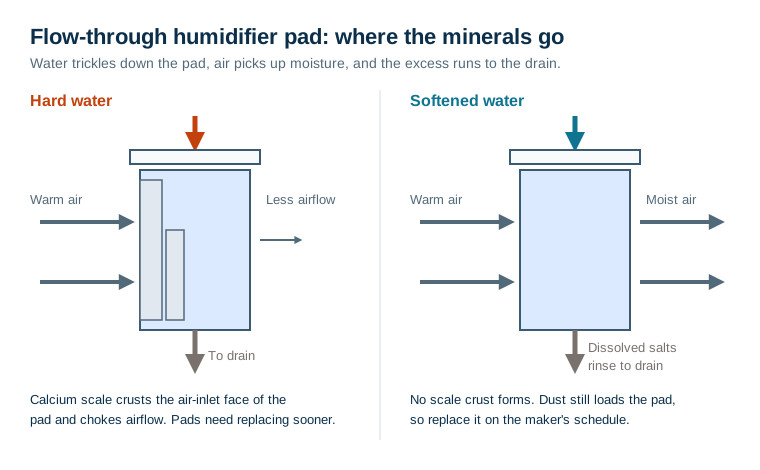
The pad is where hard water shows. Each pass leaves a little calcium carbonate on the evaporating surface, and the crust grows on the side facing the incoming air. As it grows, it stiffens the pad and blocks airflow, and output drops. Manufacturers tie pad life to hardness. Hamilton Home Products says of its 12HF flow-through humidifier: replace the evaporator pad at least once per season based on the hardness of the water supply.
On softened water, there is no calcium to crust. The sodium that replaced it stays dissolved and washes to the drain with the excess water, rather than building up on the pad. The pad still collects dust from the airstream, so it still needs replacing on schedule. It just stops being choked by scale partway through the season.
Manufacturers are comfortable with this. Aprilaire's own humidifier guidance says its evaporative humidifiers work effectively with hot, cold, hard or soft water, and recommends hot water where possible to help evaporation.
Whole-House Steam Humidifiers: Two Designs, Two Answers
Steam humidifiers boil water and inject the steam into the ductwork. They are used where a flow-through pad cannot keep up, for example in tight homes or with heat pumps that deliver cooler air. There are two ways to boil the water, and they react to softened water differently.
Electrode canisters
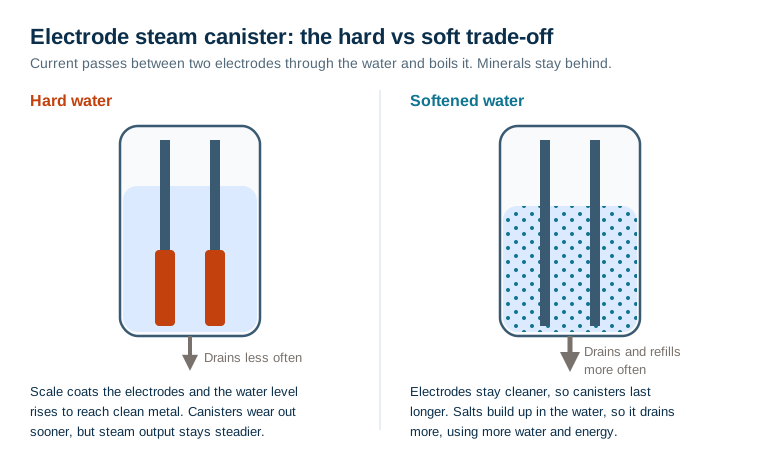
An electrode steam humidifier passes current between two metal electrodes through the water. The water's own dissolved minerals carry the current, so it needs some mineral content to work at all.
Aprilaire's Model 800 installation manual is unusually open about the trade-off:
- It is designed for water with conductivity between 125 and 1,250 microsiemens per centimetre, which it says correlates loosely with 3 to 36 grains per gallon. Both hard and softened water work well.
- Hard water means less frequent draining and filling, so better water and energy efficiency and steadier output. But scale coats the electrodes, so the canister needs replacing more often.
- Softened water means longer canister life, because it does not coat the electrodes nearly as much. But its ions stay in solution to much higher concentrations, so the unit drains and refills more often, using more water and energy.
- The troubleshooting table tells owners to plumb to softened water if the canister fills with mineral deposits before the end of the season.
- It says not to use demineralized or reverse osmosis water at all.
That last point is the reverse of the tabletop advice. The water that fixes an ultrasonic unit stops an electrode unit from working.
Heating-element tanks
The other design heats water with an element, like a small electric kettle. Honeywell's TrueSTEAM is the common residential example. Here, mineral load decides how often the tank must be flushed to get rid of what boiling leaves behind. The TrueSTEAM homeowner's manual lists the installer's choice of automatic flush intervals:
| Water supply | Automatic flush interval |
|---|---|
| Hard water | Every 8 hours of operation (recommended) |
| Factory setting | Every 12 hours |
| With a water softener | Every 20 hours |
| With the optional RO filter | Every 30 hours |
The manual also says your home's water hardness determines how often the unit needs cleaning. On softened water, it flushes less than half as often as on hard water. That saves water and time, and means less scale to clean out of the tank.
Plumbing a Whole-House Humidifier in a Softened House
Most whole-house humidifiers are fed by a small supply tube tapped into a nearby pipe, often whichever line is closest to the furnace. In a softened house, that line is usually softened, but not always. Outdoor spigots and some kitchen cold lines are often left on hard water, and a furnace near one of them may have been tapped into it. Trace the tube before you draw conclusions from the pad or canister.
Which line to use depends on the design:
- Evaporative bypass and flow-through units. Aprilaire prefers hot water, because the heat speeds evaporation. A softened hot line is ideal. Hard water works too, but the pad scales faster and needs changing more often.
- Electrode steam units. Aprilaire's Model 800 needs a cold supply, hard or softened, because cold supply water is used to cool the hot water it drains. Never use hot water, and never an RO or demineralized line.
- Heating-element steam units. Follow the manual. Tell whoever sets up the unit that the water is softened, so the flush interval matches.
Two other points worth checking at the same time:
- The drain. Flow-through and steam units send water to a floor drain or condensate pump. On softened water that drain water carries dissolved sodium salts rather than a calcium slurry. It is ordinary household wastewater, but the drain line must be clear. A pad unit with a blocked drain will overflow.
- The shut-off. Close the supply valve at the end of the heating season. A flow-through unit left on can keep running water to the drain whenever the humidistat calls, and a steam unit left full sits with concentrated water in its canister or tank.
How to tell which whole-house type you have
- A panel or cabinet on the duct with a replaceable pad inside is a bypass or flow-through evaporative unit. A bypass unit has a round duct connecting the supply and return plenums. A fan-powered unit has its own small fan.
- A cabinet with a steam hose or a dispersion tube into the duct, plus electrical wiring heavier than a thermostat cable, is a steam unit. If the service part is a sealed plastic canister, it is an electrode design. If you drain and clean a metal or plastic tank, it is usually a heating-element design.
What Softening Changes and What It Does Not
| Changes on softened water | Does not change | |
|---|---|---|
| Ultrasonic tabletop | Chemistry of the white dust | The amount of dust |
| Evaporative wick | Less calcium crust in the wick | Build-up of other dissolved solids |
| Flow-through pad | No scale crust on the pad | Dust loading and yearly pad replacement |
| Electrode steam | Longer canister life | More drain cycles and water use |
| Element steam | Longer flush interval, less cleaning | Need to flush and clean at all |
Two limits apply across the board. A softener does not sterilise water, so tank and tray hygiene is the same job either way. And it does not reduce total dissolved solids. Anything that turns water into airborne droplets will put those solids into the air.
If you are working through other appliances that boil water, the same sodium question comes up in softened water in steam ovens, irons and coolers, where some manufacturers exclude softened water entirely.
What to Do Next
- Identify your type. Look for a water line to the unit (whole-house) or a tank you fill by hand (tabletop). For a whole-house steam unit, find out whether it is electrode or heating-element.
- For a tabletop ultrasonic, do not expect a softener to help. Use distilled or RO water, or switch to an evaporative model.
- For a flow-through unit, feed it from the softened supply if you have one, and keep replacing the pad on the maker's schedule.
- For an electrode steam unit, softened water is fine and often better for the canister. Never feed it RO or distilled water.
- For an element steam unit, tell your installer the house has a softener so the flush interval can be set to match.
Frequently Asked Questions
Can I use softened water in an ultrasonic humidifier?
You can, but it will not stop the white dust, which is usually why people ask. A softener swaps calcium and magnesium for sodium without lowering total dissolved solids, and an ultrasonic humidifier sprays whatever is dissolved into the room. The dust changes chemistry, not quantity. Distilled or reverse osmosis water is what reduces it.
Is softened water good for a whole-house humidifier?
For most whole-house types, yes. Aprilaire says its evaporative humidifiers work with hot, cold, hard or soft water, and its Model 800 steam manual tells owners to plumb to softened water when the canister fills with mineral deposits before the end of the season. Honeywell's TrueSTEAM manual lists a longer automatic flush interval, 20 hours instead of 8, when a water softener is installed.
Can I use distilled water in a whole-house steam humidifier?
Not in an electrode steam humidifier. Aprilaire's Model 800 manual says not to use demineralized or reverse osmosis water, because an electrode unit needs dissolved minerals to conduct current. It is designed for water between 125 and 1,250 microsiemens per centimetre, which Aprilaire says loosely matches 3 to 36 grains per gallon. This is the opposite of the advice for tabletop ultrasonic units.
Does softened water make a humidifier grow bacteria?
There is no evidence that softened water encourages growth more than tap water does. What matters is standing water and cleaning. Tabletop tanks should be emptied, rinsed and dried regularly whatever water goes in them. Whole-house flow-through units avoid standing water by sending the excess to a drain.
Why does my humidifier wick get hard and crusty?
The wick is trapping the minerals left behind as water evaporates. On hard water that is mostly calcium carbonate, which sets into a stiff crust and cuts evaporation. Softened water stops the calcium crust but not the build-up of the other dissolved solids. Replace the wick on the maker's schedule either way.
What is the best water for a humidifier?
It depends on the type. For ultrasonic and impeller units, distilled or reverse osmosis water, because they spray dissolved minerals into the air. For whole-house flow-through and steam units, the plumbed house supply, and softened water is often the better choice. For electrode steam units, never demineralized water, because they need conductive water to work.
