
Should a Kitchen Drinking Tap Bypass the Softener?
Should a kitchen tap bypass the water softener? It can, and it avoids the sodium a softener adds, but for most homes it is not the best option. A bypass tap delivers untreated water, with the hardness and everything else the house treatment was installed to remove. A reverse osmosis (RO) unit on the softened line is usually the better choice. It cuts the added sodium and much more.
The right answer depends on two things: why the house has treatment in the first place, and who is drinking the water. This guide sets out the three options side by side, gives the sodium figures that drive the decision, and explains the flaw in the bypass approach that rarely gets mentioned.
Kitchen Tap Bypass, Softened Tap or RO: The Three Options
There are three ways to plumb the kitchen drinking water in a house with a whole-house softener.
- Hard bypass tap. A cold line taken off the main before the softener feeds the kitchen cold tap or a separate drinking faucet.
- Softened throughout. The kitchen cold tap gets the same softened water as the rest of the house.
- Softened plus point-of-use RO. An under-sink reverse osmosis unit treats the softened cold water and feeds a separate drinking faucet.
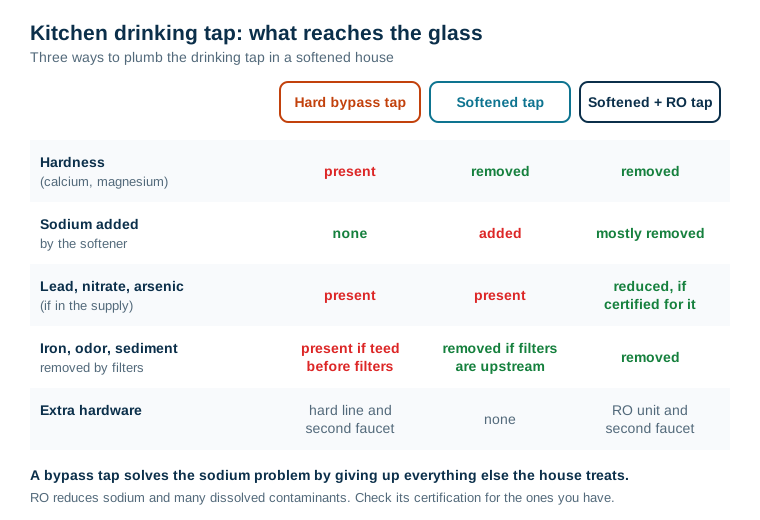
| Hard bypass tap | Softened throughout | Softened + RO | |
|---|---|---|---|
| Added sodium | None | Yes, proportional to hardness | Mostly removed |
| Hardness in drinking water | Yes | No | No |
| Contaminants the softener does not remove | Present | Present | Many reduced, if certified for them |
| Treatment from other whole-house filters | Lost if teed before them | Kept | Kept |
| Scale on the kitchen faucet and kettle | Yes | No | No |
| Cost to add | Pipe and a faucet | Nothing | RO unit, faucet, filter changes |
| Water to drain | None | None | Some, with every tank refill |
How Much Sodium the Softened Tap Actually Adds
The case for a bypass tap rests on sodium, so start with the numbers.
A softener swaps each unit of hardness for sodium. Penn State Extension's water softening guide puts it at 7.5 mg of sodium per quart for each grain per gallon (gpg) of hardness removed. A quart is close to a liter, so the figures below are per quart and per two quarts, a common daily drinking allowance.
| Raw hardness | Sodium added per quart | In 2 quarts a day | Share of a 2,300 mg daily limit |
|---|---|---|---|
| 5 gpg | 38 mg | 75 mg | 3% |
| 10 gpg | 75 mg | 150 mg | 7% |
| 15 gpg | 113 mg | 225 mg | 10% |
| 20 gpg | 150 mg | 300 mg | 13% |
| 30 gpg | 225 mg | 450 mg | 20% |
Calculated from the Penn State figure. Add whatever sodium your raw water already carries, which your water report or a lab test will show.
For most healthy adults this is a small share of total intake. Food supplies the rest. It matters more in three cases:
- Sodium-restricted diets. EPA's drinking water advisory on sodium sets a guidance level of 20 mg/L for people "restricted to a total sodium intake of 500 mg/day." Softened water from even moderately hard supplies is well above that.
- Very hard water. At 30 gpg the added sodium starts to become noticeable. EPA's advisory says sodium between 30 and 60 mg/L is where taste-sensitive people start to notice it.
- Infant formula and cooking. Mixing formula or reducing stocks concentrates whatever the water carries.
If anyone in the house is under medical advice about sodium, treat the drinking water as their doctor's decision, not a plumbing preference. How much sodium a water softener adds goes further into the figures, including potassium chloride as an alternative. For a household that has to cut it, compare potassium, RO and a bypassed kitchen line on sodium removed and 10-year cost.
The Flaw in the Bypass Approach
A bypass tap does exactly what it says: the water goes around the treatment. Most installers present it as "the same water minus the softening," but that is only true when the softener is the only treatment in the house and the water has no other problem.
Houses often have a softener because of a water problem that went beyond scale. The well tested high in iron. There is a sediment filter and an iron filter upstream. There is a carbon filter for odor. A bypass line teed off the main where it enters the house skips all of it. The drinking tap then gets the least-treated water in the building, which is backwards.
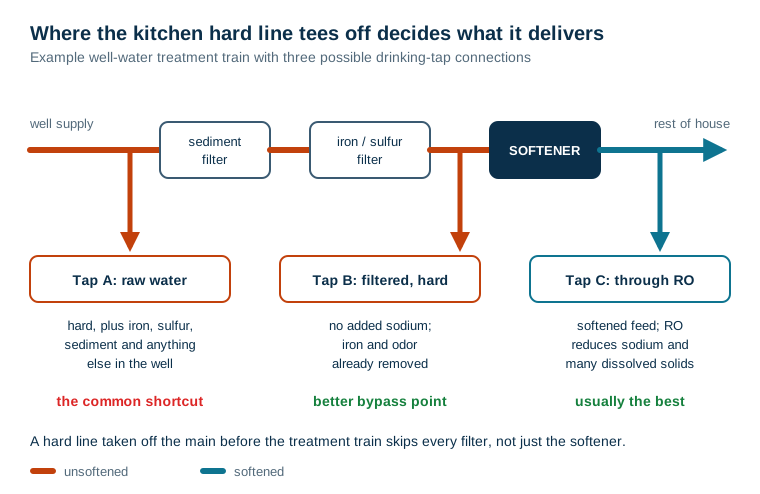
Where the tee goes decides what the tap delivers:
- Teed at the main, before all treatment: raw water. Hardness, iron, sulfur, sediment, and anything else in the supply. This is the most common shortcut, because the main is often the easiest pipe to reach.
- Teed after the filters, just before the softener: filtered hard water. This is the correct place for a bypass line in a house with a treatment train, and it gives up only the softening.
- After the softener, through RO: softened feed water, with RO reducing sodium and many other dissolved solids.
Softeners do not remove most health contaminants. A softener is not a safety device. The CDC's overview of home water treatment systems describes softeners as removing "minerals, primarily calcium and magnesium." It says reverse osmosis "will remove some types of chemicals from water, including lead, copper, chromium, chloride, and sodium (salt)." Lead, nitrate or arsenic in the supply reach the kitchen through a bypass tap and a softened tap alike. What a water softener does not remove lists the contaminants that pass straight through.
So the question to ask first is not "sodium or no sodium," but "what is in my raw water?" If you do not know, test it before you decide how to plumb the drinking tap.
Option 1: The Hard Bypass Tap
When it makes sense:
- The water is tested, and hardness is its only real problem.
- City water, or a well with a clean test, and no other whole-house treatment.
- Someone in the house wants no added sodium, and you do not want an RO unit's filter changes or drain connection.
How it is usually done:
- A tee on the cold supply, after any filters and before the softener, feeds a dedicated line to the kitchen.
- The line feeds either the cold side of the main kitchen faucet or a separate small drinking faucet. A separate faucet is the better choice, because it keeps softened water in the main faucet's cold side for rinsing dishes without spots.
- In new construction, ask for the kitchen hard line to be run at rough-in. It costs little then. Retrofitting it later means getting a pipe from the utility area to the kitchen, often through finished walls.
The trade-offs:
- Scale comes back at that tap. The drinking faucet, the kettle and the coffee maker get hard water, with the scale that comes with it.
- Two cold waters at one sink confuse guests and family. Label the drinking faucet.
- It fixes nothing else. Whatever is in the supply at the tee point is in the glass.
Option 2: Softened Water Throughout
When it makes sense:
- Moderate hardness, so the added sodium is small.
- Nobody in the house is on a sodium-restricted diet.
- The raw water has no health-related problem that a softener leaves in place.
This is the default in most installations, and for many households it is fine. The kitchen gets scale-free water, the kettle stays clean, and there is nothing extra to maintain. Its weakness is the reverse of the bypass tap: sodium rises with hardness, and on very hard water the drinking water can taste slightly salty.
Option 3: Softened Water Plus Reverse Osmosis
When it makes sense:
- Anyone in the house limits sodium.
- The water test found something besides hardness that you want reduced at the drinking tap.
- Hardness is high enough that softened water tastes salty.
Why a softener and RO work well together: the softener protects the RO membrane from scale, and the RO removes most of the sodium the softener added. How reverse osmosis and a water softener work together covers the membrane-life side of that pairing. When you get to choosing an RO unit to run on softened water, start with its NSF/ANSI 58 listing.
The trade-offs:
- Cost and upkeep. The unit, a faucet, periodic prefilter and membrane changes.
- Water to drain. RO sends a share of the water it treats to drain. The amount depends on the unit and the water pressure.
- Certification matters. An RO unit reduces what it is certified to reduce. If you are treating for a particular contaminant, such as lead, nitrate or arsenic, check that the unit's certification lists it. The APEC ROES-50 review checks one plain five-stage tank unit on softened water: its NSF/ANSI 58 listing, what it makes a day for a family of four, and what it sends to drain.
- Space. Under-sink RO needs room for the filters and storage tank, plus a drain connection.
Which Option Fits Your House
| Situation | Best fit | Why |
|---|---|---|
| City water, moderate hardness, no sodium concerns | Softened throughout | Simplest. Added sodium is small |
| Someone on a low-sodium diet | Softened + RO | Cuts sodium without giving up other treatment |
| Well with iron, sulfur or sediment filters | Softened + RO, or a hard line teed after the filters | A tee at the main would skip those filters |
| Test found lead, nitrate or arsenic | Treatment certified for that contaminant | A softener and a bypass tap both leave it in place |
| Very hard water, softened water tastes salty | Softened + RO | Removes the salt taste |
| Water tested clean apart from hardness, no RO wanted | Hard bypass tap after any filters | Cheap and simple |
For a broader look at treating the whole house versus one tap, see point-of-entry vs point-of-use water softening.
What None of These Options Will Do
- None of them tests your water. Choosing between them without a water test is guesswork. Start with the test.
- A bypass tap does not make water "natural" or safer. It makes it untreated.
- A softener does not replace disinfection. If a well has bacteria, it needs its own treatment, and neither a bypass tap nor a softened tap addresses that.
- RO is not a whole-house fix. It treats only what comes out of the drinking faucet and the fridge line connected to it.
For most homes the choice is RO on the softened cold line. If you choose a bypass tap instead, tee it after the filters, not at the main.
Frequently Asked Questions
Should the kitchen sink be on softened water?
The hot side should, to protect the faucet and keep dishes free of scale. The cold side is a choice. Softened cold water is safe for most people to drink, but it carries added sodium. If anyone in the house limits sodium, give the drinking tap either a reverse osmosis unit or a hard line taken after any other filters.
Is it safe to drink softened water?
For most healthy adults, yes. The sodium it adds is small compared with a normal diet: at 15 grains per gallon, two quarts of softened water carry roughly 225 mg of sodium, about a tenth of a 2,300 mg daily limit. It matters more for people on sodium-restricted diets, for whom EPA's guidance level is 20 mg/L of sodium in drinking water.
How do you get unsoftened water to the kitchen sink?
Either run a separate cold line from a tee installed before the softener to the kitchen, feeding the cold side of the faucet or a separate drinking faucet, or install an under-sink reverse osmosis unit on the softened cold line. The hard line needs access to the pipes between the treatment equipment and the kitchen. RO only needs space under the sink and a drain connection.
Is reverse osmosis better than a hard water tap?
Usually. Reverse osmosis removes most of the sodium a softener adds, along with many other dissolved contaminants, while a hard tap delivers whatever is in the incoming water. RO costs more to buy and maintain, and it sends some water to drain. A hard tap is cheaper and simpler, and it is fine when the incoming water has no quality problem apart from hardness.
Can I use potassium chloride instead of bypassing the kitchen tap?
Yes, if the concern is sodium only. Potassium chloride regenerates the softener with potassium instead of sodium, so the softened water carries potassium instead. It costs several times more than salt, and people with kidney disease or on potassium-restricted diets should ask their doctor first. It does not change anything else about the water.
Does a refrigerator water line need to bypass the softener?
It follows the same logic as the drinking tap. Fridge dispensers and ice makers usually connect to the kitchen cold line, so they get whatever the kitchen cold tap gets. If you add an RO unit, many can also feed the fridge line, which gives cleaner ice as well as lower-sodium drinking water.
