
Should Outdoor Faucets Bypass a Water Softener?
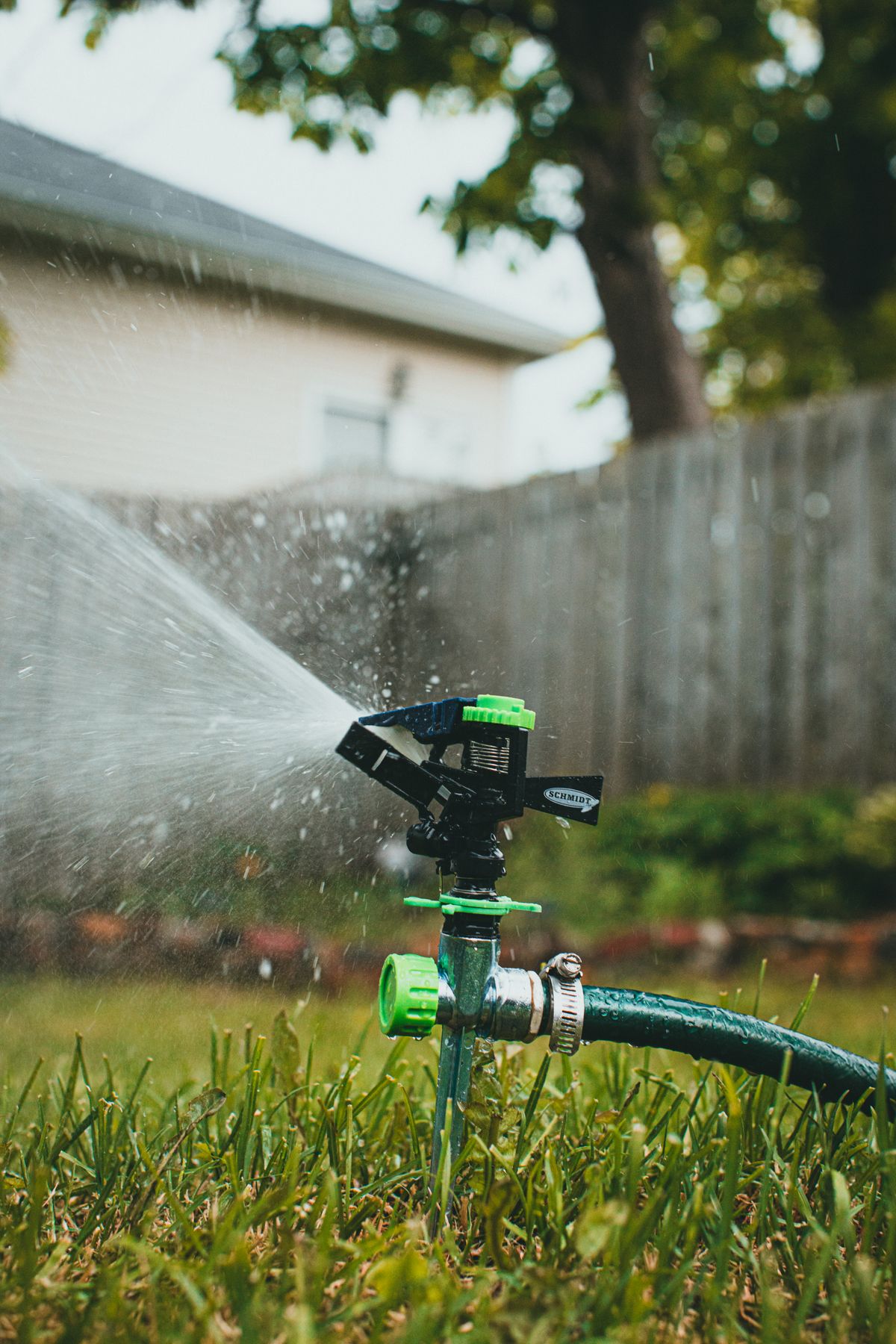
Should outdoor faucets bypass a water softener? Yes, in almost every house. Hose bibs and irrigation lines should branch off the main before the softener, so the lawn gets hard water and the softener only treats water used indoors. Softening outdoor water burns salt and softener capacity for no benefit, and the sodium it adds builds up in soil and damages its structure.
The only exceptions are small ones: a single soft tap for washing a car, for example. Everything else outside is better on hard water. The rest of this page works through the cost, the soil chemistry, and how to change an installation that already sends the garden hose through the softener.
Should Outdoor Faucets Bypass a Water Softener? The Rule, Use by Use
Most outdoor water goes onto soil, and hardness does soil no harm. Calcium and magnesium are plant nutrients. What softening does is swap them for sodium.
| Outdoor use | Hard or soft? | Why |
|---|---|---|
| Lawn sprinklers and in-ground irrigation | Hard | Largest volume, adds sodium to soil, costs the most salt |
| Garden beds, vegetables, shrubs | Hard | Same sodium problem, concentrated in beds you water often |
| Hose bibs used for general cleanup | Hard | No benefit from softening |
| Washing a car or windows | Soft is nicer, but optional | Soft water leaves fewer spots. A single soft tap works |
| Filling a pool or hot tub | Depends on the pool's water balance | Pool chemistry sets a target calcium hardness |
| Pet water bowls and livestock troughs | Usually hard | Avoids extra sodium in drinking water |
Extension services and manufacturers give the same advice. Penn State Extension's water softening guide says showers, sinks and laundry hookups "probably should be softened" while toilets, outside spigots and basement sinks "can be bypassed." Culligan's Gold Series owner's guide opens its bypass section with "Normally, all water except outside lines passes through the water softener."
What Watering the Lawn Costs Your Softener
A softener's capacity is measured in grains of hardness. Every gallon that runs through it uses up some of that capacity, whether it goes to the shower or the flower bed. The softener cannot tell the difference. It just regenerates sooner.
To show the size of the effect, here is one summer worked through for a typical house. All the inputs are assumptions, so treat the result as an illustration and swap in your own numbers.
Inputs:
- Water hardness: 15 gpg
- Indoor use: 240 gallons a day (a household of four)
- Lawn: 2,000 sq ft, watered 1 inch a week for 20 weeks. One inch over one square foot is 0.623 gallons, so that is about 1,246 gallons a week
- Softener: regenerates every 24,000 grains, using 8 lb of salt and about 50 gallons of water each time
Indoor use alone, 20 weeks: 33,600 gallons × 15 gpg = 504,000 grains. That is 21 regenerations and 168 lb of salt.
Irrigation through the softener, 20 weeks: 24,920 gallons × 15 gpg = 373,800 grains. That is almost 16 more regenerations, about 125 lb more salt and 780 more gallons of regeneration water.
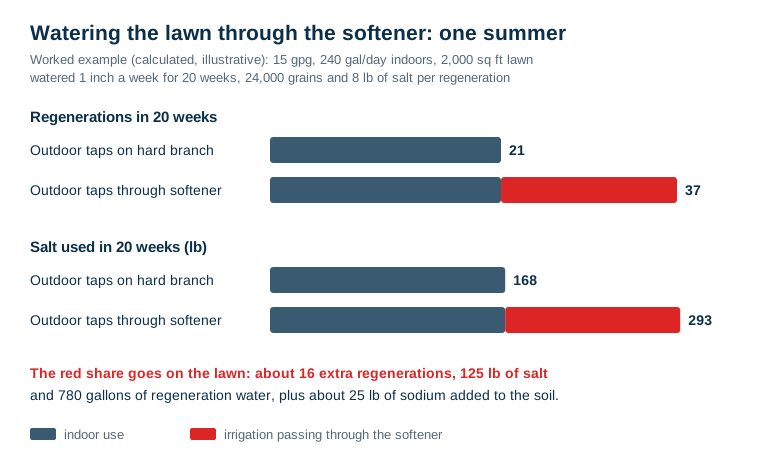
In this example the lawn takes 43% of the summer's salt. There is also a cost you cannot see on the salt bill. Each regeneration adds wear to the valve seals and puts more brine into the drain or septic system.
Work out your own figure: gallons of irrigation per week × hardness in gpg × weeks of watering, divided by your softener's grains per regeneration. That gives the extra regenerations. Multiply by your salt dose per regeneration to get the extra salt. If you water with sprinklers on a timer, your water bill or meter will give you the gallons.
The Soil Chemistry: Why Sodium Matters More Than Salt Cost
Wasted salt is the obvious cost. The one that lasts longer happens in the soil, and it is a real agronomic effect.
What softening puts in the water. Every grain of hardness a softener removes is replaced with sodium. Penn State puts the figure at 7.5 mg per quart for each gpg removed. At 15 gpg that is roughly 450 mg of sodium in every gallon. In the example above, the lawn would receive about 24,920 gallons of softened water in a summer, carrying roughly 25 lb of sodium onto 2,000 sq ft.
What sodium does to clay. Clay particles are tiny flat plates. In healthy soil, calcium and magnesium ions bind those plates into crumbs, and water and air move through the gaps between the crumbs. Sodium ions are weaker at bridging the plates, and when too many of them sit between the plates, the plates push apart. Montana State University's extension notes on sodicity and soil structure explain it plainly: "The forces that bind clay particles together are disrupted when too many large sodium ions come between them." The three results it lists are "reduced infiltration, reduced hydraulic conductivity, and surface crusting."
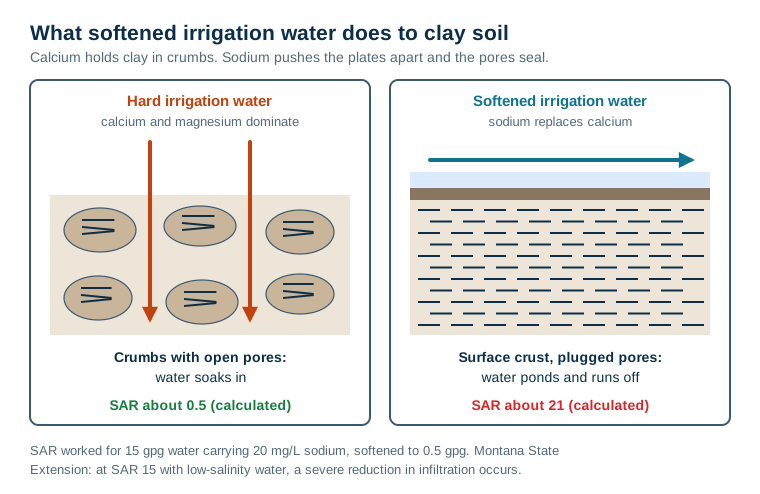
Why softened water is a worse case than salty water. Soil scientists measure this risk with the sodium adsorption ratio (SAR). SAR compares sodium to calcium plus magnesium. Softened water makes the ratio very high because it adds sodium and removes the calcium and magnesium that offset it. A worked example, calculated from the Penn State figure:
| Raw water | Softened water | |
|---|---|---|
| Hardness | 15 gpg | 0.5 gpg (typical leakage) |
| Sodium | 20 mg/L (assumed) | about 138 mg/L |
| SAR | about 0.5 | about 21 |
Montana State's guidance says that at an SAR of 15 with low-salinity water, "a severe reduction in infiltration will occur." Household water is usually low in salinity. Softened water is sodium-rich, calcium-poor and low in salinity, which is the combination most likely to disperse clay.
How fast it happens depends on your soil and climate:
- Clay and clay loam soils are the most affected. Sandy soils have little clay to disperse and drain regardless.
- Dry climates make it worse. In wet climates, rain washes some of the sodium below the root zone between waterings. In arid areas, where the lawn relies on irrigation, the sodium stays and builds up year after year.
- Symptoms are slow and easy to blame on something else: water that puddles or runs off where it used to soak in, a hard crust on bare soil, and patchy, struggling grass or shrubs that fertilizer does not fix.
Sodium also affects plants directly, apart from what it does to the soil. How much is too much varies by plant, and softened water for pets, plants, gardens and aquariums covers the plants that tolerate it least.
Check Which Side Your Outdoor Faucets Are On
Do not assume. Many houses have at least one hose bib that tees off a pipe that also feeds a bathroom, and builders do not always get the order right.
- Run each outdoor faucet for a minute, then fill a clean cup.
- Test it for hardness with a strip or drop kit.
- Test the kitchen cold tap the same way.
- Compare. If a hose bib reads the same as your raw water, it already bypasses the softener. If it reads near zero like the kitchen, it is on the soft side.
If both taps read hard, the problem is not the branch order. Check that the softener is working and that its bypass valve is not stuck in bypass before you change any pipes.
Adding a Hard-Water Branch to an Existing Installation
If an outdoor faucet is on the soft side, you have three choices, from easiest to best.
1. Bypass the softener while you water. Culligan's guide says to bypass the unit "if lines to outside faucets do not bypass the water softener, and you do not want to waste softened water on lawn sprinkling or other outside uses." It costs nothing, but the whole house gets hard water while you water, and it is easy to forget to switch it back. It only suits occasional watering.
2. Leave it and size for it. If the pipe is buried in a finished wall and you rarely water, accept soft water outside. Add the outdoor use to the daily gallons when you set the softener's capacity. This fixes the capacity problem but not the salt cost or the soil.
3. Re-pipe the outdoor line to the hard side. This is the permanent fix, and it is often simpler than people expect when the softener is near where the outdoor line leaves the house.
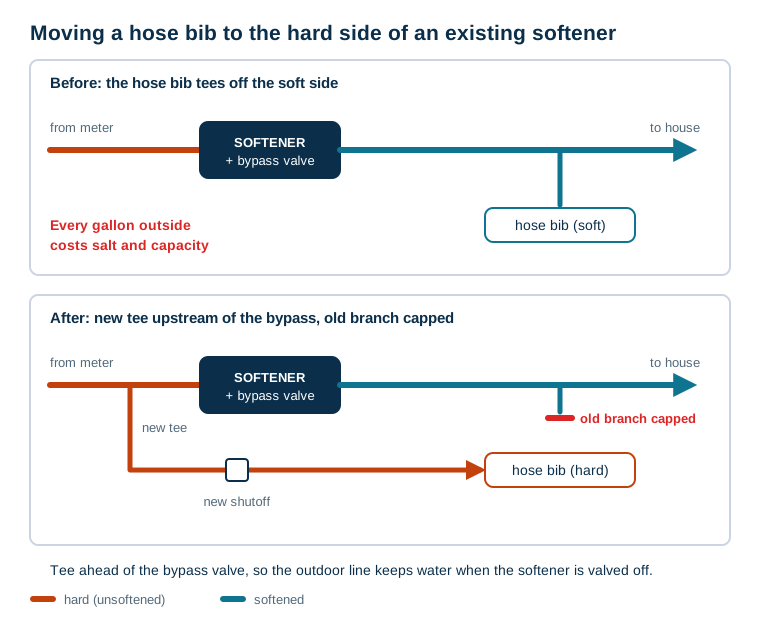
How the re-pipe goes:
- Trace the outdoor line from the hose bib back to where it tees off the main. If it shares a branch with an indoor fixture, the split has to happen where the outdoor-only section begins.
- Shut off the main and drain the lines. Put the softener in bypass first.
- Cut in a new tee on the supply side of the bypass valve, between the main shutoff and the softener. Placing it before the bypass means the outdoor line still has water when the softener is valved off for service.
- Add a shutoff valve on the new branch, ideally with a drain, so the outdoor line can be drained for winter.
- Run the new line to the outdoor-only section and connect it.
- Cap the old connection to the soft side at the tee. Do not leave a dead-end length of pipe. Cut back to the tee and cap it there.
- Keep backflow protection at the hose bib. A hose left in a bucket or connected to a sprayer can siphon back into the supply. Frost-free sillcocks with built-in vacuum breakers, or a hose-connection vacuum breaker, are the usual protection. Check what your local plumbing code requires.
- Pressure test before closing any wall, then test the hose bib for hardness to confirm the change.
Whether a permit is needed depends on where you live. Changes to the supply piping often require one, even when the softener stays where it is. Where to install a water softener covers the tie-in order in more detail, and why the outdoor branch decision is easiest to make before the pipes go in.
When Soft Water Outside Is Worth Having
There is one good reason for soft water outdoors: rinsing things you do not want spotted. Hard water dries into mineral spots on car paint and glass. Softened water leaves fewer, although it still leaves dissolved sodium salts behind, so it does not dry completely spot-free. Only deionized water does that.
If you want it, put one dedicated hose bib on the soft side, label it, and leave everything else hard. That costs only the few gallons a car wash uses, not the thousands a lawn does. Hard water spots on cars compares softened and deionized rinse water.
Resize the Softener Settings After the Change
Taking irrigation off the softener cuts the water it treats, sometimes by more than half in summer. If the softener was set up with the outdoor use in mind, update it:
- Metered softeners count only the water that passes through them, so they adjust on their own. Check that the reserve setting still makes sense.
- Timer softeners regenerate on a fixed schedule whether the water was used or not. Lengthen the interval, or you will keep paying for salt the lawn no longer uses.
- Buying a new softener? Size it for the softened fixtures only. How to size a water softener walks through the calculation.
What Bypassing the Outdoor Faucets Will Not Do
- It will not fix soil that is already sodic. A lawn that has had softened water for years may need gypsum and deep watering to replace sodium with calcium. A soil test from your local extension office will tell you whether it does.
- It will not help if your raw water is already high in sodium. Some wells naturally carry sodium. Test the raw water before blaming the softener.
- It does not change where the regeneration brine goes. That goes down the drain or into the septic system either way. Only the amount changes.
- It does nothing for the water itself. Hard water outside will still spot glass and scale spray nozzles. That is the trade-off, and for a lawn it is the right one.
Test the outdoor faucets, and move any that are on the soft side to a hard branch. The lawn is better off, and so is your salt bill.
Frequently Asked Questions
Should outside faucets be on softened water?
Usually not. Lawn and garden watering uses a lot of water, gains nothing from being softened, and adds sodium to the soil. Penn State Extension lists outside spigots among the fixtures that can be bypassed, and Culligan's owner's guide notes that normally all water except outside lines passes through the softener.
Is softened water bad for grass and plants?
Over time, on most soils, yes. Softening swaps calcium and magnesium for sodium, and sodium in irrigation water disperses clay, seals the soil surface and slows infiltration. Occasional hand watering does little harm, but a lawn irrigated with softened water every summer can build up sodium, especially in clay soils in dry climates where rain rarely flushes it out.
How do I know if my outdoor faucet is on softened water?
Test it. Run the hose bib for a minute and test it with a hardness strip or drop kit, then test the kitchen cold tap. If both read near zero, the outdoor faucet is on the soft side. If the hose bib reads the same as your raw water, it already bypasses the softener. You can also put the softener in bypass and see whether the reading at the kitchen rises.
Can I just put the softener in bypass when I water the lawn?
You can, and Culligan's guide suggests exactly that if the outside lines do not bypass the softener. The catch is that the whole house gets hard water while it is in bypass, and it is easy to forget to switch it back. A permanent hard branch to the outdoor taps removes the chore.
Does potassium chloride make softened water safe for the lawn?
It avoids adding sodium, which is the main soil problem, and potassium is a plant nutrient. But you still spend salt and softener capacity on water the lawn does not need, and potassium chloride usually costs several times more than sodium chloride. Moving the outdoor taps to a hard branch is cheaper over the life of the softener.
Does bypassing the outdoor faucets make the softener smaller?
It reduces the water the softener has to treat, so it may. Size the softener for the fixtures that are actually softened. If the outdoor taps are moved to a hard branch after installation, reprogram the capacity or reserve settings so the softener is not regenerating for water it no longer treats.
