
How Softened Water Affects a Washing Machine
A softened water washing machine stays free of scale and needs about half the detergent. Lint and suds, not mineral crust, become the things to watch. The surprise is the first week. Loads often come out worse at first, because years of residue in towels and in the machine meet a hard-water dose in soft water. One reset fixes it.
That transition period is the most common reason new softener owners decide the water "doesn't wash properly". It is real, it is predictable, and it has a clear end. This page explains what softened water changes inside the machine, why the first loads misbehave, and how to get through it in a week instead of a month.
Softened Water Washing Machine Basics: What Changes Inside
Hard water leaves two deposits in a washer. Calcium carbonate scale forms wherever water is warmed or evaporates. Calcium soap curd forms wherever detergent meets hardness. Softening stops both at the source.
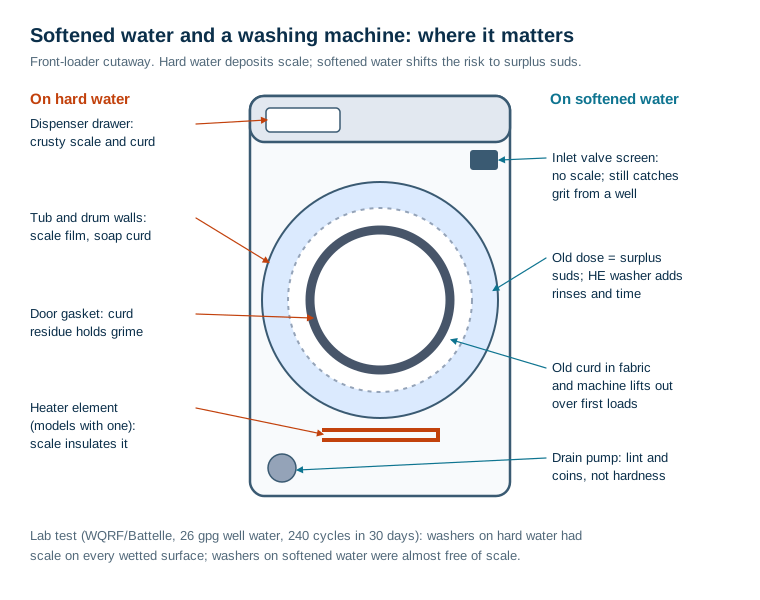
The best controlled comparison comes from lab testing done for the Water Quality Research Foundation, the research arm of the water treatment industry. Battelle ran clothes washers through 240 cycles in 30 days on 26-grain well water, alongside identical washers on softened water. The study write-up reports that the machines on hard water had noticeable scale "on all of the interior surfaces" and needed deliming and cleaning. The softened machines "appeared as if they could be cleaned up to look like new with just a quick wipe down."
Where that matters in your machine:
| Part | On hard water | On softened water |
|---|---|---|
| Heating element (many front-loaders and some top-loaders have one) | Scale coats it, raising its operating temperature | Stays clean |
| Tub and drum | Scale film and soap curd, which trap odour | Clean; residue now comes from excess detergent |
| Dispenser drawer | Crusty scale, blocked siphon | Occasional detergent gunk if overdosed |
| Door gasket | Curd residue that feeds mould | Still needs wiping; mould is a moisture problem |
| Inlet valve screens | Scale narrows them | No scale, but they still catch grit and rust from wells or old pipes |
| Drain pump filter | Lint, coins, curd | Lint and coins |
Note the pattern. Softening removes the mineral problem and leaves the mechanical and moisture ones exactly as they were.
Why the First Loads on Softened Water Can Get Worse
Here is the part almost nobody explains. For the first several loads after a softener goes in, many households see more suds, duller fabric and stiffer towels than before. Three things are happening at once.
1. The dose is still set for hard water. On hard water, a good share of each dose was consumed by calcium and magnesium. On soft water, all of it is active. A full dose now over-suds, and a high-efficiency washer responds by adding rinses, pausing, or extending the cycle.
2. Old residue in the fabric starts moving. Towels and sheets that were washed for years on hard water are loaded with soap curd and leftover detergent. That residue is what made them stiff and less absorbent. Soft water loosens it, but a wash with too much detergent does not carry it all away. Some of it redeposits, unevenly, on the next load. Fabric can feel coated or patchy for weeks.
3. The machine itself is shedding deposits. Curd and scale on the drum, tub and hoses release gradually too. That adds to the foam and occasionally shows as grey flecks on dark clothes.
None of this means the softener is faulty. It is the washer, and your laundry, catching up. Left alone it settles over a few weeks. Done deliberately it is over in about a week.
The First-Week Reset
Do these in order. The point is to clear the old residue once, with the right dose already in place, rather than letting it bleed out over dozens of loads.
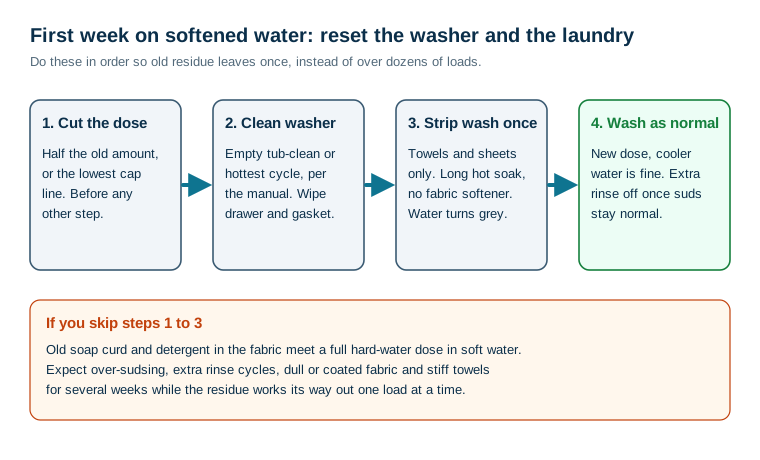
Step 1: Cut the dose before anything else. Half your old amount is the starting point, which on most HE liquid caps means the lowest line. Starting doses for every laundry and dishwasher product are in how much detergent to use with soft water.
Step 2: Clean the machine empty. Run the tub-clean or self-clean program, or the hottest, longest cycle your manual allows for cleaning, with the cleaner it recommends and no clothes. Pull out the dispenser drawer and wash it. Wipe the door gasket, including the folds. Clean the drain pump filter if your model has one.
Step 3: Strip wash towels and sheets once. A long, hot soak in washing soda and borax, with no detergent, pulls out the accumulated residue. The water usually turns grey. The full method, and which fabrics must not be stripped, is in why laundry feels stiff after washing. Two differences on softened water: it works faster because no new hardness arrives with the soak water, and you should need to do it only once.
Step 4: Wash as normal at the new dose. Use an extra rinse for the first few loads if suds still look high. Once they look normal, turn the extra rinse off.
Settings That Change on Softened Water
After the reset, a few habits are worth revisiting.
- Temperature. The WQRF summary of its laundry testing reports that on softened water, detergent could be cut by 50 percent and loads washed at 60°F instead of 100°F with the same or better stain removal (two-page summary). Cold and warm cycles are fine for everyday loads. Keep hot washes for hygiene loads and whatever the care label demands.
- Fabric softener. Mostly unnecessary. Soft water leaves fabric soft on its own, and fabric softener coats fibres, cuts towel absorbency and leaves waxy residue in the drawer.
- Hard-water boosters. Washing soda, borax and "water conditioner" additives exist to tie up hardness. Your softener already removed it. Stop them in routine loads; the one-off strip wash is the only exception.
- Pods. A pod is a fixed dose sized to cope with hard water. On soft water, keep pods for full, heavily soiled loads, or switch to a liquid you can measure.
- Extra rinse. Useful for the first loads. After that it is wasted water unless someone in the house has sensitive skin.
- Machine hardness setting. Some washers ask for your water hardness to adjust detergent dosing. If yours has an automatic dispenser with a hardness setting, set it to soft.
Front-Loaders, HE Top-Loaders and Agitator Machines
The machine type changes how loudly it complains during the transition.
Front-loaders use the least water and tumble the load through a shallow pool. They are the most sensitive to surplus suds. Foam cushions the tumbling action, so cleaning suffers, and the machine's sensors respond by adding rinses or pausing the spin. These are the machines where a hard-water dose on soft water is most obvious. They also have the door gasket, which is where residue and moisture collect.
High-efficiency top-loaders without an agitator behave much like front-loaders. They use little water, sense suds, and need HE detergent at a reduced dose.
Traditional agitator top-loaders fill the tub and have plenty of water to dilute foam. They rarely show an over-sudsing fault, which means the overdose goes unnoticed. The symptom shows up in the laundry instead, as dull, coated or stiff fabric. Cut the dose anyway. The absence of an error message does not mean the dose is right.
Whatever the machine, use the detergent type its manual specifies. A non-HE detergent in an HE washer over-suds on hard water. On soft water it is worse.
Transition or a Real Problem?
Most first-week trouble is the transition and clears with the reset. A few symptoms point elsewhere. Use this once you have halved the dose and done the reset.
| Still happening after the reset | Probably | Check |
|---|---|---|
| Heavy suds on every load | Wrong detergent type or still too much | Confirm HE detergent; try a quarter dose for one load |
| Suds plus the water tests hard at the washer tap | The laundry is not on softened water | Test the tap. Laundry lines are sometimes teed off before the softener |
| Grey flecks on dark clothes | Residue still leaving the machine or the fabric | One more empty hot cycle; clean the drain filter |
| Musty smell from the drum | Gasket or drawer mould | Wipe the gasket, dry the drawer, leave the door open between loads |
| Orange or brown marks | Iron in the water | Test for iron; a softener may not remove it |
| Machine slow to drain, error codes | Drain pump or filter blockage | Clean the pump filter; not a water-quality fault |
If loads were fine for months and then suds or dullness return, test the water before changing anything else. A softener that has run out of salt or stopped regenerating sends hard water back to the machine, and the old hard-water dose suddenly looks right again.
What Softening Does Not Fix in a Washer
Softened water is good for a washing machine. It is not a maintenance plan. These still need attention:
- Door gasket mould and smell. Leave the door and drawer open after use and wipe the gasket. Moisture feeds mould, and overdosing on soft water makes it worse.
- Drain pump and filter. Lint, hair, coins and grit do not care about hardness.
- Inlet screens on well water. Sand and sediment still arrive unless you filter them. Iron can still stain clothes orange-brown, and a softener handles only limited dissolved iron.
- Bearings, belts, door locks and control boards. The failures that usually end a washer's life are mechanical and electrical, not mineral.
- Overloading. A packed drum rinses badly on any water.
Is the Washer Alone a Reason to Soften?
Rarely. The measurable gains are real but modest: no scale, less detergent, and cooler washes. Detergent savings only arrive if you cut the dose, which is why most ownership models count them as zero until you do. On their own they cover a small part of a year's salt.
The washer becomes part of the case when you add everything else hard water does in the same house: the water heater, fixtures, showerheads and dishwasher. How those lines add up against salt, water and service costs is set out in the total cost of owning a water softener.
Checklist for a New Softener Owner
- Halve the detergent from the first load, and stop fabric softener and boosters.
- Run one empty cleaning cycle and clean the drawer, gasket and pump filter.
- Strip wash towels and sheets once. Nothing else in the wardrobe needs it.
- Use an extra rinse until suds look normal, then turn it off.
- Try cooler washes for everyday loads.
- If suds or dull loads return months later, test the water before adding detergent. A softener that has stopped working looks, to the washer, like a sudden change of water.
Frequently Asked Questions
Is softened water good for a washing machine?
Yes. It stops scale forming on the tub, the dispenser and, on models that have one, the internal heating element. In lab testing for the Water Quality Research Foundation, washers run on 26-grain hard water had scale on every wetted surface after 240 cycles, while washers on softened water were almost free of it. The main thing to change is the detergent dose, which should drop by about half.
Why is my washing machine making too many suds after installing a water softener?
Because you are still using a hard-water dose. On soft water none of the detergent is used up by calcium and magnesium, so the surplus foams. High-efficiency washers detect the suds and add rinses or pause the cycle. Halve the dose, use only HE detergent in an HE machine, and run one empty cleaning cycle to clear foam-holding residue.
Why do my clothes feel worse after getting a water softener?
Towels and sheets washed for years on hard water hold soap curd and old detergent. In soft water, with an unchanged dose, that residue loosens and redeposits unevenly for several weeks, so fabric can feel coated, stiff or dull. One strip wash on towels and sheets, plus a lower dose from then on, ends the transition.
Do I need fabric softener with a water softener?
Usually not. Fabric washed in softened water with the right dose of detergent comes out soft without it. Fabric softener adds a waxy coating that reduces towel absorbency and can leave residue in the machine. If you want it for static or scent, use a quarter of the old amount.
Can I wash in cold water with soft water?
For everyday loads, yes. The Water Quality Research Foundation reported that on softened water, washing at 60°F with half the detergent gave the same or better stain removal as 100°F water with the full dose on hard water. Use hot water where hygiene matters, such as bedding during illness or cloth nappies, and follow the care label.
Will a water softener make my washing machine last longer?
It removes one cause of wear, scale on the heating element, tub and valves. It does not prevent the common failures that have nothing to do with hardness: worn bearings, failed drain pumps, door-lock faults, control boards or mould in the door gasket. Expect a cleaner machine, not a guaranteed longer life.
