
How Softened Water Changes Coffee, Tea and Cooking
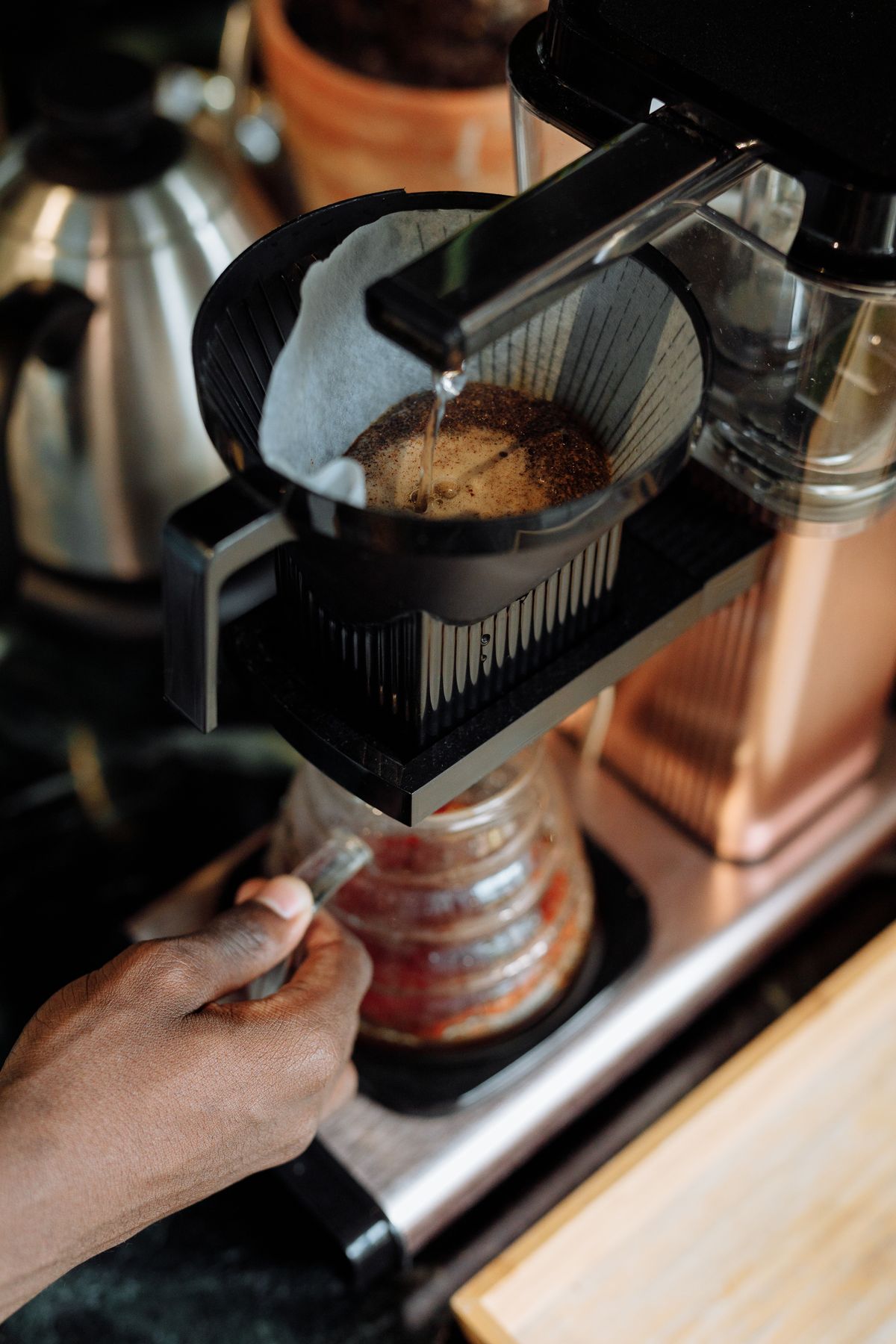
Softened water coffee taste is usually flatter and duller than coffee brewed with moderately hard water. Brewing works best with some calcium and magnesium in the water, and a salt-based softener takes them to near zero. That is why the specialty coffee industry's water spec sets a hardness range rather than zero. Your espresso machine, meanwhile, wants the opposite for its boiler.
That tension between what the machine wants and what the cup wants is the core of this page. Tea and everyday cooking follow after it, with less at stake.
Softened Water Coffee Taste: Why It Often Falls Flat
A softener changes three things that matter to a coffee brewer.
It removes calcium and magnesium. The specialty coffee world broadly agrees that these minerals take part in extraction. They help pull flavour compounds out of the grounds, and water with almost none tends to make thin, hollow cups. You do not need to accept any particular theory of why. The industry's own water spec, below, simply does not accept zero.
It leaves alkalinity alone. This is the part most articles miss. A softener exchanges positively charged ions only: calcium and magnesium out, sodium in. The bicarbonate that makes up most of a water's alkalinity passes straight through. Alkalinity is a buffer, and in coffee it neutralises the acids that give brightness. Hard water often comes with high alkalinity, so softened water from a hard supply keeps the high alkalinity and loses the hardness. That is the worst of both for coffee.
It adds sodium. Penn State Extension puts it at 7.5 mg per quart for each grain per gallon (gpg) of hardness removed. From a 10 gpg supply that is modest. From a 25 gpg well it is enough that some people notice a soft, slightly salty edge in black coffee.
So the complaint "my coffee got worse after the softener went in" is real, and it has a mechanism. It is not your beans.
What the Coffee Industry's Water Spec Asks For
The Specialty Coffee Association sets water requirements in its current tasting standard, SCA-102 (2024), which replaced its older stand-alone cupping water standard. It asks that cupping water, "whenever possible," fall within these ranges:
| Characteristic | SCA-102 acceptable range | Fully softened water | Typical hard supply (example) |
|---|---|---|---|
| Chlorine | None | Unchanged by softening | Present on most city water |
| Calcium hardness | 50–175 ppm as CaCO₃ | Near 0 | 200+ ppm |
| Alkalinity | At or near 40–70 ppm as CaCO₃ | Unchanged from raw water | Often 150+ ppm |
| pH | 6–8 | Roughly unchanged | Usually within range |
This is a tasting standard, written so that coffee professionals judge beans on the same water. It is not a rule for your kitchen. It is still the best published statement of what coffee water should look like, and it shows the problem clearly. Fully softened water fails on hardness and fixes nothing on alkalinity.
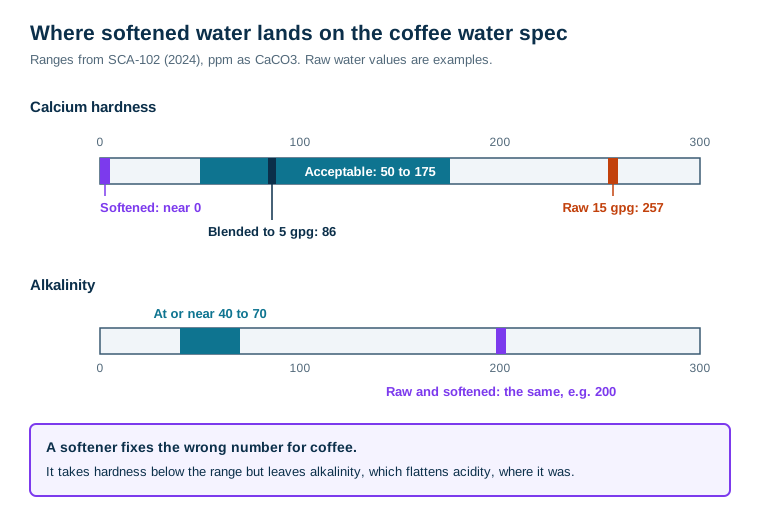
A note on units. Your softener and test strips probably read total hardness in gpg. One gpg is about 17.1 ppm. Calcium is usually most of total hardness but not all of it, so treat gpg conversions as a guide. A water blended back to about 5 gpg is roughly 86 ppm total hardness, comfortably inside the SCA-102 hardness range. Hardness units are explained in water hardness units: gpg vs ppm.
The Espresso Machine Tension
Here is the conflict in one sentence. The machine is a set of heated parts that scale up in hard water, but the brew needs some of that same hardness to taste right.
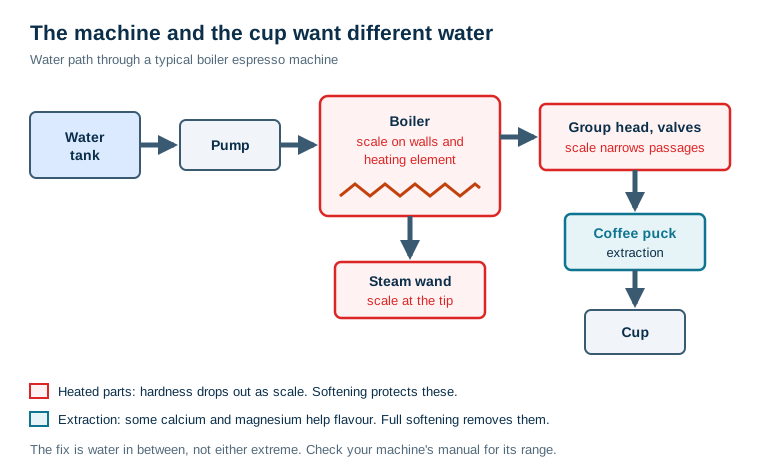
Heat drives calcium carbonate out of solution, so the boiler, heating element, solenoid valves, group head passages and steam wand tip collect scale. In a boiler machine this is the classic failure. A scaled element overheats, a scaled valve sticks, and a scaled steam wand spits. The same process that coats your kettle, covered in limescale in kettles, coffee makers and irons, happens faster inside a machine that holds water hot all day.
Softened water stops that completely. It is why many café installations include a softener or scale-inhibiting cartridge on the machine's supply. But the brew then gets the flat, high-alkalinity water described above.
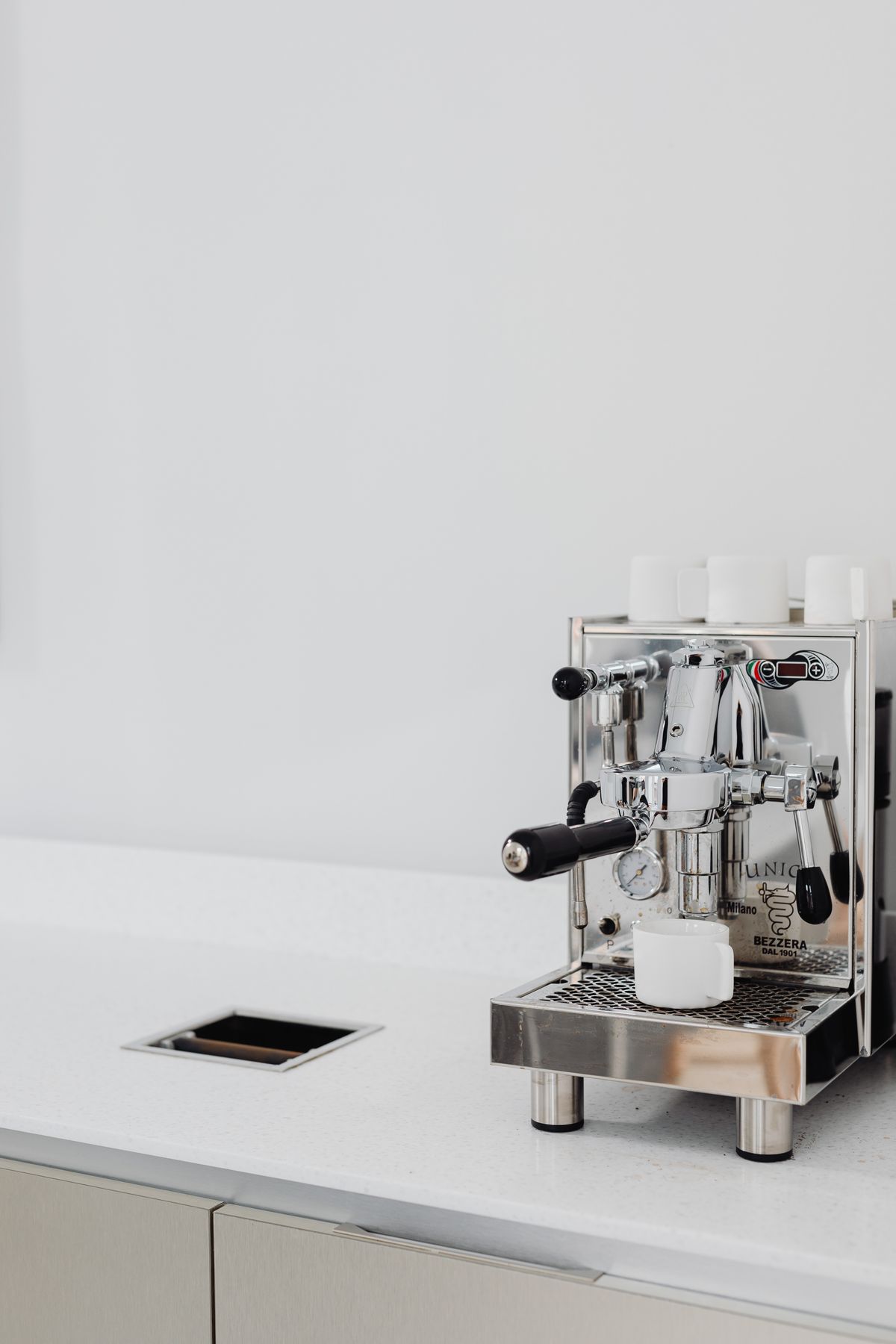
Machine makers handle this in different ways, so the manual comes first. Many manuals specify a hardness range, supply test strips, or ask you to set a hardness value so the machine can time its descaling reminders. Some tell you not to use distilled or reverse osmosis water at all, because very pure water can corrode metal parts or confuse the level sensors that work by conductivity. If your warranty specifies a water range, stay inside it.
What does not work is running fully softened water through the machine and accepting flat espresso as the price. The goal is water in between.
Drip brewers sit in the middle. A drip machine heats water on demand in a small element rather than holding a boiler hot all day, so it scales more slowly than an espresso machine, but it still scales. Hard water shows up as slower brew times and a machine that gurgles longer before it finishes. Softened water stops that but costs flavour in the same way. For a drip brewer, most people find that hard or blended water plus descaling every few months is the better trade than softened water and a flatter pot.
Four Ways to Get Brew Water in a Softened House
| Option | How it works | Coffee result | Machine result | Effort |
|---|---|---|---|---|
| Unsoftened kitchen tap plus filter jug | Hard tap, jug cartridge removes chlorine and some hardness | Usually good if raw water is moderately hard | Some scale. Descale on schedule | Low |
| Softener blending valve | Mixes some hard water back into the softened supply | Good at a few gpg | Light scale | Low, but affects the whole house |
| Machine's own filter cartridge | Cartridge in the tank partially softens or inhibits scale | Designed for the machine | Protected, if changed on time | Low, ongoing cost |
| Reverse osmosis plus remineralisation | RO strips everything, then a cartridge or recipe adds minerals back | Most controllable | Protected if hardness is kept low | Highest |
A bypassed kitchen tap is the most common starting point, especially if the house already has one for drinking. The trade-offs of a hard kitchen tap, including scale in the kettle, are in should a kitchen tap bypass the softener.
Blending at the softener is the cheapest whole-house answer, but it gives up some scale protection everywhere, not just at the coffee maker. Can household water be too soft explains what a blending valve buys and what it costs, and why they usually end up set wrong.
Reverse osmosis with remineralisation is where dedicated home baristas end up. RO water on its own fails the SCA-102 hardness range just as softened water does, so the mineral step is not optional.
Tea: A Clearer Cup, and a Kettle That Stays Clean
Tea reacts to hard water visibly. In hard water, tea often grows a film on its surface and leaves a ring on the cup. That is calcium carbonate combining with compounds in the tea. Softened water removes the calcium, so the film does not form and the cup looks clearer.
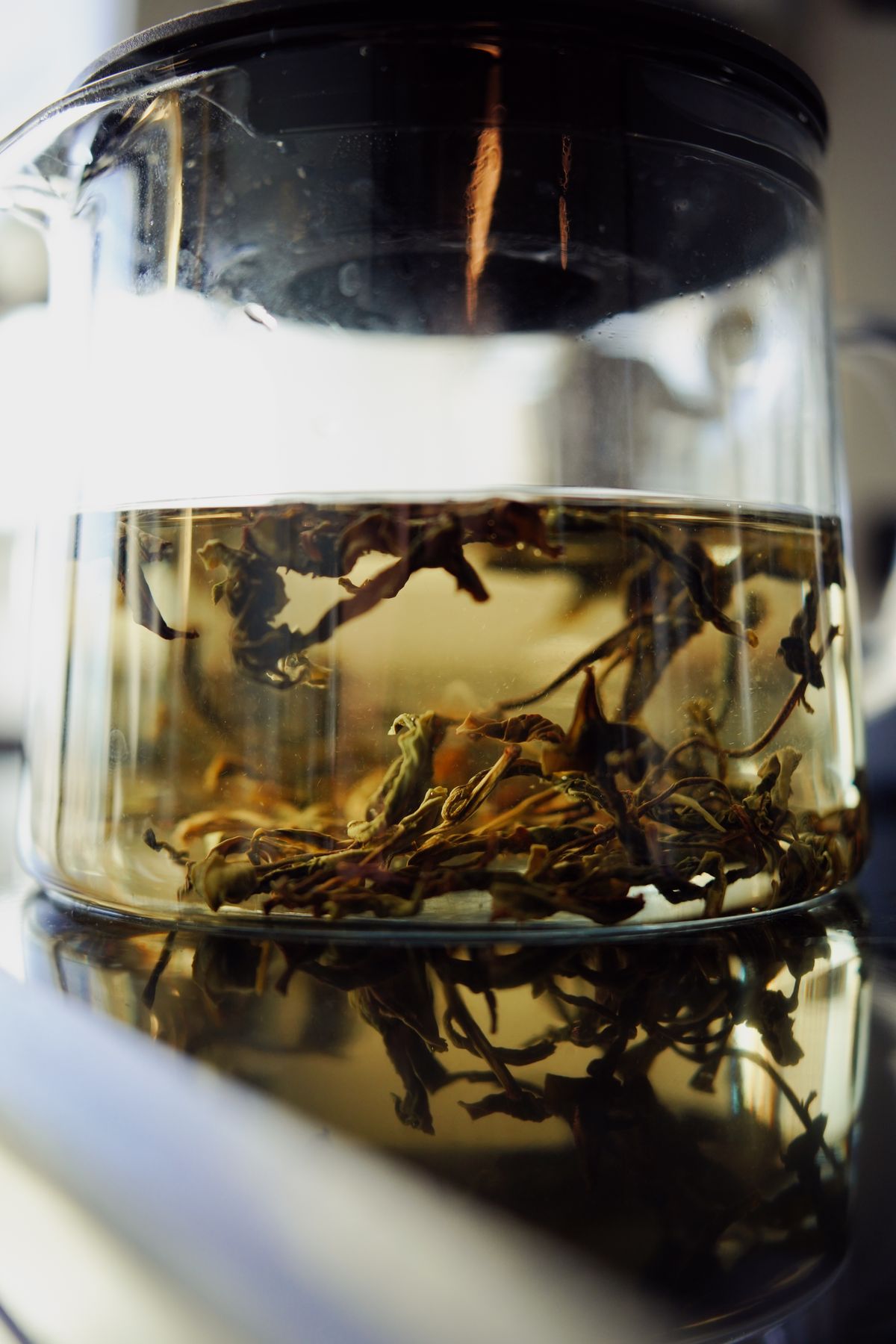
Whether it tastes better is personal. Some drinkers find tea made with softened water brighter and fuller. Others find it flat for the same reasons coffee goes flat, especially from a supply with high alkalinity. Unlike coffee, tea has no widely used brewing water spec to measure against, so try it both ways with the same leaf and the same steep time.
One benefit is not in doubt. A kettle filled with softened water does not scale. If you switch your kettle to a hard tap for coffee, expect the scale to come back, and descale it on a schedule.
Cooking: Beans, Vegetables, Rice and Salt
Most cooking is indifferent to softened water. Four cases are worth knowing.
Dried beans and pulses cook softer and faster. Calcium strengthens the pectin that holds beans and vegetable cell walls together. That is why beans can stay stubbornly firm in very hard water, and why canners add calcium on purpose to keep vegetables firm. Softened water removes it, so beans soften more readily. Most cooks see this as a benefit.
Green vegetables may soften a little sooner for the same reason. Take a minute off the cooking time if they come out softer than you like.
Rice and grains keep all the sodium. Pasta water is poured away, but rice absorbs its cooking water, so whatever sodium the softener added ends up in the pot. At 15 gpg that is roughly 120 mg of sodium per litre of water absorbed. Next to the 2,300 mg FDA Daily Value, that is small for most people. It is not small for someone on a doctor-set 500 mg diet.
Stocks and sauces that reduce concentrate it. Boiling drives off water, not salt. A stock reduced by half has twice the softener sodium per cup that its water started with.
If anyone in the household is on a sodium-restricted diet, cook and drink from an unsoftened or RO tap. The figures by hardness are in how much sodium a water softener adds.
What a Softener Cannot Do for Your Coffee or Tea
- It cannot remove chlorine. SCA-102 asks for none. A softener passes chlorine and chloramine straight through, and those affect coffee taste more than hardness does. A carbon filter handles them. If the chlorine taste got more noticeable after installation, see chlorine taste after a water softener.
- It cannot lower alkalinity. High-bicarbonate water stays high-bicarbonate. RO or specific filter cartridges are the tools for that.
- It cannot make water "right" for brewing. Its job is zero hardness. Coffee wants a range, so any fix involves blending or adding minerals back.
- It cannot rescue stale or badly roasted beans. Water is one of several variables. Test it by brewing the same beans with two waters side by side.
What to Do Next
- Test your raw and softened water for hardness, and if you can, alkalinity. A pool or aquarium test kit reads alkalinity cheaply.
- Brew a side-by-side cup with softened water and water from an unsoftened tap, same beans, same recipe. Taste decides whether this matters to you.
- Read your espresso machine's manual for its water range and any ban on RO or distilled water.
- Choose one of the four options above. For most households, an unsoftened kitchen tap through a filter jug for brewing, with the machine's own cartridge for protection, is the simplest balance.
Frequently Asked Questions
Does softened water make coffee taste bad?
It often makes coffee taste flatter. Brewing works best with some calcium and magnesium, and the SCA's cupping standard accepts calcium hardness of 50 to 175 ppm. A softener takes it to near zero. It also leaves the water's alkalinity unchanged, and high alkalinity dulls coffee's acidity. Some people notice a faint salty or soapy edge on water from very hard supplies, where the softener adds more sodium.
Should I use softened water in my espresso machine?
For the machine, softened water prevents scale in the boiler, heating element and valves, which is the main cause of espresso machine repairs in hard water areas. For the cup, fully softened water is too low in minerals. Most owners compromise with partly softened or blended water, or a manufacturer's filter cartridge. Check the manual: many machines specify a hardness range, and some forbid distilled or reverse osmosis water.
What is the best water for coffee in a house with a softener?
Water with some hardness and moderate alkalinity. The SCA-102 standard accepts calcium hardness of 50 to 175 ppm and alkalinity at or near 40 to 70 ppm. In a softened house that usually means an unsoftened kitchen tap run through a filter jug, softener water blended back to a few grains, or reverse osmosis water with minerals added back.
Is softened water good for making tea?
It is better than hard water in one visible way: it does not leave the scummy film that forms on tea made with hard water, and the kettle stays free of scale. Flavour is a matter of taste. Some drinkers find tea made with softened water fuller and brighter, others find it flat. Unlike coffee, there is no widely used tea brewing water spec to measure against.
Is it OK to cook with softened water?
For most people, yes. The sodium it adds is small next to the salt used in cooking: about 7.5 mg per quart for each grain per gallon of hardness removed, according to Penn State Extension. People on a doctor-set low-sodium diet should use an unsoftened tap for cooking and drinking. Soft water also tends to cook dried beans and vegetables softer, because calcium firms them.
Why does coffee from my softened water taste salty?
A working softener rarely adds enough sodium to taste in coffee unless the raw water is very hard. A clearly salty taste usually means brine is not rinsing out after regeneration. That is a fault worth fixing, and it shows in plain water from the tap too, not just in coffee.
