
Can Softened Water Be Used in Pools and Hot Tubs?
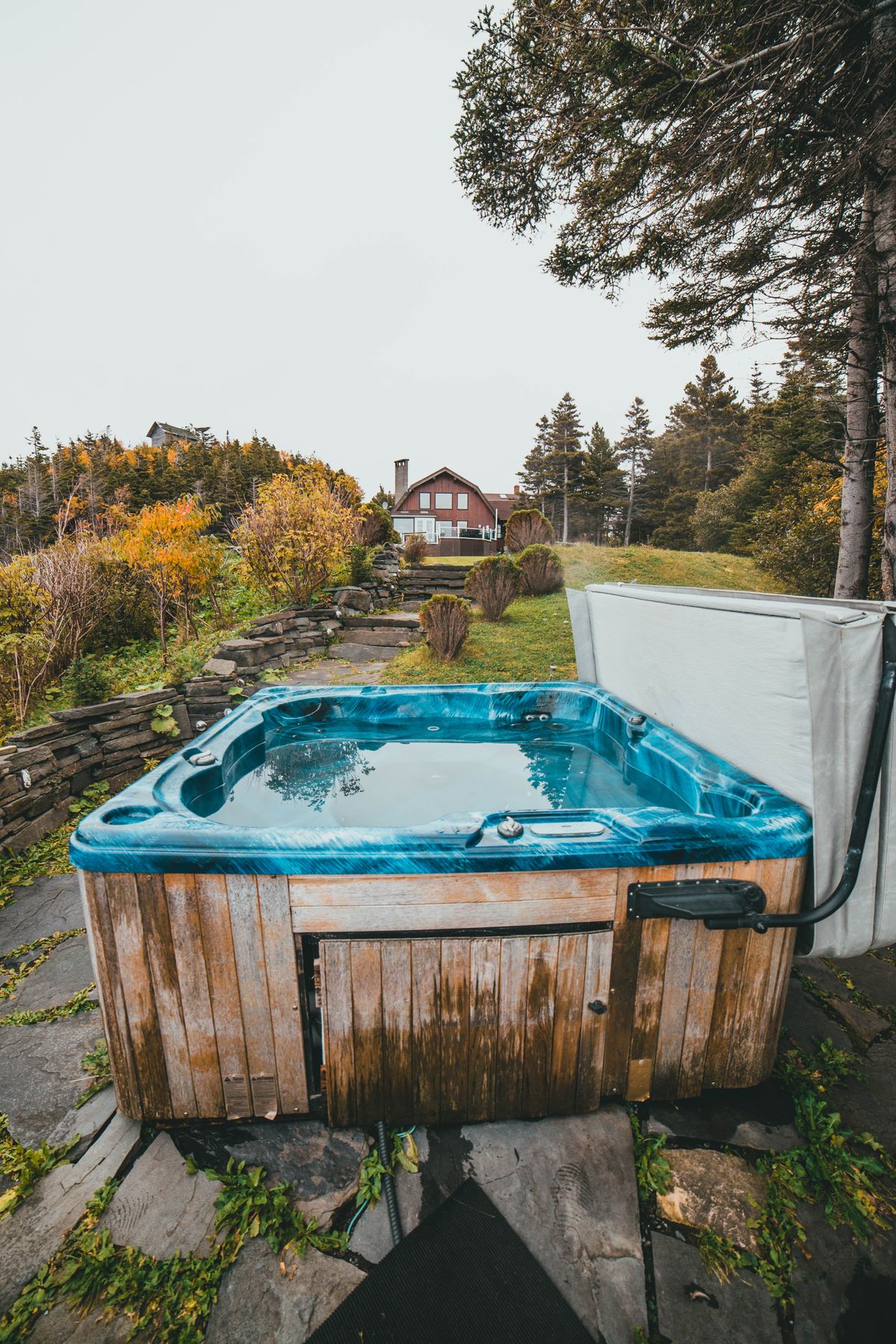
Softened water in a hot tub or pool starts with almost no calcium hardness, and pool and spa water is supposed to carry some. The industry ranges published by Taylor Technologies, following Pool & Hot Tub Alliance (PHTA) guidelines, give 200 to 400 ppm as ideal for pools and 150 to 250 ppm for spas. Water filled from a softener sits near zero. It is aggressive toward plaster, grout and heater parts until you add calcium back.
So the short answer is: a hot tub, yes, with a pound of calcium chloride afterwards. A plaster pool, not if you can avoid it. The rest of this page covers why, the arithmetic, and what to do when the only outdoor tap you have is softened.
Softened Water in a Hot Tub or Pool: Calcium Is a Required Parameter
Inside the house, calcium is the thing you pay to remove. In a pool or spa it is one of the numbers you balance, along with pH and alkalinity. The PHTA guidelines Taylor publishes give three levels:
| Parameter | Minimum | Ideal | Maximum |
|---|---|---|---|
| Calcium hardness, pools (ppm as CaCO₃) | 150 | 200–400 | 1,000 |
| Calcium hardness, spas and hot tubs (ppm as CaCO₃) | 100 | 150–250 | 800 |
A working softener delivers water at or near 0 ppm. A typical hard supply of 15 grains per gallon (gpg) is about 257 ppm total hardness, which happens to sit inside the pool ideal range. The softener takes water that was already close to right for the pool and moves it below the minimum.
What Low-Calcium Water Does to a Pool
Water low in calcium, especially when pH or alkalinity is also low, is undersaturated with calcium carbonate. It tries to make up the difference from whatever it touches. Taylor's LSI calculator page lists what corrosive water does: pitting or etching of plaster, and metal corrosion. It frames balanced water as protecting "plaster and tile" and extending "the life of your heater and pump."
In practice that means:
- Plaster and pebble finishes lose calcium from the surface. They roughen, etch and can blotch.
- Grout between tiles is cement-based and gets eaten the same way. Tile lines can recess and loosen over seasons.
- Heater exchangers and metal fittings corrode faster in aggressive water. The copper in some heat exchangers can then stain the finish blue-green.
The balance check that ties calcium, pH, alkalinity and temperature together is the Langelier Saturation Index. The same index, applied to household plumbing, is worked through in interpreting pH and hardness together. The pool version uses the same chemistry with different targets.
The Cost of Filling Soft, Then Buying the Calcium Back
Filling soft and then adding calcium back is a costly way to undo your own treatment, and the numbers show why. Take a 15,000 gallon plaster pool on 15 gpg water.
What the softener spends to strip the calcium. 15,000 gallons × 15 gpg = 225,000 grains of hardness. At a typical efficiency of around 3,000 grains per pound of salt, that is roughly 75 lb of softener salt used on a single fill. How salt efficiency works is covered in how much salt a water softener uses.
Whether the softener can even keep up. A common 32,000-grain residential unit would need about seven full regenerations to treat that fill. Most valves regenerate at a set time, often overnight. During a daytime fill the softener runs out partway through and starts passing hard water. So you may pay the salt and still get a mixed fill of unknown hardness.
What it costs to put the calcium back. Calcium chloride raises calcium hardness directly. Worked from the chemistry, raising 10,000 gallons by 10 ppm takes about 1.23 lb of calcium chloride dihydrate, the common granular product labelled around 77 percent. Products with a higher percentage need proportionally less, so follow the label.
| Target | 15,000 gal pool from 0 ppm | 400 gal hot tub from 0 ppm |
|---|---|---|
| Minimum (pool 150, spa 100) | About 28 lb | About 0.5 lb |
| Mid-range (pool 250, spa 200) | About 46 lb | About 1 lb |
Calculated: 1.23 lb of calcium chloride dihydrate per 10 ppm per 10,000 gallons. Actual doses vary with product strength and the starting reading. Test first.
Adding it safely. Calcium chloride gives off heat as it dissolves, sometimes enough to make a bucket too hot to hold. Pour the product slowly into a bucket of pool water, never water onto the product, and stir with a plastic paddle. Add it to the pool in front of a return jet with the pump running, and spread large doses over a day or two. Retest after at least a few hours of circulation, because a reading taken straight after dosing will be high near the return and low elsewhere. Wear the gloves and eye protection the label asks for.
So a softened pool fill uses tens of pounds of salt to remove calcium and then needs tens of pounds of calcium chloride to put it back. For a hot tub the same exercise costs about a pound. That difference in scale is why the advice differs.
Hot Tubs Are the Easy Case
A hot tub holds a few hundred gallons and gets drained and refilled every few months, so a softened fill is a small, repeatable correction. Fill, test, add roughly a pound of calcium chloride, circulate, and retest.
Two things are worth knowing:
- The heater is the part at risk. Hot tubs run hotter than pools, and the heater element sits in the water. Aggressive water shortens its life. Scale-forming water does too, which is why spa water is kept in a narrower band than pool water.
- The manual beats general guidance. Many hot tubs have acrylic shells with no plaster, and some manufacturers set their own calcium range, sometimes lower than the PHTA figure. If your manual specifies a range, use it. Warranties are sometimes tied to it.
If your water is very hard, a softened fill with a small calcium top-up can be easier to balance than a hard fill. A 25 gpg supply is about 430 ppm, well above the spa ideal. Some owners fill half from each source to land near the range. The right blend depends on your numbers, so test both.
The Fill Strategy When Your Only Outdoor Tap Is Softened
In many houses every outdoor tap sits after the softener, often because the softener went in on the main line without anyone planning the hose bibs. Here is the order of preference.
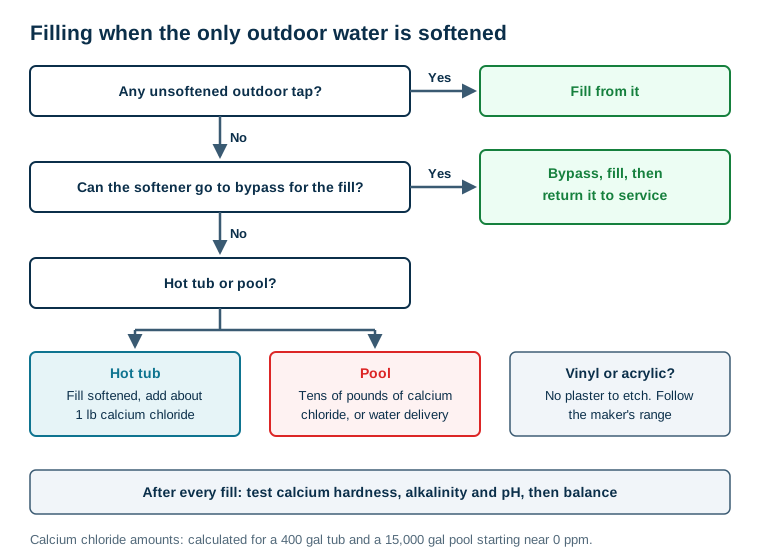
- Use an unsoftened outdoor tap if one exists. Test each hose bib with a hardness strip. Some houses have one on a different branch.
- Put the softener in bypass for the fill. The bypass valve sends raw water to the whole house, hose bibs included. Set it back to service when the fill is done, and note that the household gets hard water in the meantime. For a pool fill that runs for many hours, pick a time when little else is running, and set a reminder. An unsoftened house for a day is harmless. A softener left in bypass for a month is not.
- Fill softened and add calcium. For a hot tub this is fine. For a pool, weigh the calcium chloride cost against the alternatives.
- Bring in water for a pool. Bulk water delivery is common in some regions for first fills, and it skips the problem entirely.
The longer-term fix is plumbing. An outdoor tap teed off before the softener serves the pool, the garden and the car wash. Should outdoor faucets bypass a water softener covers how to find which side your taps are on and what adding a hard-water branch involves.
The Vinyl-Liner and Acrylic Exception
Everything above about etching assumes a surface made of calcium-based material: plaster, pebble, cement grout. Vinyl liners, fiberglass pools and acrylic spa shells do not have one. Low calcium does not eat a vinyl liner the way it eats plaster.
That does not make zero calcium fine. The heater, pump seals, ladder anchors, light niches and any metal in the circulation system still sit in the water. Manufacturers of these pools often specify a lower calcium range than plaster pools, not a zero one. Follow the liner or shell manufacturer's figure. Where there is none, the PHTA minimum is a sensible floor.
Top-Ups: Where Softened Water Can Actually Help
The fill is where softened water hurts. The top-ups are different.
Evaporation takes water out of a pool but leaves the calcium behind. In a hard water area, every top-up with hard water adds more calcium, and calcium hardness creeps upward over a season, toward cloudy water and scale lines at the waterline. Softened top-up water adds no calcium, so it slows that climb. For a pool that already reads high, softened make-up water is a reasonable choice.
Keep testing. If calcium hardness drifts toward the minimum, go back to unsoftened water for top-ups. Softened water also adds a little sodium, which is irrelevant to most pools and certainly to saltwater pools, which run far saltier by design.
What a Softener Cannot Do for Pool Water
- It cannot balance pool water. It removes calcium and magnesium. Pool water needs calcium, pH, alkalinity and sanitiser in balance, and a softener adjusts none of them in the right direction.
- It cannot sanitise. Softening does not kill algae or germs.
- It cannot protect a plaster pool from scale by softening the fill. It just trades a scale problem for an etching problem. Balance, not zero, is the goal.
- It cannot treat a whole pool fill on one regeneration. A household softener is sized for household use. A pool fill can exhaust it several times over.
What to Do Next
- Test your outdoor taps with a hardness strip to find out which are softened.
- For a new fill, use unsoftened water from a hard tap or the softener's bypass, or plan the calcium chloride before you start.
- After any fill, test calcium hardness, alkalinity and pH, and adjust calcium to your pool or spa's range. Use the manufacturer's figure where there is one.
- For a hot tub, keep a small bag of calcium chloride with your spa chemicals. About a pound brings a softened 400 gallon fill into range.
- If fills are a recurring headache, add an outdoor tap before the softener. It also stops garden watering and car washing from using up softener salt.
Frequently Asked Questions
Can you fill a hot tub with softened water?
You can, but you then have to add calcium back. Spa water is balanced to a calcium hardness range: the Pool & Hot Tub Alliance guidelines published by Taylor Technologies give 150 to 250 ppm as ideal and 100 ppm as the minimum. Softened water starts near zero. For a typical 400 gallon tub, bringing it up to about 200 ppm takes roughly 1 lb of calcium chloride, so the fix is cheap. Check your hot tub manual first, because some makers set their own range.
Is softened water bad for a swimming pool?
Filling a pool with fully softened water is a poor idea. Pools need calcium hardness. The published ideal is 200 to 400 ppm, with 150 ppm as the minimum. Low-calcium water is aggressive: it can etch plaster, pull calcium from grout and corrode metal parts. On top of that, a 15,000 gallon pool filled soft needs about 28 to 46 lb of calcium chloride to put back what the softener took out.
How do I raise calcium hardness after filling with soft water?
Add calcium chloride. A worked figure: about 1.2 lb of calcium chloride dihydrate raises 10,000 gallons by 10 ppm. Dissolve it in a bucket of water first, add it with the pump running, and retest after the water has circulated. Follow the product label, and add large amounts in stages rather than all at once.
Can I top up my pool with softened water?
Often, yes, and in very hard water areas it can help. Evaporation removes water but leaves calcium behind, so topping up with hard water keeps pushing calcium hardness higher. Softened top-up water adds none, which slows that climb. Keep testing calcium hardness, and switch to unsoftened water if it drops toward the minimum.
Is softened water OK for a vinyl liner pool?
A vinyl liner has no plaster for low-calcium water to etch, so the main surface risk goes away. The heater, pump seals, ladders and other metal parts still sit in the water, though, so do not run it at zero. Follow the liner or pool manufacturer's calcium range, which is often lower than the range for plaster pools.
Should my pool's fill line bypass the water softener?
Ideally, yes. Filling a pool through a softener uses a lot of salt, can exhaust the softener partway through the fill, and removes calcium you then have to buy back. An outdoor tap plumbed before the softener solves all three. If you do not have one, putting the softener in bypass for the fill is the next best option.
