
How Softener Brine Affects Municipal Wastewater Treatment
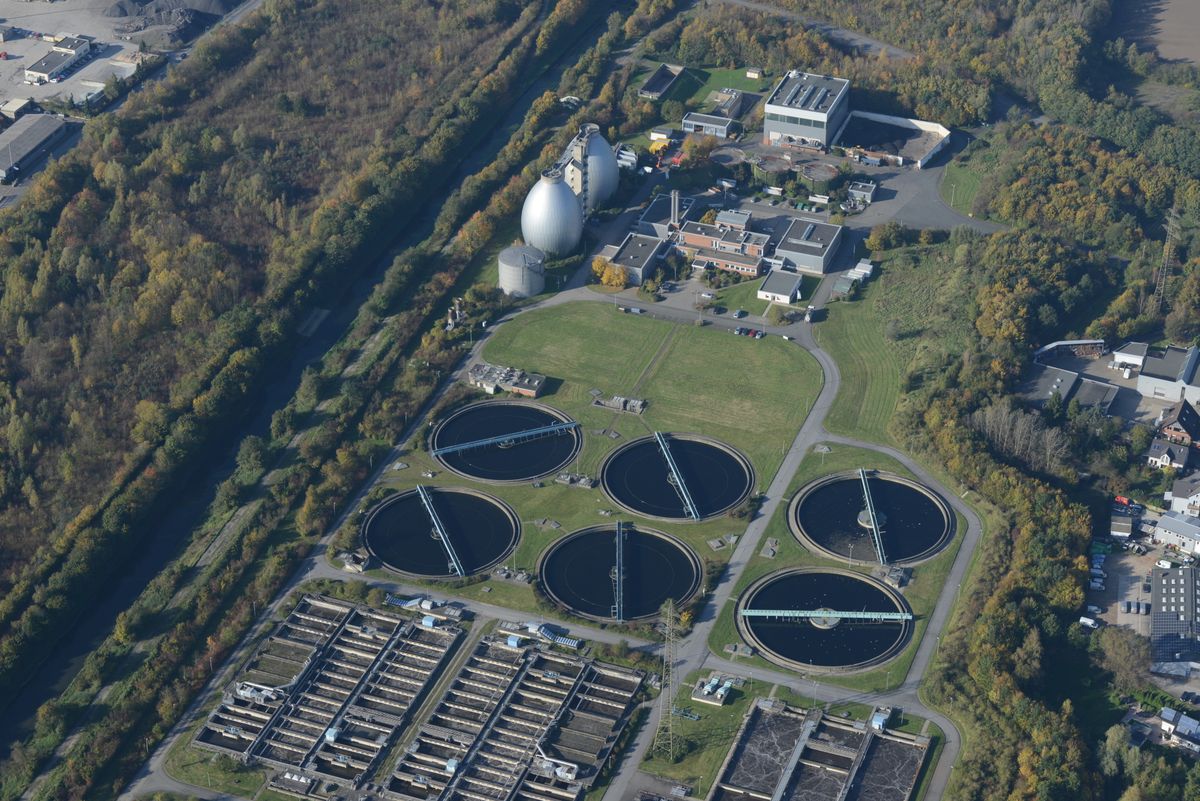
Water softener brine and wastewater treatment do not mix well for one reason: conventional treatment cannot remove chloride. A municipal plant takes things out of sewage by settling them, letting bacteria consume them, precipitating them with chemicals or killing them. Dissolved chloride from softener salt fits none of those, so it leaves the plant in the same amount it arrived and flows on to rivers, lakes or recycled water.
That single fact is behind every softener restriction in the country. This page explains the plant-side chemistry, where it collides with discharge permits and water reuse, and why cutting salt at the source beats building more treatment.
What a Treatment Plant Is Built to Remove
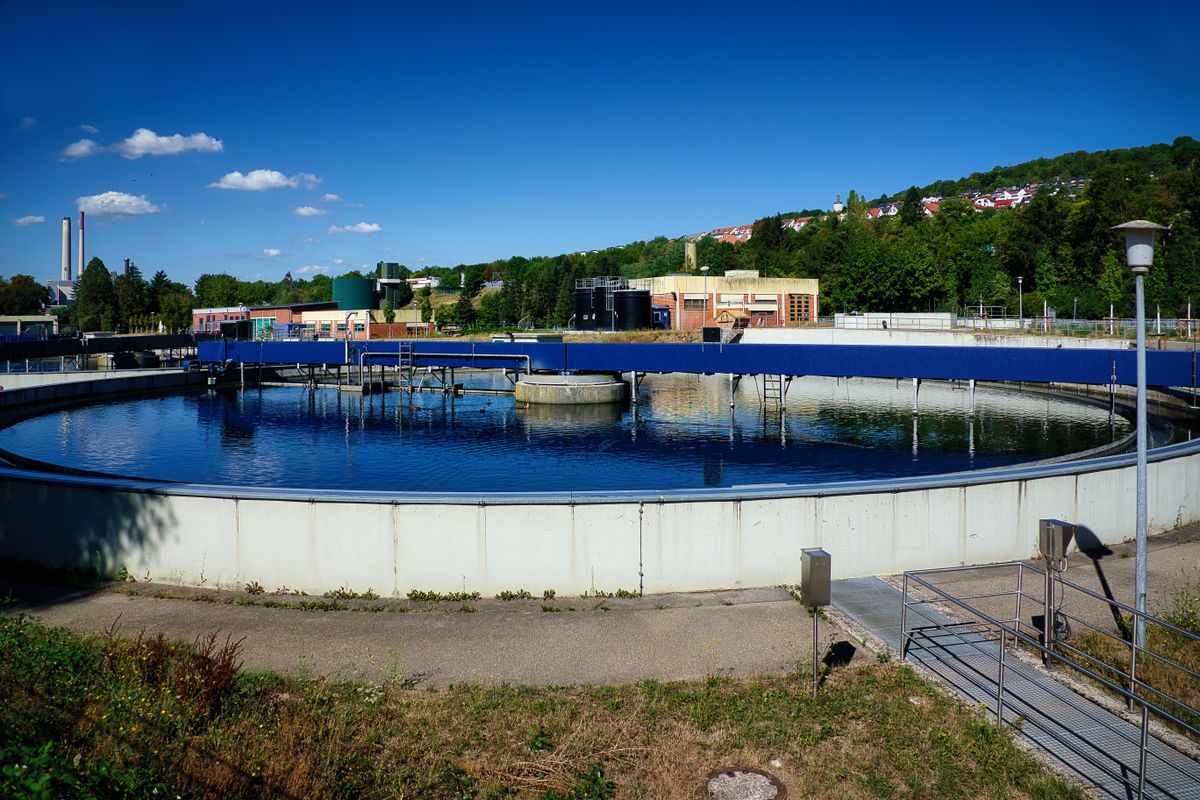
Every process in a conventional plant uses one of a handful of mechanisms. What a plant can remove is decided by which mechanism a substance responds to.
| Mechanism | Where it happens | What it removes | Does it touch chloride? |
|---|---|---|---|
| Screening and settling | Headworks, primary clarifiers | Rags, grit, suspended solids | No. Chloride is dissolved, not suspended |
| Biological conversion | Aeration basins | Organic matter, ammonia (converted to nitrate or nitrogen gas) | No. Bacteria use only trace amounts |
| Chemical precipitation | Dosing with iron or aluminium salts | Phosphorus, as insoluble compounds | No. Chloride does not form insoluble salts with common ions |
| Gas stripping | Aeration, denitrification | Nitrogen gas, some volatile compounds | No. Chloride is not volatile |
| Disinfection | Chlorination or UV | Germs | No. Chlorination adds a little chloride |
Nitrogen is the useful contrast. A plant can remove it because bacteria convert ammonia into nitrogen gas, which escapes into the air. Phosphorus can be removed because it forms solids with metal salts. Chloride has no such exit. It stays dissolved at every pH and temperature a plant operates at, and there is no gas or solid for it to turn into.
Why Chloride Leaves the Plant Unchanged
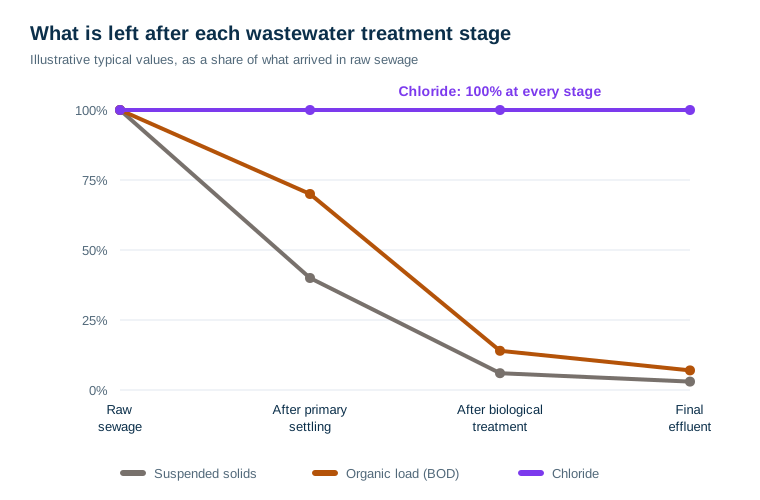
Engineers call chloride a conservative substance. Its mass going in equals its mass coming out, apart from what leaves in the small amount of water held in the sludge. That makes the plant's effluent chloride easy to predict: it is the chloride in the drinking water supply, plus everything the community added on the way.
The Minnesota Pollution Control Agency's chloride page says softener brine goes to "municipal wastewater treatment plants that are not designed to remove salt from wastewater, so the salt passes through to a lake or stream." Madison Metropolitan Sewerage District says the same of its own plant on its chloride reduction page, where about 100 tons of salt a day pass through to the environment.
Where does that salt come from? In a residential sewershed, the main additions are:
- water softener regeneration, which in many communities is the largest single source
- human waste and food, since people excrete the salt they eat
- commercial and industrial users, such as food processors and car washes
- road salt that infiltrates leaky sewer pipes in winter
Of those, softeners stand out for one reason. They are the source a sewer district can most easily influence, household by household.
Does Water Softener Brine Hurt Wastewater Treatment?
Usually not, and this is where the issue is often misunderstood.
By the time softener discharge reaches the plant it has been diluted many times by all the other sewage in the system. Biological treatment runs happily at ordinary sewage salinity. The concerns that do exist are narrower:
- Sudden salt spikes can stress treatment bacteria, but those come from industrial dumps, not from homes regenerating at 2 a.m.
- Small plants and lagoons serving a few hundred homes see less dilution, so softener brine is a larger share of their flow.
- Sodium in biosolids and recycled water matters where either is applied to farmland, because sodium degrades soil structure.
The softener problem is not what brine does inside the plant. It is what leaves.
The Discharge Permit: Where the Plant's Problem Starts
Every municipal plant discharging to surface water operates under a permit that limits what its effluent may contain. Where the receiving river or lake has a chloride standard, the permit can set a chloride limit. EPA's national recommended criterion to protect freshwater aquatic life from long-term exposure is 230 mg/L, and many states set their own.
A plant with too much chloride in its effluent has few options. It cannot tweak its process, because no conventional process removes chloride. It can build advanced treatment, or it can reduce the chloride coming in. Some states give plants time to do the second through a variance, a temporary relaxation of the limit in exchange for a source-reduction plan. Madison's district operates under exactly that kind of arrangement, with water softener optimization at the centre of its plan.
MPCA reports that 50 Minnesota lakes and streams already exceed the chloride standard, with 75 more close to it. A plant discharging into one of those has no room to add more.
A Worked Example: One Neighbourhood's Softeners
Numbers make the permit problem concrete. This example is calculated for illustration, using the household from the lifecycle environmental impact of a water softener: four people, 240 gallons a day, 15 gpg hardness.
- 1,000 homes send about 240,000 gallons a day of domestic wastewater to a small plant.
- 400 of them have softeners. An efficient metered softener in that house uses about 438 lb of salt a year, which carries about 266 lb of chloride.
- 400 × 266 lb is about 106,000 lb of chloride a year, or about 290 lb a day.
- Spread through 240,000 gallons a day, that raises the plant's effluent chloride by roughly 145 mg/L. (One mg/L in a million gallons a day is 8.34 lb a day.)
That is from softeners alone, on top of the chloride already in the water supply and from everything else in the sewer. Against a chronic aquatic-life criterion of 230 mg/L, it uses up most of the room.
Now make the same 400 softeners inefficient timer units at about 2,000 grains per pound of salt. Salt use rises by half, and the softener contribution climbs to roughly 220 mg/L. The difference between those two scenarios is the entire case for softener optimization programs. The plant does not need fewer softened homes. It needs less salt per softened home.
Real plants also receive commercial and industrial flow, infiltration and stormwater, which dilute or add to these figures. Your sewer district can tell you what its actual effluent chloride is.
Why Water Reuse Makes Chloride a Bigger Problem
In wetter regions, a plant's effluent goes to a river and on downstream. In the arid West, it is increasingly treated further and used again: to irrigate parks, farms and golf courses, or to recharge the aquifers that supply drinking water.
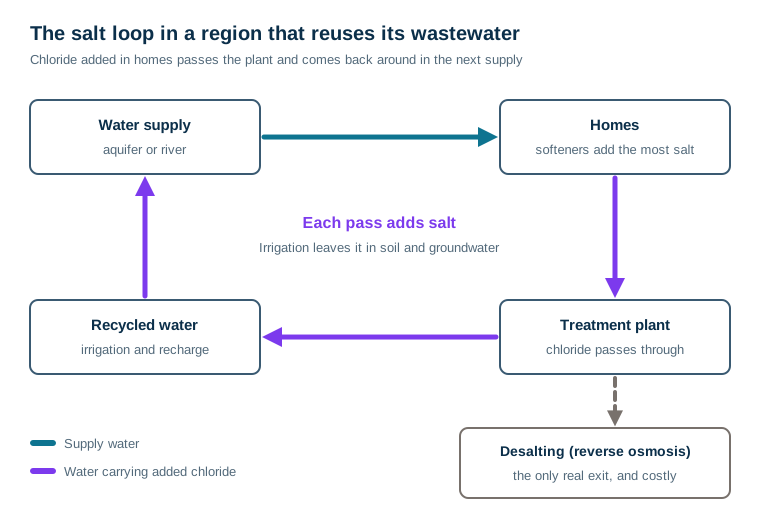
Reuse turns a one-way flow into a loop, and a loop traps salt.
- Water arrives at homes with some background salinity.
- Each use adds salt. Softeners add the most per household where they are common.
- The plant passes it through, so the recycled water is saltier than the original supply.
- Irrigation concentrates it further. Plants take up water but leave most of the salt in the soil, where it moves down to groundwater.
- Recharged or irrigated aquifers become the next supply, and the cycle starts again one step saltier.
The 2018 PNAS study Freshwater salinization syndrome on a continental scale found rising salinity at 39 percent of the US river sites it examined, and names "wastewater, water reuse, and irrigation practices" among the practices that can increase it. Recycled water that is too salty is less useful for irrigation, and groundwater basins can only take so much before their salinity objectives are exceeded.
That is why California has the most developed softener law in the country, including the first district to require removal of existing units. The legal detail, from statewide efficiency conditions to local bans, is in softener brine restrictions and drought rules. This page explains why those rules exist. That one explains what they say.
What Removing Chloride at the Plant Would Take
It is possible to take chloride out of wastewater. It is just very expensive, and it creates a new waste.
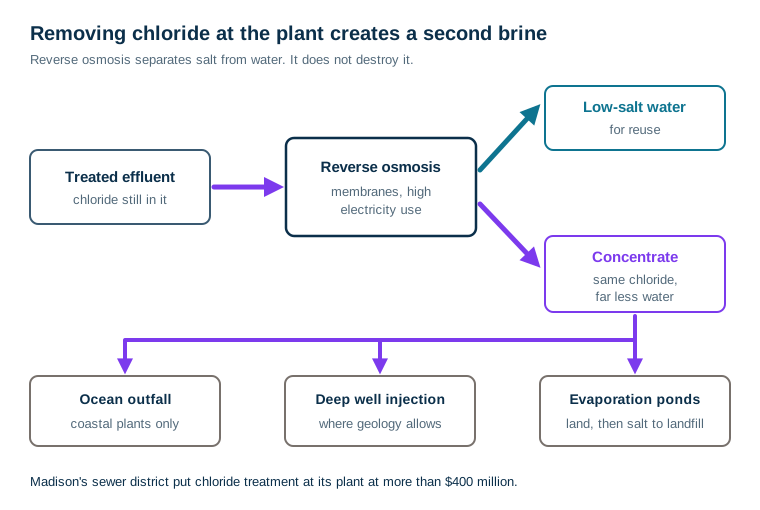
The main technology is reverse osmosis. Water is pushed through membranes that hold back dissolved salts. It produces two streams: clean water, and a concentrate carrying the salt in a much smaller volume. Electrodialysis and thermal evaporation work on the same principle of separation.
That concentrate is the catch. The chloride has not been destroyed, only concentrated, and it still has to go somewhere:
- An ocean outfall, which is only available to coastal plants
- Deep well injection, where geology and permits allow it
- Evaporation ponds, which need large areas of land and leave salt to landfill
On top of that, reverse osmosis uses a lot of electricity and needs pretreatment to protect the membranes. Madison's district estimated that chloride treatment at its plant would cost more than $400 million. That is why districts almost always choose the other path.
Why Source Control Wins
For a sewer district facing a chloride limit, the arithmetic is simple. Every pound of salt that is never added is a pound that never needs removing.
Softeners are the obvious place to start:
- Many are inefficient. Timer-controlled units and those set to high salt doses use far more salt than needed for the same softening.
- Tuning is cheap. Resetting the hardness and salt dose, or replacing a timer valve with a metered one, cuts salt without giving up soft water.
- Owners respond. Programs in Wisconsin and Minnesota ask residents to optimize their softeners and sometimes offer rebates to replace old units.
Only when voluntary measures fall short do districts move to rules: efficiency requirements, bans on new units, or, in rare cases, removal. The full chain from your drain to the plant, and the septic alternative, is traced in where water softener regeneration waste goes.
What This Means for Your Softener
Knowing the plant-side reasoning makes the practical steps clearer.
- Find out where your wastewater goes. Your sewer district can tell you whether it discharges to a river, a reuse system or a chloride-limited water, and whether it has a salt-reduction program.
- Tune before you replace. Set the hardness to your real test result and use the lowest salt dose that keeps the water soft.
- Use demand-initiated regeneration. A metered valve regenerates only when the resin is actually used up.
- Keep outdoor water off the softener. Softening irrigation water spends salt for nothing.
- Consider alternatives where your district asks. Portable exchange service moves regeneration to a facility, and a salt-free conditioner discharges no brine, though it does not remove hardness.
Switching to potassium chloride lowers sodium in the discharge but not chloride, so on its own it does not answer a chloride limit.
What This Page Cannot Tell You
- Whether your plant has a chloride problem. Many do not. It depends on the receiving water and the permit, and only the district knows.
- Your softener's share of the local load. It depends on how many homes soften, how efficiently, and what else is in the sewershed.
- How rules will change. Chloride limits tend to tighten as receiving waters are reassessed and reuse expands.
The treatment plant cannot take the salt out, so the only lasting fix is to put less in. That is the reasoning behind every softener rule, whatever you think of the rule itself.
Frequently Asked Questions
Can wastewater treatment plants remove salt?
Conventional plants cannot. Their processes remove solids, organic matter, nutrients and germs by settling, biological treatment, chemical precipitation and disinfection. Dissolved chloride is not removed by any of those, so it leaves in the effluent. Removing it takes reverse osmosis, electrodialysis or evaporation, which few municipal plants have and which produce a concentrated brine of their own.
Does water softener brine harm the bacteria in a treatment plant?
Not at normal household levels. Softener discharge is diluted many times in the sewer before it reaches the plant, and biological treatment copes with ordinary salinity. The problem is not what chloride does inside the plant but that it leaves the plant unchanged and may exceed the chloride limit in the plant's discharge permit.
Why do cities care about water softener salt?
Because their treatment plants have discharge permits that can limit chloride, and softeners are often the largest controllable source. Madison Metropolitan Sewerage District in Wisconsin receives about 220,000 pounds of salt a day, mostly from water softeners, and found that removing chloride at the plant would cost more than $400 million. Cutting salt at the source is far cheaper.
How does softener brine affect recycled water?
Recycled water carries all the salt that went down the drain. When it is used for irrigation or to recharge aquifers, that salt builds up in soils and groundwater, and each cycle of use adds more. Regions that depend on water reuse, especially in the arid West, set salinity limits that make softener chloride a problem.
Is potassium chloride better for wastewater treatment plants?
It reduces the sodium reaching the plant, which helps where sodium in recycled irrigation water is a concern. It does not reduce chloride, which is the ion most discharge limits target. Using less regenerant of either kind is what helps the plant.
Does the treatment plant remove the calcium and magnesium from softener brine?
Mostly not. Calcium and magnesium stay dissolved through conventional treatment, much like chloride. The difference is that they are not new: they came into the house in the water supply, and the softener only collected and released them. The chloride from the salt is a net addition.
