
Where Water Softener Regeneration Waste Goes
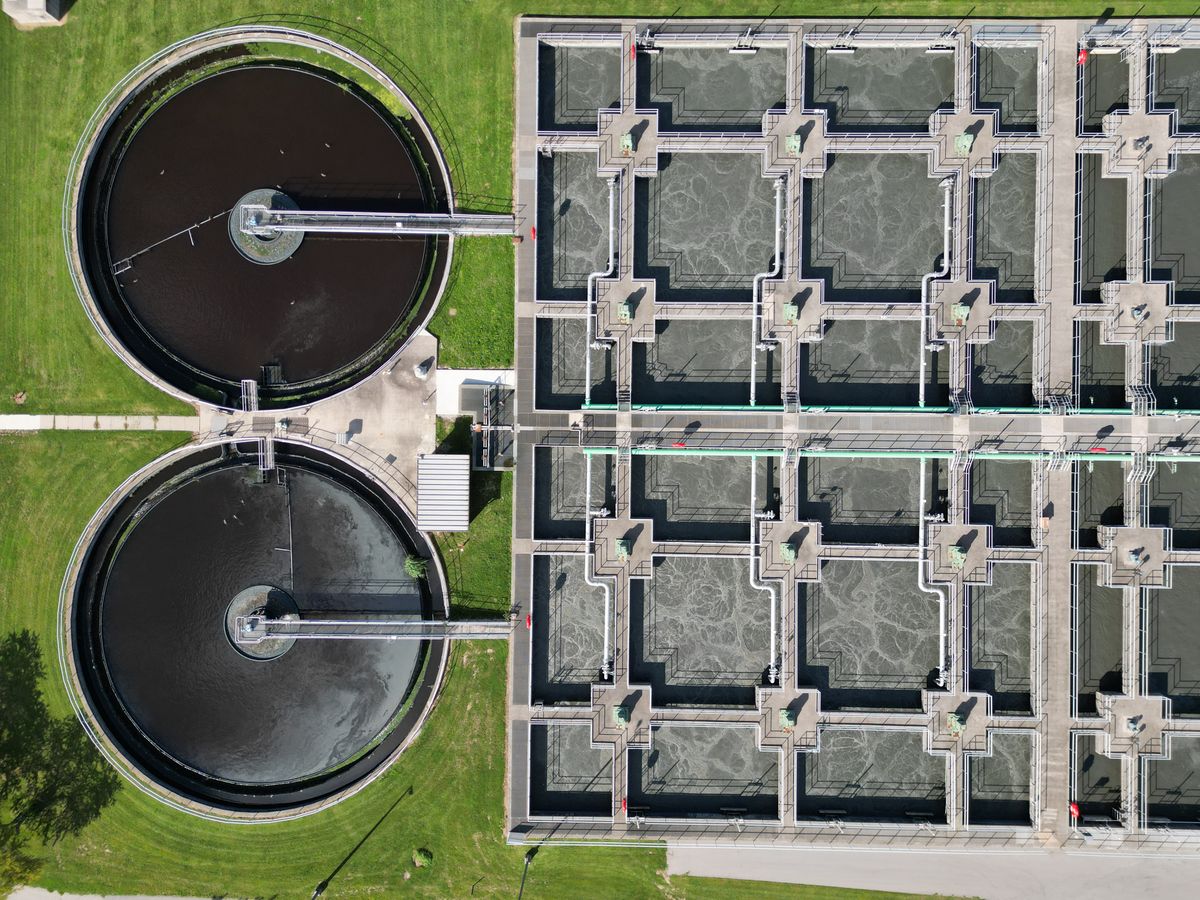
Water softener discharge, the salty rinse water from each regeneration, goes wherever the drain line ends. That is almost always the community sewer or a septic system. Either way it keeps going. Sewer discharge flows to a treatment plant and out to a river or reuse system. Septic discharge soaks through the drainfield toward groundwater. Treatment removes the grit and much of the rest, but the chloride passes through unchanged.
That last point explains every local rule about softeners. This page works out what is actually in one regeneration's discharge, then follows it along both paths.
What One Regeneration Sends Down the Drain
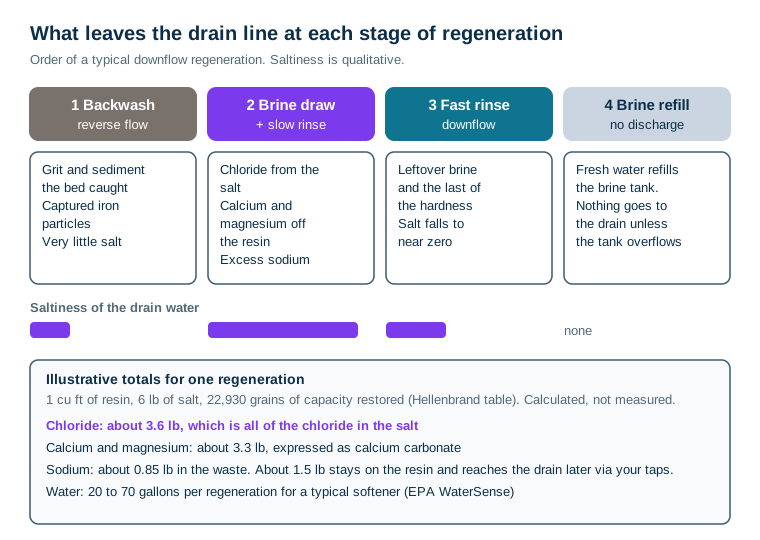
A regeneration is a sequence, not a single flush. Each stage sends something different to the drain.
- Backwash. Water runs up through the bed in reverse to loosen it. It carries out grit, sediment and any iron particles the bed caught. There is very little salt in it.
- Brine draw and slow rinse. Brine is drawn slowly through the resin. Sodium pushes the calcium and magnesium off the beads, and all of it goes to the drain with the chloride from the salt. This is the concentrated part.
- Fast rinse. Fresh water flushes out leftover brine and packs the bed. Salt in the drain water falls toward zero.
- Brine refill. Fresh water refills the brine tank for next time. Nothing goes to the drain unless the tank overflows.
Volume. EPA WaterSense's water softener fact sheet says "a typical softener uses 20 to 70 gallons of water per regeneration cycle, although some larger systems can use up to 200 gallons."
Composition. No published source gives a per-cycle breakdown for household softeners, so here is one worked from first principles. It uses a common case: 1 cubic foot of resin regenerated with 6 lb of salt, which Hellenbrand's published capacity table rates at 22,930 grains. The figures are calculated, not measured.
| Component | Amount per regeneration | How it is worked out |
|---|---|---|
| Chloride | about 3.6 lb | Salt is 60.7% chloride by weight. All of it leaves in the discharge |
| Calcium and magnesium | about 3.3 lb as calcium carbonate | 22,930 grains ÷ 7,000 grains per pound |
| Sodium in the discharge | about 0.85 lb | The part of the salt's 2.36 lb of sodium not taken up by the resin |
| Sodium held on the resin | about 1.5 lb | Swapped into your softened water over the next cycle. It reaches the drain later through sinks, showers and toilets |
| Grit and iron particles | varies | Whatever the bed caught since the last backwash |
| Water | 20 to 70 gallons | EPA WaterSense range for a typical softener |
Averaged over 50 gallons, 3.6 lb of chloride is roughly 8,700 mg/L. That is about 35 times EPA's secondary drinking water standard for chloride of 250 mg/L, set for salty taste. The concentration peaks during brine draw and slow rinse and is much lower at the start and end.
Two points from the table matter for everything that follows.
- All of the salt ends up in the wastewater. The chloride goes during regeneration. The sodium goes partly during regeneration and partly through your taps. Over a year, what goes down the drains equals what goes into the brine tank.
- The calcium and magnesium are not new. They came into the house in your water. The softener collects them and releases them in a burst. The salt is the net addition.
Where Does Water Softener Discharge Go After the Drain?
The drain line ends at a floor drain, standpipe, laundry tub or similar receptor. From there the question is what that receptor connects to. For almost every home, the answer is one of two systems:
- the community sewer, which leads to a municipal wastewater treatment plant, or
- a septic tank and drainfield, on homes without sewer service.
Dry wells, yard discharge and sump pits exist too. Most are restricted or prohibited because they put the brine straight into the ground or the storm system. Where a water softener can drain goes through each destination and which ones are generally accepted.
Path 1: Through a Municipal Treatment Plant
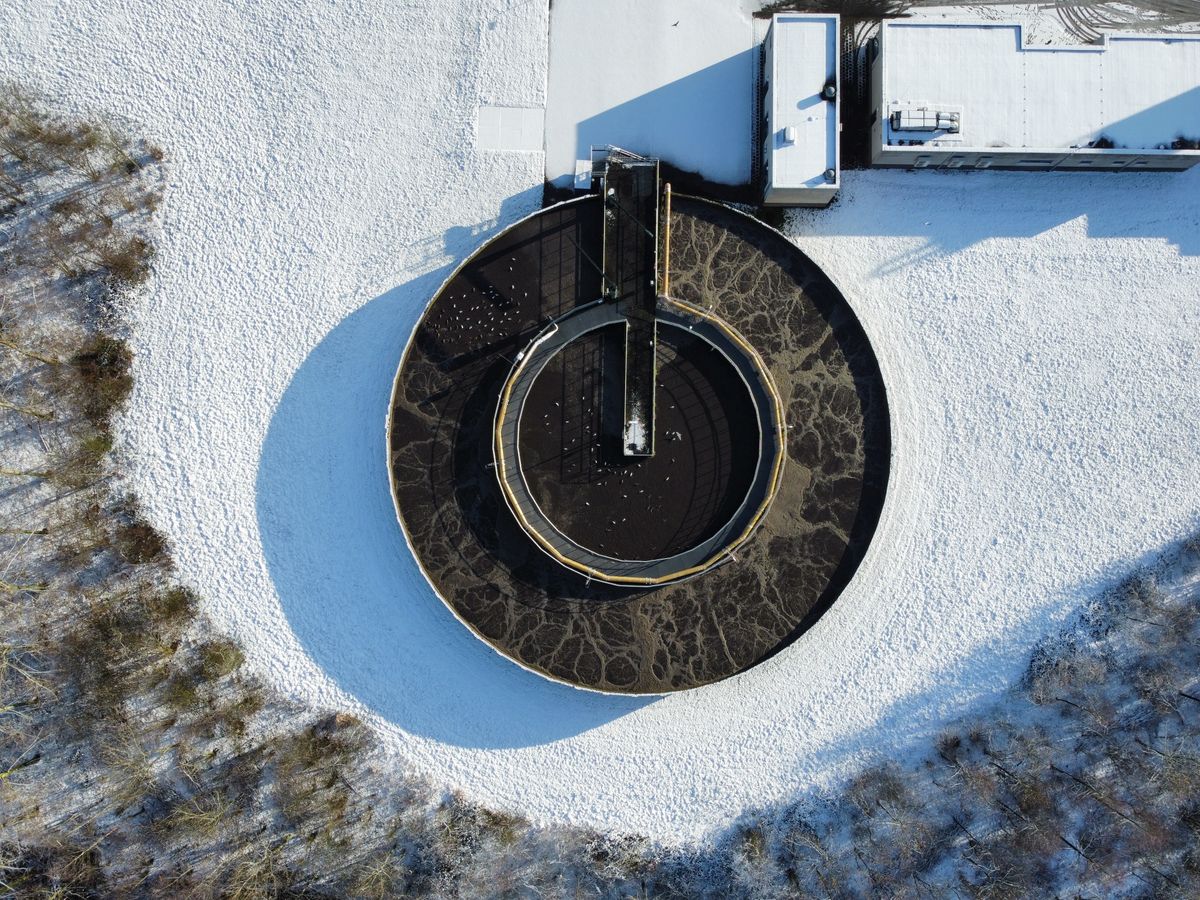
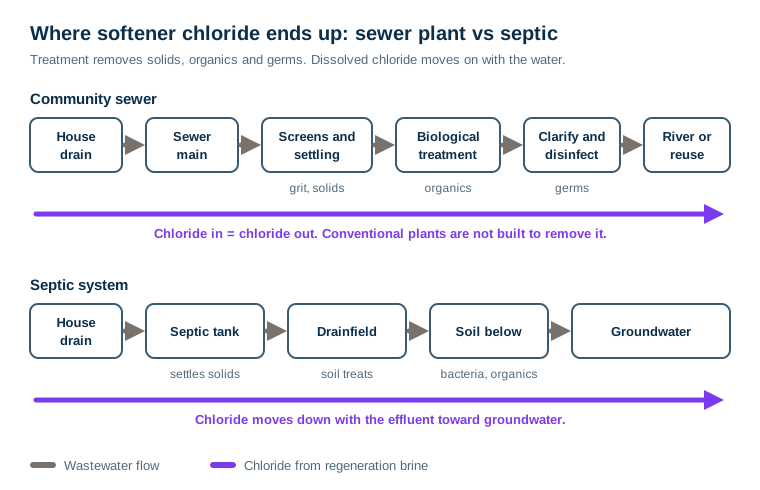
A conventional wastewater plant treats sewage in stages. Screens and grit chambers take out rags and sand. Settling tanks remove solids. Biological treatment uses bacteria to break down organic matter and, at many plants, nitrogen. Clarifiers settle the biology out, and the effluent is disinfected before discharge to a river, a lake or a water reuse system.
Softener discharge meets each stage in turn:
- Grit and iron particles settle out with the other solids.
- Calcium and magnesium mostly stay dissolved and pass through, adding to the effluent's hardness. They are the same minerals that were in the drinking water supply.
- Sodium and chloride stay dissolved. Biological treatment does not use them up. Settling does not remove them. Disinfection does not change them.
The Minnesota Pollution Control Agency's chloride page states it directly: "salty brine from water softeners drains to municipal wastewater treatment plants that are not designed to remove salt." Madison Metropolitan Sewerage District in Wisconsin says the same of its own plant on its chloride page: chloride entering the sewer passes through to the receiving streams.
The district also gives a sense of scale. It receives about 220,000 pounds of salt a day, which it compares to 5,500 bags of water softener salt. It rejected treating chloride at the plant because the technology would cost more than $400 million, and it relies on reducing salt at the source instead, starting with softener optimization for homes and businesses.
Path 2: Through a Septic Tank and Drainfield
A septic system works differently but ends the same way for chloride.
- In the tank, solids settle and scum floats. Bacteria digest some of the organic matter. The calcium and magnesium in softener discharge actually help solids settle. That finding comes from industry-funded research summarized in water softener planning for a home with septic, which also shows how very inefficient salt settings can make tank effluent worse.
- In the drainfield, effluent seeps into the soil. The soil filters particles and its bacteria treat much of the remaining organic load and germs.
- Below the drainfield, what is left moves down toward groundwater. Chloride is not taken up by soil or bacteria to any meaningful degree. It moves with the water.
So on septic, the chloride from your softener goes toward the aquifer under your own property and your neighbors'. Where that aquifer also supplies private wells, the loop closes. This is one reason some states restrict treatment-device backwash into septic systems. Massachusetts, for example, bars it from on-site systems entirely.
Septic also adds a volume issue that sewer homes do not face. Each regeneration sends 20 to 70 gallons into a system sized for household flow. A softener that regenerates more often than it needs to adds that water every time. Comparing low-discharge softeners for septic homes ranks current units on that yearly volume.
Why Chloride Is the Part That Matters
Every other part of the discharge is either removed by treatment or was already in the water supply. Chloride is new, and it stays. That makes it the reason behind the regulation.
- It accumulates. MPCA and Madison MMSD both use the same figure: one teaspoon of salt permanently pollutes five gallons of water. There is no natural process in a river or aquifer that removes chloride at any useful rate.
- It harms aquatic life. MPCA says high concentrations are toxic to fish, insects and amphibians, and reports that 50 Minnesota water bodies already exceed the chloride standard that protects aquatic life.
- It limits water reuse. Treated wastewater used for irrigation or recharge carries its salt with it. Where water is reused several times, as in parts of California, salt builds up in soils and aquifers.
- It is expensive to remove. Taking chloride out of water needs reverse osmosis or similar treatment, which produces its own concentrated brine to dispose of.
When a sewer district reaches the limit on the chloride it may discharge, it has two choices: build very expensive treatment, or reduce what comes in. Residential softeners are one of the few sources it can influence. That is the logic behind softener brine restrictions and drought rules, from voluntary efficiency programs to outright bans on new units. The plant-side detail is in how softener brine affects municipal wastewater treatment.
How to Reduce What Your Softener Sends Down the Drain
Since the chloride in the discharge equals the chloride in the salt you add, the only way to reduce it is to use less salt. Water savings follow from the same changes.
- Set the hardness correctly. A hardness setting above your real water hardness makes the softener regenerate more often than it needs to. Every extra regeneration is extra salt and extra water.
- Use demand-initiated regeneration. A metered valve regenerates when the resin is actually used up. A timer regenerates on schedule whether it is needed or not.
- Choose an efficient salt setting. A softener set to its highest salt dose removes far fewer grains per pound of salt than at its lower settings. Salt efficiency is the single biggest factor in how much chloride a softener produces.
- Fix leaks and running toilets. On a metered softener, wasted water is softened water, and it triggers regenerations.
- Understand what potassium chloride does and does not change. Swapping to potassium chloride reduces the sodium in the discharge. It still contains chloride, so it does not solve the chloride problem.
Two alternatives take the discharge out of your drain altogether. A portable exchange tank is regenerated at a central facility, and a salt-free conditioner uses no brine at all, but it also does not remove hardness in the same way.
What This Calculation Cannot Tell You
- Your own numbers will differ. The table is for one common size and salt setting. A larger bed or a higher salt dose sends proportionally more chloride per regeneration.
- Real efficiency is lower than rated. Rated capacities are measured under test conditions. At home, more salt is usually needed per grain removed, which means more chloride.
- Your local plant matters. Some plants discharge to large rivers where softener chloride is a minor issue. Others discharge to small streams or reuse systems where it is the limiting factor. Your sewer district can tell you which applies.
- A softener cannot treat its own discharge. There is no add-on that removes chloride from the brine at household scale.
The short answer to where water softener discharge goes: down your drain, through treatment, and out into the environment. Treatment catches almost everything in it except the salt.
Frequently Asked Questions
Where does water softener discharge go?
Into the drain the softener's drain line is connected to, which almost always ends in the community sewer or the home's septic system. On the sewer, it travels to the wastewater treatment plant and then out with the plant's effluent to a river, lake or reuse system. On septic, it passes through the tank and drainfield into the soil and toward groundwater. The chloride in it reaches the end of both paths.
What is in water softener backwash water?
Grit and captured iron particles from the backwash, then the spent brine: chloride from the salt, the calcium and magnesium stripped off the resin, and the sodium that was not needed. For one regeneration of a 1 cubic foot softener at 6 lb of salt, that works out to about 3.6 lb of chloride and about 3.3 lb of hardness expressed as calcium carbonate, in 20 to 70 gallons of water.
Can wastewater treatment plants remove salt from softener discharge?
Conventional plants cannot. They are built to remove solids, organic matter, nutrients and germs. The Minnesota Pollution Control Agency says softener brine drains to plants that are not designed to remove salt, and Madison's sewerage district says all chloride entering its sewer passes through to waterways. Removing it would take advanced treatment such as reverse osmosis.
Is water softener discharge bad for the environment?
The chloride is the concern. The calcium and magnesium came out of the ground in your water in the first place. The salt is a net addition, and its chloride accumulates in rivers, lakes and aquifers. How much a softener adds depends mostly on how efficiently it uses salt and how often it regenerates.
How much water does a water softener discharge?
EPA WaterSense puts a typical softener at 20 to 70 gallons per regeneration cycle, and up to 200 gallons for some larger systems. How much that adds up to depends on how often it regenerates, which is why a demand-initiated softener sends far less to the drain than one on a fixed timer.
Can I drain my water softener into my yard?
Usually not legally, and it is a poor idea for the yard. The discharge is salty enough to damage plants and soil, and many places treat it as wastewater that must go to a sewer or approved septic system. Check with your local building department or health department before discharging anywhere other than an approved drain.
