
Water Hammer and Pressure Surges After a Softener
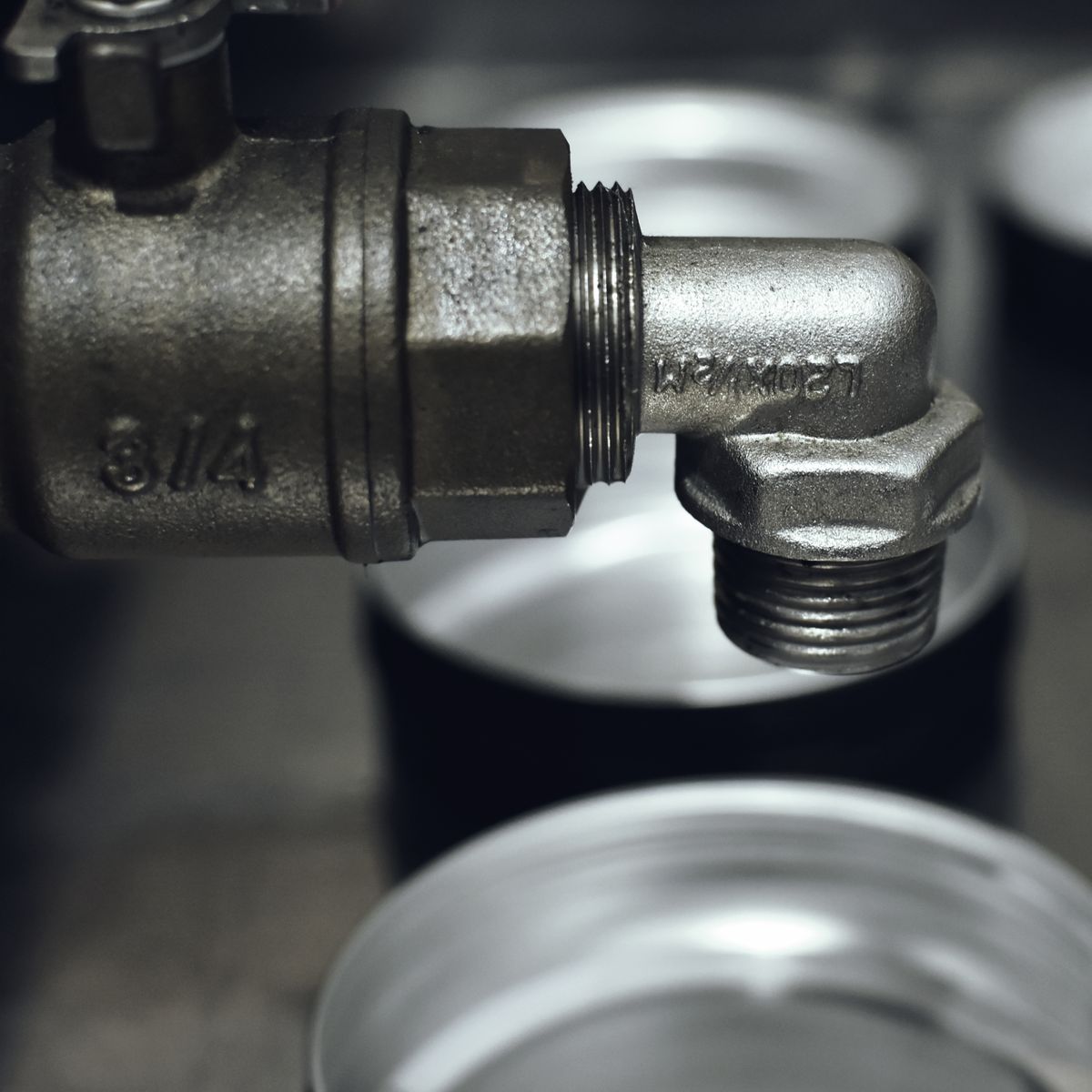
Water hammer after water softener installation happens because the softener adds a valve that shuts off flowing water quickly, usually during a regeneration cycle transition at night. The sudden stop sends a pressure wave back up the supply pipe, and loose pipes bang. An arrestor on the inlet side, close to the softener, absorbs it. Lowering pressure above 80 psi and securing the pipe fix the rest.
The house did not suddenly develop bad plumbing. It gained a device that finds the weakness the plumbing always had.
Water Hammer After Water Softener Installs: Why It Is New
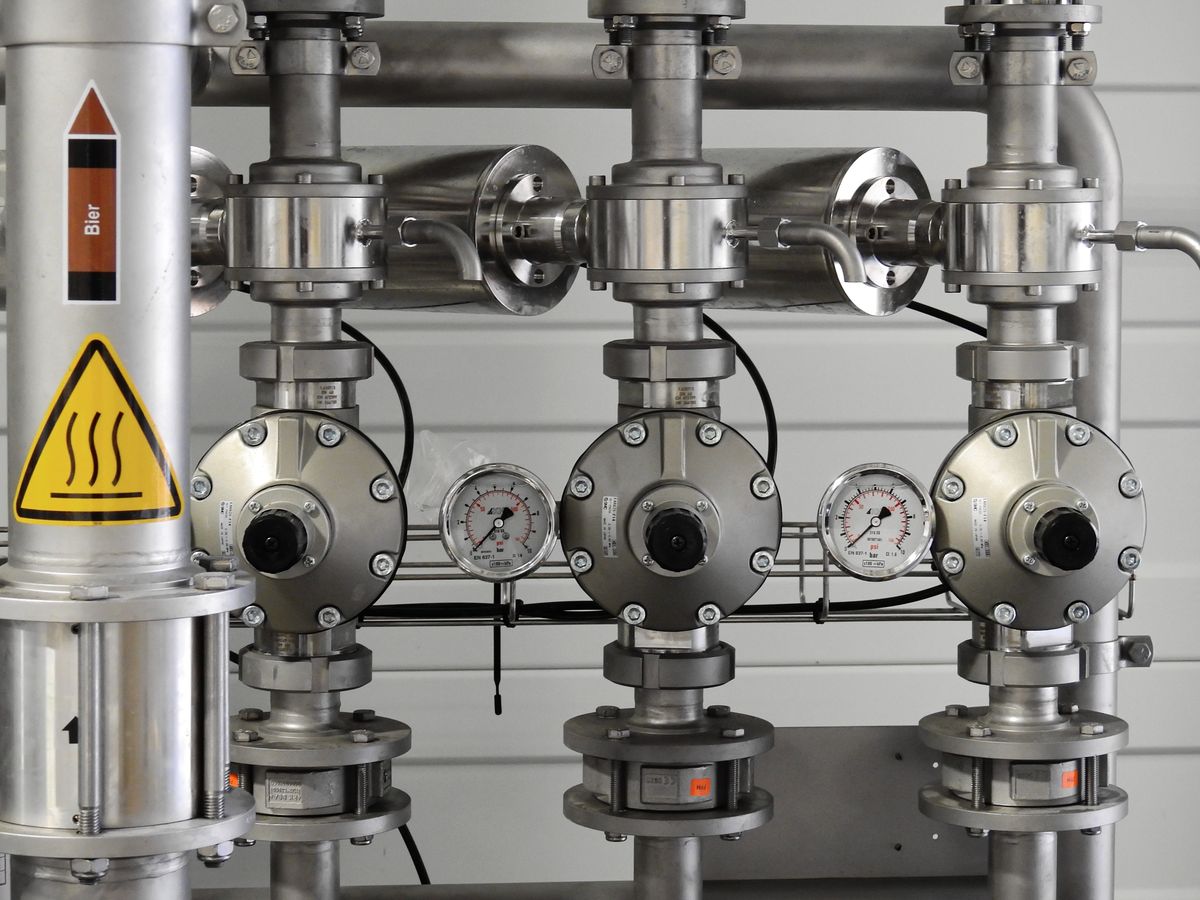
Water hammer is momentum. A column of water moving through a pipe carries energy, and if something stops it suddenly, that energy has to go somewhere. It becomes a pressure spike that races back up the pipe at roughly the speed of sound in water — around 4,000 feet per second in copper — reflects off the main or a closed valve, and returns. Each pass shakes whatever pipe is free to move.
The size of the spike depends on how fast the flow stops. The classic rule of thumb from the Joukowsky equation is that an instant stop raises pressure by roughly 50–60 psi for every foot per second of velocity lost. A softener backwashing at 7 gpm through 3/4-inch copper moves water at over 4 feet per second. Stopped instantly, that is a theoretical spike of well over 200 psi on top of line pressure. Real valves do not close instantly, so real spikes are smaller — but the arithmetic shows why a softener can do what a hand-turned tap never did.
Why faucets rarely hammer and softeners can. A quarter-turn or compression tap closes over a second or more under a human hand. The pressure wave returns from the main in a small fraction of a second, so a slow closure lets the flow bleed down gradually. What matters is not the full travel of the valve but the last few percent of port area, because that is where most of the flow is actually cut off. A motor-driven piston or a spring-closed solenoid covers that final sliver of port very quickly.
The softener's fast moments:
| Moment in the cycle | What happens to flow | Hammer risk |
|---|---|---|
| Service to backwash | Service flow redirected to drain at the drain line flow rate | Low to moderate |
| Backwash to brine draw | Drain flow of several gpm cut to a fraction of a gpm through the injector | Moderate to high |
| Rinse to refill | Drain flow stops; small refill flow begins | Moderate |
| End of brine refill | Refill flow stops as the valve or float shuts | Low to moderate |
| Return to service | Drain closes; house flow path reopens | Moderate |
| Solenoid-actuated valves on some units | Near-instant closure | High |
Why it happens at night. Most softeners regenerate around 2 a.m. That is the hour when nobody draws water, so static pressure sits at its daily peak — and, on closed systems, when thermal expansion from the water heater has pushed it higher still. The same valve transition at 60 psi might be silent; at 95 psi it bangs.
The other thing the installation changed. Softeners are usually plumbed in with a new loop of pipe to the unit. That loop is often under-supported, ends in flexible connectors, and hangs free between the main and a heavy tank. It is the loosest pipe in the house, placed right next to the valve generating the wave.
Identify the Cause From When It Bangs
The timing of the bang is the most useful diagnostic you have. Note when it happens before buying anything.
| When you hear it | Most likely cause | Go to |
|---|---|---|
| Only during regeneration, and only at night | Softener valve transition plus high night pressure | Arrestor placement; pressure checks |
| Any time a washing machine, dishwasher or ice maker valve shuts | Appliance solenoid, now louder because pressure or pipe support changed | Arrestor at the appliance |
| Worst in the early morning, T&P valve on the water heater drips | Thermal expansion on a closed system | Expansion tank |
| Every time any tap closes, even slowly | Static pressure well above 80 psi, or a failing PRV | PRV and pressure test |
| A single knock or rattle, not a bang | Loose pipe, missing hanger, or pipe touching a joist | Securing pipe |
| A gurgling, hissing or spitting sound rather than a bang | Air in the lines, not hammer | air in water lines after a softener |
How to catch the timing. Trigger a manual regeneration during the day and stand at the unit. Most control valves let you step through the cycle, and you can hear exactly which transition produces the shock. If the unit is silent in daytime but bangs at night, pressure is the variable, not the valve.
One noise that is not hammer. A softener regenerating makes a series of normal sounds — motor whirring, water rushing to drain, a hiss during brine draw. Those are covered in why a water softener makes noise. Hammer is different: a sharp knock or thud in the pipes, often some distance from the unit.
Where an Arrestor Must Sit to Work
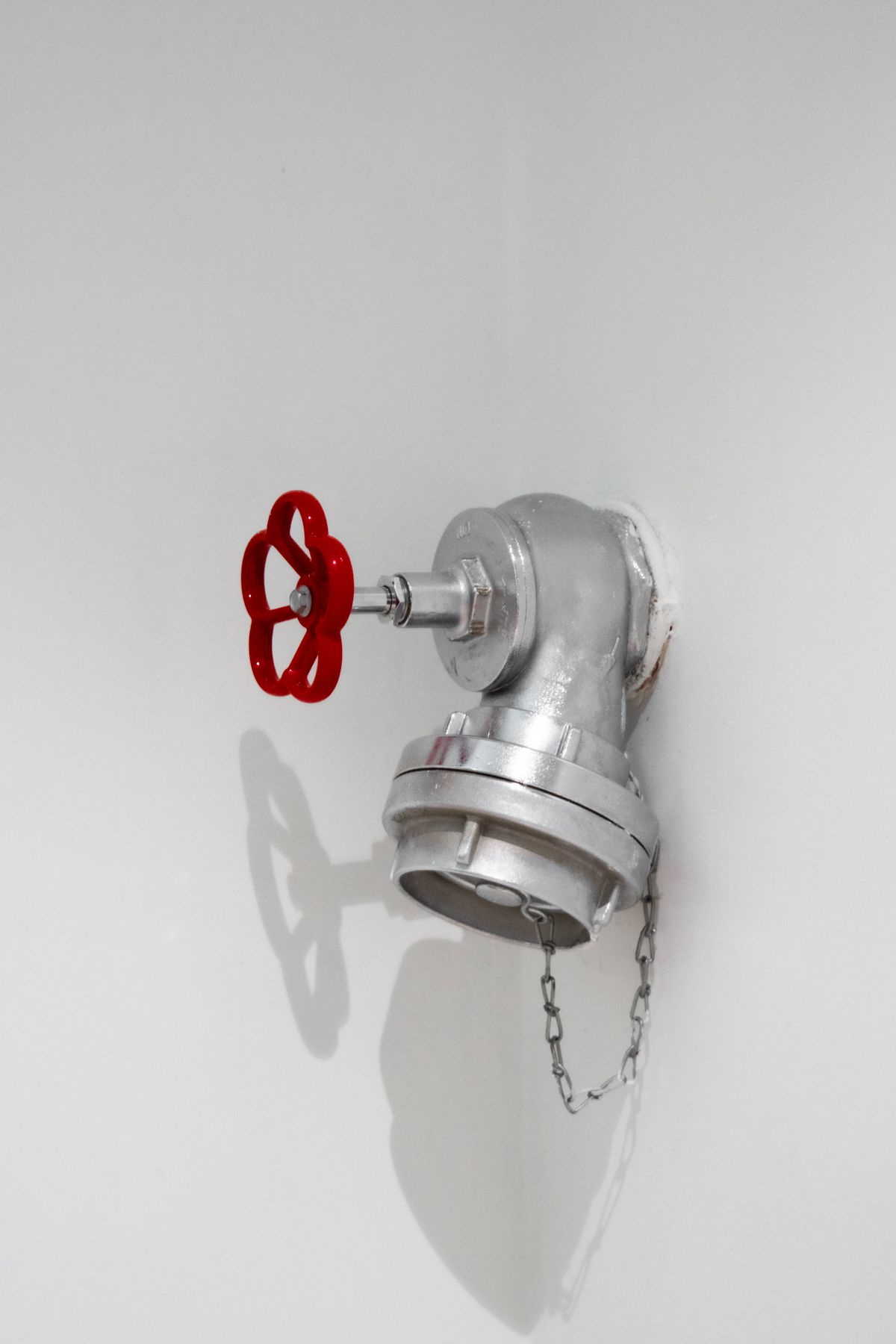
This is where most fixes fail. People buy an arrestor, install it wherever is convenient, and the banging continues.
The rule: an arrestor must sit on the upstream side of the closing valve, as close to it as practical. When a valve slams shut, the pressure spike forms on its supply side, because that is where the moving water piles up against the closure. On the downstream side, pressure momentarily drops. An arrestor fitted after the softener, or at a faucet on the far side of the house, never sees the wave it is supposed to absorb.
For hammer caused by the softener itself:
- Fit the arrestor on the inlet pipe, just before the bypass valve. A tee with the arrestor on the branch, within a couple of feet of the unit, is the standard approach.
- Not on the outlet. The outlet is downstream of the valve during the transitions that matter.
- Not at the drain line. The drain is open to atmosphere through its air gap; there is nothing to absorb there.
- Orientation matters less than distance. Modern piston-type arrestors work in any orientation, but follow the maker's instructions.
For hammer caused by appliances: the arrestor goes at the appliance — on the hot and cold supply valves behind the washing machine, under the dishwasher, or at the ice maker line. Screw-on arrestors for washing machine hose connections make this a ten-minute job.
Arrestors, not air chambers. Old houses often have capped vertical pipe stubs behind fixtures. These trap an air cushion that absorbs hammer — until the air dissolves into the water and they stop working. Sealed piston or bladder arrestors keep their cushion permanently. As manufacturer Oatey explains in how water hammer arrestors work, the sealed chamber is what separates them from a plain air stub.
Code context. The International Residential Code, in section P2903.5 as adopted in many jurisdictions, requires a water-hammer arrestor where quick-closing valves are used and calls for arrestors conforming to ASSE 1010; you can read the adopted wording of the water hammer section online. Your state or city may have adopted a different edition or amended it, so check the local version before treating any of this as a code requirement for your house.
Why a longer pipe run does not help. It is a common suggestion: add a loop or a longer run so the shock "dissipates". It does the opposite. More pipe means more moving water to stop and a longer path for the reflected wave, which increases the spike and the duration of the shaking. Shorter, well-supported runs and a correctly placed arrestor are what work.
The Pressure-Reducing Valve Interaction
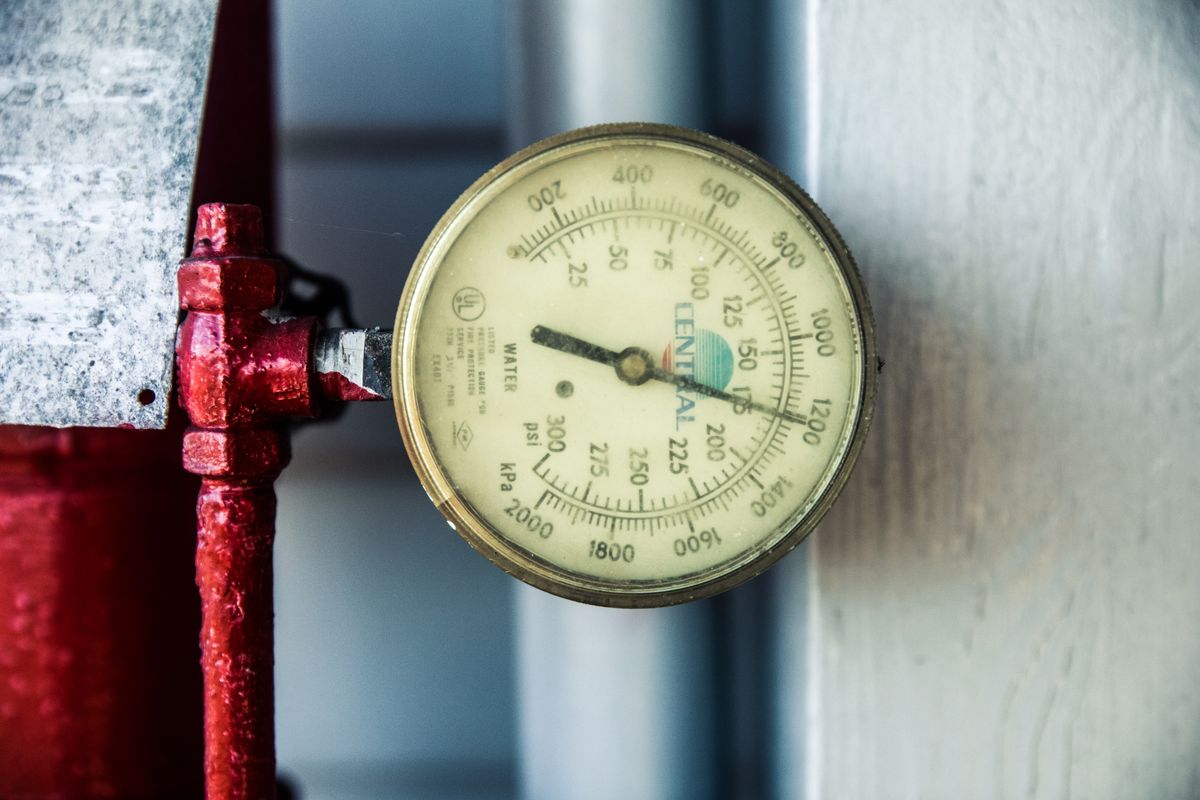
A pressure-reducing valve (PRV) on the main is supposed to hold house pressure steady — commonly around 50 to 60 psi. It can make hammer better or much worse depending on its condition.
High static pressure multiplies everything. Hammer severity scales with the pressure behind the moving water. Many residential codes, following IRC section P2903.3.1, cap static pressure at 80 psi and require a PRV where the supply exceeds it. If your house runs at 90 or 100 psi, arrestors will reduce the bang but will not eliminate it, and every valve in the house is working harder than it should.
A failing PRV creeps. PRVs wear. A common failure is creep: the valve no longer seals fully at zero flow, so pressure downstream slowly climbs toward street pressure overnight. You get normal readings during the day and a spike by 2 a.m. — exactly when the softener regenerates.
The test that catches both problems. Fit a pressure gauge with a maximum-reading needle (sometimes called a lazy hand or tell-tale needle) to a hose bib or laundry tap and leave it for 24 hours. The main needle shows current pressure; the second needle is pushed up and stays at the highest pressure reached. Read it in the morning:
| Overnight maximum | Interpretation |
|---|---|
| Within 5 psi of daytime static | PRV holding; pressure is not the driver |
| Climbs to 80–90 psi from a 55 psi setting | PRV creep or thermal expansion — see next section |
| Well above 100 psi | Urgent: stresses the softener, water heater and every fixture |
| Daytime static already above 80 psi | PRV set too high, failed open, or absent |
Softener pressure limits. Softener control valves have a maximum working pressure. The Fleck 5600SXT service manual, for example, states that water pressure is not to exceed 125 psi. Overnight spikes approaching that figure are a reason to act quickly even if nothing has leaked yet — seal and O-ring failures at the valve body are the usual first casualty, described in why a water softener leaks at the control head.
Adjusting a PRV is usually a locknut and adjusting screw on top of the valve. If it creeps, it needs a rebuild kit or replacement, not adjustment.
The Thermal Expansion Trap on Closed Systems
This is the cause that explains the pattern people find most confusing: hammer that is worst in the early morning, often alongside a dripping relief valve on the water heater.
What a closed system is. When water is heated, it expands. A 40-gallon tank heated from cold to about 120°F grows by roughly half a gallon. In an open system, that extra volume is pushed back into the street main and nobody notices. But a PRV, check valve or backflow preventer on the supply stops water flowing backward. The system is closed, and the expanding water has nowhere to go but up in pressure.
Why it appears with a softener. The softener does not usually close the system on its own. What typically happens is that the installation reveals a system that was already closed: a new gauge is fitted for the first time, a PRV that was already creeping is noticed, or a check valve is added in the softener loop. The softener's night regeneration then lands at the peak of the expansion cycle, after the water heater has recovered from evening use and no tap has been opened for hours to relieve the pressure.
The signs:
- Maximum-reading gauge shows pressure climbing overnight, then dropping the moment someone opens a tap
- Water heater temperature-and-pressure relief valve drips or has a wet discharge pipe
- Hammer or knocking worst at the first tap of the morning
- Toilet fill valves hiss briefly in the morning
The fix is an expansion tank, not another arrestor. A small pre-charged tank on the cold supply to the water heater gives expanding water somewhere to go. The model code language in section P2903.4, viewable as adopted text under thermal expansion control, requires a means of controlling thermal expansion where a PRV, check valve or backflow device creates this condition, fitted downstream of all such devices. The tank's air pre-charge should match the house's static pressure; a tank shipped at a lower factory pre-charge and installed without adjustment does far less than it should.
Limits. An expansion tank solves expansion, not the valve-closure shock itself. On a house with both problems you need both devices, and a high static pressure still needs the PRV addressed.
Securing the Pipe Is Half the Cure
A pressure wave is only noise if pipe is free to move. The same surge in rigidly clamped pipe is often silent.
- Check the softener loop first. New pipe to the softener is frequently hung from nothing. Clamp it to the wall or joists on both inlet and outlet, within a foot or so of the bypass.
- Look for pipe touching wood. A copper pipe resting on a joist or passing through a tight hole without a sleeve knocks every time it moves.
- Add hangers where spans are long. Support spacing requirements vary by pipe material and local code; horizontal copper and PEX both need regular support, and PEX needs more of it.
- Use cushioned clamps. Plastic-lined or rubber-lined clamps stop the metal-on-metal knock without allowing movement.
- Do not over-tighten on PEX. It must be able to expand and contract lengthwise.
What a Softener Owner Cannot Fix Alone
Adjusting a PRV, adding a screw-on appliance arrestor and clamping loose pipe are reasonable DIY jobs. Cutting a tee into the supply for an inlet arrestor, installing an expansion tank, or replacing a PRV involves draining down the system and making permanent joints, and in some jurisdictions requires a licensed plumber and a permit. If overnight pressure is spiking well above 100 psi, get it assessed promptly — the checklist in when to call a water softener technician covers the softener side of that call.
It is also worth being honest about expectations. You may not silence every sound. A softener will still whir, hiss and run water to the drain during regeneration, and those are normal. The goal is to eliminate the hammer — the sharp shock that stresses joints — not every noise the system makes.
Stopping the Bang, In Order
- Note exactly when it happens — during regeneration, at appliances, in the morning, or at every tap.
- Run a manual regeneration in daytime and listen for which transition produces the shock.
- Leave a maximum-reading gauge on for 24 hours and compare overnight peak to daytime static.
- If static is above 80 psi, adjust or replace the PRV before anything else.
- If pressure climbs overnight, fit or correctly pre-charge an expansion tank on the water heater supply.
- Fit an arrestor on the softener inlet, just upstream of the bypass.
- Fit screw-on arrestors at washing machines and dishwashers if they also bang.
- Clamp the softener loop and any loose runs with cushioned clamps.
- Move regeneration time if a daytime transition is louder than you can live with — a shift of an hour or two can avoid peak expansion.
- Recheck with the gauge a week later to confirm the peak has come down.
Water hammer after water softener installation is rarely a softener fault. It is the softener's fast valve arriving in a house with high pressure, a closed system or loose pipe, at the hour all three are at their worst. Put the arrestor where the wave starts, bring the pressure down, give expanding water somewhere to go, and the bang goes away without touching the softener at all.
Frequently Asked Questions
Why do my pipes bang when my water softener regenerates?
During regeneration the control valve moves through several positions, and each transition stops or redirects water that was flowing at several gallons per minute. When the flow stops abruptly, the momentum of the water becomes a pressure wave that travels back up the supply pipe and makes loose pipes jump. The bang usually happens at the start of regeneration, at the transition out of backwash, or at the end of the brine refill when a valve shuts.
Can a water softener cause water hammer?
A softener does not create the conditions for water hammer, but it can trigger it. It adds a valve that closes against flowing water, often at night when static pressure is at its highest. If the house already has high pressure, poorly supported pipes or a closed system with no expansion tank, the softener is often the first device fast enough to expose it.
Where should a water hammer arrestor be installed on a water softener?
On the supply side, as close as practical to the valve that causes the shock. For hammer triggered by the softener itself, that means on the inlet pipe just upstream of the bypass, not on the outlet and not at a distant fixture. The pressure spike forms on the upstream side of a closing valve, so an arrestor downstream of it never sees the wave.
Will a longer pipe run or a loop stop water hammer?
No. A longer run of pipe makes water hammer worse, not better, because there is more moving water to stop and the reflected wave takes longer to return. What reduces hammer is slower closure, lower flow velocity, lower static pressure, an arrestor near the closing valve and properly secured pipe.
What water pressure causes water hammer?
Hammer can occur at any pressure, but it becomes much more likely and more violent above about 80 psi. Many residential codes limit static pressure to 80 psi and require a pressure-reducing valve above that. If your static pressure is over 80 psi, lowering it will usually do more than any number of arrestors.
Do I need an expansion tank if I have a water softener?
The softener itself does not usually require one. You need one when the plumbing is a closed system, meaning a pressure-reducing valve, check valve or backflow preventer stops expanding hot water from flowing back to the main. Many homes with a PRV are already closed systems, and a softener installation is often when the resulting overnight pressure rise is first noticed.